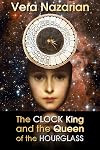
The Clock King and the Queen of the Hourglass
by Vera Nazarian 
On This Page
Description
'Human Rights Law' is designed to help readers to relate all the reading and study throughout their course specifically to exam and assignment situations.Tags
Recommendations

















Member Recommendations

Member Reviews
Received through LibraryThing Member Give Away.
I very much enjoyed this book. The sort of flat writing style perfectly complements the tone of the story. It evokes a kind of calm despair and disconnect that the “evolved” people must be feeling. Humans have “controlled” things until they are impotent both physically and intellectually. They go through the motions of a life they can’t live or enjoy. So stagnant have they become that they do what they have always done to survive and seemingly never attempt to try to come up with any better way of surviving. They rely on their “genetic throw backs” to supply them with new genetic material to carry on a human race that merely exists. Liaei, The Queen of the Hourglass, defies show more expectation and the reader is left with the hope she resurrects life. I would love to read what happens next, but the author leaves it to the readers imagination, but she leaves us with hope. show less
I very much enjoyed this book. The sort of flat writing style perfectly complements the tone of the story. It evokes a kind of calm despair and disconnect that the “evolved” people must be feeling. Humans have “controlled” things until they are impotent both physically and intellectually. They go through the motions of a life they can’t live or enjoy. So stagnant have they become that they do what they have always done to survive and seemingly never attempt to try to come up with any better way of surviving. They rely on their “genetic throw backs” to supply them with new genetic material to carry on a human race that merely exists. Liaei, The Queen of the Hourglass, defies show more expectation and the reader is left with the hope she resurrects life. I would love to read what happens next, but the author leaves it to the readers imagination, but she leaves us with hope. show less
This review was written for LibraryThing Member Giveaways.
This quick little novella runs its course in the extremely distant future, where Earth has been reduced to a shrinking lake of sludge at the bottom of the Pacific basin and two highly advanced cities of demi-humans. Our protagonist, Liaei, is an engineered 'modern' homo sapien who comes to learn that her DNA is part of a millenniums-long program of genetic renewal.
In The Clock King and the Queen of the Hourglass, Ms. Nazarian presents us briefly with an understated view of a vastly different human race. Our world has become strange, but in her hands it is not difficult to accept her future-people and their alien worldview. Her language sometimes has a shade of Bradbury, both to good and bad effect, but she plies her metaphors without show more overwriting. Questioning and curiosity -- both important themes -- exist both within the plot and without, as the author uses her character's displacement from our own time to re-frame gender identity and sexuality as an outside observer. These monologues unfortunately range from the thought-provoking to the funny to the irritatingly didactic, but come with good intent and real insight.
A few features of the story do grate a bit. The characters can't seem to decide if they measure time or not; in the same page they both criticize their ancestor's clocks and track their own heart's beats per minute. Even in 100 pages, one or two spots seem to start sputtering. However, the last few pages open up the whole story's foundation, that it is our human drive to discover and explore that makes us great and gives us our best chance for the future. I am certainly curious to seek out more of Very Nazarian's work and see if it stands up to another such rigorous and heartening message. show less
In The Clock King and the Queen of the Hourglass, Ms. Nazarian presents us briefly with an understated view of a vastly different human race. Our world has become strange, but in her hands it is not difficult to accept her future-people and their alien worldview. Her language sometimes has a shade of Bradbury, both to good and bad effect, but she plies her metaphors without show more overwriting. Questioning and curiosity -- both important themes -- exist both within the plot and without, as the author uses her character's displacement from our own time to re-frame gender identity and sexuality as an outside observer. These monologues unfortunately range from the thought-provoking to the funny to the irritatingly didactic, but come with good intent and real insight.
A few features of the story do grate a bit. The characters can't seem to decide if they measure time or not; in the same page they both criticize their ancestor's clocks and track their own heart's beats per minute. Even in 100 pages, one or two spots seem to start sputtering. However, the last few pages open up the whole story's foundation, that it is our human drive to discover and explore that makes us great and gives us our best chance for the future. I am certainly curious to seek out more of Very Nazarian's work and see if it stands up to another such rigorous and heartening message. show less
This review was written for LibraryThing Member Giveaways.
I won this book through Member Giveaways.
I really enjoyed this book! I was a little unsure at first, since the main character's name is rather awkward to pronounce, and I felt that that wasn't a good sign. There were also a few rough patches in the beginning (awkward turns of phrase, and anachronisms that seemed out of place) but soon enough I was pulled right in and completely absorbed into the far-future world created by the author.
I was pleased that the author seemed familiar with and open to multiple gender and sexual identities. I developed a lot of sympathy for the main character, and could easily imagine myself having a conversation with her. I enjoyed the pacing - we got a view of the main character's birth and early childhood, show more but not too much. I really liked that the language was just a little different, as it should be in a story set millions of years into the future.
My only real complaint about this story is that it was too short. There were so many tantalizing tidbits throughout the story that hinted at both the past and future of the world. I would definitely read a sequel or even a prequel. show less
I really enjoyed this book! I was a little unsure at first, since the main character's name is rather awkward to pronounce, and I felt that that wasn't a good sign. There were also a few rough patches in the beginning (awkward turns of phrase, and anachronisms that seemed out of place) but soon enough I was pulled right in and completely absorbed into the far-future world created by the author.
I was pleased that the author seemed familiar with and open to multiple gender and sexual identities. I developed a lot of sympathy for the main character, and could easily imagine myself having a conversation with her. I enjoyed the pacing - we got a view of the main character's birth and early childhood, show more but not too much. I really liked that the language was just a little different, as it should be in a story set millions of years into the future.
My only real complaint about this story is that it was too short. There were so many tantalizing tidbits throughout the story that hinted at both the past and future of the world. I would definitely read a sequel or even a prequel. show less
This review was written for LibraryThing Member Giveaways.
First some quick comments to help you decide quickly if you want to read the book: The Clock King and the Queen of the Hourglass is well-written and contains some fascinating thematic elements. I recommend reading it with the following caveats: If you're uncomfortable with strong sexual content in fiction, there is one scene that you may not like. If you're currently in the mood for adventure fiction, save this story for a later read when you're the mood for something cerebral.
In Clock King and the Queen of the Hourglass, Vera Nazarian presents us with a fascinating and imaginative future setting. The unique setting brought back memories of Silverberg's Majipoor and the writing of Ursula K. Le Guin to me, and by the end of the story show more left me with a desire to explore the setting further.
The characters behave in a believable and consistent manner, while they have a culture and motivations that are somewhat "alien" to us, they're comprehensible within the context of their situation and the setting. My suspension of disbelief easily maintained throughout the book--it was effortless to become immersed in the story.
As I mentioned earlier, this is not an action/adventure story. Instead its an exploration of the mind--which can be regarded as an adventure if one's tastes run that way--which mine do.
I have only two complaints about The Clock King and the Queen of the Hourglass. The story doesn't evoke my sympathy for the characters--I didn't become emotionally invested in the outcome of the story. A smaller issue is that I felt that 'Part 1' was either a little long or perhaps too slow moving for my taste. Both of these issues are subjective--other readers won't have any issue with the pace or have difficulty making a connection with the characters.
Overall an interesting read and I'll be keeping an eye out for related fiction--either other stories about the main character or those set in the same setting. show less
In Clock King and the Queen of the Hourglass, Vera Nazarian presents us with a fascinating and imaginative future setting. The unique setting brought back memories of Silverberg's Majipoor and the writing of Ursula K. Le Guin to me, and by the end of the story show more left me with a desire to explore the setting further.
The characters behave in a believable and consistent manner, while they have a culture and motivations that are somewhat "alien" to us, they're comprehensible within the context of their situation and the setting. My suspension of disbelief easily maintained throughout the book--it was effortless to become immersed in the story.
As I mentioned earlier, this is not an action/adventure story. Instead its an exploration of the mind--which can be regarded as an adventure if one's tastes run that way--which mine do.
I have only two complaints about The Clock King and the Queen of the Hourglass. The story doesn't evoke my sympathy for the characters--I didn't become emotionally invested in the outcome of the story. A smaller issue is that I felt that 'Part 1' was either a little long or perhaps too slow moving for my taste. Both of these issues are subjective--other readers won't have any issue with the pace or have difficulty making a connection with the characters.
Overall an interesting read and I'll be keeping an eye out for related fiction--either other stories about the main character or those set in the same setting. show less
This review was written for LibraryThing Member Giveaways.
Liaei was created in the distant future of Earth, at a time when the oceans had shrunk to a small briny lake and there were few people living on it. We learn this from several momentum-destroying infodumps early on.
She was created from ancient DNA, just about the last available from that ancient time, our epoch. She grows and is educated by the small, androgynous people of that time, but she grows secondary sexual characteristics and hair on her head, and eventually menstruates.
Although our time is barely remembered, Liaei's education consists of dialogues mostly rehashing 20th century issues such as racism, sexism, and pornography.
I need to discuss the ending of the book, so the rest of this review contains spoilers.
Liaei was show more created to mate with the Clock King, who seems to be kept in suspended animation until prospective mates are available. The mating fails, but Liaei does not make a serious effort. The Clock King gets sealed up again, but there might be no more possible mates, so to what end?
Liaei seems to make a choice that affirms feminism: she chooses self-development over being defined by roles determined by her sex and her reproductive function. However, this means that the human race will become extinct sooner than necessary. This is odd: this is a pro-feminist tract which undercuts itself at the end. Surely the pending extinction of her species would suggest to Liaei that she should perform her intended reproductive function?
This book is didactic and preachy and that diminishes its quality as a story. Neither Liaei nor the author seem to be aware of the contradiction I mentioned in the ending. If there were any such signs of doubt or disapproval of Liaei's choice I would think that this was an ironic critique of feminism.
However, the story is so deadly earnest that it appears that it is just incoherent. show less
She was created from ancient DNA, just about the last available from that ancient time, our epoch. She grows and is educated by the small, androgynous people of that time, but she grows secondary sexual characteristics and hair on her head, and eventually menstruates.
Although our time is barely remembered, Liaei's education consists of dialogues mostly rehashing 20th century issues such as racism, sexism, and pornography.
I need to discuss the ending of the book, so the rest of this review contains spoilers.
Liaei was show more created to mate with the Clock King, who seems to be kept in suspended animation until prospective mates are available. The mating fails, but Liaei does not make a serious effort. The Clock King gets sealed up again, but there might be no more possible mates, so to what end?
Liaei seems to make a choice that affirms feminism: she chooses self-development over being defined by roles determined by her sex and her reproductive function. However, this means that the human race will become extinct sooner than necessary. This is odd: this is a pro-feminist tract which undercuts itself at the end. Surely the pending extinction of her species would suggest to Liaei that she should perform her intended reproductive function?
This book is didactic and preachy and that diminishes its quality as a story. Neither Liaei nor the author seem to be aware of the contradiction I mentioned in the ending. If there were any such signs of doubt or disapproval of Liaei's choice I would think that this was an ironic critique of feminism.
However, the story is so deadly earnest that it appears that it is just incoherent. show less
This review was written for LibraryThing Member Giveaways.
The Clock King and the Queen of the Hourglass is a novella (99 pages) set in the landscape of a future Earth, where human beings have become androgynous, slow aging and sterile. The book opens to a miraculous event - the genetic engineering of the ova and sperm of earlier humans to create a fertile female. Humanity's survival depends on the production of a child to expand the available gene pool.
The novella is a bit strange in tone, spinning between clinical impressions, the touching humanity of the heroine as she grows up to be a teenager (with a heavy burden), and sly commentary on our present-day society as viewed through the lens of this future version of humanity. The heroine, Liaei, stays true to age - a believable character, show more complete with embarrassment, intelligence, frustration and fears. The landscape is interesting - the ocean has become deadly, the sun has undergone changes, there are technologies that are vital, but, as with the aquaducts and plumbing after the fall of the Roman empire, no one knows how they work or how to repair them.
While I enjoyed most of the novella, there were a few things that just didn't sit well, particularly in the second part with the Clock King, and the ending. Part of me was happy at the ending, but the other part was thinking how unlikley it was that it would be left like that.
All in all, I enjoyed reading The Clock King and the Queen of the Hourglass; it stayed more human than many future earth stories I have read. I recieved a review copy from the author as part of the member giveaway. show less
The novella is a bit strange in tone, spinning between clinical impressions, the touching humanity of the heroine as she grows up to be a teenager (with a heavy burden), and sly commentary on our present-day society as viewed through the lens of this future version of humanity. The heroine, Liaei, stays true to age - a believable character, show more complete with embarrassment, intelligence, frustration and fears. The landscape is interesting - the ocean has become deadly, the sun has undergone changes, there are technologies that are vital, but, as with the aquaducts and plumbing after the fall of the Roman empire, no one knows how they work or how to repair them.
While I enjoyed most of the novella, there were a few things that just didn't sit well, particularly in the second part with the Clock King, and the ending. Part of me was happy at the ending, but the other part was thinking how unlikley it was that it would be left like that.
All in all, I enjoyed reading The Clock King and the Queen of the Hourglass; it stayed more human than many future earth stories I have read. I recieved a review copy from the author as part of the member giveaway. show less
This review was written for LibraryThing Member Giveaways.
Clock King and the Queen of the Hourglass by Vera Nazarian is about Liaei, the last of the race of homo sapiens (of course, we, humans) who was born out of the best sperm and egg cells in a laboratory in the future. It’s about her journey to be the mate of the Clock King and to find her own self and protect the dying earth and the soon-to-be-extinct human versions.
This book is also about her training to be efficient, learning her self-identity, surpassing her difference from others and acquiring true knowledge.
I must admit that at the first paragraphs, I assumed this book to be boring. I’m usually a sci-fi person but the words, descriptions are just too high for my mental capability..lol But when Liaei is born and growing, I started show more to understand the future world I’m being thrown into.
Thumbs up for the very good work of Ms. Nazarian, making a vivid description of the future million years from now. You could really imagine yourself in the middle of the very large scorching sun almost red and orange, the toxic ocean, the scarcity of water and minerals as well as energy, and the extinction of animals just like dinosaurs did today.
What really amazes me is how she describes how future humans look. They don’t have hairs (eyebrows, in the head, in genitals and even no eyelashes), I can’t imagine how a person would look like that. Men and women looked like the same, same body structure and their reproductive organs are reduce to non-functional parts. And guess what? They even laugh about the ancient pornographs, they’re not obsessed with sex anymore. I think they reproduce through test-tube babies.
2 things aren’t clear to me though, how are this future version of humans formed? An what is really the rule of the Queen of the Hurglass?..hmmp..
All in all, this book is a product of a rich and wild imagination, and if you like books about the future, you should grab this one..:) show less
This book is also about her training to be efficient, learning her self-identity, surpassing her difference from others and acquiring true knowledge.
I must admit that at the first paragraphs, I assumed this book to be boring. I’m usually a sci-fi person but the words, descriptions are just too high for my mental capability..lol But when Liaei is born and growing, I started show more to understand the future world I’m being thrown into.
Thumbs up for the very good work of Ms. Nazarian, making a vivid description of the future million years from now. You could really imagine yourself in the middle of the very large scorching sun almost red and orange, the toxic ocean, the scarcity of water and minerals as well as energy, and the extinction of animals just like dinosaurs did today.
What really amazes me is how she describes how future humans look. They don’t have hairs (eyebrows, in the head, in genitals and even no eyelashes), I can’t imagine how a person would look like that. Men and women looked like the same, same body structure and their reproductive organs are reduce to non-functional parts. And guess what? They even laugh about the ancient pornographs, they’re not obsessed with sex anymore. I think they reproduce through test-tube babies.
2 things aren’t clear to me though, how are this future version of humans formed? An what is really the rule of the Queen of the Hurglass?..hmmp..
All in all, this book is a product of a rich and wild imagination, and if you like books about the future, you should grab this one..:) show less
Members
- Recently Added By
Author Information

42+ Works 1,872 Members
Vera Nazarian is a LibraryThing Author, an author who lists their personal library on LibraryThing.
Some Editions
Work Relationships
Is contained in
Common Knowledge
- People/Characters
- Liaei; Riveli; Amhama; Toliwe; Mara; Ginadi (show all 7); Vioma
- First words
- Her reason for existence was to become the Queen of the Hourglass.
- Last words
- (Click to show. Warning: May contain spoilers.)In her mind's eye, hurtling through time, the Clock King laughed.
Classifications
- Genres
- Fiction and Literature, Science Fiction, Romance
- BISAC
Statistics
- Members
- 57
- Popularity
- 539,698
- Reviews
- 19
- Rating
- (3.20)
- Languages
- English
- Media
- Paper, Ebook
- ISBNs
- 3
- ASINs
- 1