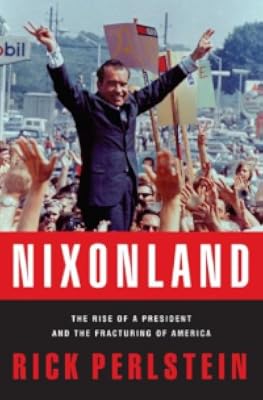
Nixonland: The Rise of a President and the Fracturing of America
by Rick Perlstein
On This Page
Description
An account of the thirth-seventh presidency sets Nixon's administration against a backdrop of the tumultuous civil rights movement while offering insight into how key events in the 1960s set the stage for today's political divides.Tags
Recommendations



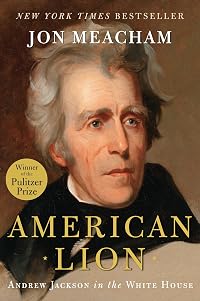
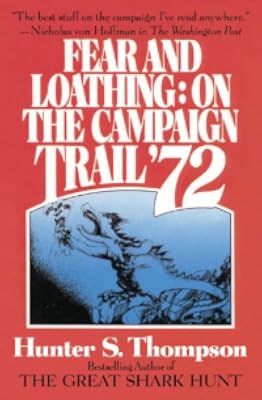
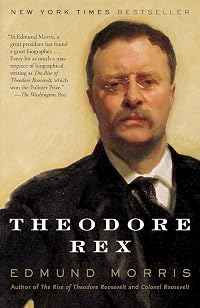

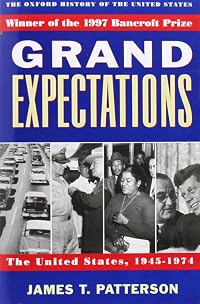

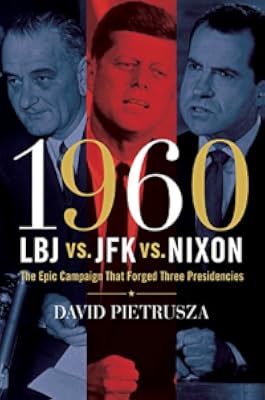
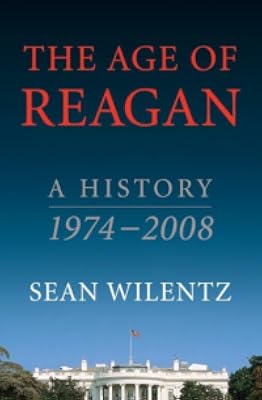
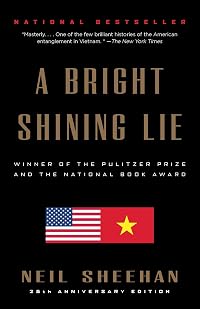

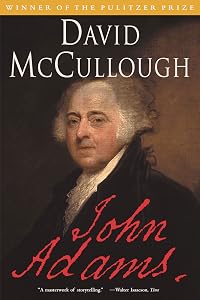

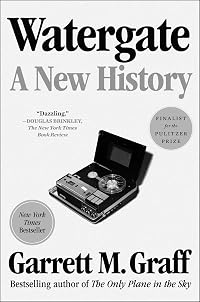
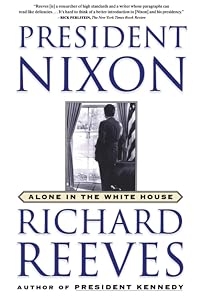

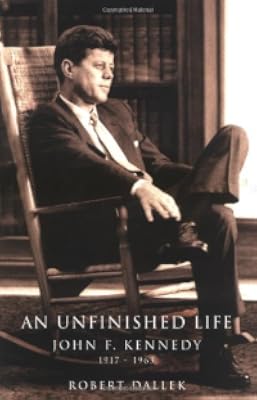
Member Recommendations
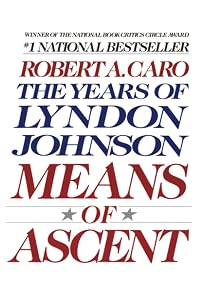
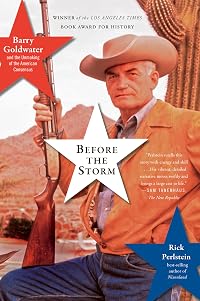
mattries37315 Perlstein's first and second books in his series studying the history of Conservatism and the Modern Right in American political history that began in the 1950s.
20
Member Reviews
It’s amazing the extent to which we are still living in the political world created by the paranoid, disaffected, self-righteous Nixon and his enthusiastic supporters. Perlstein does quite a job illuminating the levels of hypocrisy and moral licensing that fed the Nixon campaigns’ corruption and underhanded maneuvering. Not to mention the credulous simplicity that led the media to repeatedly ignore such blatant wrongdoing, and the superior indifference with which the Left fanned the flames.
More impressive still is how clearly this book shows the roots of Trumpism and modern Republican politics. The parallels can’t have been purposeful, as it was published in 2008. But even down to the fine details (e.g., the Nixon campaign show more drastically—and obviously—inflating their crowd sizes), it’s impressive to see how far back these things really go.
You have to know what you’re signing up for when you start a book like this, obviously. It‘s quite a long read, and certainly dry in parts, but I think it’s one of the best things I’ve read for an understanding of the longer historical trends in modern American conservatism. show less
More impressive still is how clearly this book shows the roots of Trumpism and modern Republican politics. The parallels can’t have been purposeful, as it was published in 2008. But even down to the fine details (e.g., the Nixon campaign show more drastically—and obviously—inflating their crowd sizes), it’s impressive to see how far back these things really go.
You have to know what you’re signing up for when you start a book like this, obviously. It‘s quite a long read, and certainly dry in parts, but I think it’s one of the best things I’ve read for an understanding of the longer historical trends in modern American conservatism. show less
I waited a long time for Rick Perlstein's second book in his series on conservatism in modern U.S. politics to become available through Libby. And let me tell you, this was a TOUGH book to read in November 2024, as it seems like everything that's happening today happened before and we learned nothing from it.
Whereas Richard Nixon was something of a punchline in Before the Storm, Perlstein's book about Barry Goldwater, here we see his comeback and rise to power after his humiliating back-to-back losses running for President in 1960 and Governor of California in 1962. Perlstein uses a framing device based on social clubs at Nixon's alma mater of Whittier College. The "Franklins" are the popular, good looking, and wealthy elite who have show more positions of influence handed to them (think of FDR and JFK), while Nixon identifies with the "Orthogonians," those who have to fight for power. While Orthogonians like Nixon have all the privileges of white, Christian men, they nevertheless have lots of grievances. Nixon's success come from mobilizing the grievances of what became known as "The Silent Majority."
This book is called Nixonland because it is not a straight biography of Nixon but a sprawling and detailed political history of the United States from the mid-60s to the early-70s. After Lyndon B. Johnson's landslide victory over Goldwater on a platform of civil rights and social welfare programs, the Democratic Party's consensus fell apart. On one side, urban uprisings and increasing militancy of Black activists terrified the white Orthogonians who used it as a pretext to declare the civil rights movement a failure. Meanwhile, the Democratic Party tore itself apart over Johnson's hawkish commitment to the war in Vietnam.
Perlstein's narrative traces the trends and crises that made it possible for a landslide victory for Nixon just 8 years after Johnson's. As an author, he has an engaging manner of bringing to life even familiar incidents in his writing. For example, the 1968 Democratic National Convention in Chicago is described as how it might have been seen by an ordinary American watching it on TV, complete with the commercial breaks for Gulf Oil. While the book ends with Nixon at his greatest success, it also contains the seeds of his demise with the events of the Watergate burglary. show less
Whereas Richard Nixon was something of a punchline in Before the Storm, Perlstein's book about Barry Goldwater, here we see his comeback and rise to power after his humiliating back-to-back losses running for President in 1960 and Governor of California in 1962. Perlstein uses a framing device based on social clubs at Nixon's alma mater of Whittier College. The "Franklins" are the popular, good looking, and wealthy elite who have show more positions of influence handed to them (think of FDR and JFK), while Nixon identifies with the "Orthogonians," those who have to fight for power. While Orthogonians like Nixon have all the privileges of white, Christian men, they nevertheless have lots of grievances. Nixon's success come from mobilizing the grievances of what became known as "The Silent Majority."
This book is called Nixonland because it is not a straight biography of Nixon but a sprawling and detailed political history of the United States from the mid-60s to the early-70s. After Lyndon B. Johnson's landslide victory over Goldwater on a platform of civil rights and social welfare programs, the Democratic Party's consensus fell apart. On one side, urban uprisings and increasing militancy of Black activists terrified the white Orthogonians who used it as a pretext to declare the civil rights movement a failure. Meanwhile, the Democratic Party tore itself apart over Johnson's hawkish commitment to the war in Vietnam.
Perlstein's narrative traces the trends and crises that made it possible for a landslide victory for Nixon just 8 years after Johnson's. As an author, he has an engaging manner of bringing to life even familiar incidents in his writing. For example, the 1968 Democratic National Convention in Chicago is described as how it might have been seen by an ordinary American watching it on TV, complete with the commercial breaks for Gulf Oil. While the book ends with Nixon at his greatest success, it also contains the seeds of his demise with the events of the Watergate burglary. show less
Forty-four years ago this very month, as this review goes to press, Richard Nixon became the first American President to resign that office, on the heels of almost certain impeachment. Apologists then and now snort dismissively of a “second-rate burglary,” while more perspicacious observers might point out that Watergate was the least of what were certainly nothing less than high crimes and misdemeanors; that a brilliant yet amoral and often unstable Nixon brought the mechanics of a criminal syndicate to the Executive Branch, and—much worse than that—in an attempt to achieve some sort of personal glory selfishly extended a war he had long privately admitted was unwinnable, thereby needlessly sacrificing the lives of tens of show more thousands of American soldiers, as well as hundreds of thousands of Southeast Asian civilians and combatants. Forty-four years on, and some might argue that not only have the deep scars Nixon inflicted on the national landscape never healed, but that both his methods and his madness are currently enjoying a kind of renaissance that either signals a reverse to the remission that was once a cancer upon his Presidency, or an underscore that there is a deep well of malevolence in our national character that can never really be expunged. Of course, neither of these notions satisfies or reassures, which is precisely why we must never let Nixon’s legacy be overlooked: like it or not, Nixon forever altered America and put a terrible mark upon all of us that may have faded but will not go away.
I am reading Rick Perlstein backwards, which is less ironic than perversely logical, since the nation is itself tumbling rapidly backwards into the kind of hate and racism and division by any other name that Nixon championed so expertly in the era that he once commanded. My first read was Perlstein’s latest, from 2014: The Invisible Bridge: The Fall of Nixon and the Rise of Reagan, his splendid analysis of how it was that after Nixon went up in flames, Reagan managed to emerge from the ashes and with a shrug and an “aw, shucks” declare that there really wasn’t any fire at all. Though Reagan had unrelentingly defended everything noxious that Nixon was about, after the ignominious fall virtually all of Nixon’s political capital clung to Reagan but none of his toxicity. But by that time, the political landscape, indeed the entire nation, had been irrevocably altered by the Nixon phenomenon that had turned politics into a zero-sum game, and divided Americans into distinct groups of us vs. them, good guys vs. bad guys, patriots vs. traitors, solid citizens vs. arrogant elites. It was hardly coincidental that Nixon surveyed the universe through a similar lens that only detected black and white, that ever filtered out any and all gray areas. And by the time Nixon had finished with America—or America had finished with him—he had forever after transformed it into “Nixonland.” That is the remarkable thesis of Perlstein’s brilliant study of the 1960s, Nixonland: The Rise of a President and the Fracturing of America, first published in 2008.
Nixon endured a forbidding childhood beset by poverty, the death of a sibling, and ever grim, unyielding parents who enforced such a rigid religious fundamentalism that it bordered on abuse. An enthusiastic but mediocre athlete, Nixon instead scored academically and distinguished himself in debate, but at his hometown Whittier College he was snubbed by the “Franklins,” a prestigious literary society comprised of members from prominent families. He responded by leading the effort to forge a rival society of “Orthogonians” for those like himself who might not otherwise get a seat at the table with the elite. This was to prove a defining moment in the life of Richard Nixon that Perlstein argues set him on an unrelenting path that would carve a cleft in America that ever clings to us like a poisonous film on the flesh of the nation that simply will not wash off.
Nixon seems to have never gotten over his rebuff by the Franklins, and the wrath that was born of that rejection fueled a resentment that he wielded like a hammer for the rest of his life. It was not simply the “us vs. them” mentality—but that was certainly part of it—but it ran much deeper and was far more vicious, because it was at root about whether or not you were “like us” or “like them,” and if you were “like them,” it meant that you were “the other,” and therefore not worthy of the same rights or the same respect we might require for ourselves. Nixon was neither the first nor the last to turn his opponents into “the other,” but he was indeed the first to successfully take that into the White House and weaponize it on a mass scale. The clarion call to the “silent majority” to stand up for the America they loved was a dog whistle to the Orthogonian hard hats that bloodied Franklin hippies on the streets of New York in 1970.
Perlstein’s book is as much a masterful history of America in the tumultuous 1960s as it is a chronicle of Nixon and how he put that indelible mark upon it, a reminder of how much those days seem like a study of an entirely different country from the vantage point of the twenty-first century, a time of great violence and radicalism that—it should not be forgotten—barely touched the vast majority of Americans who simply went about their lives anonymously in what was also a postwar economic boom in the most powerful and prosperous nation in the world. I was a youth in that era, and the truth is that more Americans listened to Pat Boone than Jimi Hendrix. Nixon knew his audience—the former, of course—and he knew how to transform them into vehement foes of the latter.
It was Nixon’s genius that he could identify these two emerging America’s and exploit the divisions there that he could actively shape, and compartments that he could adeptly construct, that would admit no shades of anything that was not an “either” or an “or.” There were the patriotic Americans who had defied economic depression and world war for a better life—only to see it put in jeopardy by unwashed longhaired cowardly druggies manipulated by communists from abroad seeking to undermine our democratic institutions; and, lazy unmotivated welfare recipients who demanded entitlements without a willingness to put in a good day’s hard work; and, most especially, violent, radical blacks who refused to be grateful for all that was being done to assist them with their seemingly endless and relentless demands. And there was now more opportunity with these same black people! There was the Republican Party, the Party of Lincoln—which had long been the not-always-reliable-friend but a friend nonetheless to African Americans against the scourge of the Southern branch of segregationist unreconstructed Democrats—who now with Nixon’s Machiavellian sleight of hand could almost silently (with a swelling cohort added to his “Silent Majority”) exploit the national Democratic Party’s embrace of Civil Rights to actively turn Republican backs on blacks and instead entice the great white backlash of the South to join their ranks. (Reagan took this baton of this “southern strategy” and skillfully ran with it under the same barely disguised cover; Trump does not bother with even a token shellacking of the ulterior motives here. And Trump doesn't need batons: he has far more effective and not-so-subtle dog whistles. Neither Nixon nor Reagan would consort with Nazis; Trump finds good people among the crowd.)
Nixon was hardly the first politician to capitalize upon fear, upon hate, upon racism, upon xenophobia, upon a misguided fantastical nation that the very essence and identity of traditional values central to a national identity were under attack and needed to be actively defended before it was too late—but he was the first American figure of national prominence to successfully parlay this tactic into a kind of art form that drove a great and enduring and unrelenting wedge into the country that has never since been bridged, and perhaps never will be.
That Nixon wedge has long been exploited, by both Reagan and his descendants, but never so cruelly and with such baseness as it has been by Donald Trump, who not at all coincidentally was a student to all of the lessons Nixon taught, and who has associated with a lot of same villains that have been key to the rise of Nixon: Roy Cohn, Roger Ailes and Roger Stone among them. Much of the wreckage Nixon left behind was superficially paved over by Ronald Reagan, and there is no little irony to the fact that Reagan’s campaign slogan—"Let’s Make America Great Again”—has been disingenuously expropriated by Donald Trump. And Trump, it must not be forgotten, has like Nixon styled himself a great defender of “law and order,” even as it becomes increasingly clear that his administration may turn out to be the most criminally corrupt in American history.
The author wrote Nixonland nearly a decade before Trumpworld, but yet it seems to eerily presage it. Perlstein’s magisterial work may not only be the best book written about Nixon and the 1960s, but should also be required reading for anyone who wants to try to comprehend the madness that besets the nation today. Of course, Nixon was a far more clever fellow than Trump, and the Republican Party of his day was not the cult of personality of its current iteration, wagging a collective tail at the master of tax and tariff scams calculated to enrich a select plutocracy, and Nixon’s motives were more about leaving an enduring mark in the history books rather than the cheap Trumpist thrills of amassing trinkets and celebrity stardom, but nevertheless there is much of then that has come back to haunt us now. “History doesn’t repeat itself, but it does thyme,” Mark Twain was once alleged to quip. We can only hope that the last stanza of that rhyme ends for Trump much as it did for Nixon, forty-four years ago this month … show less
I am reading Rick Perlstein backwards, which is less ironic than perversely logical, since the nation is itself tumbling rapidly backwards into the kind of hate and racism and division by any other name that Nixon championed so expertly in the era that he once commanded. My first read was Perlstein’s latest, from 2014: The Invisible Bridge: The Fall of Nixon and the Rise of Reagan, his splendid analysis of how it was that after Nixon went up in flames, Reagan managed to emerge from the ashes and with a shrug and an “aw, shucks” declare that there really wasn’t any fire at all. Though Reagan had unrelentingly defended everything noxious that Nixon was about, after the ignominious fall virtually all of Nixon’s political capital clung to Reagan but none of his toxicity. But by that time, the political landscape, indeed the entire nation, had been irrevocably altered by the Nixon phenomenon that had turned politics into a zero-sum game, and divided Americans into distinct groups of us vs. them, good guys vs. bad guys, patriots vs. traitors, solid citizens vs. arrogant elites. It was hardly coincidental that Nixon surveyed the universe through a similar lens that only detected black and white, that ever filtered out any and all gray areas. And by the time Nixon had finished with America—or America had finished with him—he had forever after transformed it into “Nixonland.” That is the remarkable thesis of Perlstein’s brilliant study of the 1960s, Nixonland: The Rise of a President and the Fracturing of America, first published in 2008.
Nixon endured a forbidding childhood beset by poverty, the death of a sibling, and ever grim, unyielding parents who enforced such a rigid religious fundamentalism that it bordered on abuse. An enthusiastic but mediocre athlete, Nixon instead scored academically and distinguished himself in debate, but at his hometown Whittier College he was snubbed by the “Franklins,” a prestigious literary society comprised of members from prominent families. He responded by leading the effort to forge a rival society of “Orthogonians” for those like himself who might not otherwise get a seat at the table with the elite. This was to prove a defining moment in the life of Richard Nixon that Perlstein argues set him on an unrelenting path that would carve a cleft in America that ever clings to us like a poisonous film on the flesh of the nation that simply will not wash off.
Nixon seems to have never gotten over his rebuff by the Franklins, and the wrath that was born of that rejection fueled a resentment that he wielded like a hammer for the rest of his life. It was not simply the “us vs. them” mentality—but that was certainly part of it—but it ran much deeper and was far more vicious, because it was at root about whether or not you were “like us” or “like them,” and if you were “like them,” it meant that you were “the other,” and therefore not worthy of the same rights or the same respect we might require for ourselves. Nixon was neither the first nor the last to turn his opponents into “the other,” but he was indeed the first to successfully take that into the White House and weaponize it on a mass scale. The clarion call to the “silent majority” to stand up for the America they loved was a dog whistle to the Orthogonian hard hats that bloodied Franklin hippies on the streets of New York in 1970.
Perlstein’s book is as much a masterful history of America in the tumultuous 1960s as it is a chronicle of Nixon and how he put that indelible mark upon it, a reminder of how much those days seem like a study of an entirely different country from the vantage point of the twenty-first century, a time of great violence and radicalism that—it should not be forgotten—barely touched the vast majority of Americans who simply went about their lives anonymously in what was also a postwar economic boom in the most powerful and prosperous nation in the world. I was a youth in that era, and the truth is that more Americans listened to Pat Boone than Jimi Hendrix. Nixon knew his audience—the former, of course—and he knew how to transform them into vehement foes of the latter.
It was Nixon’s genius that he could identify these two emerging America’s and exploit the divisions there that he could actively shape, and compartments that he could adeptly construct, that would admit no shades of anything that was not an “either” or an “or.” There were the patriotic Americans who had defied economic depression and world war for a better life—only to see it put in jeopardy by unwashed longhaired cowardly druggies manipulated by communists from abroad seeking to undermine our democratic institutions; and, lazy unmotivated welfare recipients who demanded entitlements without a willingness to put in a good day’s hard work; and, most especially, violent, radical blacks who refused to be grateful for all that was being done to assist them with their seemingly endless and relentless demands. And there was now more opportunity with these same black people! There was the Republican Party, the Party of Lincoln—which had long been the not-always-reliable-friend but a friend nonetheless to African Americans against the scourge of the Southern branch of segregationist unreconstructed Democrats—who now with Nixon’s Machiavellian sleight of hand could almost silently (with a swelling cohort added to his “Silent Majority”) exploit the national Democratic Party’s embrace of Civil Rights to actively turn Republican backs on blacks and instead entice the great white backlash of the South to join their ranks. (Reagan took this baton of this “southern strategy” and skillfully ran with it under the same barely disguised cover; Trump does not bother with even a token shellacking of the ulterior motives here. And Trump doesn't need batons: he has far more effective and not-so-subtle dog whistles. Neither Nixon nor Reagan would consort with Nazis; Trump finds good people among the crowd.)
Nixon was hardly the first politician to capitalize upon fear, upon hate, upon racism, upon xenophobia, upon a misguided fantastical nation that the very essence and identity of traditional values central to a national identity were under attack and needed to be actively defended before it was too late—but he was the first American figure of national prominence to successfully parlay this tactic into a kind of art form that drove a great and enduring and unrelenting wedge into the country that has never since been bridged, and perhaps never will be.
That Nixon wedge has long been exploited, by both Reagan and his descendants, but never so cruelly and with such baseness as it has been by Donald Trump, who not at all coincidentally was a student to all of the lessons Nixon taught, and who has associated with a lot of same villains that have been key to the rise of Nixon: Roy Cohn, Roger Ailes and Roger Stone among them. Much of the wreckage Nixon left behind was superficially paved over by Ronald Reagan, and there is no little irony to the fact that Reagan’s campaign slogan—"Let’s Make America Great Again”—has been disingenuously expropriated by Donald Trump. And Trump, it must not be forgotten, has like Nixon styled himself a great defender of “law and order,” even as it becomes increasingly clear that his administration may turn out to be the most criminally corrupt in American history.
The author wrote Nixonland nearly a decade before Trumpworld, but yet it seems to eerily presage it. Perlstein’s magisterial work may not only be the best book written about Nixon and the 1960s, but should also be required reading for anyone who wants to try to comprehend the madness that besets the nation today. Of course, Nixon was a far more clever fellow than Trump, and the Republican Party of his day was not the cult of personality of its current iteration, wagging a collective tail at the master of tax and tariff scams calculated to enrich a select plutocracy, and Nixon’s motives were more about leaving an enduring mark in the history books rather than the cheap Trumpist thrills of amassing trinkets and celebrity stardom, but nevertheless there is much of then that has come back to haunt us now. “History doesn’t repeat itself, but it does thyme,” Mark Twain was once alleged to quip. We can only hope that the last stanza of that rhyme ends for Trump much as it did for Nixon, forty-four years ago this month … show less
One of the central ideas of Rick Perlstein's "Nixonland" is that the Nixon era spawned much of the political discourse of subsequent U.S. history. Having finished the book, I have to admit that Perlstein is pretty accurate in his assessment. The book is a depressing chronicle of left and right wing excesses and ideological pigheadedness. Nixon himself comes across as a pathetic and self-loathing villain, but Perlstein also paints a rather unflattering series of portraits of Tricky Dick's opponents on the left. Bobby Kennedy comes off as a self-serving and cynical pol; George McGovern seems both naive and manipulative at once.
Perlstein's narrative does an excellent job of capturing the raw emotions of the age. Ranging from Johnson's show more crushing of Goldwater in 1964 to the Watts riots to Woodstock to the 1968 Democratic convention in Chicago, the Zeitgeist is portrayed vividly. As someone born in 1968, most of this history is practically contemporary, but also rather remote. Perlstein makes this come to life and my family's stories of the age are much more vivid and much less mythical to me.
The story is largely a narrative of Nixon's rise to power and the beginnings of his downfall. Perlstein's depiction of Nixon is particularly bleak and "Tricky Dick" does not come across as especially sympathetic. From the start, he is portrayed as a miserable soul. His Red Baiting in the late 40s and 50s is odious and really pathetic. By the time the book gets around to Watergate, nothing Nixon does seems improbably.
The left isn't portrayed much better. As I said above, Bobby Kennedy is unpleasant, and McGovern seems like a hypocritical prig. An extended passage on Chappaquiddic casts Ted Kennedy in an unappealing light. The hippies come across as a crass, nasty, and rather self-serving bunch.
As a contemporary reader, however, I think Perlstein's text is especially relevant to our current political situation. As I read the book, I could not help drawing parallels to the current spate of presidential politics. McCain isn't quite Nixonian in scope, but I saw some parallels. His ability to play a bit fast-and-lose with his ideology in order to appeal to the center right felt familiar. But Hillary Clinton's politics in the primaries really did seem the most Nixonian of all the candidates. Her appeal to ethnic tensions among blue-collar democrats and her sense that she alone had the political skills and "experience" to successfully handle the war stunned me. Her learned cynicism and bitterness during her husband's years as president reminded me of Nixon's time as VP under Eisenhower. Both Clinton and McCain seem stuck in the 1960s.
Obama really does strike me as someone who has moved out of this paradigm. Admittedly, I'm an Obama supporter, but I'm not trying to cast him as a saintly figure counterpoised against corrupt baby boomers. More than anything, I think his very comportment leaves the politics of the 1960s behind. Yes, he's liberal and yes, he's a politician but he thinks differently. When I watch his opponents trying to define him as a sixties radical, it's just not a match. Trying to link him to radical preachers and 60s radicals like Ed Ayers; the claims of elitism; the talk of his communist sympathies; it all seems so stale and beside the point. People like Clinton, McCain, Limbaugh, and others, are playing out of a different playbook. None of this is to say that Obama is destined to win the election -- the 1960s style of politics is still very powerful. My only point is that he is not part of that mentality.
Perlstein's book is long -- over 700 pages -- and it starts to get a bit long in the tooth in the middle. But by the end, the narrative picks up with gripping accounts of the 1972 election and the start of Watergate. Perlstein clearly sits on the left of the political spectrum, but he does a good job showing the complexity of each side. I sometimes read books looking for sympathetic characters, but I really didn't find any here. I finished Nixonland pretty confused about the era. Given what I know about the 1960s and early 70s, I can't think of higher praise for this book. show less
Perlstein's narrative does an excellent job of capturing the raw emotions of the age. Ranging from Johnson's show more crushing of Goldwater in 1964 to the Watts riots to Woodstock to the 1968 Democratic convention in Chicago, the Zeitgeist is portrayed vividly. As someone born in 1968, most of this history is practically contemporary, but also rather remote. Perlstein makes this come to life and my family's stories of the age are much more vivid and much less mythical to me.
The story is largely a narrative of Nixon's rise to power and the beginnings of his downfall. Perlstein's depiction of Nixon is particularly bleak and "Tricky Dick" does not come across as especially sympathetic. From the start, he is portrayed as a miserable soul. His Red Baiting in the late 40s and 50s is odious and really pathetic. By the time the book gets around to Watergate, nothing Nixon does seems improbably.
The left isn't portrayed much better. As I said above, Bobby Kennedy is unpleasant, and McGovern seems like a hypocritical prig. An extended passage on Chappaquiddic casts Ted Kennedy in an unappealing light. The hippies come across as a crass, nasty, and rather self-serving bunch.
As a contemporary reader, however, I think Perlstein's text is especially relevant to our current political situation. As I read the book, I could not help drawing parallels to the current spate of presidential politics. McCain isn't quite Nixonian in scope, but I saw some parallels. His ability to play a bit fast-and-lose with his ideology in order to appeal to the center right felt familiar. But Hillary Clinton's politics in the primaries really did seem the most Nixonian of all the candidates. Her appeal to ethnic tensions among blue-collar democrats and her sense that she alone had the political skills and "experience" to successfully handle the war stunned me. Her learned cynicism and bitterness during her husband's years as president reminded me of Nixon's time as VP under Eisenhower. Both Clinton and McCain seem stuck in the 1960s.
Obama really does strike me as someone who has moved out of this paradigm. Admittedly, I'm an Obama supporter, but I'm not trying to cast him as a saintly figure counterpoised against corrupt baby boomers. More than anything, I think his very comportment leaves the politics of the 1960s behind. Yes, he's liberal and yes, he's a politician but he thinks differently. When I watch his opponents trying to define him as a sixties radical, it's just not a match. Trying to link him to radical preachers and 60s radicals like Ed Ayers; the claims of elitism; the talk of his communist sympathies; it all seems so stale and beside the point. People like Clinton, McCain, Limbaugh, and others, are playing out of a different playbook. None of this is to say that Obama is destined to win the election -- the 1960s style of politics is still very powerful. My only point is that he is not part of that mentality.
Perlstein's book is long -- over 700 pages -- and it starts to get a bit long in the tooth in the middle. But by the end, the narrative picks up with gripping accounts of the 1972 election and the start of Watergate. Perlstein clearly sits on the left of the political spectrum, but he does a good job showing the complexity of each side. I sometimes read books looking for sympathetic characters, but I really didn't find any here. I finished Nixonland pretty confused about the era. Given what I know about the 1960s and early 70s, I can't think of higher praise for this book. show less
Not your typical political biography, Nixonland ends up as a kind of postmortem of an era. When we think about the late 60s, it's usually the cultural and social movements. Over the course of this book, Perlstein shows the effect the tumult of the time affected politics, and identifies a disconnect between the popular narrative laid out by the media and how normal people were actually feeling on the ground. While this book certainly isn't pro-Nixon, I came away from it understanding the kind of genius Nixon had, his skill as a politician, and his tenacity to survive in the cutthroat world of global politics over several chaotic decades, especially considered how he lacked the charisma and magnetism that many politicians use to mask show more their flaws. Perlstein doesn't spare the other side either; part of his thesis is that left-wing political actors blew their chance when change was in the air. According to Perlstein, the left's moral grandstanding and eventual turn towards more radical methodology alienated a majority of the American people. Perlstein has a sharp eye for the more embarrassing rhetoric and actions of the left-wing during this period, and often frames them as a foil to the right wing that at this time was advocating for segregation and war in Vietnam. While I disagree with some of Perlstein's characterizations, he highlights an essential failing of the left that continues all the way to this day: pretentiousness that alienates normies, and in-fighting that prevents effective action. show less
This is about how Richard Nixon formulated the narrative that the Republican Party still uses today, that of innuendo, outright lies, and the cognitive dissonance of saying one thing today and the opposite tomorrow, depending on what is expedient for purely political purposes; we still live in Nixonland. But Nixonland isn't just that, and not just the domain of Republicans anymore; his term applies to the complete vilification of the other party, and trying to get the public to believe that if their party isn't in control, then the country will be destroyed from within.
It's truly shocking to read of how much public fear was generated on a nearly daily basis in the summer of 1966, and how it was put to use in bringing down LBJ. There show more were riots in a number of cities, and the account of the Newark police shooting African-Americans just standing on their front porch or just on the street doing nothing is heartbreaking. No police or Guardsmen were ever indicted. As I write this, a grand jury recently refused to indict the policeman who murdered Eric Garner with a chokehold on a New York street. And this is nearly 50 years after that long, hot summer of 1966.
Then there's Vietnam. Nixon would alternate between criticizing LBJ for escalation or if he stopped the bombing. You see, it wasn't about ending the war; it was about Nixon positioning himself for the 1968 presidential election. If this sort of thing sounds familiar, well, I guess that's the point that Perlstein is trying to get across.
The fun really starts around page number 550, when Perlstein gets to quote Nixon, Haldeman, Ehrlichman, Mitchell, and other various henchmen such as G. Gordon Liddy and E. Howard Hunt, thanks to the Oval Office audio taping system and the Freedom of Information Act. It's sort of astonishing to think that they wouldn't turn off the tapes, when they were clearly engaging in extreme acts of obstruction of justice and talking openly about it. Am I the only one to be alarmed at Ehrlichman's suggestion that they assassinate the columnist Jack Anderson? Is that sound legal advice? show less
It's truly shocking to read of how much public fear was generated on a nearly daily basis in the summer of 1966, and how it was put to use in bringing down LBJ. There show more were riots in a number of cities, and the account of the Newark police shooting African-Americans just standing on their front porch or just on the street doing nothing is heartbreaking. No police or Guardsmen were ever indicted. As I write this, a grand jury recently refused to indict the policeman who murdered Eric Garner with a chokehold on a New York street. And this is nearly 50 years after that long, hot summer of 1966.
Then there's Vietnam. Nixon would alternate between criticizing LBJ for escalation or if he stopped the bombing. You see, it wasn't about ending the war; it was about Nixon positioning himself for the 1968 presidential election. If this sort of thing sounds familiar, well, I guess that's the point that Perlstein is trying to get across.
The fun really starts around page number 550, when Perlstein gets to quote Nixon, Haldeman, Ehrlichman, Mitchell, and other various henchmen such as G. Gordon Liddy and E. Howard Hunt, thanks to the Oval Office audio taping system and the Freedom of Information Act. It's sort of astonishing to think that they wouldn't turn off the tapes, when they were clearly engaging in extreme acts of obstruction of justice and talking openly about it. Am I the only one to be alarmed at Ehrlichman's suggestion that they assassinate the columnist Jack Anderson? Is that sound legal advice? show less
Perlstein wrote this in 2008 but its instructive to read it in 2018 as a reminder that Donald Trump is not a one off, black swan, but in many ways the logical conclusion, or at least the love child of the culture wars that Nixon may not have started, but magnified from their Goldwater roots. Its Nixon after all who coined the phrase the "Silent Majority", Nixon who understood that the majority of the population craved for a quiet status quo without being challenged by the loud minority, Nixon (or at least Spiro Agnew) who started to tear at the neutrality of the press, who started to create and disseminate fake news, overall Nixon who tore down the post war consensus by appealing to the lowest common dominator and invoking the fear of show more aliens and fear of change.
"Nixonland is still with us" warns Perlstein, in the hazy glow of the election of Obama. "Does anyone doubt that half the population, given the slightest provocation, wouldn't willingly pick up a gun and shoot the other half". Well, not anymore we don't. At this distance, he looks remarkably prescient.
As for the history itself, Perlstein's account is lively, invigorating, intense (it took me 3 months to read) and not uncommonly, inaccurate - at least in the details. But not in the overall tone. The story of how Nixon, beautifully described as a "serial collector of grudges" went from unfashionable rural California to the White House, through a combination of a knack for political insight and a mastery of the black arts rose to be the most powerful person in the world is remarkable. Even now, the whole thing seems somewhat unlikely. Thankfully the story ends at his election for a second term, and before the humiliations of Watergate (such a small thing in his general program of "ratfucking" the opposition) and his alcoholic decline took the world nearer to nuclear war than at any time since the Cuban Missile Program till, well, now (I write this as US and Russia sabre rattle over Syria).
If there is a fault here, its that Perlstein doesn't give enough credit to Nixon's achievement, engagement with China in particular, but also the beginnings of detente with Russia. And compared to the Republican party of today, he comes across as socially centrist. He gives plenty of time - and rightly so - to Nixon's many failings and especially to the criminal policy of sabotaging the peace talks in Paris in 1968 and keeping the war going through the elections of 1972. Its not so much the blood on the hands of Nixon and Kissinger - extensive though that is - but the sheer cynicism. You can't expect Vietnamese, Cambodian and Laotian lives to mean much to them - but clearly, those of their own citizens didn't much either.
If there are two main themes of the book its Vietnam and Nixonian dirty tricks. But for me there's a third; the accurate portrayal of the 1960s. It wasn't a time of free love and flowers in the hair; it was a time of social change that many in society opposed passively or actively. For every civil rights activist, there are 2 people who would have African Americans know their place. For every hippie, there are 3 hard working joes. The image of hard hats and stockbrokers joining forces to beat up hippies in Manhattan is one of Perlstein's strongest. The 60s weren't about counter culture - its just that many of the counter culture were smart enough to later get jobs in media.
Recommended show less
"Nixonland is still with us" warns Perlstein, in the hazy glow of the election of Obama. "Does anyone doubt that half the population, given the slightest provocation, wouldn't willingly pick up a gun and shoot the other half". Well, not anymore we don't. At this distance, he looks remarkably prescient.
As for the history itself, Perlstein's account is lively, invigorating, intense (it took me 3 months to read) and not uncommonly, inaccurate - at least in the details. But not in the overall tone. The story of how Nixon, beautifully described as a "serial collector of grudges" went from unfashionable rural California to the White House, through a combination of a knack for political insight and a mastery of the black arts rose to be the most powerful person in the world is remarkable. Even now, the whole thing seems somewhat unlikely. Thankfully the story ends at his election for a second term, and before the humiliations of Watergate (such a small thing in his general program of "ratfucking" the opposition) and his alcoholic decline took the world nearer to nuclear war than at any time since the Cuban Missile Program till, well, now (I write this as US and Russia sabre rattle over Syria).
If there is a fault here, its that Perlstein doesn't give enough credit to Nixon's achievement, engagement with China in particular, but also the beginnings of detente with Russia. And compared to the Republican party of today, he comes across as socially centrist. He gives plenty of time - and rightly so - to Nixon's many failings and especially to the criminal policy of sabotaging the peace talks in Paris in 1968 and keeping the war going through the elections of 1972. Its not so much the blood on the hands of Nixon and Kissinger - extensive though that is - but the sheer cynicism. You can't expect Vietnamese, Cambodian and Laotian lives to mean much to them - but clearly, those of their own citizens didn't much either.
If there are two main themes of the book its Vietnam and Nixonian dirty tricks. But for me there's a third; the accurate portrayal of the 1960s. It wasn't a time of free love and flowers in the hair; it was a time of social change that many in society opposed passively or actively. For every civil rights activist, there are 2 people who would have African Americans know their place. For every hippie, there are 3 hard working joes. The image of hard hats and stockbrokers joining forces to beat up hippies in Manhattan is one of Perlstein's strongest. The 60s weren't about counter culture - its just that many of the counter culture were smart enough to later get jobs in media.
Recommended show less
Members
- Recently Added By
Published Reviews
ThingScore 17
Perlstein's Nixon is a cartoon figure, not in the mode of Herblock, whose caricatures, while vicious, were nonetheless original and uncomfortably recognizable to Nixon’s friends, but plastic, one-dimensional, and unrecognizable except to the most fervid of Nixon’s enemies. Relying largely on the psycho-babble of Fawn Brodie, the partisan fury of Leonard Lurie, and the genteel animus of show more Richard Reeves, Perlstein left no Nixonphobic screed untapped in the process of liming his portrait of Nixon as psychotic. And when he couldn’t find a previously published damning story to lift, he made it up, as in his phony reconstruction of Nixon’s meeting with the Southern Republican state chairmen in June of 1968.
A reader expecting to learn something new (or true) about the issues that roiled the public discourse in the 1960s is bound to be disappointed. Perlstein regurgitates the standard New Left line on the war in Vietnam . . . ; apes Todd Gitlin’s revisionist line on the history of the New Left . . . ; and concocts an elaborate Nixonian plot to thwart the integration of Southern schools as a payoff to Strom Thurmond while ignoring entirely the story (best told by Ray Price) of how those schools were, in fact, integrated without violence during Nixon’s first term. . . .
Nixonland is not history; it is polemics. Perlstein is out to poke Republicans (and conservatives) in the eye and “history” is his stick.
He shapes it to suit his purpose and wields it to achieve a political objective. No Perlstein “fact” can be relied upon as true, no event he relates can be assumed to be fairly discussed, and no grand idea advanced by him can be taken seriously. show less
A reader expecting to learn something new (or true) about the issues that roiled the public discourse in the 1960s is bound to be disappointed. Perlstein regurgitates the standard New Left line on the war in Vietnam . . . ; apes Todd Gitlin’s revisionist line on the history of the New Left . . . ; and concocts an elaborate Nixonian plot to thwart the integration of Southern schools as a payoff to Strom Thurmond while ignoring entirely the story (best told by Ray Price) of how those schools were, in fact, integrated without violence during Nixon’s first term. . . .
Nixonland is not history; it is polemics. Perlstein is out to poke Republicans (and conservatives) in the eye and “history” is his stick.
He shapes it to suit his purpose and wields it to achieve a political objective. No Perlstein “fact” can be relied upon as true, no event he relates can be assumed to be fairly discussed, and no grand idea advanced by him can be taken seriously. show less
added by craigkay
But we could do worse than borrow Nixon's words on taking office in January 1969, when he said that his country suffered "from a fever of words; from inflated rhetoric that promises more than it can deliver; from angry rhetoric that fans discontents into hatreds; from bombastic rhetoric that postures instead of persuading."
Funnily enough, that sounds like a pretty good description of show more Perlstein's book. show less
Funnily enough, that sounds like a pretty good description of show more Perlstein's book. show less
added by waitingtoderail
A solid work of political history, if necessarily long and grim in the telling.
added by Richardrobert
Lists

Non-Fiction Worth Reading
1,016 works; 257 members

Presidents and First Ladies
25 works; 6 members

2024-2025 Ezra Klein Guest Recommendations
213 works; 6 members
Author Information

6+ Works 3,646 Members
Rick Perlstein was born in Wisconsin in 1969. He writes for Lingua Franca, Slate, and The Nation, and won the national Endowment for the Humanities' most prestigious grant for independent scholars. Perlstein lives in Brooklyn, New York. (Publisher Provided) Rick Perlstein is the author of Nixonland: The Rise of a President and the Fracturing of show more America, The Invisible Bridge: The Fall of Nixon and the Rise of Reagan, and Before the Storm: Barry Goldwater and the Unmaking of the American Consensus, which won the 2001 Los Angeles Times Book Award for history. His essays and book reviews have been published in numerous publications including The New Yorker, The New York Times, The Washington Post, The Nation, The Village Voice, and Slate. (Bowker Author Biography) show less
Awards and Honors
Distinctions
Notable Lists
Common Knowledge
- Canonical title
- Nixonland: The Rise of a President and the Fracturing of America
- Original publication date
- 2008
- People/Characters
- Richard M. Nixon
- Important places
- Washington, D.C., USA; Orange County, California, USA
- Important events
- United States presidential election (1972); United States presidential election (1968)
- Canonical DDC/MDS
- 973.924
- Canonical LCC
- E855.P47
Classifications
- Genres
- History, General Nonfiction, Nonfiction, Politics and Government, Biography & Memoir
- DDC/MDS
- 973.924 — History & geography History of North America United States 1901- Cold War, Vietnam War, Digital Age (1953-2001) Richard Nixon (1969-1974) Watergate Scandal, U.S. withdrawal from Vietnam
- LCC
- E855 .P47 — History of the United States United States Later twentieth century, 1961-2000 Nixon's administrations, 1969-August 9, 1974
- BISAC
Statistics
- Members
- 1,657
- Popularity
- 13,529
- Reviews
- 39
- Rating
- (4.24)
- Languages
- English
- Media
- Paper, Audiobook, Ebook
- ISBNs
- 8
- ASINs
- 10