On This Page
Description
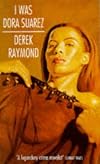
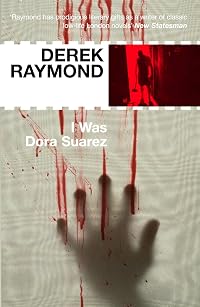
One of the most shocking crime novels of all timeIn what may be Derek Raymond's most talked-about novel—indeed, in what may be one of the most talked about crime novels ever—the reader is immediately plunged into the horrific mind of one of the most brutally damaged and murderous killers the unnamed Sergeant has ever faced.
But why the gentle Dora Suarez was murdered at all becomes the Sergeant's obsession. As it turns out, she was already dying of AIDS. So why kill her?
As the shocking show more details pile up, the fourth book in the series becomes a riveting and moving study of vile human exploitation and institutional corruption, and the valiant effort to persist against it. show less
Tags
Recommendations




















Member Reviews
(Original Review, 1990-04-17)
“He produced a big 9mm Quickhammer automatic with the tired ease of a conjurer showing off to a few girls and shlacked one into the chamber. He told Roatta: ‘Now I want you nice and still while all this is going on, Felix, because you’re going to make a terrible lot of mess.’
Roatta immediately screamed: ‘Wait! Wait!’ but his eyes were brighter than he was, and knew better. They had stopped moving before he did, because they could see there was nothing more profitable for them to look at, so instead they turned into a pair of dark, oily stones fixed on the last thing they would ever see – eternity in the barrel of a pistol. His ears were also straining with the intensity of a concert pianist for show more the first minute action inside the weapon as the killer’s finger tightened, because they knew that was the last sound they would ever heard. So in his last seconds of life, each of them arranged for him by his senses, Roatta sat waiting for the gun to explode with the rapt attention of an opera goer during a performance by his favourite star, leaning further and further forward in his chair until his existence was filled by, narrowed down to, and finally became the gun.”
In "I Was Dora Suarez" by Derek Raymond
I've read most of the important stuff when it comes to Crime Fiction, and some of them are very disturbing in their way, but I'm not sure any of them can hold a candle to "I Was Dora Suarez", the fourth novel in Derek Raymond's Factory series.
Ostensibly, it's a detective novel, but the first fifty or so pages are the most gut-churning, flat-out disgusting thing I have ever read - allegedly, they made the publisher throw up over his desk when he read them. Chris Petit described it thus: “a book full of coagulating disgust and compassion for the world’s contamination, disease and mutilation, all dwelt on with a feverish, metaphysical intensity that recalls Donne and the Jacobeans more than any of Raymond’s contemporaries.”
Why do people read, or write, this kind of stuff? Why does anyone voluntarily invite hideous images into their minds? The few examples of this kind of stuff I have come across are still stuck in my memory, and pop out to cause a little bit of mental pain at random times. It's like some weird form of masochism.
Not for me thanks. It's hard enough feeling good without that to contend with.
[2018 EDIT: I read it many eons years ago, and stuck with it to the bitter end, and I can honestly say that many years of baths and showers still haven't completely removed all traces of the horrible residue that it left behind. If you think Stephen King writes about horrific stuff, you don’t know the half of it…] show less
“He produced a big 9mm Quickhammer automatic with the tired ease of a conjurer showing off to a few girls and shlacked one into the chamber. He told Roatta: ‘Now I want you nice and still while all this is going on, Felix, because you’re going to make a terrible lot of mess.’
Roatta immediately screamed: ‘Wait! Wait!’ but his eyes were brighter than he was, and knew better. They had stopped moving before he did, because they could see there was nothing more profitable for them to look at, so instead they turned into a pair of dark, oily stones fixed on the last thing they would ever see – eternity in the barrel of a pistol. His ears were also straining with the intensity of a concert pianist for show more the first minute action inside the weapon as the killer’s finger tightened, because they knew that was the last sound they would ever heard. So in his last seconds of life, each of them arranged for him by his senses, Roatta sat waiting for the gun to explode with the rapt attention of an opera goer during a performance by his favourite star, leaning further and further forward in his chair until his existence was filled by, narrowed down to, and finally became the gun.”
In "I Was Dora Suarez" by Derek Raymond
I've read most of the important stuff when it comes to Crime Fiction, and some of them are very disturbing in their way, but I'm not sure any of them can hold a candle to "I Was Dora Suarez", the fourth novel in Derek Raymond's Factory series.
Ostensibly, it's a detective novel, but the first fifty or so pages are the most gut-churning, flat-out disgusting thing I have ever read - allegedly, they made the publisher throw up over his desk when he read them. Chris Petit described it thus: “a book full of coagulating disgust and compassion for the world’s contamination, disease and mutilation, all dwelt on with a feverish, metaphysical intensity that recalls Donne and the Jacobeans more than any of Raymond’s contemporaries.”
Why do people read, or write, this kind of stuff? Why does anyone voluntarily invite hideous images into their minds? The few examples of this kind of stuff I have come across are still stuck in my memory, and pop out to cause a little bit of mental pain at random times. It's like some weird form of masochism.
Not for me thanks. It's hard enough feeling good without that to contend with.
[2018 EDIT: I read it many eons years ago, and stuck with it to the bitter end, and I can honestly say that many years of baths and showers still haven't completely removed all traces of the horrible residue that it left behind. If you think Stephen King writes about horrific stuff, you don’t know the half of it…] show less
The fourth book in Raymond's Factory Series is noted for making the author's editor throw up while reading it. This is very gritty stuff, concerning a sexually dysfunctional serial killer, and the worst sort of exploitation of women, but it didn't quite have that effect on me. For its first half, it has the semblance of sticking a little closer to reality than the first three entries in the series, but like those books, we are clearly being manipulated by the nameless detective who serves as our first person narrator. In my reading, even the parts of the book where he isn't present are assumed to be his after-the-fact recreation of what happened. He is aided in this by one of the victims' journals, where she recounted the desperate show more circumstances of her life in the months leading up to her death. While the nameless detective always becomes deeply involved with the murders he sets out to solve, in this case, he actually falls in love with the journal writer, Dora Suarez. The presence of the writings of someone dead driving most or all of the book's narrative mirrors Raymond's approach in the first Factory novel, He Died with His Eyes Open. In that case, the victim was a writer, and the philosophical musings in his journal are a little easier to accept than the similarly lofty writing of Dora Suarez, who while not an uneducated person, would not seem quite capable of the writing Raymond attributes to her.
But -- suppose for a minute that there isn't a journal at all, and this is just the nameless detective's inner psychodrama as he sets out to avenge a woman that he fell in love with the first time he saw her face? I'm not sure I really accept this interpretation, but it would also explain how the narrator describes in detail the killings that open the book, despite the killer not revealing that level of detail to anyone.
This isn't a real problem with this book, however. It is part and parcel of how Raymond writes. The problem is that, when the nameless detective teams with another detective named Stevenson, who is investigating an apparently related murder, the two of them talk and talk and talk. While a lot of this talk is interesting (and grimly amusing), especially when they are threatening those they want evidence from, in the end they just talk way too much. This weakness is compounded by the happenstance way the killer ends up being found. Despite his leaving loads of evidence at the crime scene, in the form of various bodily...compounds, that doesn't play a part in his discovery at all. Even within the semi-fantastic atmosphere that the Factory novels evoke, this is a serious shortcoming since it detracts from the inner logic that makes the first three books so intense.
Nevertheless, in his conception and execution, Raymond is so much an outlier among writers of police novels, that this book and its predecessors are absolute must reads, particularly if you have grown tired of the staleness of much of the genre. show less
But -- suppose for a minute that there isn't a journal at all, and this is just the nameless detective's inner psychodrama as he sets out to avenge a woman that he fell in love with the first time he saw her face? I'm not sure I really accept this interpretation, but it would also explain how the narrator describes in detail the killings that open the book, despite the killer not revealing that level of detail to anyone.
This isn't a real problem with this book, however. It is part and parcel of how Raymond writes. The problem is that, when the nameless detective teams with another detective named Stevenson, who is investigating an apparently related murder, the two of them talk and talk and talk. While a lot of this talk is interesting (and grimly amusing), especially when they are threatening those they want evidence from, in the end they just talk way too much. This weakness is compounded by the happenstance way the killer ends up being found. Despite his leaving loads of evidence at the crime scene, in the form of various bodily...compounds, that doesn't play a part in his discovery at all. Even within the semi-fantastic atmosphere that the Factory novels evoke, this is a serious shortcoming since it detracts from the inner logic that makes the first three books so intense.
Nevertheless, in his conception and execution, Raymond is so much an outlier among writers of police novels, that this book and its predecessors are absolute must reads, particularly if you have grown tired of the staleness of much of the genre. show less
I was Dora Suarez by Derek Raymond I've given this book 5 Stars as credit not only to the book itself but to its place in the history of the novel.
Whatever accolade is given to the author for inventing "British Noire" you cannot doubt its depravity. It makes Quentin Tarantino look like the colourful, stylistic cinematic event that he is. This is black and white in your face and very gritty. The main character is the unnamed detective who moves from metaphysical musings to a kind of sentimental pathos in easy strides. Showing a surprising emotional depth and empathy given the amount of gore and human vulgarity that make up the weave of this book.Not for the faint hearted. The story is the publisher vomited over his desk when reading show more this. I guess in 1990 with no Internet full of SnuffPorn this book blew in like a breath of bad air and made people feel queasy.I found it interesting to see in print the literary equivalent of all that SnuffPorn.Bloody (and scabby, shitty, snotty) good reading. show less
Whatever accolade is given to the author for inventing "British Noire" you cannot doubt its depravity. It makes Quentin Tarantino look like the colourful, stylistic cinematic event that he is. This is black and white in your face and very gritty. The main character is the unnamed detective who moves from metaphysical musings to a kind of sentimental pathos in easy strides. Showing a surprising emotional depth and empathy given the amount of gore and human vulgarity that make up the weave of this book.Not for the faint hearted. The story is the publisher vomited over his desk when reading show more this. I guess in 1990 with no Internet full of SnuffPorn this book blew in like a breath of bad air and made people feel queasy.I found it interesting to see in print the literary equivalent of all that SnuffPorn.Bloody (and scabby, shitty, snotty) good reading. show less
Derek Raymond (aka Robin Cook) had a colorful life before he even turned to writing, ranging from selling lingerie to hanging out with the Beat poets in Paris, marrying an heiress for two months, smuggling paintings, driving fast cars, and getting jailed in Spain. Raymond wrote five books in the Factory series about a rude, obstinate unnamed sergeant in the Department of Unexplained Deaths. No one in the Department really wants him around and he thinks they are lazy and incompetent and uncaring. He cares about the victims and gets inside their heads to solve their murders. But, pity anyone who gets in his way when he is trying to solve these riddles.
I was Dora Suarez is appropriately considered Raymond’s masterwork. It is the fourth show more book in the series and its opening chapter is darker and more troubling than perhaps any crime fiction ever. This is a brutal double murder told from the point of view of the psychotic murderer himself as he reasons through why he must commit what he did. The words in this chapter form slowly as each piece of reasoning is mulled over and each action is committed in almost slow motion, symbolized quite clearly by the great clock into which one of the victims is actually thrown, Betty Carstairs who dared intrude on the killer’s actions. In this beginning to the novel, the reader is taken into the depths of a most tortured soul, not to pity him, but to see through his twisted psychotic eyes, why these things must be done. There has never been an opening as dark and harrowing as this and legend has it that the first publisher shown the novel (the publisher who had put out the earlier three novels in the series) got sick from reading it and, indeed, some of it is quite sickening, be forewarned.
The balance of the novel is filled with the unnamed investigator’s work in viewing the victims’ bodies at the crime scene, pushing the coroner’s office to speed it up, bullying his way into a nightclub frequented by one of the victims where she was subjected to the most venal things. But, as with the other novels in this series, the investigator finds a diary by Dora and tries to understand her as he reads it and realizes that she was slowly and painfully dying anyway and wanted to end it all, but was not given the opportunity or the freedom to do so. show less
I was Dora Suarez is appropriately considered Raymond’s masterwork. It is the fourth show more book in the series and its opening chapter is darker and more troubling than perhaps any crime fiction ever. This is a brutal double murder told from the point of view of the psychotic murderer himself as he reasons through why he must commit what he did. The words in this chapter form slowly as each piece of reasoning is mulled over and each action is committed in almost slow motion, symbolized quite clearly by the great clock into which one of the victims is actually thrown, Betty Carstairs who dared intrude on the killer’s actions. In this beginning to the novel, the reader is taken into the depths of a most tortured soul, not to pity him, but to see through his twisted psychotic eyes, why these things must be done. There has never been an opening as dark and harrowing as this and legend has it that the first publisher shown the novel (the publisher who had put out the earlier three novels in the series) got sick from reading it and, indeed, some of it is quite sickening, be forewarned.
The balance of the novel is filled with the unnamed investigator’s work in viewing the victims’ bodies at the crime scene, pushing the coroner’s office to speed it up, bullying his way into a nightclub frequented by one of the victims where she was subjected to the most venal things. But, as with the other novels in this series, the investigator finds a diary by Dora and tries to understand her as he reads it and realizes that she was slowly and painfully dying anyway and wanted to end it all, but was not given the opportunity or the freedom to do so. show less
17. [I Was Dora Suarez] by Derek Raymond
Odd, compelling, brutal, iconic Noir
Her sprawling limbs admitted only one image. They were what they could only be–joints of chilling, upset meat–and her bloodstained grin, the fixed, yet slack absence of her dark eyes were the worst of all sentences, the one that condemned a killer by looking past him. Yes, something had gone wrong this time.
Opening with one of the best starts I have seen, this forceful, flawed book takes the lid of those salacious tabloid headlines to the reality of evil underneath. A tale of a serial killer, a dying prostitute and an unnamed detective spiralling downwards in the tragedy of his loneliness. It is a book made for impact, a book that veers from haunting show more description, ugly detail, harsh and ill fitting dialogue. It could easily be accused of being overwrought or of pushing the boundaries too far but as whole, as a messy whole it's much more that these failings. It bleeds honesty, a book that the author couldn't see clearly enough to write
..in writing the book I definitely underwent an experience that I can only describe as cathartic; the writing of Suarez, though plunging me into evil, became the cause of my seeking to purge what was evil in myself. It was only after I had finished the book that I realized this; I was far too deeply involved in the battle with evil that the book became to think any further than that at the time … Suarez was my atonement for fifty years’ indifference to the miserable state of this world; it was a terrible journey through my own guilt, and through the guilt of others. from [The Hidden Files]
A warning though whilst standalone it is 4th in the iconic Factory series. It is also not a book for those who live for the puzzle as our narrator doesn't detect (no time) he swears, bullies and threatens his way to the truth and who needs a forensics team with this method? The book’s faults could drive people crazy but it's not about a perfect crime tale. It doesn't matter that peripheral characters are thin, not that the dialogue is so lopsided you wonder if he is talking to himself in his insanity or that his constant rudeness is seriously over the top.
Flawed though it maybe, it deserves its iconic status and is a must for noir lovers but also for anyone who is interested in the writing craft (bring strong stomach). Recommended
I thought as I drove that even though I was too late to save her, if I could solve her death, I might make some contribution to the coming of a time when such a horror would no longer be possible, a time when society would no longer throw up monsters. show less
Odd, compelling, brutal, iconic Noir
Her sprawling limbs admitted only one image. They were what they could only be–joints of chilling, upset meat–and her bloodstained grin, the fixed, yet slack absence of her dark eyes were the worst of all sentences, the one that condemned a killer by looking past him. Yes, something had gone wrong this time.
Opening with one of the best starts I have seen, this forceful, flawed book takes the lid of those salacious tabloid headlines to the reality of evil underneath. A tale of a serial killer, a dying prostitute and an unnamed detective spiralling downwards in the tragedy of his loneliness. It is a book made for impact, a book that veers from haunting show more description, ugly detail, harsh and ill fitting dialogue. It could easily be accused of being overwrought or of pushing the boundaries too far but as whole, as a messy whole it's much more that these failings. It bleeds honesty, a book that the author couldn't see clearly enough to write
..in writing the book I definitely underwent an experience that I can only describe as cathartic; the writing of Suarez, though plunging me into evil, became the cause of my seeking to purge what was evil in myself. It was only after I had finished the book that I realized this; I was far too deeply involved in the battle with evil that the book became to think any further than that at the time … Suarez was my atonement for fifty years’ indifference to the miserable state of this world; it was a terrible journey through my own guilt, and through the guilt of others. from [The Hidden Files]
A warning though whilst standalone it is 4th in the iconic Factory series. It is also not a book for those who live for the puzzle as our narrator doesn't detect (no time) he swears, bullies and threatens his way to the truth and who needs a forensics team with this method? The book’s faults could drive people crazy but it's not about a perfect crime tale. It doesn't matter that peripheral characters are thin, not that the dialogue is so lopsided you wonder if he is talking to himself in his insanity or that his constant rudeness is seriously over the top.
Flawed though it maybe, it deserves its iconic status and is a must for noir lovers but also for anyone who is interested in the writing craft (bring strong stomach). Recommended
I thought as I drove that even though I was too late to save her, if I could solve her death, I might make some contribution to the coming of a time when such a horror would no longer be possible, a time when society would no longer throw up monsters. show less
Harder going than the previous books in the series, mainly because of the nature of the killer. Well written and not sensationalist in tone, it was still twisted - more so than The Devil's Home on Leave, which is also about a psychopath. I can't say I enjoyed it. It feels more like I endured it.
“I Was Dora Suarez” by Derek Raymond was an incredibly tough read. This was not due to the language, even though the slang was tough at times and not due to the horror, which was pretty unspeakable. It was not even due to the fact that we never learn the name of our hero and that Mr. Raymond’s unnamed etiolated paramour echoed the Continental Op. This novel has a sort of visceral surreal ennui which pervades the story and brings about a sense of dread and confusion. At any rate, Mr. Raymond constructs a challenging hard-boiled novel which entertains and horrifies but perhaps is not my cup of tea. A true exploration of the Nietzsche quote “If one looks into the abyss….”
Members
- Recently Added By
Author Information

18+ Works 1,801 Members
Some Editions
Awards and Honors
Notable Lists
Series

Belongs to Publisher Series
Work Relationships
Common Knowledge
- Canonical title
- I Was Dora Suarez
- Original publication date
- 1990
- People/Characters
- Dora Suarez
- Dedication
- FOR
Gisele, Chopin, Claude and
Marie-Pierre Franqueville:
. . .
I could never have got through this
without the four of you. - First words
- Interrupted by her because she had come to see what was happening next door while he was finishing up with the girl, the killer came up to the old women without a word, got hold of her as if she were a load of last week's rub... (show all)bish and hurled through the front of her grandfather clock, which stood jut inside the door of the flat, using strengthen that he didn't know he had.
- Last words
- (Click to show. Warning: May contain spoilers.)I had tears in my eyes for the first time since I had broken my arm at sixteen playing football, but my tears were not for me - they were for the rightful fury of the people.
Classifications
Statistics
- Members
- 299
- Popularity
- 108,229
- Reviews
- 9
- Rating
- (3.28)
- Languages
- 5 — English, French, German, Italian, Swedish
- Media
- Paper, Audiobook, Ebook
- ISBNs
- 20
- ASINs
- 4