On This Page
Description
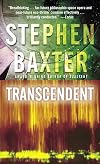
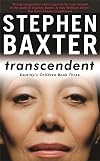
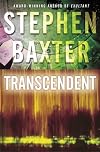
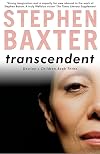
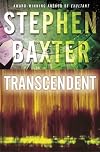
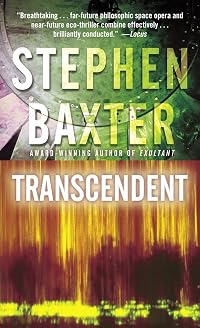
"Breathtaking . . . brilliantly conducted . . . Far-future philosophic space opera and near-future eco-thriller combine effectively."--Locus It is the year 2047, and nuclear engineer Michael Poole is mourning the death of his beloved wife and doubting his own sanity. But he must stave off a looming catastrophe: vast reservoirs of toxic gases lie beneath the melting poles, threatening to contaminate the atmosphere and destroy all life on Earth. Though born five hundred thousand years after show more the death of Michael Poole, Alia knows him intimately. Every person in Alia's world is entrusted with Witnessing one life from the past by means of a technology able to traverse time. Alia's subject is Michael Poole. Chosen to become a Transcendent, a member of the group mind that is shepherding humanity toward an evolutionary apotheosis, Alia discovers a dark side to the Transcendent's plans. Somehow, Michael holds the fate of the future in his hands, and to save that future, Alia must undertake a desperate journey into the past. "Stunning . . . engaging . . . a contrasting mix of Baxter's customary skill at presenting a very realnear future, and his talent for high-level hardscience fiction."--Starburst show lessTags
Recommendations







Member Reviews
There's a lot to love about this novel even though I have a few quibbles. My issues are purely personal in nature and do not reflect an actual fault in the novel, however.
First, the good:
We're split in the action between the digital new year coming up for us in about 25 years, at a time when Michael Poole has a stalled career and is still trying to overcome personal tragedy. The worldbuilding at this time is pretty awesome. Sentient houses and landscapes, severe environmental guilt that has led to us giving up cars in favor of virtual, and an extremely pragmatic outlook when it comes to recording genomes as so many species die.
Fast-forward half a million years in the future. Far beyond the conflict with the Xeelee, so many branches of show more humanity live and diverge and come back together again. Interestingly, the feel of this is very close to Olaf Stapledon's brilliant future history explorations, dealing with big species and existential issues in such a broad, astronomical space-and-time sense that I can't help but be awed by it.
Humanity has become as diverse and interesting as we could have hoped, adapted to any and all kinds of environments, developed symbiosis with alien biologies, techs, and even AIs. Some are undying, having lived a truly vast amount of time. Some are focused entirely on transcendence.
Interestingly, individuals in this far future are given the chance to be the ultimate observers for individuals in any portion of history. The MC in the future observes the MC of the past. Loves him. Feels his pain. And she is offered the opportunity to join the vast collective consciousness (augmentation) of the Transcendence.
The quibble:
The direction the transcendence takes is one of guilt and suffering, reliving every individual of humanity, of whatever flavor, and feeling their pain.
Yeah. Well, that's kinda the point of the novel, too, and it's rejected as the faulty logic it is. I'm not complaining about that. I'm only complaining that such an entitled future of humanity should fall into that trap in the first place.
But then, we've always fallen into worse, haven't we? lol
Even so, the novel is fascinating and filled to the brim with great ideas and techs and it falls into the full future history that Baxter has painstakingly built up. It's pretty amazing.
This novel does NOT need to be read in any particular order with any of the others. In fact, I might recommend it for anyone new to the SF mythos. :) show less
First, the good:
We're split in the action between the digital new year coming up for us in about 25 years, at a time when Michael Poole has a stalled career and is still trying to overcome personal tragedy. The worldbuilding at this time is pretty awesome. Sentient houses and landscapes, severe environmental guilt that has led to us giving up cars in favor of virtual, and an extremely pragmatic outlook when it comes to recording genomes as so many species die.
Fast-forward half a million years in the future. Far beyond the conflict with the Xeelee, so many branches of show more humanity live and diverge and come back together again. Interestingly, the feel of this is very close to Olaf Stapledon's brilliant future history explorations, dealing with big species and existential issues in such a broad, astronomical space-and-time sense that I can't help but be awed by it.
Humanity has become as diverse and interesting as we could have hoped, adapted to any and all kinds of environments, developed symbiosis with alien biologies, techs, and even AIs. Some are undying, having lived a truly vast amount of time. Some are focused entirely on transcendence.
Interestingly, individuals in this far future are given the chance to be the ultimate observers for individuals in any portion of history. The MC in the future observes the MC of the past. Loves him. Feels his pain. And she is offered the opportunity to join the vast collective consciousness (augmentation) of the Transcendence.
The quibble:
The direction the transcendence takes is one of guilt and suffering, reliving every individual of humanity, of whatever flavor, and feeling their pain.
Yeah. Well, that's kinda the point of the novel, too, and it's rejected as the faulty logic it is. I'm not complaining about that. I'm only complaining that such an entitled future of humanity should fall into that trap in the first place.
But then, we've always fallen into worse, haven't we? lol
Even so, the novel is fascinating and filled to the brim with great ideas and techs and it falls into the full future history that Baxter has painstakingly built up. It's pretty amazing.
This novel does NOT need to be read in any particular order with any of the others. In fact, I might recommend it for anyone new to the SF mythos. :) show less
This was really a decent "sort-of" finale to the series. Without spoilers, it closed out most of the plot lines and told a far future version of how things turned out.
Like many of Baxter's books, it felt smooth to read and the science of the science fiction was at least (generally) based in real science. In this case, often in philosophy as much as anything else. What happens to a humanity that is embroiled in a war that spans millennia?
Like many of Baxter's books, it felt smooth to read and the science of the science fiction was at least (generally) based in real science. In this case, often in philosophy as much as anything else. What happens to a humanity that is embroiled in a war that spans millennia?
Trancendent by Stephen Baxter, last of the “Destiny’s ChildrenâÂ? trilogy. Highly recommended. What I like about BaxterâÂÂs books, at least the two trilogies that IâÂÂve read, is that they follow the same pattern: book 1 based in the present day, book 2 based in the distant future, book 3 based in the near future. And they all deal with the same basic theme. In this series, that theme is family. The central character of the series is a family, the Poole family, and the series follows them and how they shape, and continue to shape, humanity. But the core of this family theme is the propagation of oneâÂÂs familiesâ genes. And this got me thinking. IâÂÂm 24. IâÂÂm the only son show more of my parents. My dad has a brother, and he has a son, my cousin. My mom is an only child, and her parents have brothers and sisters. But for them, their combined genetic pattern, it went to Mom, mixed with DadâÂÂs, and passed to me. Now, if I were to never have children, naturally, that line would end. I would be the last one. I am, in truth, the only hope for my grandparentsâ genes to continue into the future. They created my mom, and I was created. A new creature, close enough to be related, but with my own peculiarities. What if I have a vital adaptation that needs to be passed on? If I donâÂÂt have kids, and if they donâÂÂt have kids, and so on, then that adaptation will also die. Kinda sad. I feel pressured. Seriously. DonâÂÂt get me wrong, I really like these books, theyâÂÂre on my âÂÂTo BuyâÂ? list. But the way he writes, the way his future seems so realistically based on oursâ¦I feel like I should mark my calendar for these great events. William Gibson, Phillip K. Dick, Robert Heinlein, Frederik Pohlâ¦all great sci-fi writers. But no one makes me feel about the future the way Baxter makes me feel. His science is so far over my head, but luckily his characters are seemingly as dumb as me, and surrounded by understanding geniusâÂÂs. Just thought IâÂÂd share. show less
[Minor spoilers ahead]
Third book in the Destiny's Children trilogy, which overall I found disappointing compared to his earlier work (I loved the Manifold trilogy, and Evolution was pretty good too).
Transcendent is still a lot better than Coalescent and Exultant, though. I'd almost suggest skipping the first two, and going with the third. Although it contains elements drawn from the first two novels, they are in the background rather than being essential to the plot.
Familiar Baxter elements are present, such as the impact of global warming, the divergent evolution of humanity far in the future, future humans watching and/or interfering with present-day humans, hive minds, and a protagonist who references earlier heroes (he's Michael show more Poole, ancestor of the eponymous hero of the Xeelee sequence, and (like Malefant in Manifold), is haunted by memories of his dead wife). He's also related to the protagonists of Coalescent, though not much is made of this. The Friends of Wigner, from Exultant, are also mentioned in the background.
Overall it's a good enough book, worth a read, but not really one of Baxter's best. show less
Third book in the Destiny's Children trilogy, which overall I found disappointing compared to his earlier work (I loved the Manifold trilogy, and Evolution was pretty good too).
Transcendent is still a lot better than Coalescent and Exultant, though. I'd almost suggest skipping the first two, and going with the third. Although it contains elements drawn from the first two novels, they are in the background rather than being essential to the plot.
Familiar Baxter elements are present, such as the impact of global warming, the divergent evolution of humanity far in the future, future humans watching and/or interfering with present-day humans, hive minds, and a protagonist who references earlier heroes (he's Michael show more Poole, ancestor of the eponymous hero of the Xeelee sequence, and (like Malefant in Manifold), is haunted by memories of his dead wife). He's also related to the protagonists of Coalescent, though not much is made of this. The Friends of Wigner, from Exultant, are also mentioned in the background.
Overall it's a good enough book, worth a read, but not really one of Baxter's best. show less
Life, the universe and everything - it has it all, from environmentalism to religion. I enjoyed book 1 in the Destiny's Children, book 2 left me a bit indifferent, however this episode has inspired me again. On several occasion I found myself drifting off as I pondered issues raised by Baxter.
Essentially a failed attempt to unite the two previous novels (Coalescent, Exultant). It ends up as a meandering walk through two rather boring people's lives. While I can appreciate some of the concepts discussed (ex. hydrate deposit refrigeration, skimming) there's not really much in here that keeps my attention or makes me care about the two main characters.
I could never really get into this book I did read it all but it is a very fuzzy memory for me.
Its about a girl who century's after earth has died from global warming that she is riding a space ship somewhere up there in deep blue space. She is not of our species anymore but she acts the same and is humanoid. This book is about her going on a journey to find out about this new universe and meet the many different species
Its about a girl who century's after earth has died from global warming that she is riding a space ship somewhere up there in deep blue space. She is not of our species anymore but she acts the same and is humanoid. This book is about her going on a journey to find out about this new universe and meet the many different species
Members
- Recently Added By
Author Information

260+ Works 43,820 Members
Some Editions
Awards and Honors
Series


Work Relationships
Is contained in
Common Knowledge
- Canonical title
- Transcendent
- Original publication date
- 2005-10
- People/Characters
- Michael Poole; Alia
- Dedication
- For Sir Arthur C. Clarke
- First words
- The girl from the future told me that the sky is full of dying worlds.
- Last words
- (Click to show. Warning: May contain spoilers.)As Morag walked into the room.
Classifications
Statistics
- Members
- 669
- Popularity
- 43,077
- Reviews
- 11
- Rating
- (3.61)
- Languages
- English, French, German
- Media
- Paper, Ebook
- ISBNs
- 12
- ASINs
- 4