On This Page
Description
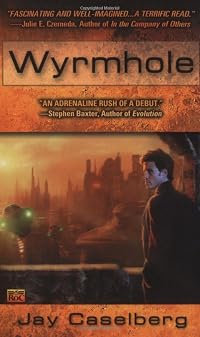
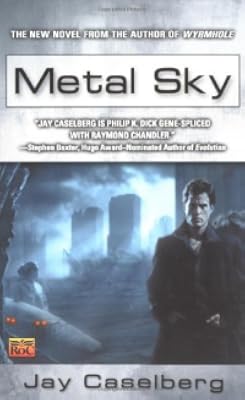
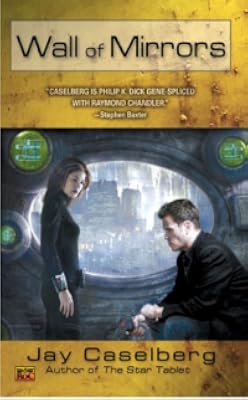
As a Psychic Investigator, Jack Stein's specialty is drawing clues from dreams and psychic impressions. It's not a line of work that draws a lot of respect in The Locality, where the rich live high and dry, and the poor rot at the roots. His latest client is Outreach Industries, a mega-conglom that's reached out and grabbed every resource on every chunk of rock in the galaxy--including the rim planet Dairil III, where a mining crew has mysteriously disappeared. Jack's been hired to sniff show more them out. In his dreams. One problem: Jack's visions are cluttered with strange mystical symbols and red herrings. It's enough to make him wonder if Outreach really wants the miners to be found. When Jack gets his hands on a seemingly minor piece of evidence, suddenly half the Locality is after him. And nobody's willing to tell him why. This could be part of something that's too big for even Jack to wrap his mind around. show lessTags
Recommendations









Member Reviews
There’s a lot of classic hard-boiled detective story elements here.
Jack Stein will get beat up multiple times, be jailed by the police, and encounter a beautiful, seductive woman with her own agenda. Stein’s an ex-soldier and member of military intelligence. In those days, he was known as “Witchy Stein” because of his luck in avoiding ambushes and traps.
Eventually, he discovered he had psychic powers. He solves cases using clues provided in dream visions – often facilitated by a device that induces sleep or by getting psychic impressions from objects and people he touches.
He seems to have left the military under a cloud. He calls it fleeing the military, but it’s not clear if he went AWOL or not. He ended up, via the show more coincidences that guide his life, in Locality as a private investigator.
Locality is a quasi-living, snake-like city that crawls across the surface of a planet, digesting raw materials and building its structures which can even be programmed to reconfigure the layout of walls and furniture. The rich live at Locality’s head, the New. The poor and outcast live in the Old, the city’s tail, where the systems are starting to decay and die before failing altogether. Advertising drones and displays plague those who aren’t rich.
Stein has gone to seed both professionally and morally, become too dependent on his psychic powers and coincidence to solve his cases. He forgets things and doesn’t make obvious connections. He takes too many stimulants, dresses sloppily and doesn’t shave regularly. At novel’s end, he becomes uncomfortably aware of how far he’s fallen.
He’s hired by Warburg of the Outreach megacorporation to investigate the disappearance of some miners at one of their projects on a distant world. In Outreach’s office is Gleeson, a mid-level bureaucrat who tells Stein he’s not being told the truth. Gleeson hires Stein too because one of the vanished miners is his boyfriend, Ronschke. The latter gave Gleeson a handipad Ronschke left him.
Stein runs into a sleazy ex-associate of his, Pinpin Dan. Stein doesn’t want to think about the sort of things he suspects Dan gets up to, but he goes to him for help in unlocking the handipad. There he runs into a fifteen-year-old, waifish girl named Wilhemnia, who helps her “Uncle Pinpin” with his “work”. After returning a short time later, he finds Pinpin dead and Wilhemnia, aka Billie, cowering in a closet. She reports that a man and woman visited Pinpin.
Fearing for Billie’s safety, he takes and the handipad back to his apartment, hoping to find Billie’s family and turn her over to them. But she says she won’t talk about her family or her past.
When he’s sleeping, Billie crawls into Stein’s bed and leaves no doubt as to what part of her “work” with Uncle Pinpin involved. Stein puts an immediate stop to that when he wakes up. He finds himself reluctantly accepting responsibility for Billie and goes looking for her when she disappears.
It turns out Billie’s is something of a computer genius. She also turns out to be something like the adult in her relationship with Stein even though she turns out to be not 15 but 12. She points out obvious things, helps him solve problems.
And we’re off on a crime story that involves mystical texts and alchemy, a beautiful librarian, and a trip to the Old and its demimonde that Billie came from.
It’s a testament to Caselberg’s skill that I liked this story even though it has three elements that usually annoy me: a kid computer genius, sexual abuse, and a kid taking care of a damaged adult.
That bed scene is the only sexually explicit scene in the book. We don’t wallow in the details of Billie’s past. It’s kept vague, but it’s clear enough in its degradation. Billie may be a computer genius, but it’s more of a game to get data and connect it, not understand the “science” stuff she uncovers. Stein isn’t a dolt, just a man who has let himself decay, and Billie can be annoying in an unhumorous way.
Each book of the series is quite different in plot, but the relationship between Billie and Stein is at its core and carries the series with its interesting permutations.
This book, though, is self-contained and doesn’t suggest at all where this series eventually goes. This one, at least, works purely on the basis of a mystery too. show less
Jack Stein will get beat up multiple times, be jailed by the police, and encounter a beautiful, seductive woman with her own agenda. Stein’s an ex-soldier and member of military intelligence. In those days, he was known as “Witchy Stein” because of his luck in avoiding ambushes and traps.
Eventually, he discovered he had psychic powers. He solves cases using clues provided in dream visions – often facilitated by a device that induces sleep or by getting psychic impressions from objects and people he touches.
He seems to have left the military under a cloud. He calls it fleeing the military, but it’s not clear if he went AWOL or not. He ended up, via the show more coincidences that guide his life, in Locality as a private investigator.
Locality is a quasi-living, snake-like city that crawls across the surface of a planet, digesting raw materials and building its structures which can even be programmed to reconfigure the layout of walls and furniture. The rich live at Locality’s head, the New. The poor and outcast live in the Old, the city’s tail, where the systems are starting to decay and die before failing altogether. Advertising drones and displays plague those who aren’t rich.
Stein has gone to seed both professionally and morally, become too dependent on his psychic powers and coincidence to solve his cases. He forgets things and doesn’t make obvious connections. He takes too many stimulants, dresses sloppily and doesn’t shave regularly. At novel’s end, he becomes uncomfortably aware of how far he’s fallen.
He’s hired by Warburg of the Outreach megacorporation to investigate the disappearance of some miners at one of their projects on a distant world. In Outreach’s office is Gleeson, a mid-level bureaucrat who tells Stein he’s not being told the truth. Gleeson hires Stein too because one of the vanished miners is his boyfriend, Ronschke. The latter gave Gleeson a handipad Ronschke left him.
Stein runs into a sleazy ex-associate of his, Pinpin Dan. Stein doesn’t want to think about the sort of things he suspects Dan gets up to, but he goes to him for help in unlocking the handipad. There he runs into a fifteen-year-old, waifish girl named Wilhemnia, who helps her “Uncle Pinpin” with his “work”. After returning a short time later, he finds Pinpin dead and Wilhemnia, aka Billie, cowering in a closet. She reports that a man and woman visited Pinpin.
Fearing for Billie’s safety, he takes and the handipad back to his apartment, hoping to find Billie’s family and turn her over to them. But she says she won’t talk about her family or her past.
When he’s sleeping, Billie crawls into Stein’s bed and leaves no doubt as to what part of her “work” with Uncle Pinpin involved. Stein puts an immediate stop to that when he wakes up. He finds himself reluctantly accepting responsibility for Billie and goes looking for her when she disappears.
It turns out Billie’s is something of a computer genius. She also turns out to be something like the adult in her relationship with Stein even though she turns out to be not 15 but 12. She points out obvious things, helps him solve problems.
And we’re off on a crime story that involves mystical texts and alchemy, a beautiful librarian, and a trip to the Old and its demimonde that Billie came from.
It’s a testament to Caselberg’s skill that I liked this story even though it has three elements that usually annoy me: a kid computer genius, sexual abuse, and a kid taking care of a damaged adult.
That bed scene is the only sexually explicit scene in the book. We don’t wallow in the details of Billie’s past. It’s kept vague, but it’s clear enough in its degradation. Billie may be a computer genius, but it’s more of a game to get data and connect it, not understand the “science” stuff she uncovers. Stein isn’t a dolt, just a man who has let himself decay, and Billie can be annoying in an unhumorous way.
Each book of the series is quite different in plot, but the relationship between Billie and Stein is at its core and carries the series with its interesting permutations.
This book, though, is self-contained and doesn’t suggest at all where this series eventually goes. This one, at least, works purely on the basis of a mystery too. show less
I was interested in this book because it is SF and mystery combined. The story is set in the future and the POV, Jack Stein, is a psychic investigator (he picks up vibes, and has dreams). He is a typical down and out, solitary, noir-ish character.
The setting is an interesting outgrowth of a trend today, the gated community. It becomes so insular that everything needed is encapsulated in it, and with the advent of nano-tech, it becomes a growing and self-perpetuating entity. There are echoes of the City of Levels in the Chung Kuo series.
It is called the Locality and it has degrees of innovation and newness which correspond to price. There is New, where everything is shiny and fresh, and up to the minute in trends. Then there is Middle show more where the older New has been displaced, and finally Old where everything is falling apart, poorly maintained and soon to be re-absorbed. Stein lives on the Old side of Middle because its what he can afford. Of course he can hop the trans for the parks and shops of New when he needs a break. The Locality programs 'outside scenes' so that no one ever has to think about reality.
Jack is hired by a big company to look into the disappearance of a group of miners on a far away planet. The problem being that they are not sharing everything or really cooperating in the search for the miners and the truth.
There are multiples players, all with their own hidden agenda, and Jack has to figure out what happened, why, who did it, and who is blocking the investigation.
There are interesting side characters, and Jack picks up a teenage ward when a crony of his is killed. Billie adds a good touch to the story.
Jack looks into various metaphysical and mathematical theories to explain the vanishing of the miners. It is interesting, but doesn't bog down the story.
I liked the writing, the setting, and the characters. I have the rest of the series and will continue reading. show less
The setting is an interesting outgrowth of a trend today, the gated community. It becomes so insular that everything needed is encapsulated in it, and with the advent of nano-tech, it becomes a growing and self-perpetuating entity. There are echoes of the City of Levels in the Chung Kuo series.
It is called the Locality and it has degrees of innovation and newness which correspond to price. There is New, where everything is shiny and fresh, and up to the minute in trends. Then there is Middle show more where the older New has been displaced, and finally Old where everything is falling apart, poorly maintained and soon to be re-absorbed. Stein lives on the Old side of Middle because its what he can afford. Of course he can hop the trans for the parks and shops of New when he needs a break. The Locality programs 'outside scenes' so that no one ever has to think about reality.
Jack is hired by a big company to look into the disappearance of a group of miners on a far away planet. The problem being that they are not sharing everything or really cooperating in the search for the miners and the truth.
There are multiples players, all with their own hidden agenda, and Jack has to figure out what happened, why, who did it, and who is blocking the investigation.
There are interesting side characters, and Jack picks up a teenage ward when a crony of his is killed. Billie adds a good touch to the story.
Jack looks into various metaphysical and mathematical theories to explain the vanishing of the miners. It is interesting, but doesn't bog down the story.
I liked the writing, the setting, and the characters. I have the rest of the series and will continue reading. show less
Jack Stein, Psychic Investigator. It's a great hook, and Caselberg brings in some wonderful ideas over the course of his debut novel Wyrmhole.
Stein is hired to investigate the disappearance of a miner. He's also hired to learn more about a lost handipad (PDA) that comes into his possession. Naturally, the cases are related, leading him into a web of business deals and betrayals.
I wanted this book to be more than it was. I never felt all that connected to the protagonist, or to any of the characters, really. The plot also felt a bit forced. Of Stein's psychic abilities, Caselberg writes, "Things didn't happen by chance to Jack Stein. Coincidence was always loaded. Events seemed to coalesce around Jack." Unfortunately, that means the plot show more relies pretty heavily on these coincidences, which strains the credulity of the reader.
One of the most fascinating concepts for me was the Locality, the self-contained city which constantly rebuilds itself, leaving the old portion to fall into decay and ruin. Thematically, it was a powerful symbol, in addition to being a downright nifty idea. I hope he does more with it in future books.
I did finish the book, and I was relatively satisfied at the end. As a first novel, it's not bad, and Caselberg clearly has a great deal of potential. I just don't think this book completely fulfills that potential. show less
Stein is hired to investigate the disappearance of a miner. He's also hired to learn more about a lost handipad (PDA) that comes into his possession. Naturally, the cases are related, leading him into a web of business deals and betrayals.
I wanted this book to be more than it was. I never felt all that connected to the protagonist, or to any of the characters, really. The plot also felt a bit forced. Of Stein's psychic abilities, Caselberg writes, "Things didn't happen by chance to Jack Stein. Coincidence was always loaded. Events seemed to coalesce around Jack." Unfortunately, that means the plot show more relies pretty heavily on these coincidences, which strains the credulity of the reader.
One of the most fascinating concepts for me was the Locality, the self-contained city which constantly rebuilds itself, leaving the old portion to fall into decay and ruin. Thematically, it was a powerful symbol, in addition to being a downright nifty idea. I hope he does more with it in future books.
I did finish the book, and I was relatively satisfied at the end. As a first novel, it's not bad, and Caselberg clearly has a great deal of potential. I just don't think this book completely fulfills that potential. show less
Ratings
Members
- Recently Added By
Author Information

39+ Works 486 Members

Jay Caselberg is a LibraryThing Author, an author who lists their personal library on LibraryThing.
Awards and Honors
Awards
Series

Classifications
Statistics
- Members
- 174
- Popularity
- 188,992
- Reviews
- 3
- Rating
- (3.06)
- Languages
- English
- Media
- Paper, Ebook
- ISBNs
- 2
- ASINs
- 1