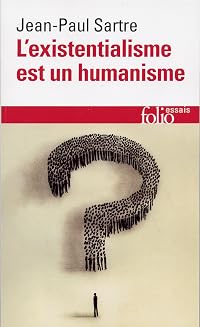
Existentialism Is a Humanism
by Jean-Paul Sartre
On This Page
Description
A new translation of two seminal works of existentialism It was to correct common misconceptions about his thought that Jean-Paul Sartre, the most dominent European intellectual of the post-World War II decades,? accepted an invitation to speak on October 29, 1945, at the Club Maintenant in Paris. The unstated objective of his lecture ( ?Existentialism Is a Humanism ?) was to expound his philosophy as a form of ?existentialism, ? a term much bandied about at the time. Sartre asserted that show more existentialism was essentially a doctrine for philosophers, though, ironically, he was about to make it accessible to a general audience.? The published text of his lecture? quickly became one of the bibles of existentialism and made Sartre an international celebrity. The idea of freedom occupies the center of Sartre ?s doctrine. Man, born into an empty, godless universe, is nothing to begin with. He creates his essence ?his self, his being ?through the choices he freely makes ( ?existence precedes essence ?). Were it not for the contingency of his death, he would never end. Choosing to be this or that is to affirm the value of what we choose. In choosing, therefore, we commit not only ourselves but all of mankind. This book presents a new English translation of? Sartre ?s 1945 lecture? and his analysis of Camus ?s The Stranger, along with a discussion of these works by acclaimed Sartre biographer Annie Cohen-Solal. This edition is a translation of the 1996 French edition, which includes Arlette Elka© m-Sartre ?s introduction and a Q&A with Sartre about his lecture. show lessTags
Recommendations























Member Reviews
(Please note that Sartre consistently speaks of "man". Ironically, Simone de Beauvoir's partner of 51 years is unable or unwilling to include women in his language at least. Nevertheless, the essence of his will includes any gender.)
»Man is nothing other than his own project. He exists only to the extent that he realizes himself, therefore he is nothing more than the sum of his actions, nothing more than his life.”«
“Existentialism Is a Humanism” is originally a lecture by Sartre, first delivered in 1945, aimed to clarify misunderstandings about existentialism. He adeptly defends the philosophy against critiques of it promoting despair, amorality, and nihilism. The book is built on the existentialist premise that "existence show more precedes essence".
Or, in Sartre’s own words:
»We mean that man first exists: he materializes in the world, encounters himself, and only afterward defines himself. If man as existentialists conceive of him cannot be defined, it is because to begin with he is nothing. He will not be anything until later, and then he will be what he makes of himself. Thus, there is no human nature since there is no God to conceive of it. Man is not only that which he conceives himself to be, but that which he wills himself to be, and since he conceives of himself only after he exists, just as he wills himself to be after being thrown into existence, man is nothing other than what he makes of himself. This is the first principle of existentialism.«
I’ve long wanted to read about existentialism since what little grasp of it I had (and still only have) appealed to me and interested me. (For those who are in the same position as I found myself, in a nutshell: Existentialism is a philosophy that emphasises individual freedom, choice, and existence, asserting that individuals are responsible for giving meaning to their lives through their actions and decisions. It contends that people must navigate the absurdities of life without reliance on predetermined norms, thereby creating their own values and defining their own essence. Thus: existence precedes essence)
What makes this work particularly interesting is how Sartre uncomplicates (in very non-uncomplicated words and ideas, though) the existentialist stance that individuals are entirely responsible for their own actions. This notion initially appears daunting – suggesting isolation in our freedom and decisions. Yet, as Sartre explains, it is incredibly empowering. It posits that we are the architects of our own values and the authors of our lives. His assertion that “man is condemned to be free” resonated deeply with me, underscoring the weight of personal responsibility that accompanies our freedom.
»man is free and there is no human nature in which I can place my trust.«
And, yet, that freedom is not without reason: Sartre illustrates how our personal choices ripple across humanity, arguing that in choosing for ourselves, we also choose for all mankind.
»What is more, to say that we invent values means neither more nor less than this: life has no meaning a priori. Life itself is nothing until it is lived, it is we who give it meaning, and value is nothing more than the meaning that we give it. You can see, then, that it is possible to create a human community.«
"Existentialism Is a Humanism" also delves into the subject of despair, which Sartre describes as the acknowledgment that we rely only on ourselves and our will for action. This was an eye-opener to the liberating potential within existentialism, as it encourages one to act without hope – encouraging a direct confrontation with reality.
»“No hope is necessary to undertake anything.”«
The eloquence and intellectual clarity of Sartre's prose are undeniable. I, with little understanding of existentialism, found this book taxing to read. It’s well-written, presents great ideas and dispels misunderstandings and accusations, and is thought-provoking. It does feel like a lecture, though, and it’s not something one would read for pleasure.
I think I will move on to Sartre’s “Nausea” and, sooner or later, to his “Being and Nothingness”.
I don’t feel “qualified” to star-rate this book but would recommend reading it to anyone with an open mind.
»Existentialism is not so much an atheism in the sense that it would exhaust itself attempting to demonstrate the nonexistence of God; rather, it affirms that even if God were to exist, it would make no difference—that is our point of view. It is not that we believe that God exists, but we think that the real problem is not one of his existence; what man needs is to rediscover himself and to comprehend that nothing can save him from himself, not even valid proof of the existence of God. In this sense, existentialism is optimistic. It is a doctrine of action, and it is only in bad faith—in confusing their own despair with ours—that Christians are able to assert that we are “without hope.”«
Blog | Facebook | Twitter | Mastodon | Instagram | Pinterest | Medium | Matrix | Tumblr
Ceterum censeo Putin esse delendam show less
»Man is nothing other than his own project. He exists only to the extent that he realizes himself, therefore he is nothing more than the sum of his actions, nothing more than his life.”«
“Existentialism Is a Humanism” is originally a lecture by Sartre, first delivered in 1945, aimed to clarify misunderstandings about existentialism. He adeptly defends the philosophy against critiques of it promoting despair, amorality, and nihilism. The book is built on the existentialist premise that "existence show more precedes essence".
Or, in Sartre’s own words:
»We mean that man first exists: he materializes in the world, encounters himself, and only afterward defines himself. If man as existentialists conceive of him cannot be defined, it is because to begin with he is nothing. He will not be anything until later, and then he will be what he makes of himself. Thus, there is no human nature since there is no God to conceive of it. Man is not only that which he conceives himself to be, but that which he wills himself to be, and since he conceives of himself only after he exists, just as he wills himself to be after being thrown into existence, man is nothing other than what he makes of himself. This is the first principle of existentialism.«
I’ve long wanted to read about existentialism since what little grasp of it I had (and still only have) appealed to me and interested me. (For those who are in the same position as I found myself, in a nutshell: Existentialism is a philosophy that emphasises individual freedom, choice, and existence, asserting that individuals are responsible for giving meaning to their lives through their actions and decisions. It contends that people must navigate the absurdities of life without reliance on predetermined norms, thereby creating their own values and defining their own essence. Thus: existence precedes essence)
What makes this work particularly interesting is how Sartre uncomplicates (in very non-uncomplicated words and ideas, though) the existentialist stance that individuals are entirely responsible for their own actions. This notion initially appears daunting – suggesting isolation in our freedom and decisions. Yet, as Sartre explains, it is incredibly empowering. It posits that we are the architects of our own values and the authors of our lives. His assertion that “man is condemned to be free” resonated deeply with me, underscoring the weight of personal responsibility that accompanies our freedom.
»man is free and there is no human nature in which I can place my trust.«
And, yet, that freedom is not without reason: Sartre illustrates how our personal choices ripple across humanity, arguing that in choosing for ourselves, we also choose for all mankind.
»What is more, to say that we invent values means neither more nor less than this: life has no meaning a priori. Life itself is nothing until it is lived, it is we who give it meaning, and value is nothing more than the meaning that we give it. You can see, then, that it is possible to create a human community.«
"Existentialism Is a Humanism" also delves into the subject of despair, which Sartre describes as the acknowledgment that we rely only on ourselves and our will for action. This was an eye-opener to the liberating potential within existentialism, as it encourages one to act without hope – encouraging a direct confrontation with reality.
»“No hope is necessary to undertake anything.”«
The eloquence and intellectual clarity of Sartre's prose are undeniable. I, with little understanding of existentialism, found this book taxing to read. It’s well-written, presents great ideas and dispels misunderstandings and accusations, and is thought-provoking. It does feel like a lecture, though, and it’s not something one would read for pleasure.
I think I will move on to Sartre’s “Nausea” and, sooner or later, to his “Being and Nothingness”.
I don’t feel “qualified” to star-rate this book but would recommend reading it to anyone with an open mind.
»Existentialism is not so much an atheism in the sense that it would exhaust itself attempting to demonstrate the nonexistence of God; rather, it affirms that even if God were to exist, it would make no difference—that is our point of view. It is not that we believe that God exists, but we think that the real problem is not one of his existence; what man needs is to rediscover himself and to comprehend that nothing can save him from himself, not even valid proof of the existence of God. In this sense, existentialism is optimistic. It is a doctrine of action, and it is only in bad faith—in confusing their own despair with ours—that Christians are able to assert that we are “without hope.”«
Blog | Facebook | Twitter | Mastodon | Instagram | Pinterest | Medium | Matrix | Tumblr
Ceterum censeo Putin esse delendam show less
Una relectura me permite darle más pelota. Es importante volver a este libro como volver a una época filosófica que constituye un punto de inflexión para varias concepciones que se ponen en cuestión estos días. Muchas de las objeciones de Sartre aquí presentes se cumplen, y así es como nos vemos hoy día enfrentando nuevamente el advenimiento de neofascismos y la caída en la nada misma. Solo nos puede aportar un ssentido a la vida nuestros actos, solo podemos definirnos por el verbo del que somos protagonistas. Me parece importante una atenta relectura en este año, 2020.
Se trata de una conferencia que Sartre pronunció en 1946 para defender al existencialismo de las críticas que le venían desde el cristianismo y, sobre todo, desde el marxismo. Es cierto que el texto se comprende mejor conociendo el contexto del autor, en plena tensión con el partido comunista francés, pero no pierde valor como texto autónomo. Sarte hace gala de su capacidad literaria para explicar el existencialismo de forma llana y breve, pero precisamente por eso rigurosa. La base es que la existencia precede a la esencia, es decir, que "existo ergo sum" o "existo ergo cogito". Respecto al cristianismo, aclara desde el principio que su tesis parte de un ateísmo radical y absoluto; evidentemente, si hay Dios, yo existo porque show more Él lo quiere, y todo cambia de perspectiva. Pero por eso quizá es posible un entendimiento (esto aquí sólo se atisba) puesto que, aunque yo exista por voluntad de Otro, eso no significa que exista ya completo, sino que debo irme completando con los medios que Dios me ha dado (esta es la tesis de Marcel y de los existencialistas cristianos). Donde es más difícil el diálogo es con los marxistas, porque Sartre parte del individuo concreto, y sólo por asociación llega a la comunidad, pero manteniendo siempre la primacía del sujeto. Incluso se burla con suavidad de las promesas de un futuro mejor dentro de varias generaciones.
Hoy el existencialismo tiene mucho más que decir que el marxismo, aunque quizá este último, muy maltratado por los marxistas, necesite una revisión y una actualización. Pero el existencialismo que se presenta aquí no cabe duda de que resulta tremendamente sugerente.
El libro se completa con la transcripción de la "discusión" posterior a la conferencia, que en realidad consta básicamente de una aburrida arenga de uno de los críticos marxistas más famosos del momento; hoy nadie se acuerda de él, y sí de Sartre. Por algo será. show less
Hoy el existencialismo tiene mucho más que decir que el marxismo, aunque quizá este último, muy maltratado por los marxistas, necesite una revisión y una actualización. Pero el existencialismo que se presenta aquí no cabe duda de que resulta tremendamente sugerente.
El libro se completa con la transcripción de la "discusión" posterior a la conferencia, que en realidad consta básicamente de una aburrida arenga de uno de los críticos marxistas más famosos del momento; hoy nadie se acuerda de él, y sí de Sartre. Por algo será. show less
Apr 8, 2011 (Edited)Spanish
Compte rendu d'une conférence donnée en octobre 1945 à Paris, ce texte est absolument remarquable. Il expose avec beaucoup de pertinence et une très grande clarté les fondements de l'existentialisme, mouvement audacieux (et largement incompris à l'époque) qui rompait avec les théories philosophiques en vigueur, à une période-clé de l'histoire de l'humanité.
Il s'agit du texte majeur de l'existentialisme qu'il convient de lire pour bien comprendre la pensée de Sartre, et de préférence avant toute autre oeuvre de l'auteur.
Il s'agit du texte majeur de l'existentialisme qu'il convient de lire pour bien comprendre la pensée de Sartre, et de préférence avant toute autre oeuvre de l'auteur.
Aug 7, 2021French
en principe je bloque sur les essais (je préfère sentir une position philosophique dans les oeuvres, littéraires ou cinématographiques), et je n'aime pas vraiment sartre (le personnage), mais ce bref texte est vraiment facile d'accès, et m'a permis de mettre des mots sur des idées que jusque là je ressentais seulement. alors vraiment je vous le conseille, à moins que vous soyez un intellectuel et alors ça vous semblera un peu simpliste (et de toute façon les intellectuels ont du lire ce genre de livres quand ils avaient 12 ans).
Apr 27, 2010French
Members
- Recently Added By
Lists

el
1,139 works; 1 member
Author Information

Sartre is the dominant figure in post-war French intellectual life. A graduate of the prestigious Ecole Normale Superieure with an agregation in philosophy, Sartre has been a major figure on the literary and philosophical scenes since the late 1930s. Widely known as an atheistic proponent of existentialism, he emphasized the priority of existence show more over preconceived essences and the importance of human freedom. In his first and best novel, Nausea (1938), Sartre contrasted the fluidity of human consciousness with the apparent solidity of external reality and satirized the hypocrisies and pretensions of bourgeois idealism. Sartre's theater is also highly ideological, emphasizing the importance of personal freedom and the commitment of the individual to social and political goals. His first play, The Flies (1943), was produced during the German occupation, despite its underlying message of defiance. One of his most popular plays is the one-act No Exit (1944), in which the traditional theological concept of hell is redefined in existentialist terms. In Red Gloves (Les Mains Sales) (1948), Sartre examines the pragmatic implications of the individual involved in political action through the mechanism of the Communist party and a changing historical situation. His highly readable autobiography, The Words (1964), tells of his childhood in an idealistic bourgeois Protestant family and of his subsequent rejection of his upbringing. Sartre has also made significant contributions to literary criticism in his 10-volume Situations (1947--72) and in works on Baudelaire, Genet, and Flaubert. In 1964 he was awarded the Nobel Prize in Literature and refused it, saying that he always declined official honors. (Bowker Author Biography) show less
Some Editions
Awards and Honors
Series
Belongs to Publisher Series
Common Knowledge
- Canonical title
- Existentialism Is a Humanism
- Original title
- L'Existentialisme est un humanisme
- Original publication date
- 1946
- First words
- My purpose here is to defend existentialism against some charges that have been brought against it.
- Last words
- (Click to show. Warning: May contain spoilers.)... existentialism is optimistic. It is a doctrine of action, and it is only in bad faith- in confusing their own despair with ours- that Christians are able to assert that we are "without hope."
- Disambiguation notice
- Do not combine with Existentialism and Human Emotions (1957) -- they are completely different works.
Classifications
Statistics
- Members
- 1,100
- Popularity
- 23,185
- Reviews
- 11
- Rating
- (3.57)
- Languages
- 20 — Catalan, Czech, Danish, Dutch, English, Estonian, Finnish, French, German, Hungarian, Italian, Norwegian (Bokmål), Norwegian, Polish, Portuguese, Russian, Slovak, Spanish, Swedish, Turkish
- Media
- Paper, Audiobook, Ebook
- ISBNs
- 61
- UPCs
- 1
- ASINs
- 30