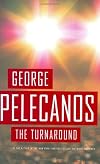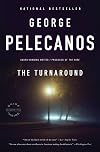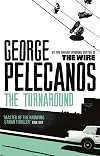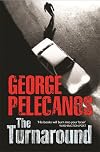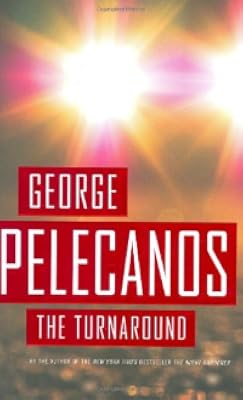
The Turnaround
by George Pelecanos
On This Page
Description
Thirty-five years after a devastating accident that irrevocably shapes the lives of six people, a pair of redemption-seeking survivors reaches out to one another in an effort that is compromised by a fellow survivor's release from prison.Tags
Recommendations



Member Reviews
I can understand now why Pelecanos has been called the Zola of crime fiction. His characters are always introduced as the products of a specific personal, social and racial environment. They are almost always male, residents of Washington DC or the Maryland suburbs (a place Pelecanos knows and brings to life like no other author except maybe Edward P Jones), and they range from street hoods to cops and small businessmen who may or may not have been to college. These backgrounds having been established, Pelecanos has each character choose between living right and living wrong, and there's never any doubt in the reader's mind which is which. The collisions, rises, and falls that follow these initial conditions read almost like a physics show more textbook, so swift and sure are the natural consequences. Not that these novels are ever saccharine; they're satisfyingly real, and dirty where they need to be. Sometimes the brand names and carefully calibrated street dialect threaten to make them a little too real.
The moral stakes are especially vivid in The Turnaround, dealing as it does with a racial incident in 1972 and its aftermath in 2006. The story is complex enough to be interesting, but there's never any doubt which kind of ending the reader is supposed to want to see. show less
The moral stakes are especially vivid in The Turnaround, dealing as it does with a racial incident in 1972 and its aftermath in 2006. The story is complex enough to be interesting, but there's never any doubt which kind of ending the reader is supposed to want to see. show less
I've grown to really appreciate the crime writing of George Pelecanos. It's not only that he name drops places in the Maryland suburbs of DC and streets within the District of Columbia, but also that he knows and feels so comfortable writing about black-white relationships in the DC Metro area. He sees both the good and bad in all of his characters. This book was a real treat to read despite the fact that it was about a bad situation.
Years ago, three white kids decided to ride into a black enclave called Heathrow Heights to taunt three young black men who happened to be there at the time. A pie in face of a black kid ended with a white runaway, a white eye injury, and a white death. Years later this scene is revisited as we meet the show more characters (with the exception of the dead man) who were involved. Alex Pappas, the son of the store owner has taken over his dad's store. Charlie Baker, after having served prison time becomes determined to extort money from those who put him there in the first place. As they grow older, the Monroe brothers try to piece together their lives, James as a mechanic and the younger Raymond as a physical therapist at Walter Reed National Medical Center,
Interesting and believable characters make this story flow well. If you get the CD version, you'll love how Dion Graham does the dialogue - especially the "bad guys". For one who never read much crime fiction in the past, I'm finding that Pelecanos' writing is surely going to change that! show less
Years ago, three white kids decided to ride into a black enclave called Heathrow Heights to taunt three young black men who happened to be there at the time. A pie in face of a black kid ended with a white runaway, a white eye injury, and a white death. Years later this scene is revisited as we meet the show more characters (with the exception of the dead man) who were involved. Alex Pappas, the son of the store owner has taken over his dad's store. Charlie Baker, after having served prison time becomes determined to extort money from those who put him there in the first place. As they grow older, the Monroe brothers try to piece together their lives, James as a mechanic and the younger Raymond as a physical therapist at Walter Reed National Medical Center,
Interesting and believable characters make this story flow well. If you get the CD version, you'll love how Dion Graham does the dialogue - especially the "bad guys". For one who never read much crime fiction in the past, I'm finding that Pelecanos' writing is surely going to change that! show less
George Pelecanos’s books are populated by denizens of slum housing, drug dens, and inner city street corners. Their stories can seem harsh and jarring, but they can also be ironically moving. The Turnaround is a departure from the author's previous formula involving police or private detectives. But it is similar in its strong local flavor (D.C. and its suburbs), in its startling evocation of the underclasses, and its mix of hope and despair.
The book begins in 1972, when three white boys, Billy, Pete, and Alex, high on beer and pot, go looking for trouble in a black neighborhood. They find it soon enough, but their attempted escape is stymied by an unanticipated dead end, or turnaround, at the end of the street.
The story picks up with show more the survivors thirty-five years later. Like this author's other books, we become enmeshed in a world of drugs and violence. But this story has an additional dimension: aging, and the changes it brings.
One of the black boys who had been there that day, Raymond Monroe, is now working at the VA Center at Walter Reed Hospital. Raymond works as a physical therapist, helping the veterans from Iraq and Afghanistan who have returned home in pieces. He admonishes one depressed veteran to get out and speak to the community, but the veteran demurs, saying “I’m not proud of everything I did.” Monroe answers him:
“Neither am I. … Look, Sergeant. You’re gonna realize something as you get older. Hopefully it’ll come to you quicker than it did to me. Life is long. Who you are now, the things you did, how you’re feeling, like your world is never gonna be as good as it was? None of that is going to matter as you move along. It only will if you let it. I’m not the person I was when I was young. … Let’s just say I had to walk a whole lotta miles to learn how much I’ve changed. Whatever you did before doesn’t matter. What matters now is how you make the turnaround. You’re gonna be all right."
This book is all about turnarounds, as well as dead ends. It is also about fathers and sons, and understanding the causes of hate and violence. Some in this book are saved, and some are damned. And Pelecanos makes you care about all of them. He’s a good writer. show less
The book begins in 1972, when three white boys, Billy, Pete, and Alex, high on beer and pot, go looking for trouble in a black neighborhood. They find it soon enough, but their attempted escape is stymied by an unanticipated dead end, or turnaround, at the end of the street.
The story picks up with show more the survivors thirty-five years later. Like this author's other books, we become enmeshed in a world of drugs and violence. But this story has an additional dimension: aging, and the changes it brings.
One of the black boys who had been there that day, Raymond Monroe, is now working at the VA Center at Walter Reed Hospital. Raymond works as a physical therapist, helping the veterans from Iraq and Afghanistan who have returned home in pieces. He admonishes one depressed veteran to get out and speak to the community, but the veteran demurs, saying “I’m not proud of everything I did.” Monroe answers him:
“Neither am I. … Look, Sergeant. You’re gonna realize something as you get older. Hopefully it’ll come to you quicker than it did to me. Life is long. Who you are now, the things you did, how you’re feeling, like your world is never gonna be as good as it was? None of that is going to matter as you move along. It only will if you let it. I’m not the person I was when I was young. … Let’s just say I had to walk a whole lotta miles to learn how much I’ve changed. Whatever you did before doesn’t matter. What matters now is how you make the turnaround. You’re gonna be all right."
This book is all about turnarounds, as well as dead ends. It is also about fathers and sons, and understanding the causes of hate and violence. Some in this book are saved, and some are damned. And Pelecanos makes you care about all of them. He’s a good writer. show less
George Pelecanos is one of the best crime writers working today. And his work has long transcended the traditional constraints of the genre and displayed real literary quality. This most-recent of his books is clearly the most ambitious, the most consciously beyond-genre book he's written, and it's really very successful. Although there's a crime at the center of the story, there's no police procedure, very little in the way of investigation, and next to no suspense involved at all. I for one saw almost immediately the dramatic secret he only officially reveals in the last 20 pages. But the book is not really about those things at all, so there's no real effect of their absence except for the diehard crime proceduralist. The book is show more about fathers and sons, the legacy of crime and wrongdoing, and the possibility and power of redemption. It's a great read. show less
The Turnaround showcases what a fine writing talent George Pelecanos truly is. Nothing about this story normally appeals to me: young urban men coming of age, who share a love of music, cars, dope and to some extent-- professional basketball and are connected tangentially by a common violent crime. Yet, Pelecanos writes with such truthfulness for the situation of life, I found myself lost within his story, eager to learn the fate of the central characters.
There are no real heros in this novel (except for the war veterans characters that occassionally walk randomly through a scene, who possess such dignitity despite their sacrifice and loss). Rather, it is a story about life experiences; how people are shaped by their economic show more situation, family upbringing and environmental influences.
I highly recommend this book to anyone who is looking for a story rich in character development. show less
There are no real heros in this novel (except for the war veterans characters that occassionally walk randomly through a scene, who possess such dignitity despite their sacrifice and loss). Rather, it is a story about life experiences; how people are shaped by their economic show more situation, family upbringing and environmental influences.
I highly recommend this book to anyone who is looking for a story rich in character development. show less
This is a tale of growth and redemption that follows a group of people whose lives cross in 1972, when a trio of bored teens decides to venture into the other side of town and lay on some racial taunts. The resulting violence leaves one dead, two imprisoned and one disfigured. The story then jumps to present day, when the lives of these people intersect again, and we see how the same events can bring about growth and maturity in some, and stagnation and thirst for vengeance in another. This is a fairly compelling story, but the writing style is less so. Points for making the reader care about the characters and taking pleasure in their growth, compassion and forgiveness.
Pelecanos is Philip Roth in genre form: same concerns with masculinity and the decline of white, working class areas founded on solid immigrant values. Only because his work is genre based, it lacks the sophistication of Roth, both in terms of language and content. So while this is a very satisfying read, with solid human values triumphing over bad, it's never going to make you look at the world afresh. Affirming rather than transforming, then, but enjoyable and well-crafted nonetheless.
Members
- Recently Added By
Author Information

45+ Works 11,777 Members
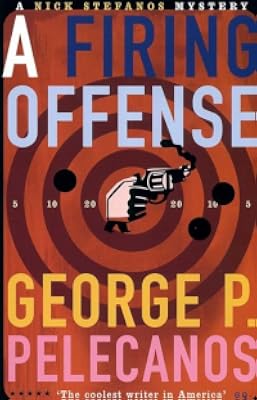
George P. Pelecanos was born in Washington, D.C. on February 18, 1957. Before becoming an author, he worked as a line cook, dishwasher, bartender, and woman's shoe salesman. His first novel, A Firing Offense, was published in 1992. His other books include Nick's Trip, Shoedog, King Suckerman, Right as Rain, Hard Revolution, Drama City, The Night show more Gardener, and What It Was. He has received numerous awards including the Raymond Chandler award in Italy, the Falcon award in Japan, and the Grand Prix Du Roman Noir in France. Hell to Pay and Soul Circus were awarded the 2003 and 2004 Los Angeles Times Book Prizes. He has served as producer on the feature films Caught (1996), Whatever (1998) and BlackMale (1999). He was a producer, writer, and story editor for the HBO series, The Wire, which won the Peabody Award and the AFI Award. He was also a writer and co-producer on the HBO World War II miniseries The Pacific and an executive producer and writer on the HBO series Treme. (Bowker Author Biography) show less
Awards and Honors
Awards
Common Knowledge
- Original publication date
- 2008
- People/Characters
- Alex Pappas; James Monroe; Raymond Monroe; Charles Baker; Peter Whitten; Billy Cachoris (show all 12); John Pappas; Vicki Pappas; Deon Brown; Dominique Dixon; Cody Kruger; La Trice Brown
- Important places
- Washington, D.C., USA
- Dedication
- In Memoriam
Lance Cpl. Philip A. Johnson
3rd Battalion, 2nd Marine Regiment
2nd Marine Division
2nd Marine Expeditionary Force - First words
- He called the place Pappas and Sons Coffee Shop.
- Last words
- (Click to show. Warning: May contain spoilers.)He's talking about me, thought Alex. John Pappas's son. The dreamer.
Classifications
Statistics
- Members
- 723
- Popularity
- 39,118
- Reviews
- 29
- Rating
- (3.71)
- Languages
- 5 — Dutch, English, French, Italian, Spanish
- Media
- Paper, Audiobook, Ebook
- ISBNs
- 25
- ASINs
- 12