On This Page
Description
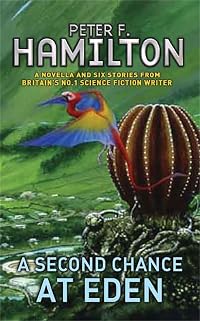
Acclaimed bestselling author Peter F. Hamilton has taken the science fiction world by storm with his stunning, grand-scale epic: The Reality Dysfunction, The Neutronium Alchemist, and The Naked God. Now, with this collection of six stories and a short novel, Hamilton spans more than five centuries in the future history of bitek, affinity genes, Edenists, Adamists, xenocs, the Saldanas, and the starship Lady Macbeth. This outstanding anthology includes "Escape Route," which has been chosen show more for Gardner Dozois's prestigious collection The Year's Best Science Fiction. show lessTags
Recommendations



Member Reviews
This collection of stories, one of which is a novel by 1960-1970s standards, is set in the universe of the bizarrely popular Night's Dawn Trilogy. All of the stories here are better than any of or all of the volumes in that trilogy. The novel is a murder-mystery, something that Hamilton does well. One of the stories features the crew of the Lady MacBeth,, familiar to all Night's Dawn readers. Other stories have disparate settings and themes and that is what makes this book much better than most of Hamilton's other works; some of these stories are actually about something more than either space operatic adventure or whodunnit. Some of them have a classic sting-in-the-tail SF short story construction. If you liked any Hamilton at all, you show more should enjoy this collection. show less
A varied bundle of stories and novellas: there’s a near-future dog-fighting story; there’s a whodunit set on a bio-technological mining station around Jupiter (against the background of “normal humans” versus “enhanced humans”); there’s a quiet story about the owner of a frontier orchard trying to maintain her economic independence; and also a “humans find alien derelict” story; and plenty more besides. The timeline is chronological, from near-future to far-future, with excellent science fiction technology that is both clever and intriguing. Hamilton does excellent worldbuilding and plays with genre tropes like a pro.
I liked these: I picked up this bundle to sample Hamilton, and I think I will enjoy tackling his show more longer works. show less
I liked these: I picked up this bundle to sample Hamilton, and I think I will enjoy tackling his show more longer works. show less
My reactions to reading this collection in 1999. Spoilers follow.
“Introduction” -- A brief account of the origin of this collection as a series of previously unrelated stories built around the concept of “affinity technology”.
“Sonnie’s Edge” -- Gladiatorial combat stories have a fairly long history in sf, and this story is in that tradition. The important thing about working in such a sub-genre is that you do it with flare and bring something new to the idea. Hamilton largely succeeds on both counts. Here the combat is between engineered beasts (with just enough vital organs to keep them functioning in combat and things like liver and kidneys relegated to support pods hooked up between bouts), beasts controlled by affinity show more links which are cloned organisms implanted in two parties to enable a sort of telepathy. In this case, though, it’s not true telepathy since the beasts have no sentience and microprocessors to run part of their bodies. However, their handlers experience most of their sensations and use them as vehicles of surrogate combat. The "edge" of the title is the revelation that the narrator has her brain in the combat beast and not safely on the sidelines as is usually the case. Fear of death and damage is the edge. The main peculiarity of this story is a stylistic one. For reasons I can’t fathom, Hamilton, just as Sonnie is assaulted by the Spetsnaz assassin girl, shifts first person viewpoint to the girl than back to Sonnie. The twist end of the story works (Sonnie’s brain in the beast), but I think it could be managed without the jarring shift of viewpoints.
“A Second Chance at Eden” -- After reading this story, I can see why people make a fuss over Hamilton. In this story, he packs on an amazing amount of not only scientific and technological speculation (foremost the whole idea of a space colony grown from a modified coral polyp), but he also grounds that speculation in a believable matrix of plausibly extrapolated cultural, religious, and social speculation. Hamilton is also good at creating plausible characters with believable motives. He only falls down a bit in a couple of areas. Narrator and police chief, Harvey Parfitt, seems to provide too many infodumps and information (not that I mind infodumps) for what is ostensibly a story told for a contemporary audience. However, this can be rationalized stylistically in a couple of ways. First, he’s a detail oriented policeman. Secondly, the narrative may be for posterity since Parfitt is present for Wing-Tsit Chang’s transference of his consciousness to Eden’s neural strata and the events that trigger Eden’s independence. The second flaw is Hamilton’s use of that old plot cliché of the detective sleeping with a woman, Hoi Yin, he meets in the course of the investigation. However, I think he handles the cliché fairly well giving it a context of marital trouble, trouble of interesting nature since the Parfits disagree on the morality of the affinity bonds that form the basis of Eden’s culture. And I like that ultimately Parfitt loves his wife even more than Eden and returns to Earth. Hamilton does an interesting turnabout at story’s end. After the traditional sf hostility against religion, the demonstration of the emotional (in an almost clichéd free love mode) and psychological experience of Eden’s affinity bonds in a most intimate way with Parfitt’s and Hoi Yin’s sexual union, we find, at story’s end, that maybe Cooke had a point. Here the Unified Christian Church is represented in Eden by Father Cooke. He is represented as a good man who does not believe the residents of Eden are evil, but whose fears that affinity technology will lead humanity into a hubristic reliance on itself for its spiritual and psychological needs. Eden’s new culture and independence are triggered by a murder committed by the beloved Ching who practices a type of Buddhism. He kills the creator of Hoi Yin (engineered, originally, to be a geisha) who he regards as unfit to merge, as he does, with Eden. Chong decides his victim Maowkanitz is just not the sort he wants in on the ground floor of his new civilization. At the very least, I’m ambivalent about Ching’s action. Parfitt seems even more disturbed. At story’s end, he calls Eden flawed, its children (in an allusion to “The Emperor’s New Clothes”) “naked”, and sees earth, in all its flaws, inviting.
“New Days Old Times” -- The title of the story states the theme: new technology and space colonization can not eliminate old problems like ethnic hatreds which, here, spring up on a colony world. Like his “A Second Chance at Eden”, this story has an almost conservative message. Here ethnic tensions are exacerbated by Earth’s Govcentral forcing ethnic groups to integrate and live side by side.
“Candy Buds” -- This is a biter-bitten story as a mobster on a colony world is killed, not entirely unexpectedly, by the step-daughter of an old victim. The story is written in the present tense. The present tense seems well-suited to depict obsessions, here the sexual obsession of the old Laurus for Torreya before he discovers she’s his daughter.
“Deathday” -- I liked the background of this story: a colonization development corporation goes broke when the target’s star turns out to be surprisingly variable and causes ice ages less than five thousand years apart. The story’s protagonist spends his days stalking a xenoc (an indigenous lifeform in Hamilton’s nomenclature), a shapeshifting and possibly sentient lifeform, who spends its days and nights tormenting the protagonist – and desecrating the memory and body of the hero’s dead wife. This is very probably in vengeance for the colonization corporation releasing a virus that killed 90% of the planet’s animals. (It was supposed to kill a dinosaur-like predator.) The xenoc seems to have a natural affinity bond with the hero. The story reaches a horrifying conclusion when the xenoc’s eggs hatch (after the creature is killed), and the new xenoc’s, a meter tall, try to impersonate the hero’s wife. However, Hamilton sort of spoils the horror by having tiny impersonations of the hero kill the protagonist.
“The Lives and Loves of Tiarella Rosa” -- An interesting tale of obsession, doomed obsession in this case around the theme that “life is about cycles”. Squeamish terrorist Eason, on the run with anti-matter stolen from his ex-comrades-in-arms, stumbles upon the island of Charmaine with its custom engineered lifeforms built by a dead owner. Charmaine is populated by the fortune-telling, self-described “bitch” Tiarella Rosa and her daughter Althea whom Eason unexpectedly falls in love. However, he is unexpectedly supplanted by Mullen, a local boy. Eason finds out he has been an unwitting part of a bizarre scheme for Rosa to relive her life and restore the fortunes of Charmaine. Rosa’s father, the genetic engineering genius behind the island’s lifeforms, cloned Rosa and her dead lover. The Rosa clone became Althea. The clone of Vanstone, Rosa’s dead husband, was sent away and become Mullen. Eason was there to sexually awaken and educate Althea – as an old pre-Vanstone lover did with Rosa – before being supplanted by Mullen. It’s an interesting story about many things: how our loves may be fated by biology and not the whims of chance, tyring to relive and redeem our lives through clones with environments engineered to duplicate our pasts, and the question of whether free will can be divorced from both genetic and environmental influences.
“Escape Route” -- A suspenseful story about an attempt to decipher the secrets of an abandoned alien spaceship. Complications are a group of mercenaries on the Lady Macbeth to covertly look for fissionable materials in an asteroid belt so a colony can use nukes to blackmail their way to freedom. The mercs and ship’s captain are the only ones to recognize that the wonders of the 13, 000 year old derelict will totally upset the current political and economic order. The mercs understandably see wealth and the opportunity to abandon their missions. Marius Calvert, the ship’s captain, doesn’t think the ship represents wealth, just chaos. The ship, in a rather clichéd end, is destroyed. Calvert’s pessimism is never really explained unless he thinks any medium of wealth he puts his new money in may become obsolete in the forthcoming economic turmoil, or he may want to preserve the Confederation. show less
“Introduction” -- A brief account of the origin of this collection as a series of previously unrelated stories built around the concept of “affinity technology”.
“Sonnie’s Edge” -- Gladiatorial combat stories have a fairly long history in sf, and this story is in that tradition. The important thing about working in such a sub-genre is that you do it with flare and bring something new to the idea. Hamilton largely succeeds on both counts. Here the combat is between engineered beasts (with just enough vital organs to keep them functioning in combat and things like liver and kidneys relegated to support pods hooked up between bouts), beasts controlled by affinity show more links which are cloned organisms implanted in two parties to enable a sort of telepathy. In this case, though, it’s not true telepathy since the beasts have no sentience and microprocessors to run part of their bodies. However, their handlers experience most of their sensations and use them as vehicles of surrogate combat. The "edge" of the title is the revelation that the narrator has her brain in the combat beast and not safely on the sidelines as is usually the case. Fear of death and damage is the edge. The main peculiarity of this story is a stylistic one. For reasons I can’t fathom, Hamilton, just as Sonnie is assaulted by the Spetsnaz assassin girl, shifts first person viewpoint to the girl than back to Sonnie. The twist end of the story works (Sonnie’s brain in the beast), but I think it could be managed without the jarring shift of viewpoints.
“A Second Chance at Eden” -- After reading this story, I can see why people make a fuss over Hamilton. In this story, he packs on an amazing amount of not only scientific and technological speculation (foremost the whole idea of a space colony grown from a modified coral polyp), but he also grounds that speculation in a believable matrix of plausibly extrapolated cultural, religious, and social speculation. Hamilton is also good at creating plausible characters with believable motives. He only falls down a bit in a couple of areas. Narrator and police chief, Harvey Parfitt, seems to provide too many infodumps and information (not that I mind infodumps) for what is ostensibly a story told for a contemporary audience. However, this can be rationalized stylistically in a couple of ways. First, he’s a detail oriented policeman. Secondly, the narrative may be for posterity since Parfitt is present for Wing-Tsit Chang’s transference of his consciousness to Eden’s neural strata and the events that trigger Eden’s independence. The second flaw is Hamilton’s use of that old plot cliché of the detective sleeping with a woman, Hoi Yin, he meets in the course of the investigation. However, I think he handles the cliché fairly well giving it a context of marital trouble, trouble of interesting nature since the Parfits disagree on the morality of the affinity bonds that form the basis of Eden’s culture. And I like that ultimately Parfitt loves his wife even more than Eden and returns to Earth. Hamilton does an interesting turnabout at story’s end. After the traditional sf hostility against religion, the demonstration of the emotional (in an almost clichéd free love mode) and psychological experience of Eden’s affinity bonds in a most intimate way with Parfitt’s and Hoi Yin’s sexual union, we find, at story’s end, that maybe Cooke had a point. Here the Unified Christian Church is represented in Eden by Father Cooke. He is represented as a good man who does not believe the residents of Eden are evil, but whose fears that affinity technology will lead humanity into a hubristic reliance on itself for its spiritual and psychological needs. Eden’s new culture and independence are triggered by a murder committed by the beloved Ching who practices a type of Buddhism. He kills the creator of Hoi Yin (engineered, originally, to be a geisha) who he regards as unfit to merge, as he does, with Eden. Chong decides his victim Maowkanitz is just not the sort he wants in on the ground floor of his new civilization. At the very least, I’m ambivalent about Ching’s action. Parfitt seems even more disturbed. At story’s end, he calls Eden flawed, its children (in an allusion to “The Emperor’s New Clothes”) “naked”, and sees earth, in all its flaws, inviting.
“New Days Old Times” -- The title of the story states the theme: new technology and space colonization can not eliminate old problems like ethnic hatreds which, here, spring up on a colony world. Like his “A Second Chance at Eden”, this story has an almost conservative message. Here ethnic tensions are exacerbated by Earth’s Govcentral forcing ethnic groups to integrate and live side by side.
“Candy Buds” -- This is a biter-bitten story as a mobster on a colony world is killed, not entirely unexpectedly, by the step-daughter of an old victim. The story is written in the present tense. The present tense seems well-suited to depict obsessions, here the sexual obsession of the old Laurus for Torreya before he discovers she’s his daughter.
“Deathday” -- I liked the background of this story: a colonization development corporation goes broke when the target’s star turns out to be surprisingly variable and causes ice ages less than five thousand years apart. The story’s protagonist spends his days stalking a xenoc (an indigenous lifeform in Hamilton’s nomenclature), a shapeshifting and possibly sentient lifeform, who spends its days and nights tormenting the protagonist – and desecrating the memory and body of the hero’s dead wife. This is very probably in vengeance for the colonization corporation releasing a virus that killed 90% of the planet’s animals. (It was supposed to kill a dinosaur-like predator.) The xenoc seems to have a natural affinity bond with the hero. The story reaches a horrifying conclusion when the xenoc’s eggs hatch (after the creature is killed), and the new xenoc’s, a meter tall, try to impersonate the hero’s wife. However, Hamilton sort of spoils the horror by having tiny impersonations of the hero kill the protagonist.
“The Lives and Loves of Tiarella Rosa” -- An interesting tale of obsession, doomed obsession in this case around the theme that “life is about cycles”. Squeamish terrorist Eason, on the run with anti-matter stolen from his ex-comrades-in-arms, stumbles upon the island of Charmaine with its custom engineered lifeforms built by a dead owner. Charmaine is populated by the fortune-telling, self-described “bitch” Tiarella Rosa and her daughter Althea whom Eason unexpectedly falls in love. However, he is unexpectedly supplanted by Mullen, a local boy. Eason finds out he has been an unwitting part of a bizarre scheme for Rosa to relive her life and restore the fortunes of Charmaine. Rosa’s father, the genetic engineering genius behind the island’s lifeforms, cloned Rosa and her dead lover. The Rosa clone became Althea. The clone of Vanstone, Rosa’s dead husband, was sent away and become Mullen. Eason was there to sexually awaken and educate Althea – as an old pre-Vanstone lover did with Rosa – before being supplanted by Mullen. It’s an interesting story about many things: how our loves may be fated by biology and not the whims of chance, tyring to relive and redeem our lives through clones with environments engineered to duplicate our pasts, and the question of whether free will can be divorced from both genetic and environmental influences.
“Escape Route” -- A suspenseful story about an attempt to decipher the secrets of an abandoned alien spaceship. Complications are a group of mercenaries on the Lady Macbeth to covertly look for fissionable materials in an asteroid belt so a colony can use nukes to blackmail their way to freedom. The mercs and ship’s captain are the only ones to recognize that the wonders of the 13, 000 year old derelict will totally upset the current political and economic order. The mercs understandably see wealth and the opportunity to abandon their missions. Marius Calvert, the ship’s captain, doesn’t think the ship represents wealth, just chaos. The ship, in a rather clichéd end, is destroyed. Calvert’s pessimism is never really explained unless he thinks any medium of wealth he puts his new money in may become obsolete in the forthcoming economic turmoil, or he may want to preserve the Confederation. show less
Personally, I'd recommend you read this after the Night's Dawn trilogy, but you could read them in either order, or indeed, read one without the other.
There's nothing here which matches Night's Dawn for greatness but it does lack most of the grammatical problems which plague the novel.
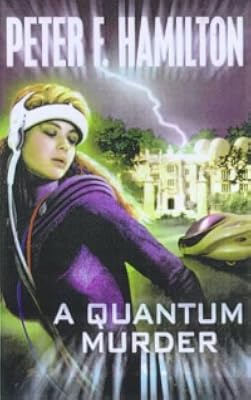
The best is the title story. The slightly noirish tone is well done and all the Biblical references work. I wrongly guessed the murderer, but wasn't far off when you take the twist into account
There's nothing here which matches Night's Dawn for greatness but it does lack most of the grammatical problems which plague the novel.
The best is the title story. The slightly noirish tone is well done and all the Biblical references work. I wrongly guessed the murderer, but wasn't far off when you take the twist into account
I’ve read thousands of pages written by Peter Hamilton, many thousands, usually in the form of voluminous trilogies (Night’s Dawn, Void, Salvation) or other collections (Commonwealth Saga, Mandel Files) in addition to single volume works such as Great North Road and Fallen Dragon. Hamilton is a brilliant writer of hard science fiction.
This is the second collection of his short stories that I have read, following right on the heels of his collection, Manhattan in Reverse. As is the case with his other work, the hard science fiction in these stories is excellent. There is one novella length work (the title piece) and six other shorter tales, most of which are set in the Night’s Dawn universe.
If you like hard science fiction, show more you’ll enjoy this collection. If you like the style, there are many thousands of pages of similar work available to you. show less
This is the second collection of his short stories that I have read, following right on the heels of his collection, Manhattan in Reverse. As is the case with his other work, the hard science fiction in these stories is excellent. There is one novella length work (the title piece) and six other shorter tales, most of which are set in the Night’s Dawn universe.
If you like hard science fiction, show more you’ll enjoy this collection. If you like the style, there are many thousands of pages of similar work available to you. show less
This collection of stories takes place in the Confederation universe prior to the events of the Night’s Dawn Trilogy. They vary from considering different aspects of affinity bonds to the start of Edenism. Ashly shows up in one of the previous trips during his one way trip into the distance future. Marcus Calvert flies the Lady Macbeth on the infamous flight that Joshua refused to share with everyone-- the flight that left them living on Tranquility due to the extensive damage his ship took.
The collection is a very pleasant read after finishing the Night’s Dawn Trilogy. Familiar characters, ideas, and places make appearances in a collection of stories spread across space and time in the years after the beginning of the Confederation show more and before the reality dysfunction begins on Lalonde. show less
The collection is a very pleasant read after finishing the Night’s Dawn Trilogy. Familiar characters, ideas, and places make appearances in a collection of stories spread across space and time in the years after the beginning of the Confederation show more and before the reality dysfunction begins on Lalonde. show less
This second "taste" of Peter F. Hamilton's short works was even more intriguing than the first, and since it introduces many of the elements of his massive novels - in particular the Night's Dawn trilogy - it encouraged me even more to take the jump or, as some of my fellow bloggers defined it, to overcome author intimidation.
A Second Chance at Eden is a collection of short stories, but the one that truly fascinated me is the one from which the book draws its title: once more I encountered a murder mystery, as was the case with Watching Trees Grow, but it was completely different, starting with the background in which the investigation takes place.
Full review at SPACE AND SORCERY BLOG
A Second Chance at Eden is a collection of short stories, but the one that truly fascinated me is the one from which the book draws its title: once more I encountered a murder mystery, as was the case with Watching Trees Grow, but it was completely different, starting with the background in which the investigation takes place.
Full review at SPACE AND SORCERY BLOG
Members
- Recently Added By
Lists

Space Colonization
100 works; 26 members
Author Information

123+ Works 42,631 Members
Peter F. Hamilton was born in Rutland, England on March 2, 1960. He started writing in 1987 and sold his first short story to Fear magazine in 1988. His first novel, Mindstar Rising, was published in 1993. His other works include the Night's Dawn series; Fallen Dragon; and the Void series. (Bowker Author Biography)
Some Editions
Series

Belongs to Publisher Series
Bastei Science Fiction-Abenteuer (23240)
Work Relationships
Is contained in
Contains
Has as a reference guide/companion
Common Knowledge
- Canonical title
- A Second Chance at Eden
- Original title
- A Second Chance at Eden
- Original publication date
- 1998-10
- People/Characters
- Penny Maowkavitz; Marcus Calvert
- Dedication
- To David Garnett
because, like many of us, I owe him. - First words
- It was daylight, so Battersea was in gridlock.
- Last words
- (Click to show. Warning: May contain spoilers.)"We'll never know, now." Marcus lifted his head, some of the old humour emerging through his melancholia. "But I hope they got back safe."
- Original language
- English
Classifications
Statistics
- Members
- 1,152
- Popularity
- 21,748
- Reviews
- 12
- Rating
- (3.79)
- Languages
- Czech, English, German
- Media
- Paper, Audiobook, Ebook
- ISBNs
- 18
- ASINs
- 15