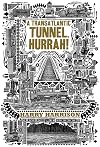
A Transatlantic Tunnel, Hurrah!
by Harry Harrison
On This Page
Description
A metal highway under the sea is no longer a dream. Captain Augustine Washington and his team of navvies are already driving the tunnel under the Atlantic in an heroic feat of construction. For Gus, a descendant of the infamous George Washington, executed as a traitor after the Battle of Lexington, this is the opportunity to redeem the family name. But his beautiful fiancee has been forced to end their engagement, and there is a ruthless and sinister plot to destroy the tunnel - and Gus show more himself... show lessTags
Recommendations


















Member Reviews
In this early essay in what would later be called steampunk, Harrison gives us an alternate universe where the British Empire never ended, and the descendant of the great Victorian engineers Thomas Brassey and Isambard Kingdom Brunel is planning the next great extension of the Great Western Railway - to New York! Along the way, we meet a descendant of that minor rebel, George Washington, now relegated to a footnote in history by means of a firing squad. God Save The Queen!
My reactions to reading this novel in 1996. Spoilers follow.
I decided to read this book to see how it influenced Richard Dreyfuss’ and Harry Turtledove’s The Two Georges since Harry Harrison is specifically mentioned in the acknowledgements of the latter novel. This novel is better than that one, and there are enough similarities between Harrison’s alternate universe and that of The Two Georges to show Turtledove’s and Dreyfuss’ debt is great.
Both feature worlds dominated by French and English Empires and lacking united Germanies though Harrison’s novel mentions Russia very little. Both novels feature relatively genial worlds spared our two World Wars; indeed, one of the final scenes in Harrison’s novel is a psychic show more viewing our world and horrified by what she sees. Both have North Americas with prominent Indian and Irish populations. While both novels feature Iroquois Indians, Harrison’s novel mentions several other Indian tribes in North and South America who seem to have maintained sovereignty or, at least, respect and power. Still, as befitting the pseudo-Victorian tone of this novel, the Irish and Indians are mainly there to be colorful, humorous characters. The Two Georges really only mentions the Iroquois and the Irish but treats their situation (possible cultural death in the Iroquois case and discrimination and appalling labor conditions for the Irish) in a much more realistic manner. Both novels postulate worlds more technologically backwards than ours though Harrison (as befitting the author who put steam powered robots in one of his Stainless Steel Rat novels) creates some delightful variations on current technology – typically large, unique, and underemployed. His hero, Augustine Washington, travels by huge “helithopter”. Large, mechanical computers and their new electronic counterparts are rare and unaccountably referred to as “Brabbage” engines not Babbage engines. Transoceanic flight exists but in large, very ornately decorated airplanes owned by the Cunard line which views them as they once did ocean liners. They prefer to go for quality of passenger and not quantity. Both novels also feature the American Revolution as never (at least successfully) occurring. In Harrison’s novel, unlike The Two Georges, Washington is a reviled traitor.
However, this novel features another turning point. In the year 1212, Crusaders in Spain do not defeat the Moslems at Navas de Tolosa, and the nations of Spain and Portugal never come into being. England discovers the New World and seems to have settled North America much more slowly. Indeed, Washington works on the transcontinental railway when a young engineer though the novel takes place in approximately 1973. Both novel feature a typical humorous aside of alternate history novels – characters alluding to or reading alternate histories describing our world. Thomas Bushell in The Two Georges dismisses an alternate history describing WWII as absurd. Here Harrison alludes to his friend and literary colleague Brian Aldiss. Here he is the Reverend Aldiss who writes “popular scientific romances”. While I normally don’t like fannish allusions to other sf authors, the joke and idea is much more palatable in alternate histories since part of their charm is seeing literary and historical characters in a new light. As befitting Harrison, this novel features many humorous scenes using this element. Another Harrison friend, colleague, and author is mentioned – Kingsley Amis, here Lord Amis, “foreign minister”. The engineer who enthusiastically talks Washington into being the first human to cross the Atlantic via rocket bears the name Clarke, a suspiciously close resemblance to Arthur C. Clarke. Dick Tracy even shows up and economist Keynes is mentioned.
This book is a quick, concise, charming read. Harrison proves he can do the hard science when describing strange Victorian vehicles (I liked the carriages hooked up to electric cars controlled by horse reins.) and, of course, the charming and plausible seeming centerpiece of the novel: the transatlantic tunnel (Though Harrison does a mighty bit of hand waving when explaining how his bridge across the mid-Atlantic fault zone will accommodate mid-ocean spreading). Critic J. J. Pierce called this sort of story (he was talking about another novel featuring a transatlantic tunnel), “industrial science fiction”. That’s a good description though there’s action and a bit of intrigue here too. show less
I decided to read this book to see how it influenced Richard Dreyfuss’ and Harry Turtledove’s The Two Georges since Harry Harrison is specifically mentioned in the acknowledgements of the latter novel. This novel is better than that one, and there are enough similarities between Harrison’s alternate universe and that of The Two Georges to show Turtledove’s and Dreyfuss’ debt is great.
Both feature worlds dominated by French and English Empires and lacking united Germanies though Harrison’s novel mentions Russia very little. Both novels feature relatively genial worlds spared our two World Wars; indeed, one of the final scenes in Harrison’s novel is a psychic show more viewing our world and horrified by what she sees. Both have North Americas with prominent Indian and Irish populations. While both novels feature Iroquois Indians, Harrison’s novel mentions several other Indian tribes in North and South America who seem to have maintained sovereignty or, at least, respect and power. Still, as befitting the pseudo-Victorian tone of this novel, the Irish and Indians are mainly there to be colorful, humorous characters. The Two Georges really only mentions the Iroquois and the Irish but treats their situation (possible cultural death in the Iroquois case and discrimination and appalling labor conditions for the Irish) in a much more realistic manner. Both novels postulate worlds more technologically backwards than ours though Harrison (as befitting the author who put steam powered robots in one of his Stainless Steel Rat novels) creates some delightful variations on current technology – typically large, unique, and underemployed. His hero, Augustine Washington, travels by huge “helithopter”. Large, mechanical computers and their new electronic counterparts are rare and unaccountably referred to as “Brabbage” engines not Babbage engines. Transoceanic flight exists but in large, very ornately decorated airplanes owned by the Cunard line which views them as they once did ocean liners. They prefer to go for quality of passenger and not quantity. Both novels also feature the American Revolution as never (at least successfully) occurring. In Harrison’s novel, unlike The Two Georges, Washington is a reviled traitor.
However, this novel features another turning point. In the year 1212, Crusaders in Spain do not defeat the Moslems at Navas de Tolosa, and the nations of Spain and Portugal never come into being. England discovers the New World and seems to have settled North America much more slowly. Indeed, Washington works on the transcontinental railway when a young engineer though the novel takes place in approximately 1973. Both novel feature a typical humorous aside of alternate history novels – characters alluding to or reading alternate histories describing our world. Thomas Bushell in The Two Georges dismisses an alternate history describing WWII as absurd. Here Harrison alludes to his friend and literary colleague Brian Aldiss. Here he is the Reverend Aldiss who writes “popular scientific romances”. While I normally don’t like fannish allusions to other sf authors, the joke and idea is much more palatable in alternate histories since part of their charm is seeing literary and historical characters in a new light. As befitting Harrison, this novel features many humorous scenes using this element. Another Harrison friend, colleague, and author is mentioned – Kingsley Amis, here Lord Amis, “foreign minister”. The engineer who enthusiastically talks Washington into being the first human to cross the Atlantic via rocket bears the name Clarke, a suspiciously close resemblance to Arthur C. Clarke. Dick Tracy even shows up and economist Keynes is mentioned.
This book is a quick, concise, charming read. Harrison proves he can do the hard science when describing strange Victorian vehicles (I liked the carriages hooked up to electric cars controlled by horse reins.) and, of course, the charming and plausible seeming centerpiece of the novel: the transatlantic tunnel (Though Harrison does a mighty bit of hand waving when explaining how his bridge across the mid-Atlantic fault zone will accommodate mid-ocean spreading). Critic J. J. Pierce called this sort of story (he was talking about another novel featuring a transatlantic tunnel), “industrial science fiction”. That’s a good description though there’s action and a bit of intrigue here too. show less
In a word: dull. Two words: very dull. Lots of engineering details about building a transatlantic tunnel and ways of overcoming the cost and materials challenges. I just can't muster the excitement.
I read the book because it has an alternate history setting to it, one in which the US lost the revolutionary war. And now who but a descendant of George Washington and a descendant of Isambard Kingdom Brunel are working together on the tunnel projects. Tensions will be high! But they are not really because any tension that might be there fizzles out because the characters have so little depth to them.
DNF at page 100. Although I was past the halfway point, I didn't see that Harrison had enough runway left to get this bird in the air (to use show more a wholly inappropriate transportation metaphor). show less
I read the book because it has an alternate history setting to it, one in which the US lost the revolutionary war. And now who but a descendant of George Washington and a descendant of Isambard Kingdom Brunel are working together on the tunnel projects. Tensions will be high! But they are not really because any tension that might be there fizzles out because the characters have so little depth to them.
DNF at page 100. Although I was past the halfway point, I didn't see that Harrison had enough runway left to get this bird in the air (to use show more a wholly inappropriate transportation metaphor). show less
Written in the style of late nineteenth century thrillers, this tells the story of the construction of a tunnel across the Atlantic in the face of sabotage and huge natural challenges. The style flows from its setting in a world in which the American Revolution failed and Islamic victories in the Crusades preempt the rise of Spain and the destruction of the civilizations of South America. Packed with typical Harrison touches like knowing references to popular contemporary and historical figures in this new context: a steampunk world with the values of an idealised Victorian England. Essentially, this is a Boys' Own romp for post-modern adults.
This would have to be one of the earliest post-Vernes post-Wells steampunk books - basically written before the term was even coined. But it's definitely steampunk, positing an alternate history where the Victorian steam age never ended. Some great 'boy's own' adventure writing here, featuring manly men and derring do. Hurrah, I say!
Harrison's novel is considered one of the founding works of the steampunk genre. It features all of the expected litererary tropes including an alternate history, overly mechanized technology, and a strangely backward looking and forward leaning world civilization.
The hero of this work is Augustus Washington, an engineer and descendant of the disgraced General George Washington who was hung as a traitor during the early failed attempt at American Independance. His skills put him in charge of the effort to build a monumental undersea railway tunnel from England to the American colonies.
Combining elements such as the Pinkerton Detective Agency, the Brunel family of English engineers, cloak and dagger derring do, and Washington's desire to show more establish America as it's own country, Harrison writes a tightly plotted thriller.
The copy of the book I obtained was from 1972. The one recurring downside to reading this book was the poor editing used in it's preperation. Normally I'm not one to get stuck on spelling mistakes and the like, but in this copy it was a recurring incident. A shame because it distracted from a very good story. show less
The hero of this work is Augustus Washington, an engineer and descendant of the disgraced General George Washington who was hung as a traitor during the early failed attempt at American Independance. His skills put him in charge of the effort to build a monumental undersea railway tunnel from England to the American colonies.
Combining elements such as the Pinkerton Detective Agency, the Brunel family of English engineers, cloak and dagger derring do, and Washington's desire to show more establish America as it's own country, Harrison writes a tightly plotted thriller.
The copy of the book I obtained was from 1972. The one recurring downside to reading this book was the poor editing used in it's preperation. Normally I'm not one to get stuck on spelling mistakes and the like, but in this copy it was a recurring incident. A shame because it distracted from a very good story. show less
A good book based on an interesting concept. An alternate history breaking off at some point that on the surface is unimportant but completely changes everything leading to America still being a colony of England in the 60s which leads to a huge engineering project to build a tunnel between the two countries. Slickly written with enough details to keep it interesting without dragging, this book is a classic of the genre.
Members
- Recently Added By
Author Information

440+ Works 44,520 Members
Harry Harrison was born Henry Maxwell Dempsey on March 12, 1925 in Stamford, Connecticut. He was drafted into the U. S. Air Corps in 1943 and became a sharpshooter, a military policeman, a gunnery instructor, and a specialist in the prototypes of computer-guided bomb-sights and gun turrets. After being discharged, he graduated from Hunter College show more with a degree in art. By the end of the 1940s, he was running a small studio that specialized in selling illustrations to comics and science-fiction magazines. He then moved on to editing some of the magazines. As the market for comics began to shrink, he started writing for science-fiction magazines. He wrote short science fiction stories and novels including Deathworld, Captive Universe, Montezuma's Revenge, Star Smashers of the Galaxy Rangers, Stonehenge, West of Eden, Stars and Stripes Forever. He also wrote the Stainless Steel Rat series and the Bill, the Galactic Hero series. His novel Make Room! Make Room! Was the inspiration for the movie Soylent Green. He also wrote under the pseudonyms Hank Dempsey, Felix Boyd, Wade Kaempfert, Cameron Hall, Philip St. John, and Leslie Charteris. He died on August 15, 2012 at the age of 87. (Bowker Author Biography) show less
Some Editions
Series
Belongs to Publisher Series
Work Relationships
Common Knowledge
- Alternate titles
- Tunnel Through the Deeps
- Original publication date
- 1972
- Dedication
- For transatlantic TOBY ROXBURGH thespian, Savoyard, friend
- First words
- Leaving Paddington Station, the Flying Cornishman seemed little different from any other train.
- Last words
- (Click to show. Warning: May contain spoilers.)Whistling, he went around the turning and out of sight.
- Original language
- English
Classifications
Statistics
- Members
- 584
- Popularity
- 50,541
- Reviews
- 12
- Rating
- (3.40)
- Languages
- Dutch, English, German, Italian
- Media
- Paper, Ebook
- ISBNs
- 15
- ASINs
- 11