Lucia: A Venetian Life in the Age of Napoleon
by Andrea Di Robilant
On This Page
Description
In 1787, Lucia, the beautiful sixteen-year-old daughter of a prominent Venetian statesman, is married off to Alvise Mocenigo, scion of one of the most powerful Venetian families. But their life as a golden couple will be suddenly transformed when Venice falls to Bonaparte. As the larger events unfolding around Lucia mingle with her most personal concerns, we witness-through her letters to her sister and other primary sources-her painful series of miscarriages and the pressure on her to show more produce an heir; her impassioned affair with an Austrian officer and its stunning results; the glamour and strain of her career as a hostess in Hapsburg Vienna and lady-in-waiting at the court of Napoleon's stepson, Prince Eugène de Beauharnais, as well as her intimate relationship with the Empress Josephine; and her amazing firsthand account of the defeat of Napoleon in Paris in 1814. In her later years, Lucia, regal and still beautiful and a bit battle-hardened herself, was Byron's landlord during the poet's stay in Venice. In a fitting finale to this sweeping drama, Lucia stands as a relic of a lost golden age: she created, in part, the aura that gave rise to the Romantic view of Italy and its culture that we still nourish today.With the brave and articulate Lucia at the center of his re-creation of this remarkable historical period, Andrea di Robilant has once again reached across the centuries, and deep into his own past, to bring history to rich and vivid life on the page. show lessTags
Recommendations















Member Reviews
A rather pleasant, romance-novel sort of story – except it’s true. While researching family papers, author Andrea di Robilant found a box of letters belonging to his great**4 grandmother, Lucia Mocenigo. There were probably thousands of men and women of Lucia’s time that had more interesting life stories, but hers got recorded – born in a patrician but impoverished Venetian family; married at 16 to the scion of an equally patrician but considerably less impoverished Venetian family. Miscarriages and death of a child; tenderness and conflict with her husband; political difficulties as Venice is torn apart between Austria and France; an illicit love affair and reconciliation with her husband; being what was essentially a single show more mom; deaths in the family; and eventually ending up as Byron’s landlady. The charm is that the politics and turmoil are interspersed with talk about dresses for court, gardening plans, and a recipe for chocolate dessert cakes. Light reading but engaging and very well done; I’ll have to check out di Robilant’s other book about Venice. show less
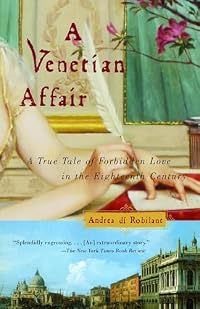
Lucia: A Venetian Life in the Age of Napoleon begins where Andrea Di Robilant’s A Venetian Affair left off. Lucia Mocenigo, one of the author's ancestors, was the eldest daughter of Andrea Memmo, and she married at seventeen into one of the best-known patrician families in Venice. When the Republic fell in 1797 to Napoleon, Lucia went to Vienna, where she became friends with Josephine Bonaparte. Later, Lucia moved back to Venice, where she became Byron’s landlord. She died in the 1850s, when she was in her 80s.
Lucia is a compelling look into the life of an intriguing woman. She was at the heart of European political change, as her letters to her husband and sister show. What Di Robilant does successfully in this book, as he did in show more A Venetian Affair, is bring the event s and people to life. Everything Lucia, her husband Alvise, and her son Alvisetto, do is documented here with precision. Sometimes with too much precision: when her son was a teenager, Lucia obsessively worried over his progress in school. But in all, Lucia was an impressive woman who rose to the challenges she faced with courage. show less
Lucia is a compelling look into the life of an intriguing woman. She was at the heart of European political change, as her letters to her husband and sister show. What Di Robilant does successfully in this book, as he did in show more A Venetian Affair, is bring the event s and people to life. Everything Lucia, her husband Alvise, and her son Alvisetto, do is documented here with precision. Sometimes with too much precision: when her son was a teenager, Lucia obsessively worried over his progress in school. But in all, Lucia was an impressive woman who rose to the challenges she faced with courage. show less
(I have strong Venetian roots…yet, I love Napoleon…Hmm…For many Venetians, this is, still today, a very divided and somewhat ‘better-left-alone’ kind of topic.
When Napoleon conquered Venice and terminated the Venetian Republic once and for all, it was a glorious day for the people of the region, who had suffered much oppression; but an everlasting blow to the Venetian aristocracy. Venice, ‘Queen of the Adriatic’, would no longer be).
Okay, on with the book already…
There is a particular hotel in Venice, Palazzo Mocenigo, on Venice’s Grand Canal, which has now been converted into apartments. In it stands a 10-foot statue of Napoleon, dating from the time of the end of the Republic…I know this because I’ve been told show more about it repeatedly, and, have seen it myself. Interestingly, the statue is connected to the story of an aristocratic lady who once lived in the times of the Revolution, specifically in Venice. Her name was Lucia.
One of her descendants, Andrea di Robilant tells her story in the book: Lucia: A Venetian Life in the Age of Napoleon. He was inspired by the statue of Napoleon standing in the Palace of one of his ancestral great-great-grandfathers, to find out more. The story revealed itself to him when he found an unopened box containing letters of correspondence written by Lucia, his great-great-great-great grandmother.
The story of Lucia is not terribly exciting. She wasn’t famous or anything, but she was certainly part of the aristocracy of the times. She married at the age of 15 to Alvise Mocenigo. Through her letters you can sense the loneliness and sadness of a woman who was resigned to make the best of her marriage. Alvise is portrayed as cold and very goal-oriented, with little time for romance or love (for Lucia, that is). Lucia had wanted more. I never sensed any joy from her except that she had immense love for her family, especially for her sister. Throughout the book, her husband, who is politically affiliated to the Revolutionaries is constantly traveling and trying to make best to stay solvent; while Lucia continues to make connections with the ‘right’ people in society’s well-known circles.
Even though, the book is solely based on letters and facts, (dated letters only- throughout the book), I was still very interested in the happenings of day to day life in Lucia’s world. I felt her very real and was able to make a connection with this woman who struggled to keep up with the aristocracy while trying to bridge differences within the different political agendas of the time, for her husband. Despite her husband’s loyalty to his party, Lucia’s love for Venice is repeated throughout the book. She despised the fact that Venice was being overthrown- the Republic falling. For back then, Lucia was quite entrepreneurial and had a good sense of business relations. She was, as well, politically knowledgeable. After the fall of the Republic, Lucia actually befriended Josephine, and was even part of Eugene’s court as lady-in-waiting to his wife, Augusta. this is well noted in her letters.
The story has a few extremely sad moments; (spoiler) involving her son. Lucia, I felt was never truly happy. She went through the motions of what was expected of her. She was true to her sister and cared for her happiness. She was a doting mother and a relentlessly dedicated wife to an undeserving and unfaithful husband. When it came to herself, though, it almost felt as though she was not entitled to happiness; this was also my feeling when Lucia finally found the love of her life. She denied her feelings and happiness all through her life. Lucia's life is not dramatic, but her days are filled with meetings, encounters and visits for influential and political reasons; all to benefit her family's security. The intricacy of her devised daily agenda itself, makes for an interesting read.
I believe that writing from personal letters is extremely challenging for any author; refraining from adding personal touches is extremely difficult. Andrea de Robilant succeeds in telling Lucia’s story brilliantly and effortlessly despite this drawback. He allowed the letters to tell the story and so, Lucia’s world came to life, beautifully.
Perhaps my Venetian roots and my love for Venice and the 18th century is what held my interest throughout the book. I may be partial to the time and place, but even so, I was totally immersed in Lucia’s life and felt as though she could have been one of my own great-great-great-great grand relatives. I love this book.
If you’d like to read an interview with Andrea Robilant: http://www.wmagazine.com/society/2008/02/andrea_di_robilant?currentPage=1 show less
When Napoleon conquered Venice and terminated the Venetian Republic once and for all, it was a glorious day for the people of the region, who had suffered much oppression; but an everlasting blow to the Venetian aristocracy. Venice, ‘Queen of the Adriatic’, would no longer be).
Okay, on with the book already…
There is a particular hotel in Venice, Palazzo Mocenigo, on Venice’s Grand Canal, which has now been converted into apartments. In it stands a 10-foot statue of Napoleon, dating from the time of the end of the Republic…I know this because I’ve been told show more about it repeatedly, and, have seen it myself. Interestingly, the statue is connected to the story of an aristocratic lady who once lived in the times of the Revolution, specifically in Venice. Her name was Lucia.
One of her descendants, Andrea di Robilant tells her story in the book: Lucia: A Venetian Life in the Age of Napoleon. He was inspired by the statue of Napoleon standing in the Palace of one of his ancestral great-great-grandfathers, to find out more. The story revealed itself to him when he found an unopened box containing letters of correspondence written by Lucia, his great-great-great-great grandmother.
The story of Lucia is not terribly exciting. She wasn’t famous or anything, but she was certainly part of the aristocracy of the times. She married at the age of 15 to Alvise Mocenigo. Through her letters you can sense the loneliness and sadness of a woman who was resigned to make the best of her marriage. Alvise is portrayed as cold and very goal-oriented, with little time for romance or love (for Lucia, that is). Lucia had wanted more. I never sensed any joy from her except that she had immense love for her family, especially for her sister. Throughout the book, her husband, who is politically affiliated to the Revolutionaries is constantly traveling and trying to make best to stay solvent; while Lucia continues to make connections with the ‘right’ people in society’s well-known circles.
Even though, the book is solely based on letters and facts, (dated letters only- throughout the book), I was still very interested in the happenings of day to day life in Lucia’s world. I felt her very real and was able to make a connection with this woman who struggled to keep up with the aristocracy while trying to bridge differences within the different political agendas of the time, for her husband. Despite her husband’s loyalty to his party, Lucia’s love for Venice is repeated throughout the book. She despised the fact that Venice was being overthrown- the Republic falling. For back then, Lucia was quite entrepreneurial and had a good sense of business relations. She was, as well, politically knowledgeable. After the fall of the Republic, Lucia actually befriended Josephine, and was even part of Eugene’s court as lady-in-waiting to his wife, Augusta. this is well noted in her letters.
The story has a few extremely sad moments; (spoiler) involving her son. Lucia, I felt was never truly happy. She went through the motions of what was expected of her. She was true to her sister and cared for her happiness. She was a doting mother and a relentlessly dedicated wife to an undeserving and unfaithful husband. When it came to herself, though, it almost felt as though she was not entitled to happiness; this was also my feeling when Lucia finally found the love of her life. She denied her feelings and happiness all through her life. Lucia's life is not dramatic, but her days are filled with meetings, encounters and visits for influential and political reasons; all to benefit her family's security. The intricacy of her devised daily agenda itself, makes for an interesting read.
I believe that writing from personal letters is extremely challenging for any author; refraining from adding personal touches is extremely difficult. Andrea de Robilant succeeds in telling Lucia’s story brilliantly and effortlessly despite this drawback. He allowed the letters to tell the story and so, Lucia’s world came to life, beautifully.
Perhaps my Venetian roots and my love for Venice and the 18th century is what held my interest throughout the book. I may be partial to the time and place, but even so, I was totally immersed in Lucia’s life and felt as though she could have been one of my own great-great-great-great grand relatives. I love this book.
If you’d like to read an interview with Andrea Robilant: http://www.wmagazine.com/society/2008/02/andrea_di_robilant?currentPage=1 show less
I loved this history book. It told the story of the incredible life of Lucia, an ancestor of the author, and her life in and around Venice at the fall of the Venetian empire. It read like a novel and was full of amazing detail and a credit to the author's meticulous research. I would love to read the author's other history books. Well done.
The author has written a true story based on letters his great-great-great-great grandmother wrote.
In 1787, sixteen year old Lucia married Alvis Mocenigo. Lucia's father was a Venetian statesman and Alvise came from a powerful family in Venice.
This book is full of history. It has a lot of the time Napoleon ruled and when he was in Venice. I have read quite a bit about Josephine, the first wife of Napoleon. I did not know that Austria had control of Venice at one time.
I was interested in the looting of the paintings that were sent to the Louvre. Three of the paintings were by Titian Vecellio, who is in my family tree. He lies in a church in Venice.
I have been to Venice three times and find it one of the most wonderful places in the show more world to visit.
The author has also written The Venetian Affair, which I have not yet read. show less
In 1787, sixteen year old Lucia married Alvis Mocenigo. Lucia's father was a Venetian statesman and Alvise came from a powerful family in Venice.
This book is full of history. It has a lot of the time Napoleon ruled and when he was in Venice. I have read quite a bit about Josephine, the first wife of Napoleon. I did not know that Austria had control of Venice at one time.
I was interested in the looting of the paintings that were sent to the Louvre. Three of the paintings were by Titian Vecellio, who is in my family tree. He lies in a church in Venice.
I have been to Venice three times and find it one of the most wonderful places in the show more world to visit.
The author has also written The Venetian Affair, which I have not yet read. show less
Heillandi frásögn af lífi Luciu í Feneyjum. Hún var dóttir virts en fátæks aðalsmanns sem nær þó að gifta hana í vel efnaða fjölskyldu. Í umróti Napóleónsstyrjaldanna umgengst hún náið frægustu valdafjölskyldur Austurríkis og Frakklands, þ.á m. Jósefínu keisaraynju Frakka. Merkust eru þó mikil og gagnmerk bréfaskrif hennar og Pauline systur hennar sem gefa einstakt innsæi í daglegt amstur Luciu við barneignir, fósturmissi, framhjáhald, veikindi og fjárhagskröggur svo eitthvað sé nefnt.
An interesting biography involving various cities that I know (particularly Venice and Vienna) and an interesting time period. Added interest came from the fact that the author is a descendant of Lucia.
Members
- Recently Added By
Author Information

11 Works 1,380 Members
Andrea di Robilant was born in Italy. He was educated at Le Rosey and Columbia University. He is an Italian journalist and writer. In 2003 he wrote his first book A Venetian Affair. It is a biography of his ancestor in 18th century Venice based on their correspondence; and a sequel entitled Lucia: A Venetian Life in the Age of Napoleon was show more released in 2008. It was in this book that the search to uncover the identity of the anonymous rose began. Di Robilant¿s describes a pink rose that leads to an invitation to meet the doyenne of European roses, Sra. Eleonora Garlant. The question is- could this unnamed rose possibly be the long-lost Rose Bichonne, a China rose that nineteenth-century growers cultivated but which had apparently disappeared since? In 2011 he published Irresistible North: From Venice to Greenland on the Trail of the Zen Brothers, in which he analyses the claim that two Venetian merchants, the Zeno brothers, sailed over the north Atlantic in a pre-Columbian expedition to North America. (Bowker Author Biography) show less
Common Knowledge
- Canonical title
- Lucia: A Venetian Life in the Age of Napoleon
- Original publication date
- 2007
- People/Characters
- Lucia Mocenigo; Alvise Mocenigo; Martinengo delle Palle, Paolina Memmo; Mocenigo, Alvisetto; Napoleon Bonaparte
- Important places
- Venice, Veneto, Italy; Alvisopoli, Italy
- First words
- In the winter of 1786, Andrea Memmo, the Venetian ambassador to the Papal States, was visiting Naples with his daughters Lucia and Paolina during the Carnival season, when he received a dispatch from Venice he had been waitin... (show all)g for anxiously.
- Last words
- (Click to show. Warning: May contain spoilers.)The gardeners do not know its provenance and call it the Rosa moceniga; but it is probably a variety of the Rosa multiflora that Lucia brought from Paris, and now grows wild in the garden of Alvisopoli.
- Original language
- English
Classifications
Statistics
- Members
- 238
- Popularity
- 136,162
- Reviews
- 7
- Rating
- (3.91)
- Languages
- English, French, Italian
- Media
- Paper, Audiobook, Ebook
- ISBNs
- 13
- ASINs
- 4