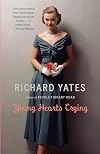
Young Hearts Crying
by Richard Yates
On This Page
Description
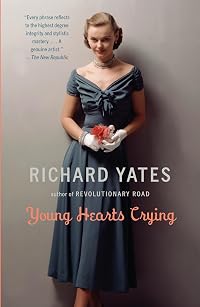
In Young Hearts Crying, Yates movingly portrays a man and a woman from their courtship and marriage in the 1950s to their divorce in the 70s, chronicling their heartbreaking attempts to reach their highest ambitions. Michael Davenport dreams of being a poet after returning home from World War II Europe, and at first he and his new wife Lucy enjoy their life together. But as the decades pass and the success of others creates an oppressive fear of failure in both Michael and Lucy, their once show more bright future gives way to a life of adultery and isolation. With empathy and grace, Yates creates a poignant novel of the desires and disasters of a tragic, hopeful couple.From the Trade Paperback edition.
. show less
Tags
Recommendations





Member Reviews
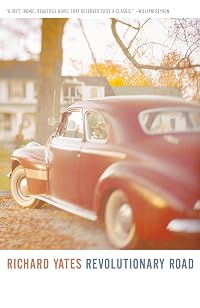
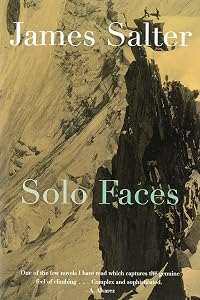
When I read the American writer Richard Yates (1926-1992), I am always reminded of his colleague and contemporary James Salter, with protagonists and plots that exude almost the same melancholy. In Yates's case, the focus lies slightly more on the man-woman relationship, with his “Revolutionary Road” as the most unsettling masterpiece. “Young Hearts Crying” (the title alone is an ominous program), written later (1984), is less violent, and follows the lives of Michael Davenport and Lucy Blaine, a couple who seemingly get along well for a while because “she is a bit shorter and a bit younger than him.” I see you looking up; indeed, here speaks a macho man who appears open-minded but still wants to have the final say. Lucy is show more extremely wealthy, but he wants them to live off his meager money. The year is the 1950s. It will take years before the bomb explodes and Lucy gets fed up with Michael’s narcissistic behavior. The novel subsequently follows Lucy first, and then Michael after the divorce. I personally found that second part, centering on Lucy, the most appealing, because here we naturally follow the female focus. But in this part, too, everything ultimately revolves around the men. Even Lucy does not escape what preoccupies all Yates' characters extremely: being considered ‘special,’ distinguishing oneself from others, and for Lucy, that apparently still means receiving recognition from men.
The third part, centering on Michael, is downright disillusioning: it seems as if he never learns from his failures. The image Yates paints of Michael is downright antipathetic and immature: due to alcohol, he stumbles from psychosis to psychosis, which does not prevent him from constantly seducing women (invariably referred to as ‘girls’). It seems as if this little boy just won't grow up. Only at the end is there the impression that both Richard and Lucy do achieve some self-insight and catharsis. The story unfolds in the 1950s, 1960s, and 1970s in the US, and major societal evolutions are touched upon incidentally, which adds value to the narrative. My summary gives a rather depressing impression, and the book is naturally that too, yet its introspective view of the protagonists makes it a very interesting and readable novel. I was, however, a little disconcerted when I later read that the main character, Michael, corresponds to a large extent with Yates himself. show less
The third part, centering on Michael, is downright disillusioning: it seems as if he never learns from his failures. The image Yates paints of Michael is downright antipathetic and immature: due to alcohol, he stumbles from psychosis to psychosis, which does not prevent him from constantly seducing women (invariably referred to as ‘girls’). It seems as if this little boy just won't grow up. Only at the end is there the impression that both Richard and Lucy do achieve some self-insight and catharsis. The story unfolds in the 1950s, 1960s, and 1970s in the US, and major societal evolutions are touched upon incidentally, which adds value to the narrative. My summary gives a rather depressing impression, and the book is naturally that too, yet its introspective view of the protagonists makes it a very interesting and readable novel. I was, however, a little disconcerted when I later read that the main character, Michael, corresponds to a large extent with Yates himself. show less
This starts in the 50s when Michael falls in love with Lucy at university. Michael marries her “without being fully aware of how it had all come about” and is stunned when he discovers how wealthy she is. He is determined to support them as a writer and would rather make ends meet writing for Chain Store Age than be tainted by touching her trust fund. Money is the big issue they can never discuss – that and the fact that neither of them have ever felt they fitted in (as when “fear of seeming to be a snob impelled her... to become one”). As they glimpse more bohemian lives of their friends, they become increasingly unsettled and more aware of that.
The recurring theme is the desire “to make difficult things look easy”, along show more with the converse of having but wasting talent and/or wealth. The irony is that money is an issue in all the relationships portrayed (including friendship), and it taints them all, even in those where it isn’t apparently an issue. It is also about the process and toll of writing, although Michael is a writer whose main word-related quality is saying the wrong thing in the wrong way when it matters most.
The story proceeds in three parts, spread over subsequent decades, with the second focusing on Lucy and the third on Michael (it might be intriguing to read 3 and 2 the other way round and consider what would need changing to make that work). It is interesting to see things through Lucy’s eyes, especially when she almost becomes Michael, by using his and their life in her work.
*** SPOILERS FOLLOW ***
Their early days together are too easy, and there is a hint of residual sadness and someone always holding back. As this is Yates, the happiness doesn’t last and there are some painfully awkward scenes, such as when Michael is pleased at the way Lucy defends his career (or lack of) to her father, only to be told she did it for her, not for him: the “clumsiest embrace of their lives” follows. Similarly, there were friends who “wouldn’t feel like themselves until he was gone” – ouch.
It felt less polished than other Yates I have read. For example, I felt there were many gaps, particularly an understanding of what Michael writes, his style, what drives him etc, and the lack of input from friends and relatives at various times in their lives. There are also long stretches with oddly little mention of their daughter Laura (you lose track of how old she is, wonder who is babysitting or if she’s being left alone etc); she seems a ghost remnant of their marriage, but maybe that was the intention.
Despite its weaknesses, I found it utterly compelling (I dreamed about it) and was almost reluctant to get to the end.
Oh, and there is a section where it helps (but is not essential) if you’re familiar with Tennessee Williams’ Streetcar Named Desire. show less
The recurring theme is the desire “to make difficult things look easy”, along show more with the converse of having but wasting talent and/or wealth. The irony is that money is an issue in all the relationships portrayed (including friendship), and it taints them all, even in those where it isn’t apparently an issue. It is also about the process and toll of writing, although Michael is a writer whose main word-related quality is saying the wrong thing in the wrong way when it matters most.
The story proceeds in three parts, spread over subsequent decades, with the second focusing on Lucy and the third on Michael (it might be intriguing to read 3 and 2 the other way round and consider what would need changing to make that work). It is interesting to see things through Lucy’s eyes, especially when she almost becomes Michael, by using his and their life in her work.
*** SPOILERS FOLLOW ***
Their early days together are too easy, and there is a hint of residual sadness and someone always holding back. As this is Yates, the happiness doesn’t last and there are some painfully awkward scenes, such as when Michael is pleased at the way Lucy defends his career (or lack of) to her father, only to be told she did it for her, not for him: the “clumsiest embrace of their lives” follows. Similarly, there were friends who “wouldn’t feel like themselves until he was gone” – ouch.
It felt less polished than other Yates I have read. For example, I felt there were many gaps, particularly an understanding of what Michael writes, his style, what drives him etc, and the lack of input from friends and relatives at various times in their lives. There are also long stretches with oddly little mention of their daughter Laura (you lose track of how old she is, wonder who is babysitting or if she’s being left alone etc); she seems a ghost remnant of their marriage, but maybe that was the intention.
Despite its weaknesses, I found it utterly compelling (I dreamed about it) and was almost reluctant to get to the end.
Oh, and there is a section where it helps (but is not essential) if you’re familiar with Tennessee Williams’ Streetcar Named Desire. show less
This was classic Yates - fractured lives and relationships coupled with superb writing. His subject matters are often similar to Updike's, but I feel there is always a little more redemption in his characters, and they tend to be a victim of circumstances more than their own weak morals as so many of Updike's protagonists are.
I don't think it's my favourite Yates, but it was enjoyable nonetheless. A master at work.
4 stars - if only I could learn a tenth of what Yates achieved in writing. Sigh.
I don't think it's my favourite Yates, but it was enjoyable nonetheless. A master at work.
4 stars - if only I could learn a tenth of what Yates achieved in writing. Sigh.
This book is generally well reviewed, so my expectations were fairly high. It was my introduction to Yates, and it has not encouraged me to continue with his other works. The female characters just didn't work for me; they seemed to be barely distinguishable. And eventually I just had to laugh at the way every woman Michael Davenport met instantly became his lover, even though he appears to view females as prey whose only value is their appearance.
A longer, more structurally adventurous version of Revolutionary Road, I suppose, with a more engaging wife, and a longer time-frame. The couple in question really age in this book, and actually learn something! Remarkable. I think this might be a more English department book than RR as well- lots of interlinking irony and formal trickery. I'm fine with that, some people probably aren't. In fact, I think I could eventually be convinced that this is the better novel. In any case, I hope people start writing these kinds of books again: none of the characters have obscure mental illnesses; they are all actually old enough to have the thoughts they have; nothing magical happens; nothing quirky happens. Fingers crossed.
I couldn't decide whether this was a 4 or a 5. I found the beginning a little lagging, but the ending really brought it home. Some regurgitate themes and plot points from other works (*cough Bellevue), but still a great read. Well, that's the last Yates novel I have to read. Only the last collection of stories. But Yates has quickly become a new favourite. One of those authors whose whole bibliography is amazing, and I will always devour.
Young Hearts Crying tells the story of an aspiring poet and a rich girl, artist-wanna-be who got married, had a kid, divorced, and then lived on. It seems to essentially tell the story of how the dreams of youth either shift with maturity or detrimentally hold a person in immaturity. This same theme seems to be illustrated through numerous characters. Did not enjoy as much as Revolutionary Road, too much immaturity in repeated sexual conquests.
Members
- Recently Added By
Lists

A Novel Cure
742 works; 23 members

Makes Me Want to Eat (or Drink)
39 works; 11 members
Author Information

46+ Works 12,600 Members
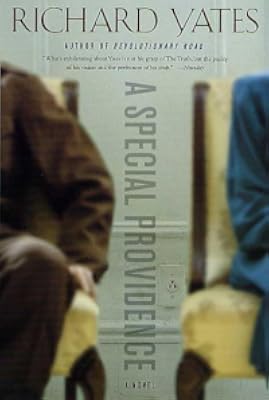
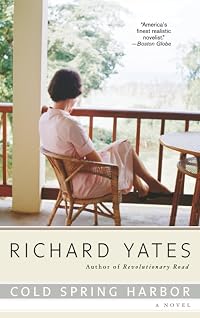
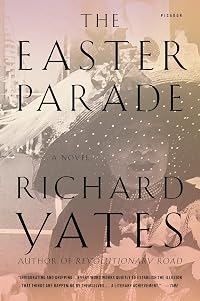
Richard Yates is the author of the novels "Revolutionary Road", "A Special Providence", "Disturbing the Peace", "The Easter Parade", "A Good School", "Young Hearts Crying", & "Cold Spring Harbor". He died in 1992. (Bowker Author Biography) Richard Yates was born in Yonkers, New York in 1926. Yates was a well-known American novelist and short-story show more writer. Yates first became interested in writing and journalism while attending Avon Old Farms School in Avon, Connecticut. After Yates' return from France and Germany after serving in the army, he worked as a journalist, publicity writer, and freelance ghost writer. It was not until 1961 that his career as a novelist was officially launched with the publication of his first novel, Revolutionary Road. Revolutionary Road was a finalist for the National Book Award and was subsequently made into a movie in 2008. Yates also taught writing at several universities and institutions including Columbia University, Boston University, Wichita State University, and the University of Southern California Master of Professional Writing Program. Yates was divorced twice and has three daughters: Sharon, Monica, and Gina. He died in 1992 in Birmingham, Alabama of emphysema and complications from a minor surgery. show less
Some Editions
Common Knowledge
- Canonical title
- Young Hearts Crying
- Original title
- Young Hearts Crying
- Original publication date
- 1984
Classifications
Statistics
- Members
- 391
- Popularity
- 80,045
- Reviews
- 13
- Rating
- (3.95)
- Languages
- 5 — Dutch, English, German, Portuguese, Spanish
- Media
- Paper, Audiobook, Ebook
- ISBNs
- 15
- ASINs
- 9