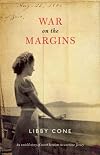
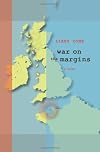
War on the Margins
by Libby Cone 
On This Page
Description
Drawn from authentic World War Two documents, broadcasts and private letters, 'War on the Margins' tells of the often-overlooked Nazi occupation of Jersey.Tags
Recommendations
















Member Reviews
This is a well-written, well-researched, easy to read but hard to forget story about the hardships endured by Jersey Islanders during World War II, particularly those of Jewish (whether real or suspected) descent.
The story is told from the perspectives of several residents, particularly Marlene, a clerk in the Aliens Registration Office and Claude Cahun and Marcel Moore, surrealist Jewish artists and lovers-real historic figures-who fled France, and became part of the Resistance movement on the island. Their letters form the basis for much of the novel.
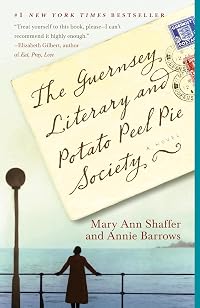
Other characters are developed well to represent the population who starved, hid (and hid their neighbors), listened hopelessly and hopefully every night on their forbidden and concealed show more wirelesses and prayed to be liberated. The stories of imprisonment and trials of the Resistance members, and the eventual despair of soldiers adds to the perspective. Ms. Cone gives us a small but stunning view into the minds of those involved in this oft forgotten aspect of the war. If you enjoyed the Guernsey Literary and Potato Peel Pie Society, you will find this adds another and very different dimension to the story.
While it could easily have been just another novel about people enduring torture, starvation, and privation, about the Holocaust, about man's inhumanity to man, it wasn't. The story of bravery, treachery, and the effect of all of this (good and bad) on the human psyche, how every act-whether well-intentioned or not- has an impact that is often unforeseeable is the real story. It is a story very well told. show less
The story is told from the perspectives of several residents, particularly Marlene, a clerk in the Aliens Registration Office and Claude Cahun and Marcel Moore, surrealist Jewish artists and lovers-real historic figures-who fled France, and became part of the Resistance movement on the island. Their letters form the basis for much of the novel.
Other characters are developed well to represent the population who starved, hid (and hid their neighbors), listened hopelessly and hopefully every night on their forbidden and concealed show more wirelesses and prayed to be liberated. The stories of imprisonment and trials of the Resistance members, and the eventual despair of soldiers adds to the perspective. Ms. Cone gives us a small but stunning view into the minds of those involved in this oft forgotten aspect of the war. If you enjoyed the Guernsey Literary and Potato Peel Pie Society, you will find this adds another and very different dimension to the story.
While it could easily have been just another novel about people enduring torture, starvation, and privation, about the Holocaust, about man's inhumanity to man, it wasn't. The story of bravery, treachery, and the effect of all of this (good and bad) on the human psyche, how every act-whether well-intentioned or not- has an impact that is often unforeseeable is the real story. It is a story very well told. show less
This rather lovely book, which weaves fact and fiction, tells the story of the inhabitants of Jersey during World War II, and in particular, the Jewish people living on the island.
As people are forced to register as Jewish and find themselves subjected to all the hatred of the Nazi regime, some people try to flee for their life, many go into hiding (often in the cellars of non-Jewish friends, who risk their own lives by helping them). Many are deported, and many perish.
The book tells the story of many of the inhabitants, but focuses mainly on Marlene Zimmer, a young girl with a Jewish father, who tries to outrun the authorities. She is taken in by two of the other main characters, Claude Cahun and Marcel Moore (the aliases of Lucille show more Schwob and Suzanne Malherbe, step-sisters and lovers. The three women aid the Resistance, picking up scraps of news on their forbidden wirelesses, passing information to other citizens, and encouraging German soldiers to desert. Also featuring prominently in the story is Peter, a Polish Jew who finds himself transported from one prison to another.
The official documents in this novel are real, as are the love letters which Suzanne and Lucille write to each other. This mixture of real life and fiction underlines the horrors of war in Jersey. The book is told in clean and direct language, but it is very evocative and I found myself feeling very moved. Some of the measures taken against Jews were difficult to imagine – not being able to have or profit from their own businesses, not being able to go into shops or theatres, and only being allowed to go shopping between 3pm – 4pm. (Sadly, we know only too well that these were nowhere near the worst atrocities visited upon them.)
As well as the main characters, the stories of more peripheral characters are also told, which made for a fuller picture of life in Jersey as a whole, rather than just a handful of residents.
Overall, this is a book I would highly recommend. Eloquent writing and a subject that lingers in the mind make this an excellent telling of an important story. show less
As people are forced to register as Jewish and find themselves subjected to all the hatred of the Nazi regime, some people try to flee for their life, many go into hiding (often in the cellars of non-Jewish friends, who risk their own lives by helping them). Many are deported, and many perish.
The book tells the story of many of the inhabitants, but focuses mainly on Marlene Zimmer, a young girl with a Jewish father, who tries to outrun the authorities. She is taken in by two of the other main characters, Claude Cahun and Marcel Moore (the aliases of Lucille show more Schwob and Suzanne Malherbe, step-sisters and lovers. The three women aid the Resistance, picking up scraps of news on their forbidden wirelesses, passing information to other citizens, and encouraging German soldiers to desert. Also featuring prominently in the story is Peter, a Polish Jew who finds himself transported from one prison to another.
The official documents in this novel are real, as are the love letters which Suzanne and Lucille write to each other. This mixture of real life and fiction underlines the horrors of war in Jersey. The book is told in clean and direct language, but it is very evocative and I found myself feeling very moved. Some of the measures taken against Jews were difficult to imagine – not being able to have or profit from their own businesses, not being able to go into shops or theatres, and only being allowed to go shopping between 3pm – 4pm. (Sadly, we know only too well that these were nowhere near the worst atrocities visited upon them.)
As well as the main characters, the stories of more peripheral characters are also told, which made for a fuller picture of life in Jersey as a whole, rather than just a handful of residents.
Overall, this is a book I would highly recommend. Eloquent writing and a subject that lingers in the mind make this an excellent telling of an important story. show less
This book was intriguing from a historical point of view; it explores an area I’ve not seen done much in historical fiction. As the only part of British soil occupied by the Nazis, the Channel Islands give us a microcosm of how occupation might have been if Britain had been taken. The author utilizes first hand sources and empathetic storytelling to give us a window into a dangerous, spellbinding world.
I liked how the author was balanced in her portrayal of the Channel Islanders. Both the collaborators and the resistors were given page time, giving us a view into both sides of the Nazi occupation. The hard reality of war comes to vivid life as well: food shortages, round-ups, life on the run, and the slave labor of the Nazi era. show more Enough that the reader is sucked in immediately and lives the story along with the characters.
I liked the characters generally, though I felt there was a weird balance of the POVs that did the book a disservice. Marlene and Peter, our two fictional “leads”, are the heart of the book. Through their eyes and hearts, the reader feels like they’re experiencing the story rather than just reading it. They read like two people who get swept up into the epic that is warfare and resistance, tugging the reader along by the heartstrings.
However, there is too much emphasis and page time given to the POVs of our historically real figures like Lucy, Suzanne, and Albert. Lucy and Suzanne play a big part in the story, taking Marlene in and being driving forces behind Resistance. They could be considered leads in the story as well. So their POVs have merit.
However, they take up so much page time, along with other real figures, that Marlene and Peter read as secondary characters at times. Other POVs like Albert and Mary Erica were just superfluous, in my opinion. They were important figures and played a intriguing part in the history of the Nazi occupation of the Channel Islands. But for this book, they were extraneous and unneeded. Marlene and Peter’s story got lost in the shuffle of history at times which is a shame.
The author pays attention to her history and research, which is much appreciated by this WWII history buff. I liked her incorporation of first hand sources and POVs of real historical figures. Yet, those very same POVs drown out our fictional figures, which are the heart of the story and how the reader invests themselves into the story (at least for me). So an intriguing read for the history, but needs work for the fictional stuff. show less
I liked how the author was balanced in her portrayal of the Channel Islanders. Both the collaborators and the resistors were given page time, giving us a view into both sides of the Nazi occupation. The hard reality of war comes to vivid life as well: food shortages, round-ups, life on the run, and the slave labor of the Nazi era. show more Enough that the reader is sucked in immediately and lives the story along with the characters.
I liked the characters generally, though I felt there was a weird balance of the POVs that did the book a disservice. Marlene and Peter, our two fictional “leads”, are the heart of the book. Through their eyes and hearts, the reader feels like they’re experiencing the story rather than just reading it. They read like two people who get swept up into the epic that is warfare and resistance, tugging the reader along by the heartstrings.
However, there is too much emphasis and page time given to the POVs of our historically real figures like Lucy, Suzanne, and Albert. Lucy and Suzanne play a big part in the story, taking Marlene in and being driving forces behind Resistance. They could be considered leads in the story as well. So their POVs have merit.
However, they take up so much page time, along with other real figures, that Marlene and Peter read as secondary characters at times. Other POVs like Albert and Mary Erica were just superfluous, in my opinion. They were important figures and played a intriguing part in the history of the Nazi occupation of the Channel Islands. But for this book, they were extraneous and unneeded. Marlene and Peter’s story got lost in the shuffle of history at times which is a shame.
The author pays attention to her history and research, which is much appreciated by this WWII history buff. I liked her incorporation of first hand sources and POVs of real historical figures. Yet, those very same POVs drown out our fictional figures, which are the heart of the story and how the reader invests themselves into the story (at least for me). So an intriguing read for the history, but needs work for the fictional stuff. show less
War on the Margins is a debut novel from Libby Cone, set on the Channel Islands during World War II, with the main focus of the story centering on how the islanders endured the Nazi Occupation. Moreover it’s a story about resistance, as a number of the islanders unify in an attempt to expel the Fascist menace; for some though it’s also a story of endurance, as the hardships of imprisonment become a reality.
From the outset I’ve got to say that War on the Margins is a real eye-opener. I was fully aware of the fact that the Channel Islands were occupied during WW2 before reading this novel, but I had no idea to what extent the Islands and its residents suffered under Nazi control. This novel really does bring home just how widespread show more starvation and persecution were on the Channel Islands during the period, and it ain’t pretty!
The novel follows a number of primary story threads, the main one being the Occupation experiences of the chief protagonist, Marlene Zimmer. Marlene works for the Aliens Office on Jersey, and after gaining an advance insight into the Occupation measures being implemented by the Germans, she discovers that her distant Jewish heritage is detrimental to her safety. So she quickly flees to begin a new life elsewhere on the island; a covert one that involves few pleasures and much indignation. I really like the author’s treatment of this character. She evolves Marlene from being a woman largely devoid of ambition and unsure of her own identity, into one of the complete polar opposite. My only complaint is that the author didn’t spend more time exploring Marlene’s evolution (more on that later), but putting that aside, Marlene’s story is a definite highlight of the novel.
Another primary focus of War on the Margins is on the French artists and lovers - Lucille and Suzanne, the ‘real life’ island residents who inspired the novel in the first place. Their relationship brings another aspect to the ‘marginal’ theme of the novel, and although no exploration of homosexual persecution is explored (presumably because it never emerged as an issue), the relationship between the lovers is, and what emerges as a consequence of Cone’s excellent crafting of the story, is the depth of love and devotion that the two artists showed for one another; a depth that undoubtedly nurtured an inner strength in both women and kept them motivated during that great time of adversity. That adversity reaches its zenith when both women were arrested for suspected clandestine activity and jailed in the local prison. Here I feel the novel really reaches its zenith too, with the author making full use of the actual prison letters and poems of Lucille Schwob to enrich the story.
Aside from an additional couple of less significant story threads, War on the Margins also focuses on the plight of political prisoners shipped to Jersey en masse, to provide the workforce for building construction. The main ‘player’ here is Peter, a Polish political prisoner, who eventually ties up with one of the other main characters of the novel. Again I liked the author’s treatment of the character, at least in the initial stages of his introduction. Here in Peter the reader sees the stoic resoluteness of a prisoner wronged for his beliefs, surviving in an environment pretty much akin to Hell. It’s powerful stuff from Cone and aside from the descriptions of punishments served out to deserting or non-compliant German soldiers, it’s the portion of the novel that provides the most graphical impact.
As good as War on the Margins is though, it’s not without a couple of minor niggles in my opinion. I’ve already mentioned that the novel follows a number of primary story threads, and while these are all tightly controlled and interwoven well into the narrative, the number of story threads included is perhaps a little too ambitious for a novel of this length. I feel there’s not enough focus spent on a particular story thread at any one time to allow the reader to fully connect with a character, or to sympathise with the situations that they find themselves in. There are some dire situations created in this novel, mainly centering around characters ‘holing up’ in squalid conditions such as cellars, prisons, transport ships etc., and while Cone paints the story of their plight superbly well to some extent, you never really get a total sense of sympathetic connection with them.
My other minor niggle with the novel is centered around the flow of the story. I’m delighted that the author has seen fit to include official documents and orders in this novel, both for historical reference and context-setting, but the documents are presented verbatim, with their expanse usually filling a number of pages. All good and well but this had the affect of interrupting the flow of the story for me, and I found I needed a paragraph or two afterward, just to get back into the story. I’m well aware of the importance of these documents to the novel but perhaps it would have been better only embedding extracts of these documents in the narrative flow, and linking these extracts to full reproductions in an appendix at the back of the book.
Overall though I wouldn’t let any minor complaints that I have put you off reading War on the Margins for yourself. My annoyances may well be just idiosyncratic, and regardless, they do little to interfere with the ‘enjoyment’ of this novel. This is truly an accomplished work by Libby Cone, not least for its historical value, and it is one that should be read by anyone who has the slightest interest in the Nazi Occupation of the Channel Islands. Cone should be celebrated for what she has achieved in War on the Margins, for aside from illustrating the suffering that the Channel Islanders endured, she’s spotlighted the degree to which Nazi persecution of the Jews extended; a persecution in this case, that offers a chilling glimpse into the fate that would no doubt have awaited Jews in mainland Britain should the Nazis have succeeded with their belligerent expansion.
Libby Cone’s biggest success in War on the Margins though is undoubtedly her ability to weave the real-life prison diaries and poems of Lucille Schwob into the novel (along with the other primary source documents to a lesser degree). Before reading War on the Margins I was aware that the author had included primary source material in the novel, so I was intrigued to see how successfully she would manage this. I’m happy to say, although I would have liked to have seen more, that she’s achieved it admirably. This on its own makes War on the Margins a worthwhile read, and one I highly recommend. Just be aware that War on the Margins isn’t a casual ‘pick up and put down’ kind of novel though. It’s one of these novels that requires a fairly high level of engagement and plenty of cogitation. Put the effort in though and I guarantee that you’ll be richly rewarded. show less
From the outset I’ve got to say that War on the Margins is a real eye-opener. I was fully aware of the fact that the Channel Islands were occupied during WW2 before reading this novel, but I had no idea to what extent the Islands and its residents suffered under Nazi control. This novel really does bring home just how widespread show more starvation and persecution were on the Channel Islands during the period, and it ain’t pretty!
The novel follows a number of primary story threads, the main one being the Occupation experiences of the chief protagonist, Marlene Zimmer. Marlene works for the Aliens Office on Jersey, and after gaining an advance insight into the Occupation measures being implemented by the Germans, she discovers that her distant Jewish heritage is detrimental to her safety. So she quickly flees to begin a new life elsewhere on the island; a covert one that involves few pleasures and much indignation. I really like the author’s treatment of this character. She evolves Marlene from being a woman largely devoid of ambition and unsure of her own identity, into one of the complete polar opposite. My only complaint is that the author didn’t spend more time exploring Marlene’s evolution (more on that later), but putting that aside, Marlene’s story is a definite highlight of the novel.
Another primary focus of War on the Margins is on the French artists and lovers - Lucille and Suzanne, the ‘real life’ island residents who inspired the novel in the first place. Their relationship brings another aspect to the ‘marginal’ theme of the novel, and although no exploration of homosexual persecution is explored (presumably because it never emerged as an issue), the relationship between the lovers is, and what emerges as a consequence of Cone’s excellent crafting of the story, is the depth of love and devotion that the two artists showed for one another; a depth that undoubtedly nurtured an inner strength in both women and kept them motivated during that great time of adversity. That adversity reaches its zenith when both women were arrested for suspected clandestine activity and jailed in the local prison. Here I feel the novel really reaches its zenith too, with the author making full use of the actual prison letters and poems of Lucille Schwob to enrich the story.
Aside from an additional couple of less significant story threads, War on the Margins also focuses on the plight of political prisoners shipped to Jersey en masse, to provide the workforce for building construction. The main ‘player’ here is Peter, a Polish political prisoner, who eventually ties up with one of the other main characters of the novel. Again I liked the author’s treatment of the character, at least in the initial stages of his introduction. Here in Peter the reader sees the stoic resoluteness of a prisoner wronged for his beliefs, surviving in an environment pretty much akin to Hell. It’s powerful stuff from Cone and aside from the descriptions of punishments served out to deserting or non-compliant German soldiers, it’s the portion of the novel that provides the most graphical impact.
As good as War on the Margins is though, it’s not without a couple of minor niggles in my opinion. I’ve already mentioned that the novel follows a number of primary story threads, and while these are all tightly controlled and interwoven well into the narrative, the number of story threads included is perhaps a little too ambitious for a novel of this length. I feel there’s not enough focus spent on a particular story thread at any one time to allow the reader to fully connect with a character, or to sympathise with the situations that they find themselves in. There are some dire situations created in this novel, mainly centering around characters ‘holing up’ in squalid conditions such as cellars, prisons, transport ships etc., and while Cone paints the story of their plight superbly well to some extent, you never really get a total sense of sympathetic connection with them.
My other minor niggle with the novel is centered around the flow of the story. I’m delighted that the author has seen fit to include official documents and orders in this novel, both for historical reference and context-setting, but the documents are presented verbatim, with their expanse usually filling a number of pages. All good and well but this had the affect of interrupting the flow of the story for me, and I found I needed a paragraph or two afterward, just to get back into the story. I’m well aware of the importance of these documents to the novel but perhaps it would have been better only embedding extracts of these documents in the narrative flow, and linking these extracts to full reproductions in an appendix at the back of the book.
Overall though I wouldn’t let any minor complaints that I have put you off reading War on the Margins for yourself. My annoyances may well be just idiosyncratic, and regardless, they do little to interfere with the ‘enjoyment’ of this novel. This is truly an accomplished work by Libby Cone, not least for its historical value, and it is one that should be read by anyone who has the slightest interest in the Nazi Occupation of the Channel Islands. Cone should be celebrated for what she has achieved in War on the Margins, for aside from illustrating the suffering that the Channel Islanders endured, she’s spotlighted the degree to which Nazi persecution of the Jews extended; a persecution in this case, that offers a chilling glimpse into the fate that would no doubt have awaited Jews in mainland Britain should the Nazis have succeeded with their belligerent expansion.
Libby Cone’s biggest success in War on the Margins though is undoubtedly her ability to weave the real-life prison diaries and poems of Lucille Schwob into the novel (along with the other primary source documents to a lesser degree). Before reading War on the Margins I was aware that the author had included primary source material in the novel, so I was intrigued to see how successfully she would manage this. I’m happy to say, although I would have liked to have seen more, that she’s achieved it admirably. This on its own makes War on the Margins a worthwhile read, and one I highly recommend. Just be aware that War on the Margins isn’t a casual ‘pick up and put down’ kind of novel though. It’s one of these novels that requires a fairly high level of engagement and plenty of cogitation. Put the effort in though and I guarantee that you’ll be richly rewarded. show less
It’s 1940. A young woman working in the Aliens Office in Jersey reads the order to begin taking registrations of Jews. Does this order apply to me? she wonders. Her father was Jewish, but she has never practiced the faith and doesn’t have more than two Jewish grandparents, which the order says deems a person Jewish. For this young woman, Marlene, life in occupied Jersey raises a host of moral questions, of which this is only the first. In her novel, War on the Margins, Libby Cone explores these questions, using the lives of real-life Jersians, as well as some composite characters like Marlene.
Marlene’s dilemma soon lands her on the doorstep of the French surrealist lesbian artists Claude Cahun and Marcel Moore. These two women, show more both real-life figures, are themselves Jewish, although they did not register. They draw Marlene into resistance work, creating fliers encouraging soldiers to desert and surreptitiously sneaking them into their pockets. As the novel goes on, readers meet Peter, a Polish prisoner whom the Germans bring to Jersey as slave labor, and Erica, a woman the authorities suspect of being Jewish but who has failed to register.
This novel was absorbing right from the start. It was developed out of Cone’s research for her MA in Jewish Studies, and she fills the novel with original documents from the time. And of course the situation itself is fascinating. I didn’t know anything much about the occupation of the Channel Islands until I listened to The Guernsey Literary and Potato Peel Pie Society last year. In many ways, I found this book to be a more satisfying examination of the topic.
In the early chapters, I did find that I had some problems with the writing, but it wasn’t a problem as the book went on, and there are even a couple of rather nice pieces of writing in the later chapters. I wouldn’t say the prose is stellar, but it gets the job done. The only other problem I had was that the multiple storylines didn’t mesh together very well.
The women’s resistance activities raised one of the most interesting threads. A few of their actions seemed morally questionable, being more about revenge and anger than about weakening the occupying force. But then, much to my surprise, events conspired to make the characters think about what they had done—to realize that their acts didn’t just affect the Nazis, that maybe there were consequences they couldn’t see. This added a thought-provoking layer to the narrative that I much appreciated.
See my complete review at Shelf Love. show less
Marlene’s dilemma soon lands her on the doorstep of the French surrealist lesbian artists Claude Cahun and Marcel Moore. These two women, show more both real-life figures, are themselves Jewish, although they did not register. They draw Marlene into resistance work, creating fliers encouraging soldiers to desert and surreptitiously sneaking them into their pockets. As the novel goes on, readers meet Peter, a Polish prisoner whom the Germans bring to Jersey as slave labor, and Erica, a woman the authorities suspect of being Jewish but who has failed to register.
This novel was absorbing right from the start. It was developed out of Cone’s research for her MA in Jewish Studies, and she fills the novel with original documents from the time. And of course the situation itself is fascinating. I didn’t know anything much about the occupation of the Channel Islands until I listened to The Guernsey Literary and Potato Peel Pie Society last year. In many ways, I found this book to be a more satisfying examination of the topic.
In the early chapters, I did find that I had some problems with the writing, but it wasn’t a problem as the book went on, and there are even a couple of rather nice pieces of writing in the later chapters. I wouldn’t say the prose is stellar, but it gets the job done. The only other problem I had was that the multiple storylines didn’t mesh together very well.
The women’s resistance activities raised one of the most interesting threads. A few of their actions seemed morally questionable, being more about revenge and anger than about weakening the occupying force. But then, much to my surprise, events conspired to make the characters think about what they had done—to realize that their acts didn’t just affect the Nazis, that maybe there were consequences they couldn’t see. This added a thought-provoking layer to the narrative that I much appreciated.
See my complete review at Shelf Love. show less
This is an unforgettable read about the effects that WW11 had on the lives of the people of Jersey. To read it is to weep at the atrocities and unfairness, to rage at how this was allowed to happen, but ultimately to rejoice in the determined survival spirit that shone through. The fact that these events really took place and that they are not the invention of the author makes it all the more heart wrenching to read. Libby Cone has written her book in a sensitive manner and even allowed moments of humour to creep in. The author also used actual radio broadcasts of the time and several of the book’s characters were real people, not inventions from Cone’s mind, which makes the book all the more poignant.
When France fell to the Nazis during WWII, the Channel Islands fell as well, despite the fact that they were a part of the British Commonwealth. Jersey, the Southern-most of the three islands, is the setting of Libby Cone’s novel about the way in which the Channel islands and its citizens were impacted by Nazi occupation. Here, we meet Marlene Zimmer, an anxious single, orphaned woman in her mid to late 20s working for the Jersey Aliens Office. This is where Jersey citizens were requested and then forced to register as Jews when they met the ever broadening requirements. Although she considers herself a Christian and a British citizen, her father was Jewish. When the office is finally instructed to classify Jews as foreigners, show more Marlene’s nerves can no longer take the stress. She leaves her work, her flat, and her identity behind to hide on the island in hopes of somehow surviving the remainder of the war. What she finds is work on the Resistance and a place to belong with Lucille and Suzanne, partners in life, art, and politics.
There are several stories told in this novel: Marlene’s reaction to Nazi occupation and her Jewish heritage, Lucy and Suzanne’s early life and current work resisting the occupation, and Peter’s journey as a Jew imprisoned and shipped to the Channel Islands for slave labor. Marlene is the main character and her life flows through those of Lucy, Suzanne, and Peter. I was most interested in Lucy and Suzanne’s story. They were fascinating women and I enjoyed reading about their work for the Resistance. As much as I liked Marlene, I would have loved to have read a novel entirely about them.
Intermixed within each character’s stories, there were chapters containing official communications between the Nazis to the Aliens Office and the registered Jews on Jersey requesting information about their status and their future. While Marlene worked for the Aliens Office, it made sense to me that they were there - as if Marlene was reading them and discovering what was happening. After that, If felt that they got in my way. This is partially due to the fact that the novel’s layout is structured with double spaces between lines which made these sections especially hard to read. After I found that I could follow the political changes easily through the context of the story, I began skimming and then skipping them altogether.
War on the Margins brought a perspective of the Resistance Movement during WWII that was unique and interesting. I found the strength and creativity of Lucy and Suzanne refreshing and engaging. This novel has encouraged me to look more into underground efforts against the Nazis in occupied territories. Although the formatting of the text was unusual, I quickly got used to it with the exception of the communication chapters. The novel read quickly and kept me interested throughout. It would suggest this book to anyone interested in WWII, living under Nazi occupation, and the Resistance.
http://literatehousewife.wordpress.com/2008/12/10/129-war-on-the-margins/ show less
There are several stories told in this novel: Marlene’s reaction to Nazi occupation and her Jewish heritage, Lucy and Suzanne’s early life and current work resisting the occupation, and Peter’s journey as a Jew imprisoned and shipped to the Channel Islands for slave labor. Marlene is the main character and her life flows through those of Lucy, Suzanne, and Peter. I was most interested in Lucy and Suzanne’s story. They were fascinating women and I enjoyed reading about their work for the Resistance. As much as I liked Marlene, I would have loved to have read a novel entirely about them.
Intermixed within each character’s stories, there were chapters containing official communications between the Nazis to the Aliens Office and the registered Jews on Jersey requesting information about their status and their future. While Marlene worked for the Aliens Office, it made sense to me that they were there - as if Marlene was reading them and discovering what was happening. After that, If felt that they got in my way. This is partially due to the fact that the novel’s layout is structured with double spaces between lines which made these sections especially hard to read. After I found that I could follow the political changes easily through the context of the story, I began skimming and then skipping them altogether.
War on the Margins brought a perspective of the Resistance Movement during WWII that was unique and interesting. I found the strength and creativity of Lucy and Suzanne refreshing and engaging. This novel has encouraged me to look more into underground efforts against the Nazis in occupied territories. Although the formatting of the text was unusual, I quickly got used to it with the exception of the communication chapters. The novel read quickly and kept me interested throughout. It would suggest this book to anyone interested in WWII, living under Nazi occupation, and the Resistance.
http://literatehousewife.wordpress.com/2008/12/10/129-war-on-the-margins/ show less
Members
- Recently Added By
Published Reviews
ThingScore 100
“Suzanne” and “Lucille” are two bewigged bohemians who bring the best out of Marlene — and high praise to Libby Cone for exquisitely enshrining their genuine wartime contribution. In real Channel Island history, they were Claude Cahun and Marcel Moore, Jewish lesbian lovers and artists who together defied the Germans, chalking on walls Churchill’s ubiquitous V for victory.
Their show more tireless propaganda prompted soldiers to desert, so landing the colourful pair in Nazi cells, under sentence of death. Libby Cone breathes life into the poetic exploits of these “surrealist sisters” and into the transformation of Marlene — a victory V in itse show less
Their show more tireless propaganda prompted soldiers to desert, so landing the colourful pair in Nazi cells, under sentence of death. Libby Cone breathes life into the poetic exploits of these “surrealist sisters” and into the transformation of Marlene — a victory V in itse show less
added by reademwritem
There are many eye-opening aspects of the story: the progressive deterioriation of the islanders’ diets as supplies become scarce (you will never look at a swede in the same way again); the shocking conditions in the Organization Todt work camps, with the terrible irony that men were worked to death to build hospitals for German soldiers; the decline in German morale after D-Day and the show more pitiful state that islanders and occupiers alike were reduced to after the link to the French mainland was cut. Cone tells her tale with understated empathy and never loses sight of the human dimensions (on all sides of the conflict).
War in the Margins will ultimately leave you asking yourself one question: how would you have acted if it had been you? An excellently researched and still very affecting read. show less
War in the Margins will ultimately leave you asking yourself one question: how would you have acted if it had been you? An excellently researched and still very affecting read. show less
added by reademwritem
Lists

Women in War
148 works; 30 members
Author Information

5 Works 72 Members
Libby Cone is a LibraryThing Author, an author who lists their personal library on LibraryThing.
Common Knowledge
- Canonical title
- War on the Margins
- Original publication date
- 2008
- People/Characters
- Claude Cahun (real); Mary Drummond (fictional); Marcel Moore (real); Clifford Orange (real); Marlene Zimmer (fictional)
- Important places
- Jersey, Channel Islands
- Important events
- World War II (1939 | 1945); D-Day (1944-06-06); Operation Overlord (1944-06-06 | 1944-08-30)
- Dedication
- For Tom
- Publisher's editor
- Mary Morris, Duckworth
- Blurbers
- Lynne Hatwell
Classifications
Statistics
- Members
- 56
- Popularity
- 548,233
- Reviews
- 9
- Rating
- (4.05)
- Languages
- English
- Media
- Paper, Ebook
- ISBNs
- 4
- ASINs
- 2