
Devil May Care
by Sebastian Faulks
James Bond Novels: Continuation Series (43), James Bond Novels (43)
On This Page
Description
Set in the Cold War, and follows the action of Bond across two contintents and exotic locations after he is assigned to shadow a mysterious, power-crazed pharmaceutical magnate with an interest in opiate deriviates.Tags
Recommendations





































Member Reviews
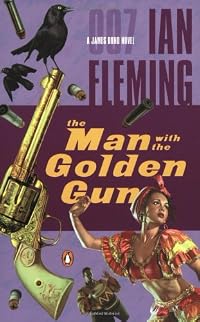
You can tell that Faulks has had great fun getting to know our hero, and even greater fun writing his Bond novel, and he's certainly nailed Fleming's style. The story picks up after Fleming's last Bond novel (The Man With The Golden Gun) finishes, and then takes us to pastures new for Bond - into Persia, for the main arc.
Along the way, however, we are treated to all the classic ingredients of a Bond novel - a baddie with a deformity, his indestructible henchman (until you find his weak spot that is), a secret lair, gadgets, car chases, aeroplanes with not enough parachutes, guest appearances from Felix Leiter and Rene Mathis, not to mention M, Moneypenny and Bond's never-seen secretary Loelia Ponsonby, and last but not least - The Girl show more - Phew!
Having shoehorned all that excitement into one novel, what will Faulks do for an encore?
There are some particularly enjoyable scenes, the tennis match with the Gorner, the baddie, being a classic reminiscent of playing golf with Goldfinger - you have to chuckle when you find out how the baddie cheats! The courtship dance between Bond and Scarlett is also well done as they are repeatedly interrupted before they can get to the inevitable final clinch.
You come to this novel with high expectations due to Faulks' literary pedigree, and it doesn't disappoint. I hope for more - with a less derivative villain perhaps ...
Hugely enjoyable - Bond is back! show less
Along the way, however, we are treated to all the classic ingredients of a Bond novel - a baddie with a deformity, his indestructible henchman (until you find his weak spot that is), a secret lair, gadgets, car chases, aeroplanes with not enough parachutes, guest appearances from Felix Leiter and Rene Mathis, not to mention M, Moneypenny and Bond's never-seen secretary Loelia Ponsonby, and last but not least - The Girl show more - Phew!
Having shoehorned all that excitement into one novel, what will Faulks do for an encore?
There are some particularly enjoyable scenes, the tennis match with the Gorner, the baddie, being a classic reminiscent of playing golf with Goldfinger - you have to chuckle when you find out how the baddie cheats! The courtship dance between Bond and Scarlett is also well done as they are repeatedly interrupted before they can get to the inevitable final clinch.
You come to this novel with high expectations due to Faulks' literary pedigree, and it doesn't disappoint. I hope for more - with a less derivative villain perhaps ...
Hugely enjoyable - Bond is back! show less
Devil May Care’s cover tries to entice readers by declaring that author Sebastian Faulks is writing as original—and as yet unparalleled) Bond writer Ian Fleming. But this device isn’t simply a trick to boost sales. Faulks has indeed assumed Fleming’s voice, flinging details at the reader at lightning speed while weaving an intricate plot that never slows and never bores.
Faulks isn’t merely writing in Fleming’s style, he has returned Bond to the Cold War era when the Soviet Union dominated Eastern Europe and the threat of global nuclear war loomed large over the United States and Britain. Bond’s mission this time is to follow a European industrialist, Julius Gorner, who is suspected of trafficking in drugs and weapons. show more Along the way, Bond stumbles into the path of an alluring woman who needs his help in rescuing her sister from Gorner’s Persian compound. What follows is a classic action/spy novel that more than holds its own with Fleming’s own work.
Devil May Care is not a perfect book, however. Its primary fault is that Faulks picks up and drops characters with a bit too much carelessness. The sister, who is a primary plot device, is only present for about five pages while another, familiar character, who is followed in the first chapter, virtually disappears until the final one. It is a bit disorienting when Faulks returns to characters who haven’t been mentioned in the previous hundred pages.
Ultimately, I hope Faulks continues to write in this style, as Devil May Care is a fun and thrilling read that is difficult to put down. show less
Faulks isn’t merely writing in Fleming’s style, he has returned Bond to the Cold War era when the Soviet Union dominated Eastern Europe and the threat of global nuclear war loomed large over the United States and Britain. Bond’s mission this time is to follow a European industrialist, Julius Gorner, who is suspected of trafficking in drugs and weapons. show more Along the way, Bond stumbles into the path of an alluring woman who needs his help in rescuing her sister from Gorner’s Persian compound. What follows is a classic action/spy novel that more than holds its own with Fleming’s own work.
Devil May Care is not a perfect book, however. Its primary fault is that Faulks picks up and drops characters with a bit too much carelessness. The sister, who is a primary plot device, is only present for about five pages while another, familiar character, who is followed in the first chapter, virtually disappears until the final one. It is a bit disorienting when Faulks returns to characters who haven’t been mentioned in the previous hundred pages.
Ultimately, I hope Faulks continues to write in this style, as Devil May Care is a fun and thrilling read that is difficult to put down. show less
I would put this squarely in the bottom half of Bond Novels. Loved that this was set in mid- to late-sixties and the tech, politics, and history kept true to that. The story lacked action compared to other Bond novels, though. Delivered on car chases, a memorable and ruthless villain with an odd sidekick, as well as Felix Leiter and Rene Mathis involvement. Did not deliver on Q-branch gadgets, clever quips, liaisons with multiple beautiful women, or patriotic pride. The main action died while there was still about 20% of the book left. I don't know why the author made that choice, but it made the book feel like it went on far longer than it needed to (or should).
Also, the title "Devil May Care" appears to be completely pasted on. It show more doesn't relate to the story, nor is it even mentioned in passing by a character. show less
Also, the title "Devil May Care" appears to be completely pasted on. It show more doesn't relate to the story, nor is it even mentioned in passing by a character. show less
Devil May Care (2008) (Bond #36) by Sebastian Faulks. Mr. Faulks is attempting to write in the voice of Ian Fleming. To properly read and enjoy this book, and to properly review this book, the reader should have a history of reading the Fleming novels. If your only view of Bond is from the movies then you are seriously hindered in you appraisal of this writing. In the original novels Bond had survived WWII, seeing some action and forming a world view from his experiences, A survivor, and a killer due to that experience, he left nonsense behind and devoted himself to the mission, namely making certain that Great Britain remained Great and her enemies remained vanquished.
As a 00 agent he brought the same sensibilities. Enjoy today, do show more your best to see tomorrow, and regret nothing seems to be his motto for living, something the films have drained away replacing them with quips and gadgets. Self-reliance was probably Bond’s greatest virtue, something the movies retained but never truly heralded.
With that said, it is nice to return to a Bond adventure that harkens back to the original books. Yes, there is the travel to “exotic” locations and women and danger, but there is also the mission. I’ve read in various reviews that the Bond books and movies all run to a trope in that there is a “Super Villain” who plans “Super Evil” of some type, is assisted by a cadre of henchmen that try to stop Bond, and there are beautiful women (in the Fleming novels usually just a single beautiful woman) who are dangerous to one degree or another.
Of course these things are present. The 00 section is reserved for when killing is the probably only answer to the problem presented by the mission. Only a supreme evil needs such a drastic response. These books do not enlist a bad guy who has been diddling with his taxes or stealing boxes of paper clips from work. In order to send a 00 agent out there has to be a great threat to national security, and even world security. So when you pick up a Bond book you will always find what you expect. It is just in the manner of how the threat is presented and the reaction of Bond that differs.
Here the threat is drugs. Drugs are a self-inflicted horror that is easy to get into but difficult to remove yourself from. This is the minor threat presented by Dr. Julius Gorner, industrialist and evil mastermind (if you can call trying to get every young person in England addicted) that is soon overshadowed by his true plan for the destruction of Great Britain, and perhaps more of the world. Like all super evil beings, Gorner likes to win at every thing he does. There is a tennis match Bond participates in that somehow has been rigged in Gorner’s favor. There is the beautiful woman, one of a set or twins, who helps Bond with the match.
While Poppy seems to fall into trouble, Bond and her sister Scarlett do some terrain hopping trying to save her and the world. In all truth a Bond book doesn’t need a great, pristine new plot. The tropes of the past will carry us through the story. What is needed are twists and turns, unexpected betrayals and loyalities, a good bad person, a least one outstanding henchman, vivid depictions of localities (made more difficult to render properly when the date of the writing drifts further and further away from the time setting for the book) and a proper world view. Bond is always better when he relies on his own skill set, his tenacity, and often his charm rather than the movie gizmo’s and gimcracks that would have Flemings rolling his eyes in disbelief.
Is Devil May Care the best of the Bond books? Probably not, but it is a good, thrilling read that will leave the audience satisified. And really, isn’t that all we ask of a book, or our literary heroes? show less
As a 00 agent he brought the same sensibilities. Enjoy today, do show more your best to see tomorrow, and regret nothing seems to be his motto for living, something the films have drained away replacing them with quips and gadgets. Self-reliance was probably Bond’s greatest virtue, something the movies retained but never truly heralded.
With that said, it is nice to return to a Bond adventure that harkens back to the original books. Yes, there is the travel to “exotic” locations and women and danger, but there is also the mission. I’ve read in various reviews that the Bond books and movies all run to a trope in that there is a “Super Villain” who plans “Super Evil” of some type, is assisted by a cadre of henchmen that try to stop Bond, and there are beautiful women (in the Fleming novels usually just a single beautiful woman) who are dangerous to one degree or another.
Of course these things are present. The 00 section is reserved for when killing is the probably only answer to the problem presented by the mission. Only a supreme evil needs such a drastic response. These books do not enlist a bad guy who has been diddling with his taxes or stealing boxes of paper clips from work. In order to send a 00 agent out there has to be a great threat to national security, and even world security. So when you pick up a Bond book you will always find what you expect. It is just in the manner of how the threat is presented and the reaction of Bond that differs.
Here the threat is drugs. Drugs are a self-inflicted horror that is easy to get into but difficult to remove yourself from. This is the minor threat presented by Dr. Julius Gorner, industrialist and evil mastermind (if you can call trying to get every young person in England addicted) that is soon overshadowed by his true plan for the destruction of Great Britain, and perhaps more of the world. Like all super evil beings, Gorner likes to win at every thing he does. There is a tennis match Bond participates in that somehow has been rigged in Gorner’s favor. There is the beautiful woman, one of a set or twins, who helps Bond with the match.
While Poppy seems to fall into trouble, Bond and her sister Scarlett do some terrain hopping trying to save her and the world. In all truth a Bond book doesn’t need a great, pristine new plot. The tropes of the past will carry us through the story. What is needed are twists and turns, unexpected betrayals and loyalities, a good bad person, a least one outstanding henchman, vivid depictions of localities (made more difficult to render properly when the date of the writing drifts further and further away from the time setting for the book) and a proper world view. Bond is always better when he relies on his own skill set, his tenacity, and often his charm rather than the movie gizmo’s and gimcracks that would have Flemings rolling his eyes in disbelief.
Is Devil May Care the best of the Bond books? Probably not, but it is a good, thrilling read that will leave the audience satisified. And really, isn’t that all we ask of a book, or our literary heroes? show less
I love the James Bond movies. However, this is the first James Bond novel I have ever read. Generally, I find that spy novels and thrillers are the exception to the rule that "the book is always better than the movie". While this hasn't been made into a movie (yet), I'm quite sure that the exception would prove true here as well.
Faulks has gone back to the mid-60's and the Cold War for this particular incarnation of James Bond. However, he has a much more chaste and introspective Bond than we are used to. After contemplating the ravages of time on his face and body, Bond even turns down an offer to make love to a beautiful woman. What is going on? Of course, all it takes is a cartoonish super-villain with designs on starting a new world show more war to bring Bond back to his normal state.
By the end of the novel, Bond, with confidence restored and libido fully intact, saves the world from disaster and whisks the woman (who has a secret that I could guess about 50 pages in) away for the beginning of a beautiful affair that will last until the beginning of the next book, of course.
The book is an entertaining diversion, but as to advancing the character of 007...let's just say that Bond is still Bond. show less
Faulks has gone back to the mid-60's and the Cold War for this particular incarnation of James Bond. However, he has a much more chaste and introspective Bond than we are used to. After contemplating the ravages of time on his face and body, Bond even turns down an offer to make love to a beautiful woman. What is going on? Of course, all it takes is a cartoonish super-villain with designs on starting a new world show more war to bring Bond back to his normal state.
By the end of the novel, Bond, with confidence restored and libido fully intact, saves the world from disaster and whisks the woman (who has a secret that I could guess about 50 pages in) away for the beginning of a beautiful affair that will last until the beginning of the next book, of course.
The book is an entertaining diversion, but as to advancing the character of 007...let's just say that Bond is still Bond. show less
This started well, and to be honest, it was less pastiche than actual replica of Fleming. Loved the setting, loved the build up, the gambling & match with the major villain all proceeded well, and reminded me very strongly of Umberto Eco's analysis of the Bond novels. All went as per formula but enjoyable none the less, then after the half way mark, it became more cinematic, less dramatic, and more like Movie Bond than Fleming. Some of the background colour returned in parts, eg Mathis research into the villain's henchman, but the last third in particular read like a film script, and this was not really Fleming at all. If I could have given this 3.5 stars then I would have done. Good, but not near the standard of the Best Fleming's & show more after such a promising start by Mr Faulks, I was expecting more. Worth a read, but not to put something else aside to read, if you take my meaning show less
If you've read Fleming's novels you will recognize James Bond here but although close, it's not up to Ian Fleming's standards. If you haven't read any of the Bond novels, don't start here. The original author had a winning style that Faulks just cannot reproduce even though he has used more updated language. This resembles the corny movie stories more than Fleming's novels.
Members
- Recently Added By
Lists

Biggest Disappointments
606 works; 168 members
Author Information

38+ Works 21,437 Members
Sebastian Faulks is the author of Where My Heart Used to Beat, which made the New Zealand Best Seller List 2015. (Bowker Author Biography)
Awards and Honors
Series


Common Knowledge
- Canonical title
- Devil May Care
- Original title
- Devil may care
- Original publication date
- 2008-05-28
- People/Characters
- James Bond; Dr. Julius Gorner; Scarlett Papava; Poppy Papava; M; Miss Moneypenny (show all 13); René Mathis; May; Chagrin; Q; J.D. Silver; Darius Alizadeh; Felix Leiter
- Important places
- Paris, France
- Dedication
- To the memory of Ian Fleming and to Fali Vakeel who, when he and I were schoolboys, first introduced me to Bond
- First words
- It was a wet evening in Paris.
- Last words
- (Click to show. Warning: May contain spoilers.)"And some romance."
Classifications
Statistics
- Members
- 1,437
- Popularity
- 16,291
- Reviews
- 43
- Rating
- (3.21)
- Languages
- 13 — Danish, Dutch, English, Estonian, Finnish, French, German, Italian, Marathi, Portuguese, Croatian, Slovenian, Spanish
- Media
- Paper, Audiobook, Ebook
- ISBNs
- 50
- ASINs
- 11