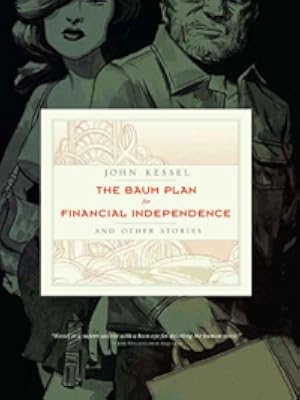
The Baum Plan for Financial Independence: and Other Stories
by John Kessel
On This Page
Description
A literary collection of astonishing stories from an award-winning science-fiction writer and satirist.Tags
Recommendations











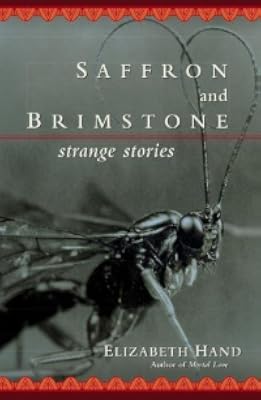
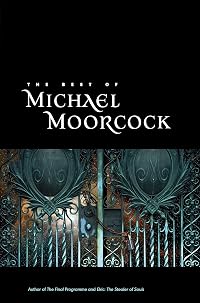
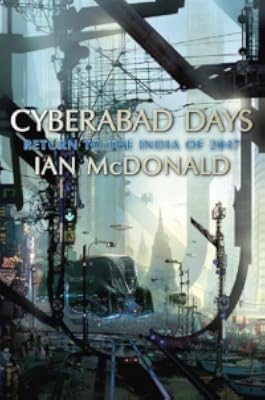
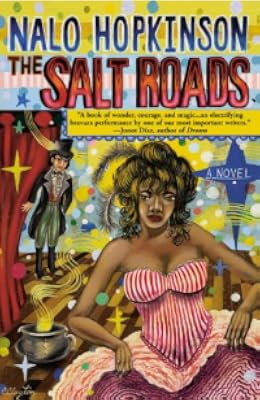
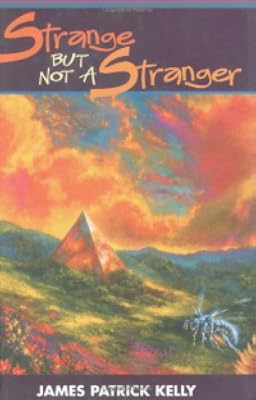

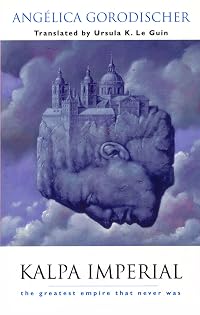
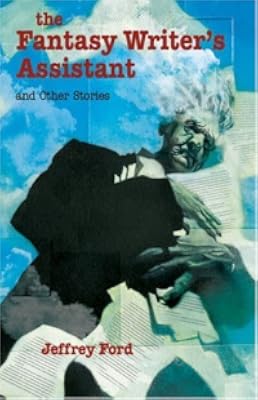
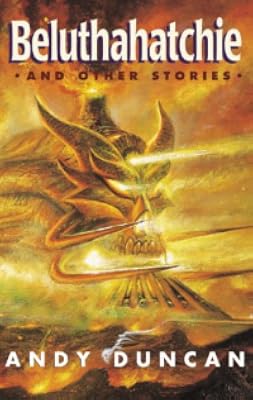

Member Recommendations
Member Reviews
John Kessel does not write a lot of fiction, by the standards of his fellow SF writers, but he maintains a high level of quality, as in this collection of recent stories. He is a literature professor, and it shows in his interest in history, literary and political, in particular of the 19th century. He often examines the conflict between the individual and the social, a focus which still allows for great variety. Many of the stories start from historical characters, or existing literary works. We see how the economy really works, what a failed, violent man may do with a Power, a crucial moment in the life of director Orson Welles, and other possibilities, both straight science fiction and magical realism or fantasy. "The Red Phone" is show more hilarious and erotic. "Pride and Prometheus" brings together exactly the two, famous 19th century stories you think it does, respecting both - it's a treat. At the heart of the collection are four stories set in a future, utopian, feminist society. One of these, "Stories for Men", won the Tiptree award. The Society of Cousins, located in a domed lunar crater, has a gender and sexual-preference mix that seems to be about what we have today, but has social, economic and political structures which lead to generally harmonious relations between men and women - while women make most major decisions. I have the impression that this utopia might actually work. An impressive achievement, although flawed in that all the stories turn on the intrusion of male agression, or on its possibility. Must it always be about the men? However, Kessel leaves room for more stories about the Society, and I certainly hope he writes them. show less
The Baum Plan for Financial Independence: And Other Stories is a collection of stories by John Kessel. The publisher, Small Beer Press, made the book available both through LibraryThing as an Early Reviewer title, and through the Small Beer website as a free PDF download.
This book is worth purchasing solely for the story "Pride and Prometheus", in which Mary Bennett, the serious and studious Bennett sister from Pride and Prejudice, encounters Victor Frankenstein and for the first time in her life is moved by romantic feelings. Frankenstein is likewise drawn to Mary, but makes no secret that his motivations lie elsewhere. I don't want to spoil the story for anyone, so I will say only that this story is beautiful, serious, and heartfelt, show more never descending into parody or gimmickry.
The other story I was most interested in reading was the title story, "The Baum Plan for Financial Independence". In this story, the narrator picks up his relationship with Dot right where he left it off when he went to prison because of something the two of them did together. Because he can't refuse Dot anything, they break into a house Dot has heard contains a great deal of wealth, and are surprised when a passage from a bedroom closet leads to a train station that in turn leads to something like the Emerald City we know from Oz.
I found this story, and indeed most of the stories, very well written, but many of them, including "The Baum Plan", have an arbitrariness and/or lack of resolution that left me wanting something more. Kessel's prose contains lovely details, but there is sometimes a clean quietness to the stories that feels almost antiseptic, even when the characters are filled with strong emotion. One story, "The Snake Girl", appears to have no speculative element, which is certainly not a crime, but it reads a bit like the type of earnest literary magazine story that an intense college student writes just after suffering the end of his/her first profound relationship, rather than a story that offers any of its readers anything particular to think about.
Another story, "It's All True", is about a man who goes back into time (well, one timeline, anyway) to try and persuade Orson Welles to join him in a future that will appreciate his brilliance. (I understand that this universe is the same in which Kessel's novel Corrupting Dr. Nice takes place, although I did not recognize the connection myself.) This was a neat concept, and the resolution of the Welles element is generally satisfying, but I still came away with a slight feeling of "why does the story end here as opposed to anywhere else?" Also, in a few of the short-shorts, I felt as though the author clearly knew what was going on, but somehow I was missing critical information and/or the joke and/or the point. I also consider it a strength that Kessel does not browbeat the reader with clumsy exposition, but at the same time I felt like I often didn't get enough information to work with.
All that said, it's worth your time to take a look at this book. Different stories will appeal to different readers. And again, "Pride and Prometheus" is worth more than the price of admission all on its own, with an ending that is not only not arbitrary, but feels necessary and just right. show less
This book is worth purchasing solely for the story "Pride and Prometheus", in which Mary Bennett, the serious and studious Bennett sister from Pride and Prejudice, encounters Victor Frankenstein and for the first time in her life is moved by romantic feelings. Frankenstein is likewise drawn to Mary, but makes no secret that his motivations lie elsewhere. I don't want to spoil the story for anyone, so I will say only that this story is beautiful, serious, and heartfelt, show more never descending into parody or gimmickry.
The other story I was most interested in reading was the title story, "The Baum Plan for Financial Independence". In this story, the narrator picks up his relationship with Dot right where he left it off when he went to prison because of something the two of them did together. Because he can't refuse Dot anything, they break into a house Dot has heard contains a great deal of wealth, and are surprised when a passage from a bedroom closet leads to a train station that in turn leads to something like the Emerald City we know from Oz.
I found this story, and indeed most of the stories, very well written, but many of them, including "The Baum Plan", have an arbitrariness and/or lack of resolution that left me wanting something more. Kessel's prose contains lovely details, but there is sometimes a clean quietness to the stories that feels almost antiseptic, even when the characters are filled with strong emotion. One story, "The Snake Girl", appears to have no speculative element, which is certainly not a crime, but it reads a bit like the type of earnest literary magazine story that an intense college student writes just after suffering the end of his/her first profound relationship, rather than a story that offers any of its readers anything particular to think about.
Another story, "It's All True", is about a man who goes back into time (well, one timeline, anyway) to try and persuade Orson Welles to join him in a future that will appreciate his brilliance. (I understand that this universe is the same in which Kessel's novel Corrupting Dr. Nice takes place, although I did not recognize the connection myself.) This was a neat concept, and the resolution of the Welles element is generally satisfying, but I still came away with a slight feeling of "why does the story end here as opposed to anywhere else?" Also, in a few of the short-shorts, I felt as though the author clearly knew what was going on, but somehow I was missing critical information and/or the joke and/or the point. I also consider it a strength that Kessel does not browbeat the reader with clumsy exposition, but at the same time I felt like I often didn't get enough information to work with.
All that said, it's worth your time to take a look at this book. Different stories will appeal to different readers. And again, "Pride and Prometheus" is worth more than the price of admission all on its own, with an ending that is not only not arbitrary, but feels necessary and just right. show less
 This review was written for LibraryThing Early Reviewers.
I was very impressed with this collection. The stories were thought-provoking, compelling, sometimes funny and sometimes sad. I read it all in order, except I read the last story first, because I had to see what was done with Pride and Prejudice and Frankenstein. “Pride and Prometheus” turned out to be wonderful and fit perfectly into the worlds of those books. I was impressed with Kessel’s ability to write in different styles.
My favorite stories were “Powerless”, “It’s All True”, “The Last American”, “The Juniper Tree”, “Stories for Men” and “Pride and Prometheus” would probably be my absolute favorite. For people who liked Kessel’s time travel novel, Corrupting Dr. Nice, “It’s All True” is set show more in the same world of time travel.
Some of the stories were weaker and made me feel like I was missing something or that the story’s components did not quite work together, so that the reader could not know what happened or what was the point. Unfortunately, the first two stories “The Baum Plan for Financial Independence” and “Every Angel is Terrifying” were that way. Those stories were interesting enough that I was glad I read them and enjoyed the story as it went along, but I was reading with the expectation that there would be a big reveal or that what had happened had some greater significance.
Luckily, I have read “A Good Man is Hard to Find” and Pride and Prejudice, and I love literary references and inclusion of literary characters and historical figures, which Kessel also includes in his other stories. Though I prefer a story that is straightforward and has a comprehensible conclusion, I was able to adjust my expectations and find a lot to enjoy in stories that were puzzling, such as “Powerless”, which initially disappointed when I finished it, but it then grew on me.
The two short-shorts, “The Red Phone” and “Downtown” were silly, “Downtown” was deliberately nonsensical and “The Red Phone” wasn’t really clever and the fact that that sort of situation would never happen and it is not interesting enough to be a science fictional idea.
I highly recommend the collection (my least favorites make up about 4 pages of a 320 page collection). I thought the stories were also very accessible to people who are not big readers of science fiction, but love a good story and are interested in reading something thoughtful and different. These stories are really about humanity, so people turned off by aliens should have no fear. (Though I like alien stories). show less
My favorite stories were “Powerless”, “It’s All True”, “The Last American”, “The Juniper Tree”, “Stories for Men” and “Pride and Prometheus” would probably be my absolute favorite. For people who liked Kessel’s time travel novel, Corrupting Dr. Nice, “It’s All True” is set show more in the same world of time travel.
Some of the stories were weaker and made me feel like I was missing something or that the story’s components did not quite work together, so that the reader could not know what happened or what was the point. Unfortunately, the first two stories “The Baum Plan for Financial Independence” and “Every Angel is Terrifying” were that way. Those stories were interesting enough that I was glad I read them and enjoyed the story as it went along, but I was reading with the expectation that there would be a big reveal or that what had happened had some greater significance.
Luckily, I have read “A Good Man is Hard to Find” and Pride and Prejudice, and I love literary references and inclusion of literary characters and historical figures, which Kessel also includes in his other stories. Though I prefer a story that is straightforward and has a comprehensible conclusion, I was able to adjust my expectations and find a lot to enjoy in stories that were puzzling, such as “Powerless”, which initially disappointed when I finished it, but it then grew on me.
The two short-shorts, “The Red Phone” and “Downtown” were silly, “Downtown” was deliberately nonsensical and “The Red Phone” wasn’t really clever and the fact that that sort of situation would never happen and it is not interesting enough to be a science fictional idea.
I highly recommend the collection (my least favorites make up about 4 pages of a 320 page collection). I thought the stories were also very accessible to people who are not big readers of science fiction, but love a good story and are interested in reading something thoughtful and different. These stories are really about humanity, so people turned off by aliens should have no fear. (Though I like alien stories). show less
This review was written for LibraryThing Early Reviewers.This could easily have been a 4 star book, but a few of the stories just didn't go anywhere. I'm all for ambiguity, but I have to feel like it's serving some purpose other than getting the author out of the story as quickly as possible.Still, this book blends science fiction with "straight" fiction as well as anything I've read since Vonnegut. Like Vonnegut, the sci-fi elements of his work serve to satire contemporary society and culture. What was most intriguing about this book was the way many of the stories addressed gender and power. One story imagines a world where the women of the suffragette movement formed violent gangs, ala the KKK, to terrorize abusive men into changing their ways, even going so far as to assassinate Grover show more Cleveland. Several other stories take place in a colony on the moon run by a society of "matrons," a colony where men live with very little power and where fatherhood is intentionally unknown. As a trade-off, men have few responsibilities, and sex is plentiful and without taboo. Girls are encouraged (and in most cases, forced) to move out at the age of 14 while boys live at home indefinitely. The ramifications of such a society cut both ways for Kessel, as the men and women struggle with the pressures of such an arrangement. In one of the stories, a comedian named "Tyler Durden" challenges the matriarchy, and faces grave consequences as a result.Fascinating stuff, and well worth a read this summer. show less
John Kessel is an incredibly talented writer, and this collection serves as an excellent introduction to his work. His range as a writer is simply astonishing. This book alone contains a lunar gender study, a reformed criminal tale, and a surprisingly brilliant Mary Shelly meets Jane Austin story (despite it's groan worth title, Pride and Prometheus).
There is not a dud in this collection, however it suffers a bit due to its main virtue. The collection as a whole doesn't fit together to my liking. There is just enough cohesion amongst the stories to make me feel that there should be something more in this book. It's an arbitrary failing, but it does separate this collection from some others (Kelly Link's Magic for Beginners comes to show more mind) that I'd consider to be truly great. show less
There is not a dud in this collection, however it suffers a bit due to its main virtue. The collection as a whole doesn't fit together to my liking. There is just enough cohesion amongst the stories to make me feel that there should be something more in this book. It's an arbitrary failing, but it does separate this collection from some others (Kelly Link's Magic for Beginners comes to show more mind) that I'd consider to be truly great. show less
This review was written for LibraryThing Early Reviewers.Fairly strong overall. I particularly enjoyed "It's All True", set in the same time-travel universe as Kessel's novel Corrupting Dr. Nice, where the time-traveling protagonist meets with Orson Welles -- it's a very inventive universe and it's fun to see what Kessel does with it in the shorter form. The four-story cycle set on the moon are the other standouts, though interestingly enough the best-known one of the set, "Stories for Men" (which appears to have been written as an exercise to win the Tiptree for a profoundly male-focused story, and which I frankly found tedious) was perhaps the weakest. The other three in this group, however, were excellent.
The final story, a sort of Frankenstein/Pride and Prejudice crossover fanfic, was far show more better than that description makes it sound, and certainly would have been even better had I read the Austen novel -- missing out on half of the source material didn't help matters, but the story was strong enough to not only stand alone but stand out as one of the best of the bunch. show less
The final story, a sort of Frankenstein/Pride and Prejudice crossover fanfic, was far show more better than that description makes it sound, and certainly would have been even better had I read the Austen novel -- missing out on half of the source material didn't help matters, but the story was strong enough to not only stand alone but stand out as one of the best of the bunch. show less
This review was written for LibraryThing Early Reviewers.I was lucky enough to recently snag an ARC of John Kessel's The Baum Plan for Financial Independence and other tales, courtesy of Library Thing's Early Reviewer's program. The back cover copy promises witty intersections with classic literature like Pride and Prejudice, The Wizard of Oz, and A Good Man is Hard to Find.
Subversive literary mash-ups seem to be all the rage today, and Oz doubly so. The last few years have seen the release of a manga, Alan Moore's pornographic Lost Girls, the excellent science fiction Dorothy of Oz comic, and the lackluster SciFi channel's Tin Man. The title story (Baum as in L. Frank) is unfortunately rather middle of the road, as such things go. Dot, a liberated gal of the mid twentieth, takes our narrator show more on an underground ride to a strange dream space where wealth is theirs for the taking. It's rather unfortunate that "Baum Plan," like many of the other mash-ups, has a rather indecisive ending. Kessel has a knack for the entertaining, and the pages kept turning, whether I was reading about a time-travelling Orson Wells or Victor Frankenstein doing the dance of manners with the cast of Pride and Prejudice. I was particularly impressed an amused by the ultra-short "The Red Phone," which surpasses Nicholson Baker's Vox in humor and sexiness.
The high point of the collection by far is Kessel's linked shorts about life on a moon colony. The world-building is excellent enough to be nearly invisible, and his stories about men in a matriarchal society are compelling enough that I literally couldn't put it down once I started the cycle.
With this collection, Small Beer press further confirms its reputation for producing excellence in the science fiction short form. I'll eagerly look for more as Kessel as an author, and continue to seek out new releases from this charmingly otherworldly imprint. show less
Subversive literary mash-ups seem to be all the rage today, and Oz doubly so. The last few years have seen the release of a manga, Alan Moore's pornographic Lost Girls, the excellent science fiction Dorothy of Oz comic, and the lackluster SciFi channel's Tin Man. The title story (Baum as in L. Frank) is unfortunately rather middle of the road, as such things go. Dot, a liberated gal of the mid twentieth, takes our narrator show more on an underground ride to a strange dream space where wealth is theirs for the taking. It's rather unfortunate that "Baum Plan," like many of the other mash-ups, has a rather indecisive ending. Kessel has a knack for the entertaining, and the pages kept turning, whether I was reading about a time-travelling Orson Wells or Victor Frankenstein doing the dance of manners with the cast of Pride and Prejudice. I was particularly impressed an amused by the ultra-short "The Red Phone," which surpasses Nicholson Baker's Vox in humor and sexiness.
The high point of the collection by far is Kessel's linked shorts about life on a moon colony. The world-building is excellent enough to be nearly invisible, and his stories about men in a matriarchal society are compelling enough that I literally couldn't put it down once I started the cycle.
With this collection, Small Beer press further confirms its reputation for producing excellence in the science fiction short form. I'll eagerly look for more as Kessel as an author, and continue to seek out new releases from this charmingly otherworldly imprint. show less
This review was written for LibraryThing Early Reviewers.Members
- Recently Added By
Author Information

Some Editions
Awards and Honors
Awards
Distinctions
Work Relationships
Contains
Common Knowledge
- Canonical title
- The Baum Plan for Financial Independence: and Other Stories
- Original publication date
- 2008
- Dedication
- For Emma Hall Kessel
Tell me a story, Dad. - First words
- When I picked her up at the Stop ‘n Shop on Route 28, Dot was wearing a short black skirt and red sneakers just like the ones she had taken from the bargain rack the night we broke into the Sears in Hendersonville five year... (show all)s earlier.
Classifications
Statistics
- Members
- 221
- Popularity
- 147,108
- Reviews
- 16
- Rating
- (3.90)
- Languages
- English
- Media
- Paper, Ebook
- ISBNs
- 3
- ASINs
- 1