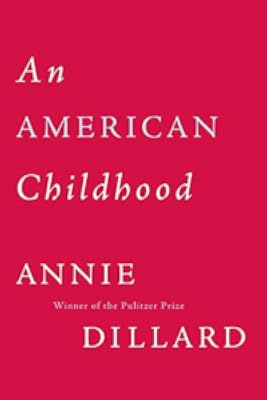
An American Childhood
by Annie Dillard
On This Page
Description
A book that instantly captured the hearts of readers across the country, An American Childhood is Pulitzer Prize-winning author Annie Dillard's poignant, vivid memoir of growing up in Pittsburgh in the 1950s.Tags
Recommendations


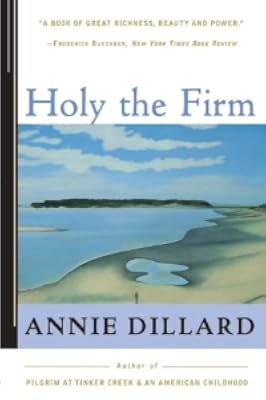
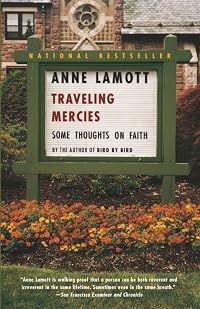
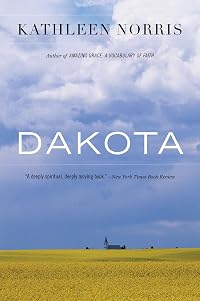
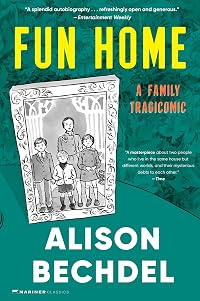



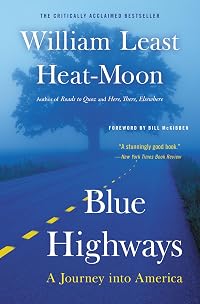
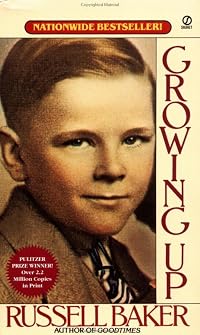
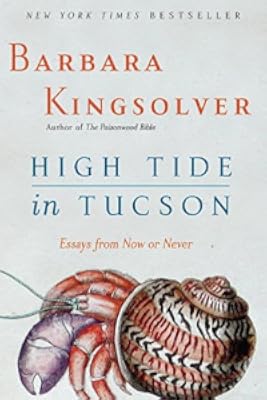


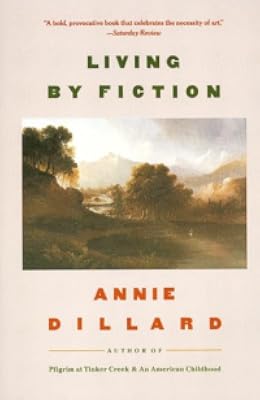









Member Recommendations
Member Reviews
This memoir is beautifully conceived and written: Intense, vivid, at times hilarious. Since it was from the library, I transcribed sentence after sentence to my copybook but had to restrain myself. There are many keepers throughout.
For instance, here is the vivid way she captures what it is like to pass out of childhood: “the interesting things of the world engaged my loose mind like a gear” (35). The other end of her adolescence crescendoes in the closing chapters of the book; she seems a danger to herself and others. Again, I marveled at how she could, with a few deft strokes, capture so precisely this feeling I remembered all too well.
Once in a while, she uses a word in an unusual way, but correctly: “She held against a show more living-room window a curtain rod from which depended heavy, flower-print curtains” (60). Too much of that, and she would be showing off. As it is, there is just enough of it to convince me she is a great writer. Some of her favorite arcane words crop up more than once. The first time, I read on, since I more or less know what she’s saying. When it shows up again, I realize it behooves me to know what it means exactly, and I turn to the dictionary. For instance, sempiternal. I could guess that it combines Latin semper and aeternus; the result seems a tautology (always eternal?). It turns out it denotes a concept of everlasting time that can never come to pass. So I have to go back over her paragraph to see if she knows this, too. One is always safe to assume she does.
At times, though, my credulity was stretched. Dillard seems precociously aware of herself and the world around her. Her intense interests—rocks, bugs, World War Two, the parables of Jesus—and her ambition to remember everything. Did she really as a child have such a vivid sense of transience? Was she really able to divide her attention so that it was as if she was watching herself from above? It matters little. This is one of the best evocations of a consciousness growing from childhood to adolescence, making its personal thrust forth from Eden to the tree of the knowledge of good and evil.
At one point, Dillard writes: “I loved living at my own edge.” That, in a nutshell, is what the 255 pages of this account describe. This book is personal but not solipsistic; it is universal. It’s like a message in a bottle dropped in the ocean by someone almost painfully aware of what it means to live and afraid that others are missing out on the show. I’m glad it drifted up on shore where I was standing. show less
For instance, here is the vivid way she captures what it is like to pass out of childhood: “the interesting things of the world engaged my loose mind like a gear” (35). The other end of her adolescence crescendoes in the closing chapters of the book; she seems a danger to herself and others. Again, I marveled at how she could, with a few deft strokes, capture so precisely this feeling I remembered all too well.
Once in a while, she uses a word in an unusual way, but correctly: “She held against a show more living-room window a curtain rod from which depended heavy, flower-print curtains” (60). Too much of that, and she would be showing off. As it is, there is just enough of it to convince me she is a great writer. Some of her favorite arcane words crop up more than once. The first time, I read on, since I more or less know what she’s saying. When it shows up again, I realize it behooves me to know what it means exactly, and I turn to the dictionary. For instance, sempiternal. I could guess that it combines Latin semper and aeternus; the result seems a tautology (always eternal?). It turns out it denotes a concept of everlasting time that can never come to pass. So I have to go back over her paragraph to see if she knows this, too. One is always safe to assume she does.
At times, though, my credulity was stretched. Dillard seems precociously aware of herself and the world around her. Her intense interests—rocks, bugs, World War Two, the parables of Jesus—and her ambition to remember everything. Did she really as a child have such a vivid sense of transience? Was she really able to divide her attention so that it was as if she was watching herself from above? It matters little. This is one of the best evocations of a consciousness growing from childhood to adolescence, making its personal thrust forth from Eden to the tree of the knowledge of good and evil.
At one point, Dillard writes: “I loved living at my own edge.” That, in a nutshell, is what the 255 pages of this account describe. This book is personal but not solipsistic; it is universal. It’s like a message in a bottle dropped in the ocean by someone almost painfully aware of what it means to live and afraid that others are missing out on the show. I’m glad it drifted up on shore where I was standing. show less
Wow! What a delight this memoir of growing up as a precocious, perspicacious young lady. The book is dream-like in its definite and affected retelling of moments and memories in short chapter vignettes. This includes family life with a father yearning for the raucous life of New Orleans and the tranquility of river travel and a cynical, wry mother that reminds me of the one in Once I was a Teenager: Growing up in the 50s and 60s in Australia and beyond. Annie recalls being snowed in for the Great Appalachian Storm of November 1950, discovering amateur microscopy, ominous Cold War fears, and more.
She has a charming, descriptive style. I never cared why buckeyes were named 'til I read here "Buckeyes were wealth. A ripe buckeye husk show more splits. It reveals the shining brown sphere inside only partially, as an eyelid only partially discloses an eye's sphere. The nut so revealed looks like the clam brown eye of a buck, apparently. It was odd to imagine the settlers who named it having seen more male deer's eyes in the forest than nuts on a lawn."
However, her real excitement and depth of feeling comes across in the lengthy two-thirds meet of the book given over as a paean to reading itself. It praises individual titles, whole subject areas, the Homewood branch of Pittsburgh's Carnegie Library: "I began reading books, reading to delirium. I began by vanishing from the known word into the passive abyss of reading, but soon found myself engaged with surprising vigor because of thing in the books, or even the things surrounding the books, roused me from my stupor." Never did an abyss sound so warm and inviting! I put up there on par with Thoreau's "Reading" chapter in Walden. show less
She has a charming, descriptive style. I never cared why buckeyes were named 'til I read here "Buckeyes were wealth. A ripe buckeye husk show more splits. It reveals the shining brown sphere inside only partially, as an eyelid only partially discloses an eye's sphere. The nut so revealed looks like the clam brown eye of a buck, apparently. It was odd to imagine the settlers who named it having seen more male deer's eyes in the forest than nuts on a lawn."
However, her real excitement and depth of feeling comes across in the lengthy two-thirds meet of the book given over as a paean to reading itself. It praises individual titles, whole subject areas, the Homewood branch of Pittsburgh's Carnegie Library: "I began reading books, reading to delirium. I began by vanishing from the known word into the passive abyss of reading, but soon found myself engaged with surprising vigor because of thing in the books, or even the things surrounding the books, roused me from my stupor." Never did an abyss sound so warm and inviting! I put up there on par with Thoreau's "Reading" chapter in Walden. show less
Although it may send the wrong signal about this book, I admit that Dillard’s reflections here (and elsewhere) make me tear up. I find the pursuit of knowledge that she doggedly and lovingly pursues to be profoundly beautiful, and she demonstrates and describes the endeavor with such sincerity and simple awe that I cannot help being a bit overwhelmed and feeling a bit spiritual in spite of myself.
An American Childhood is, ostensibly, a memoir but it is clear from the fidelity of Dillard’s 40-year-old recollections of when she was five through sixteen that this is as much a reflective commentary on the awakening of intellect and the value of curiosity as much as it is an account of her childhood. But it hardly matters — Dillard is show more a famously curious natural philosopher, lover of books, and one likely to see the omnipresence of the divine in the stunning variety of the natural world. Even if she is creatively filling in the gaps of her childhood, it is a satisfying one and about the only one that, in my mind, suits her.
The childhood that Dillard describes is one in which she
She observes about her childhood, and probably many like hers, that it was emerging awareness of a mind that is independent from the world of things, and that she was a person of feeling and reason who was capable of reaching out to that world with intention and curiosity, only to lose it for a while and then regain it.
The book is also about her developing interest in writing as a medium of capturing what reason can bring into focus about the curiosity and awe she shares with the world. Writing in her childhood notebooks …
The book also describes Dillard’s puzzled and dissatisfied engagement with organized religion. She recalls watching people in church praying and taking communion and in those acts connecting to God. The whole exercise seemed to strike her as dogmatic and ineffectual. She instead found spirituality in worldly experience, but it was not an experience that usurped theology as much as she imagined it to be a more effective medium to the same enlightened awareness.
There is no doubt that Dillard’s upbringing and family circumstances afforded her some privilege — microscopes and rock tumblers and privacy and time do have their costs. In the end, however, she makes a more global appeal …
And for me, that brings something into focus about childhood and what we hope for institutions like public education.
Easily one of my favorite books from one of my favorite authors. Highly recommended. show less
An American Childhood is, ostensibly, a memoir but it is clear from the fidelity of Dillard’s 40-year-old recollections of when she was five through sixteen that this is as much a reflective commentary on the awakening of intellect and the value of curiosity as much as it is an account of her childhood. But it hardly matters — Dillard is show more a famously curious natural philosopher, lover of books, and one likely to see the omnipresence of the divine in the stunning variety of the natural world. Even if she is creatively filling in the gaps of her childhood, it is a satisfying one and about the only one that, in my mind, suits her.
The childhood that Dillard describes is one in which she
“woke in bits, like all children, piecemeal over the years. I discovered myself and the world, and forgot them, and discovered them again. I woke at intervals” (11)
She observes about her childhood, and probably many like hers, that it was emerging awareness of a mind that is independent from the world of things, and that she was a person of feeling and reason who was capable of reaching out to that world with intention and curiosity, only to lose it for a while and then regain it.
The book is also about her developing interest in writing as a medium of capturing what reason can bring into focus about the curiosity and awe she shares with the world. Writing in her childhood notebooks …
“I hoped that the sentences would nail the blowing scraps down. I hoped that the sentences would store scenes like rolls of film, rolls of film I could simply reel off and watch. But of course sentences did not work that way. The sentences suggested scenes to the imagination, which were no sooner repeated than envisioned, and envisioned just as poorly and just as vividly as actual memories” (128).
The book also describes Dillard’s puzzled and dissatisfied engagement with organized religion. She recalls watching people in church praying and taking communion and in those acts connecting to God. The whole exercise seemed to strike her as dogmatic and ineffectual. She instead found spirituality in worldly experience, but it was not an experience that usurped theology as much as she imagined it to be a more effective medium to the same enlightened awareness.
There is no doubt that Dillard’s upbringing and family circumstances afforded her some privilege — microscopes and rock tumblers and privacy and time do have their costs. In the end, however, she makes a more global appeal …
”You may wonder, that is, as I sometimes wonder privately, but it doesn’t matter. For it is not you or I that is important, neither what sort we might be nor how we came to be each where we are. What is important is anyone’s coming awake and discovering a place, finding in full orbit a spinning globe one can lean over, catch, and jump on. What is important is the moment of opening a life and feeling it touch—with an electric hiss and cry—this speckled mineral sphere, our present world “ (248-249)
And for me, that brings something into focus about childhood and what we hope for institutions like public education.
Easily one of my favorite books from one of my favorite authors. Highly recommended. show less
In some ways I wish I had read this years ago, when it was published, but in fact I would not have appreciated it nearly as much. She paints a mid-century childhood in vivid colors. My growing up overlapped with her time and I was reminded of so many things that I had forgotten or deemed unimportant but I now see in a different light. Wonderful. Excellent writing and the child comes through in superb detail. Highly recommended.
This is an American childhood, if your family owned American Standard and had so much money that your father could throw over his job and decide he was going to boat down the Ohio River to New Orleans. However, Ms. Dillard isn't talking about her family's wealth - at least not centrally. She's mostly interested in describing the development of her mind.
As a young child she immerses herself in nature and books. Her mother takes her to the nearest branch of the Pittsburgh Public library which happens to be in an area of the city inhabited mostly by African-Americans. There she reads A Field Guide to Ponds multiple times and marvels at how many other patrons have done the same. in the summers she goes with her paternal grandparents to show more their summer home on Lake Erie where she further indulges her love of nature.
Her private school provides an excellent, if conventional education, but when puberty hits, Ms. Dillard's raging hormones get her in one scrape after another culminating in her arrest for taking part in a drag race with other teenagers. This results in a suspension from school, plus being sent to a rather strict girls' college. Throughout all of this, she never seems to question her fate. Maybe she doesn't want to, but with such a lively mind, it's a disappointment. show less
As a young child she immerses herself in nature and books. Her mother takes her to the nearest branch of the Pittsburgh Public library which happens to be in an area of the city inhabited mostly by African-Americans. There she reads A Field Guide to Ponds multiple times and marvels at how many other patrons have done the same. in the summers she goes with her paternal grandparents to show more their summer home on Lake Erie where she further indulges her love of nature.
Her private school provides an excellent, if conventional education, but when puberty hits, Ms. Dillard's raging hormones get her in one scrape after another culminating in her arrest for taking part in a drag race with other teenagers. This results in a suspension from school, plus being sent to a rather strict girls' college. Throughout all of this, she never seems to question her fate. Maybe she doesn't want to, but with such a lively mind, it's a disappointment. show less
With the 1987 publication of An American Childhood, Annie Dillard, novelist, critic and woman of all trades helped ushered in the age of the memoir. For this alone we should thank her.
Non traditional in many ways, Dillard begins her work by claiming, "When everything else has gone from my brain...what will be left is topology: the dreaming memory of land as it lay." From this emerges a rich and generous history of Pittsburg, the landscape upon which Dillard's childhood is inscribed. She takes the reader on a journey through every rock she overturned with a popsicle stick in hopes of finding buried treasure, through the alleyways where childhood games were played with ferocity, to the hallowed halls of Junior League dances where children show more are manufactured to become the city's elite. Her personal history is so entwined with that of the city that they are artfully rendered one in the same.
Unlike other memoirs, An American Childhood flouts the traditional coming of age trope. Instead, Dillard focuses on awakening from the self absorption of early childhood and entrance into the greater world. In a sense, she chronicles the Lacanian moment of self awareness, and does so lyrically and deftly.
For me, her work most resonates when she speaks of the importance of books and reading in forming her malleable psyche and material interactions with the world. In her words, "The visible world turned me curious to books; the books propelled me reeling back to the world." For Dillard, reading becomes a love "most requited" (according to Wetherell's Post review). It is the medium through which boundaries are shattered, hopes are realized, and escapes are planned.
In this memoir, Dillard's prowess as a poet shines through. Her lyrical recollections of the past seem as if they are memories from your own childhood. Even if you have not read any of her previous works, read An American Childhood in order to relieve the innocence and wonder of your own youth. show less
Non traditional in many ways, Dillard begins her work by claiming, "When everything else has gone from my brain...what will be left is topology: the dreaming memory of land as it lay." From this emerges a rich and generous history of Pittsburg, the landscape upon which Dillard's childhood is inscribed. She takes the reader on a journey through every rock she overturned with a popsicle stick in hopes of finding buried treasure, through the alleyways where childhood games were played with ferocity, to the hallowed halls of Junior League dances where children show more are manufactured to become the city's elite. Her personal history is so entwined with that of the city that they are artfully rendered one in the same.
Unlike other memoirs, An American Childhood flouts the traditional coming of age trope. Instead, Dillard focuses on awakening from the self absorption of early childhood and entrance into the greater world. In a sense, she chronicles the Lacanian moment of self awareness, and does so lyrically and deftly.
For me, her work most resonates when she speaks of the importance of books and reading in forming her malleable psyche and material interactions with the world. In her words, "The visible world turned me curious to books; the books propelled me reeling back to the world." For Dillard, reading becomes a love "most requited" (according to Wetherell's Post review). It is the medium through which boundaries are shattered, hopes are realized, and escapes are planned.
In this memoir, Dillard's prowess as a poet shines through. Her lyrical recollections of the past seem as if they are memories from your own childhood. Even if you have not read any of her previous works, read An American Childhood in order to relieve the innocence and wonder of your own youth. show less
It is difficult to convey how impressed I was with this book. Or even to separate which aspects of it I was most impressed by. There was the incredible skill of the author to recall and flesh out memories into these perfectly formed little scenes. There was the lyrical prose and ingeniously-combined word groupings. There was perfect capturing of the types of feelings that a child has about the most seemingly benign situations. There was the tone: neither showy nor falsely-modest. There was the time that it captured in 1950s Pittsburgh, with all the greater social issues and inner social circles it involved. It is really a wonderful book.
Members
- Recently Added By
Lists

Top Five Books of 2014
1,064 works; 398 members

Literary Pittsburgh
45 works; 1 member

Coming of Age
33 works; 1 member
Author Information

32+ Works 22,163 Members
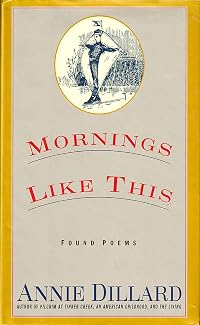
Annie Dillard was born Annie Doak in Pittsburgh, Pennsylvania on April 30, 1945. She received a B.A and an M.A. in English from Hollins College. She writes both fiction and nonfiction books including Tickets for a Prayer Wheel, Holy the Firm, Teaching a Stone to Talk, The Living, and Mornings Like This: Found Poems. She won the 1975 Pulitzer Prize show more for General Nonfiction for Pilgrim at Tinker Creek. She wrote an autobiography entitled An American Childhood. Her work also has appeared in such periodicals as The Atlantic, Harper's Magazine, The Christian Science Monitor, and Cosmopolitan. She taught for 21 years in the English department of Wesleyan University. (Bowker Author Biography) show less
Awards and Honors
Awards
Distinctions
Work Relationships
Is contained in
Is abridged in
Common Knowledge
- Canonical title
- An American Childhood
- Original title
- An American Childhood
- Original publication date
- 1987
- People/Characters
- Annie Dillard; Amy; Mollie
- Important places
- Pennsylvania, USA; Pittsburgh, Pennsylvania, USA
- Epigraph
- I have loved, O Lord, the beauty of thy house and the place where dwelleth thy glory. - Psalm 26
- Dedication
- for my parents Pam Lambert Doak and Frank Doak
- First words
- When everything else has gone from my brain--the President's name, the state capitals, the neighborhoods where I lived, and then my own name and what it was on earth I sought, and then at length the faces of my friends, and f... (show all)inally the faces of my family--when all this has dissolved, what will be left, I believe, is topology: the dreaming memory of land as it lay this way and that.
- Last words
- (Click to show. Warning: May contain spoilers.)In New Orleans--if you could get to New Orleans--would the music be loud enough?
- Original language
- English
Classifications
Statistics
- Members
- 2,386
- Popularity
- 8,228
- Reviews
- 37
- Rating
- (4.08)
- Languages
- English, French
- Media
- Paper, Audiobook, Ebook
- ISBNs
- 25
- ASINs
- 17