On This Page
Description
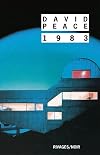
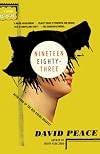
Nineteen Eighty Three's three intertwining storylines see the Quartet's central themes of corruption and the perversion of justice come to a head as BJ, the rent boy from Nineteen Seventy Four, the lawyer Big John Piggott - who's as near as you get to a hero in Peace's world - and Maurice Jobson, the senior cop whose career of corruption and brutality has set all this in motion, find themselves on a collision course that can only end in a terrible vengeance.Nineteen Eighty Three is an epic show more tale which concludes an extraordinary body of work confirming Peace as the most innovative and remarkable new British crime writer to have emerged for years. show lessTags
Recommendations



Member Reviews
And so closes the grim and relentless Red Riding Quartet.
What a wild, horrible ride. Beautiful, somehow, even it its horribleness, but still absolutely not for the faint of heart. I wouldn’t advise binging the series like I did, no matter how seductive the octane rush of jumping straight into the next book might be. In some ways, it’s almost necessary to read them back-to-back in order to better see how all the moving parts weave together, but Peace’s repetitive, often surrealistic style becomes toilsome by the final novel and TRRQ’s misery becomes heavy to the point of making them a burdensome read.
Nineteen Eighty-Three ties up most of the loose ends from the previous books, including some things I had entirely forgotten show more about from the very first novel, Nineteen Seventy-Four. It further solidifies Barry James “BJ” Anderson’s role as the red line connecting everyone and everything from the very beginning, if in a somewhat convoluted way. This is an impressive feat that I wasn’t sure Peace could pull off, but he did, and I appreciate that. However, out of all four novels, even in comparison to the psychotic absurdity of Nineteen Seventy-Seven, was the most difficult for me to understand.
Eighty-Three is told in three parts through three characters: Police officer Maurice “The Owl” Jobson, solicitor John “The Pig” Piggott, and prostitute / eventual thug BJ. Jobson’s POV is told in first person, Piggott’s second, and BJ’s POV is in third person for the majority of the book until his final few chapters where he switches suddenly to first. Each of these three parts are told at different periods: Jobson’s starts in the ‘80s then suddenly backs up to the ‘60s where it proceeds mostly linearly through the ‘70s and back into the ‘80s, Piggott’s the ‘80s, and BJ’s beginning in 1974 with intermittent flashbacks to childhood and eventually skipping to the ‘80s. Eventually all three narratives collide in 1983.
Fortunately, skipping around chronologically wasn’t confusing at the beginning as Peace usually puts the date somewhere at the start. Unfortunately, after a while, it didn’t matter because I was getting confused anyway with how many similar names and events were being tossed around, with little clue about which I should connect. Something about Peace’s repetitive style made this equally hard, as some plot points (torture scenes for instance) would be described in almost the exact same way, repeatedly. I began losing track of what was done to who and when, because I started remembering everything the same way. Throw in the fact that none of the narrators are reliable and most are mad or are going mad, and it’s just a terrible, muddy mess. Despite the stream of consciousness prose being written rather beautifully, I think it does sometimes get in the way of the story and is probably the biggest problem with TRRQ as a whole.
Something else that makes the books challenging is that Peace loves to play with his readers. Despite each chapter being told from a character’s POV, the reader doesn’t know everything that the character does, and the character won’t always reveal the meaning behind their words, or the memory or piece of information that provides meaning to the thing that their experiencing. For instance, we don’t know that the dead woman that Jack keeps dreaming about in Seventy-Seven is his ex-wife until the end of that book, and in Eighty-Three, BJ keeps seeing a man whom he recognizes but never names. Many characters (mainly Jack, BJ, and Laws) speak in riddles which are never explained. Maybe if I re-read and re-read the series, I might understand them, but... this is not really a series that I think most people would want to re-read.
Anyway. Overall, I don’t regret reading this series. It excited and terrified me in a way that few books have, and I devoured them like I was starving. Certainly, TRRQ will be a series that I’ll remember for a long time, for both good and bad reasons, and it has taught me a lot about how I would like to experiment with my own writing. That said, having completed the series, I still don’t think that I would recommend them to most anyone. The payoff simply isn’t worth it and I found it much more unsatisfying than the films. show less
What a wild, horrible ride. Beautiful, somehow, even it its horribleness, but still absolutely not for the faint of heart. I wouldn’t advise binging the series like I did, no matter how seductive the octane rush of jumping straight into the next book might be. In some ways, it’s almost necessary to read them back-to-back in order to better see how all the moving parts weave together, but Peace’s repetitive, often surrealistic style becomes toilsome by the final novel and TRRQ’s misery becomes heavy to the point of making them a burdensome read.
Eighty-Three is told in three parts through three characters: Police officer Maurice “The Owl” Jobson, solicitor John “The Pig” Piggott, and prostitute / eventual thug BJ. Jobson’s POV is told in first person, Piggott’s second, and BJ’s POV is in third person for the majority of the book until his final few chapters where he switches suddenly to first. Each of these three parts are told at different periods: Jobson’s starts in the ‘80s then suddenly backs up to the ‘60s where it proceeds mostly linearly through the ‘70s and back into the ‘80s, Piggott’s the ‘80s, and BJ’s beginning in 1974 with intermittent flashbacks to childhood and eventually skipping to the ‘80s. Eventually all three narratives collide in 1983.
Fortunately, skipping around chronologically wasn’t confusing at the beginning as Peace usually puts the date somewhere at the start. Unfortunately, after a while, it didn’t matter because I was getting confused anyway with how many similar names and events were being tossed around, with little clue about which I should connect. Something about Peace’s repetitive style made this equally hard, as some plot points (torture scenes for instance) would be described in almost the exact same way, repeatedly. I began losing track of what was done to who and when, because I started remembering everything the same way. Throw in the fact that none of the narrators are reliable and most are mad or are going mad, and it’s just a terrible, muddy mess. Despite the stream of consciousness prose being written rather beautifully, I think it does sometimes get in the way of the story and is probably the biggest problem with TRRQ as a whole.
Something else that makes the books challenging is that Peace loves to play with his readers. Despite each chapter being told from a character’s POV, the reader doesn’t know everything that the character does, and the character won’t always reveal the meaning behind their words, or the memory or piece of information that provides meaning to the thing that their experiencing. For instance, we don’t know that the dead woman that Jack keeps dreaming about in Seventy-Seven is his ex-wife until the end of that book, and in Eighty-Three, BJ keeps seeing a man whom he recognizes but never names. Many characters (mainly Jack, BJ, and Laws) speak in riddles which are never explained. Maybe if I re-read and re-read the series, I might understand them, but... this is not really a series that I think most people would want to re-read.
Anyway. Overall, I don’t regret reading this series. It excited and terrified me in a way that few books have, and I devoured them like I was starving. Certainly, TRRQ will be a series that I’ll remember for a long time, for both good and bad reasons, and it has taught me a lot about how I would like to experiment with my own writing. That said, having completed the series, I still don’t think that I would recommend them to most anyone. The payoff simply isn’t worth it and I found it much more unsatisfying than the films.
These books (1974, 1977, 1980, 1nd 1983) collectively constitute The Red Riding Hood Quartet, a series of crime novels based on the Yorkshire Ripper murders. I had read the first in the series, Nineteen Seventy-four last year, and thought it would be a simple matter to pick up with Nineteen Seventy-seven (which BTW is on the 1001 list) and proceed. However, I soon determined that I needed to reread Nineteen Seventy-four, which I did, and when I finished Nineteen Seventy-seven, I had to immediately go onto Nineteen Eighty and then Nineteen Eighty-three. I can't remember when I've read so many books by the same author in such a concentrated amount of time. (I devoured these over several days). In my view, these four books can only be read show more as one novel.
The first book in the series is narrated by a novice crime reporter, and concerned the solving of a series of child murders, some of which occurred several years before 1974, when the book is set. It is grim and bleak, and about terrible people doing terrible things. In this book, we are introduced to some of the corrupt policemen who are the core of this series.
Nineteen Seventy-seven is narrated by Jack Whitehead, a senior crime reporter who had made an appearance in the first book as the arrogant, wisecracking rival of the narrator in the first book. Now that we are in his mind, we can see that he is a psychological wreck, with self-induced demons haunting him.
Whitehead's sections alternate with sections narrated by Bobby Fraser, a policeman who made a brief but important appearance in the first book. In that book, he was a rookie, and was ethical with a sense of fair play. Three years later, he is unrecognizable--corrupt and violent.
In Nineteen Seventy-seven the Ripper murders begin, but are not solved. As in Nineteen Seventy-four, the narrative flows freely back and forth in time, and is for the most part in stream of consciousness. It is again a novel without a hero, full of terrible people.
In Nineteen Eighty the murders continue, and we meet the first character we can like. Peter Hunter, an investigator from another district, is sent to review the Ripper investigation to determine whether the failure to solve the case is due to incompetence, or to some clue that has been overlooked. Again the narrative travels loosely back and forth in time, and more and more of the rampant police corruption becomes known to the reader.
Each of these first three novels ends with a huge bang, although we sometimes are not entirely sure what actually happened. It is not until the ensuing book that we are entirely aware of what happened, and the ramifications it has for the characters and the investigation.
Nineteen Eight-three is narrated from the pov of three characters. John Piggot, a sleazy solicitor who is trying to prove that the man convicted of the child murders in the first book was framed, narrates his sections in the first person. BJ, a "rent boy" who has made appearances in the first three novels, narrates his sections, referring to himself in the second person. The final sections are told from the point of view of a corrupt police official.
Nineteen Eight-three winds and unwinds, not unlike a symphonic exposition, all the threads begun in the first novel. It shifts back and forth in time over nearly twenty years. As in the first three novels, it also ends with a bang, and again we are not quite sure of all of the ramifications. Unfortunately, there will be no succeeding books to enlighten us.
These four novels are amazing. They are not, however, for everyone. There are obscenties on every page. Brutality and violence abound, sometimes graphicly described. Everyone is corrupt. The novels are bleak, gritty, cynical and despairing. If this description doesn't bother you, I highly recommend these books. Read as one, they are a masterpiece. show less
The first book in the series is narrated by a novice crime reporter, and concerned the solving of a series of child murders, some of which occurred several years before 1974, when the book is set. It is grim and bleak, and about terrible people doing terrible things. In this book, we are introduced to some of the corrupt policemen who are the core of this series.
Nineteen Seventy-seven is narrated by Jack Whitehead, a senior crime reporter who had made an appearance in the first book as the arrogant, wisecracking rival of the narrator in the first book. Now that we are in his mind, we can see that he is a psychological wreck, with self-induced demons haunting him.
Whitehead's sections alternate with sections narrated by Bobby Fraser, a policeman who made a brief but important appearance in the first book. In that book, he was a rookie, and was ethical with a sense of fair play. Three years later, he is unrecognizable--corrupt and violent.
In Nineteen Seventy-seven the Ripper murders begin, but are not solved. As in Nineteen Seventy-four, the narrative flows freely back and forth in time, and is for the most part in stream of consciousness. It is again a novel without a hero, full of terrible people.
In Nineteen Eighty the murders continue, and we meet the first character we can like. Peter Hunter, an investigator from another district, is sent to review the Ripper investigation to determine whether the failure to solve the case is due to incompetence, or to some clue that has been overlooked. Again the narrative travels loosely back and forth in time, and more and more of the rampant police corruption becomes known to the reader.
Each of these first three novels ends with a huge bang, although we sometimes are not entirely sure what actually happened. It is not until the ensuing book that we are entirely aware of what happened, and the ramifications it has for the characters and the investigation.
Nineteen Eight-three is narrated from the pov of three characters. John Piggot, a sleazy solicitor who is trying to prove that the man convicted of the child murders in the first book was framed, narrates his sections in the first person. BJ, a "rent boy" who has made appearances in the first three novels, narrates his sections, referring to himself in the second person. The final sections are told from the point of view of a corrupt police official.
Nineteen Eight-three winds and unwinds, not unlike a symphonic exposition, all the threads begun in the first novel. It shifts back and forth in time over nearly twenty years. As in the first three novels, it also ends with a bang, and again we are not quite sure of all of the ramifications. Unfortunately, there will be no succeeding books to enlighten us.
These four novels are amazing. They are not, however, for everyone. There are obscenties on every page. Brutality and violence abound, sometimes graphicly described. Everyone is corrupt. The novels are bleak, gritty, cynical and despairing. If this description doesn't bother you, I highly recommend these books. Read as one, they are a masterpiece. show less
Much improved on the last two volumes, probably helped by there being three different POV characters so the over-used poetic prose devices are varied and spread out a bit. Another one without a sympathetic protagonist (the one I thought likely to be redeemed wasn't in the end) and extremely different to the finale of the TV adaptations in a variety of key ways. The TV version is sanitised I guess but in addition to leaving out the nastier aspects of the POV characters it changes the plot; people who die in the book live in the TV version but I'll say no more than that.
The final book in the Red Riding quartet. This time the three main characters are a solicitor, a rent boy and a corrupt police officer. The story, as with the other books, goes back and forth in time and answers many of the questions raised in the first book. It was sometimes hard to follow, but it was well worth the read.
The quartet has to be read as one - there's no point starting one book and then going onto something else afterwards - the characters and actions are so complex you have to really put some time aside to work your way through everything. Having said that, they were absolutely worth the time taken.
The quartet has to be read as one - there's no point starting one book and then going onto something else afterwards - the characters and actions are so complex you have to really put some time aside to work your way through everything. Having said that, they were absolutely worth the time taken.
Nineteen Seventy-Four
Nineteen Seventy-Seven
Nineteen Eighty
Nineteen Eighty-Three
I was inspired to read this crime quartet by arubabookwoman's superb review below. In her summary, she wrote "These four novels are amazing. They are not, however, for everyone. There are obscenities on every page. Brutality and violence abound, sometimes graphically described. Everyone is corrupt. The novels are bleak, gritty, cynical and despairing. If this description doesn't bother you, I highly recommend these books. Read as one, they are a masterpiece."
There is little I can add to this, except to say that Peace's writing is exceptional. Even though it can often be difficult to know who is talking or thinking, the way Peace gets inside people's heads so show more that his writing replicates how they think is astounding and, indeed, often poetic, despite the obscenity and graphic violence. I couldn't put these books down, even as they horrified me. show less
Nineteen Seventy-Seven
Nineteen Eighty
Nineteen Eighty-Three
I was inspired to read this crime quartet by arubabookwoman's superb review below. In her summary, she wrote "These four novels are amazing. They are not, however, for everyone. There are obscenities on every page. Brutality and violence abound, sometimes graphically described. Everyone is corrupt. The novels are bleak, gritty, cynical and despairing. If this description doesn't bother you, I highly recommend these books. Read as one, they are a masterpiece."
There is little I can add to this, except to say that Peace's writing is exceptional. Even though it can often be difficult to know who is talking or thinking, the way Peace gets inside people's heads so show more that his writing replicates how they think is astounding and, indeed, often poetic, despite the obscenity and graphic violence. I couldn't put these books down, even as they horrified me. show less
I'll put the same review on all four of them:
Nineteen Seventy-Four
Nineteen Seventy-Seven
Nineteen Eighty
Nineteen Eighty Three
I read them as a challenge - based on camaraderie with coworkers.
Once I started the series, didn't especially want to wimp out, and then was compelled to read thru to the last book to see if I could possibly figure out what the "ending" was.
I'm not faulting the author - it was a unique and compelling writing style and twisted plot with characters jumping back and forth between books.
I did it. I read them all. I think they got weirder and more difficult as they went along, but if you're looking for some intense, darkly challenging books - have at it.
Read in 2011.
Nineteen Seventy-Four
Nineteen Seventy-Seven
Nineteen Eighty
Nineteen Eighty Three
I read them as a challenge - based on camaraderie with coworkers.
Once I started the series, didn't especially want to wimp out, and then was compelled to read thru to the last book to see if I could possibly figure out what the "ending" was.
I'm not faulting the author - it was a unique and compelling writing style and twisted plot with characters jumping back and forth between books.
I did it. I read them all. I think they got weirder and more difficult as they went along, but if you're looking for some intense, darkly challenging books - have at it.
Read in 2011.
Red Riding quartet (David Peace)
1974
1977
1980
1983
A recent reviewer of Peace's book "Occupied City" described it as "unreadable". I bought it and before I started was somewhat encouraged by a much more positive review by a Jake Kerridge. But even that ended with ".......You will occasionally feel glad as you read that nobody else writes like Peace, but you will put the book down amazed and delighted that at least one person does." Well that proved to be the case as far as the comma.
I bought the Red Riding quartet for a song in the Borders sale the last day before it closed for good. The basic subject seemed much more approachable — after all dammit they'd just been made into a TV mini-series. After struggling through I can report that show more they are also unreadable which is probably why they were still in the sale on the last day, most Borders customers being more savvy about choosing reading material than me. They are set mostly in Yorkshire but Manchester and Preston also appear. Some of the characters are common to all the books but corrupt coppers take the leading parts. There are references to real events such as the hunt for the "Yorkshire Ripper" (Peter Sutcliffe in real life) and perhaps people better informed about the place and the times could pick out more. But it is a work of fiction and even it was written in a more readable style it would be a mistake to try to make the links. Don't buy or even borrow. show less
1974
1977
1980
1983
A recent reviewer of Peace's book "Occupied City" described it as "unreadable". I bought it and before I started was somewhat encouraged by a much more positive review by a Jake Kerridge. But even that ended with ".......You will occasionally feel glad as you read that nobody else writes like Peace, but you will put the book down amazed and delighted that at least one person does." Well that proved to be the case as far as the comma.
I bought the Red Riding quartet for a song in the Borders sale the last day before it closed for good. The basic subject seemed much more approachable — after all dammit they'd just been made into a TV mini-series. After struggling through I can report that show more they are also unreadable which is probably why they were still in the sale on the last day, most Borders customers being more savvy about choosing reading material than me. They are set mostly in Yorkshire but Manchester and Preston also appear. Some of the characters are common to all the books but corrupt coppers take the leading parts. There are references to real events such as the hunt for the "Yorkshire Ripper" (Peter Sutcliffe in real life) and perhaps people better informed about the place and the times could pick out more. But it is a work of fiction and even it was written in a more readable style it would be a mistake to try to make the links. Don't buy or even borrow. show less
Members
- Recently Added By
Lists

Top Five Books of 2017
757 works; 230 members

...read all, pay nowt (Books set in Yorkshire)
86 works; 14 members
Author Information

19+ Works 5,478 Members
Some Editions
Series


Common Knowledge
- Canonical title
- Nineteen Eighty Three
- Alternate titles*
- Millenovecento83
- Related movies
- Red Riding: 1983 (2009 | IMDb)
- First words
- 'No more dead dogs and slashed swans for us,' whispered Dick Alderman, like this was good news - It wasn't.
- Blurbers
- Ian Rankin
- Original language
- Inglés
*Some information comes from Common Knowledge in other languages. Click "Edit" for more information.
Classifications
Statistics
- Members
- 457
- Popularity
- 66,506
- Reviews
- 12
- Rating
- (3.72)
- Languages
- 7 — Dutch, English, French, German, Italian, Spanish, Swedish
- Media
- Paper, Audiobook, Ebook
- ISBNs
- 19
- ASINs
- 6