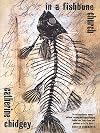
In a Fishbone Church
by Catherine Chidgey
On This Page
Description
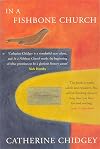
When Clifford Stilton dies, his son Gene crams his carefully kept diaries into a hall cupboard - but Clifford's words have too much life in them to be ignored, and start to permeate his family's world. Clifford taught Gene about how to find rocks and fossils, and about how to kill birds and fish. Gene passes on a similar inheritance to his daughters, Bridget and Christina - they have their own ways of digging and discovering the past, keeping an account of life, watching out for the show more varieties of death that lie hidden. Etta their mother tells a very different story of her 1940s childhood. In a Fishbone Church spans continents and decades. From the Berlin rave scene to the Canterbury duck season, from the rural 1950s to the cosmopolitan present, these five vivid lives cohere in a deeply affecting and exhilarating novel. In a Fishbone Church, Catherine Chidgey's acclaimed debut, won the Hubert Church Award for Best First Book in the Montana New Zealand Book Awards, the Adam Award, the regional Commonwealth Prize for Best First Novel, and a Betty Trask Award in the UK, where it was also longlisted for the Orange Prize. First published in 1998, it has been a bestseller in New Zealand and has been published around the world. show lessTags
Recommendations


















Member Reviews
If this was ever made into a film it would fit right in the hallowed New Zealand Cinema Of Unease.
That's what stalks these pages, never overt but ever present as an undercurrent. Unease about what? One may well ask because it is never apparent, no-one seems settled, most people seem slightly haunted, so much unsaid.
Annoyingly, there are these cryptic diary entries: Marsha 9 pm, Dolly 6pm, Rae 6pm, always women's names and always evening but no explanation as to what they mean and there are enough of them to make me curious. Either that or I missed it, if anyone knows leave a comment.
All the way through the book it was not apparent where it was going and at the end it went nowhere, it just stopped, so much left unanswered, so many show more undercurrents that deeply influence the story but never revealed.
In lots of ways it is such a typical New Zealand story. Like a lot of life here in NZ (to an immigrant anyway) things are left unsaid, understated, tacit, implied, but never said. I think it's the worst trait of kiwis and it is the root of that Cinema of Unease, that dark underbelly in Godzone that produces murders, massacres, and endless abuse. I'm sick of it already!
By contrast to Australia where nothing is left unsaid, and that which is said, is said in so many, often offensively humorous, ways. I'm in the wrong country for novels that's for sure.
I would not recommend this unless you want the endless mind numbing trivia of a family that may or may not be dysfunctional. Bah Humbug it was my Christmas Read. show less
That's what stalks these pages, never overt but ever present as an undercurrent. Unease about what? One may well ask because it is never apparent, no-one seems settled, most people seem slightly haunted, so much unsaid.
Annoyingly, there are these cryptic diary entries: Marsha 9 pm, Dolly 6pm, Rae 6pm, always women's names and always evening but no explanation as to what they mean and there are enough of them to make me curious. Either that or I missed it, if anyone knows leave a comment.
All the way through the book it was not apparent where it was going and at the end it went nowhere, it just stopped, so much left unanswered, so many show more undercurrents that deeply influence the story but never revealed.
In lots of ways it is such a typical New Zealand story. Like a lot of life here in NZ (to an immigrant anyway) things are left unsaid, understated, tacit, implied, but never said. I think it's the worst trait of kiwis and it is the root of that Cinema of Unease, that dark underbelly in Godzone that produces murders, massacres, and endless abuse. I'm sick of it already!
By contrast to Australia where nothing is left unsaid, and that which is said, is said in so many, often offensively humorous, ways. I'm in the wrong country for novels that's for sure.
I would not recommend this unless you want the endless mind numbing trivia of a family that may or may not be dysfunctional. Bah Humbug it was my Christmas Read. show less
This is the first book I have read by this author. It won the Montana New Zealand First Fiction Award 1998. I enjoyed much of this book. The author evokes a strong sense of place and draws recognisable characters.
It begins with the funeral of Clifford Stilton and the author builds a picture of Clifford through the memories of his son Gene and Clifford's diaries, excerpts of which appear spasmodically throughout the book, sometimes with very tenuous links to the story thread and herein lies the fault. The story after a strong beginning jumps somewhat erratically between the generations. Although the reader has a fairly strong image of the family story by the end.
I am pleased to have read this book at last and I did enjoy it, I just show more felt the change in narration at times jarring.
I look forward to reading some more from this author in the future as this was her first book. show less
It begins with the funeral of Clifford Stilton and the author builds a picture of Clifford through the memories of his son Gene and Clifford's diaries, excerpts of which appear spasmodically throughout the book, sometimes with very tenuous links to the story thread and herein lies the fault. The story after a strong beginning jumps somewhat erratically between the generations. Although the reader has a fairly strong image of the family story by the end.
I am pleased to have read this book at last and I did enjoy it, I just show more felt the change in narration at times jarring.
I look forward to reading some more from this author in the future as this was her first book. show less
There is a lot to like about this novel: it is crisply written, engaging, and contains some memorable characters and incidents. Its chief weakness is that it starts out focusing on one character, family patriarch Clifford Stilton, but ends up being more about his children and grandchildren. They are supposed to be under the influence of Clifford and his diary, but that influence never adds up to anything conclusive.
The novel is strongly reminiscent of a family memoir. Elizabeth Jane Howard, to take one example, is a writer who is excellent at taking this kind of material and shaping it into a coherent and moving story. But this is Catherine Chidgey's first novel, and, at least at that stage of her career, she did not have the same firm show more grasp on her material. It's an entertaining and well-written read, but ultimately something of a let-down. show less
The novel is strongly reminiscent of a family memoir. Elizabeth Jane Howard, to take one example, is a writer who is excellent at taking this kind of material and shaping it into a coherent and moving story. But this is Catherine Chidgey's first novel, and, at least at that stage of her career, she did not have the same firm show more grasp on her material. It's an entertaining and well-written read, but ultimately something of a let-down. show less
I have finished this book here on my very last day in Auckland and am going to have to leave it behind because of the weight of my suitcase, and unfortunately, I don't have the time to write the thoughtful review that it deserves.
In a Fishbone Church is Catherine Chidgey's debut novel, and it's so interesting to read it after falling in love with The Beat of the Pendulum last year. That was a book constructed out of fragments of daily life, and contrary to my own expectations, I was utterly captivated by it. Well, In a Fishbone Church—published 20 years beforehand—has some similar elements...
The reader learns about the characters from a diary, not the diary of an educated or especially literate man, just the daily notes of what is show more mostly a humdrum life, recorded by an Everyman who recognises that even an everyday life has significance of a sort. He's a butcher, and he goes hunting, and he buys presents for his wife, and he records his pulse rate because he's got a heart problem. He is not very interested in other people, and he finds it surprising when others, especially his family members, end up not doing exactly what he expected them to.
So much, so ordinary, and yet Chidgey has constructed from this material an absorbing tale of three generations interacting with this man and being influenced by him sometimes against their will. The book made quite a splash: longlisted for the Orange prize in 1999, and winning the Commonwealth Writers' Prize for Best First Book in South East Asia and Pacific (1999), the Betty Trask Award (1999), the Hubert Church Best First Book Award (1998), and the Adam Foundation Prize in Creative Writing (1997).
To read the rest of my review please visit https://anzlitlovers.com/2019/05/19/in-a-fishbone-church-by-catherine-chidgey/ show less
In a Fishbone Church is Catherine Chidgey's debut novel, and it's so interesting to read it after falling in love with The Beat of the Pendulum last year. That was a book constructed out of fragments of daily life, and contrary to my own expectations, I was utterly captivated by it. Well, In a Fishbone Church—published 20 years beforehand—has some similar elements...
The reader learns about the characters from a diary, not the diary of an educated or especially literate man, just the daily notes of what is show more mostly a humdrum life, recorded by an Everyman who recognises that even an everyday life has significance of a sort. He's a butcher, and he goes hunting, and he buys presents for his wife, and he records his pulse rate because he's got a heart problem. He is not very interested in other people, and he finds it surprising when others, especially his family members, end up not doing exactly what he expected them to.
So much, so ordinary, and yet Chidgey has constructed from this material an absorbing tale of three generations interacting with this man and being influenced by him sometimes against their will. The book made quite a splash: longlisted for the Orange prize in 1999, and winning the Commonwealth Writers' Prize for Best First Book in South East Asia and Pacific (1999), the Betty Trask Award (1999), the Hubert Church Best First Book Award (1998), and the Adam Foundation Prize in Creative Writing (1997).
To read the rest of my review please visit https://anzlitlovers.com/2019/05/19/in-a-fishbone-church-by-catherine-chidgey/ show less
Ratings
Members
- Recently Added By
Author Information

11+ Works 1,158 Members
Catherine Chidgey was born in 1970 and grew up in New Zealand. Her first novel, In a Fishbone Church, was published in 1999 and won Best First Book at the New Zealand Book Awards and at the Commonwealth Writers' Prize. It also won a Betty Trask Award and was longlisted for the Orange Prize. Her second novel, Golden Deeds, was chosen by Time Out show more magazine asa book of the year, and was a 2002 Best Book in the La Times Book Review and a 2002 Notable Book in the New York Times Book Review. Her third novel, The Transformation, was chosen by Barnes & Noble as a Discover Pick in 2005. In 2013 she won the BNZ Katherine Mansfield Award. Catherine has held the Sargeson Fellowship; the Todd New Writers¿ Bursary; the Katherine Mansfield Memorial Fellowship to Menton, France; the Rathcoola Residency to Cork, Ireland; the NZSA Peter and Dianne Beatson Fellowship; and the University of Otago Wallace Residency at the Pah Homestead in Auckland. In 2002 she won the inaugural Prize in Modern Letters and in 2003 she was named as the best New Zealand under 40. (Bowker Author Biography) show less
Awards and Honors
Awards
Common Knowledge
- Canonical title
- In a Fishbone Church
Classifications
Statistics
- Members
- 113
- Popularity
- 289,360
- Reviews
- 4
- Rating
- (3.61)
- Languages
- English
- Media
- Paper, Ebook
- ISBNs
- 7
- ASINs
- 3