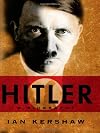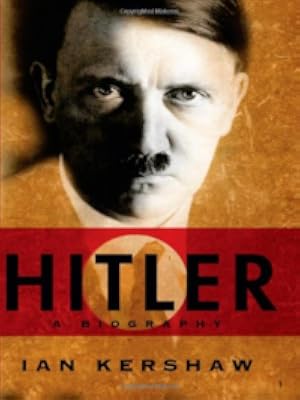
Hitler: A Biography {complete}
by Ian Kershaw
Kershaw's Hitler (Collections and Selections — Omnibus abridgment)
On This Page
Description
A single-volume edition of a classic biographical work traces Hitler's life and addresses key questions about the nature of Nazi radicalism, the Holocaust, and the factors that enabled European society to permit his atrocities.Tags
Recommendations






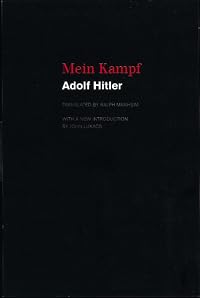
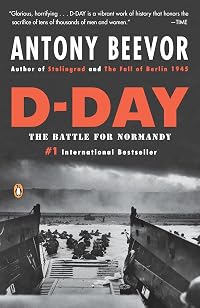
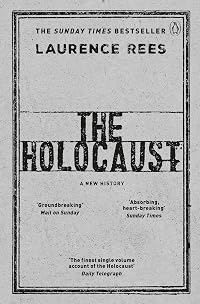
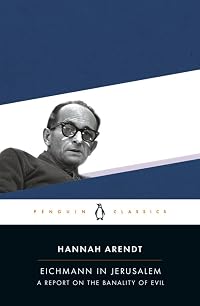






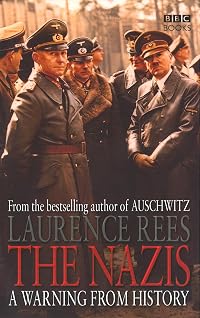

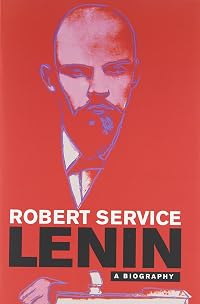


Member Recommendations

Member Reviews
An excellent biography, Kershaw provides clear insight to Hitler the man, and never allows the narrative to lapse into a mysticism of Hitler’s power and influence. Ultimately Hitler did reach the unassailable power of absolute dictator, but he reached that point through the acquiescence and approval from the German military, industrial leaders, and civilian population. Kershaw writes that “Hitler’s dictatorship amounted to the collapse of Modern civilization - a form of nuclear blow-out within modern society. It showed what we are capable of.”
From the onset, Kershaw grapples with how to explain how a person with no close relationships and without any exceptional qualities or intellect could have had such an immense and show more destructive historical impact. Other than his political life, Kershaw describes Hitler as an empty vessel. Still, the book’s time during Hitler’s early years traces his personal views and attitudes towards the Jews. which began during his time in Vienna. However, his experience in war and the humiliation of defeat cemented his views on Judaism and bolshevism. Again, it’s worth noting that there is no indication Hitler studied Marxism; his gifts were political demagoguery, not intellectual curiosity. Kershaw notes that reading, for Hitler, was about confirming prejudice, not for enlightenment or learning.
Hitler’s first known writing on “the Jewish question” came in the form of a well-known letter dated September 16, 1919, where he concluded that the final aim “must unshakably be the removal of Jews altogether.” Kershaw points out that this revealed the basis of Hitler’s worldview that would persist to the end, that antisemitism rests on race theory, and that a unifying nationalism must be based on “the need to combat the external and internal power of the Jews.”
Hitler blamed the Jews on the humiliating treatment of Germany following the Great War. Being a powerful orator, Hitler assaulted the Jews in the most vicious and barbaric language imaginable in nearly every speech. He wasn’t interested in governmental efficiency or organization, but rather considered propaganda to be the highest form of political activity. Politics was not the art of the possible, it was to Hitler an unending mass mobilization for a cause to be followed without question.
Amid the political rise of Nazism, to ensure ideological purity, Germans began to be purged from their positions in civil service, police, and teaching positions. These were brought in line with National Socialistic ideas.
Following the Reichstag fire, the Nazis took full advantage of the confusion. Hitler ruthlessly decided that they could not be dependent on “judicial considerations,” that an emergency decree was necessary to begin rounding up Communists and Social Democrats immediately. How did the German people react? “The ‘emergency decree’ that took away all personal liberties and established the platform for dictatorship was warmly welcomed.”
Neo-conservatives, whose ideas helped pave the way for Nazism, became disillusioned, too late. University professors were purged under a new Civil Service law in 1933. Loyalty oaths were demanded. Book burning became prevalent. The poet Heinrich Heine was among those whose works were now being burned. He had written: “where books are burnt, in the end people are also burnt.”
After Hitler consolidated power and the war began, the final solution began to form. Kershaw repeatedly illustrates how following Hitler and a lack of rule of law led government and military officials to begin “working towards the Fuhrer.” The authorization of mass murder began in 1939 with the genocidal plan to kill the mentally ill and incurably sick. This began the progression that ultimately led to deadly concentration camps and the murder of over six million Jews. This unimaginable atrocity was made possible by a system of “working towards the Fuhrer.” The internal government of the Reich had become Fuhrer autocracy.
It remains a damning lesson of the horrors that can be unleashed when groups and classes of people are dehumanized. The damning defense of “I was just following orders” will never be forgotten.
Kershaw concludes that “never in history has such ruination - physical and moral - been associated with the name of one man.” He continues, noting that “the extreme form of personal rule which an ill-educated beerhall demagogue and racist bigot, a narcissistic, megalomaniac, self-styled national savior, was allowed to acquire and exercise in a modern, economically advanced, and cultural land known for its philosophers and poets was absolutely decisive in the terrible unfolding of events in those fateful twelve years.”
We are all obliged to learn the lessons of history and guard against ever allowing our greatest failures and calamities to happen again. show less
From the onset, Kershaw grapples with how to explain how a person with no close relationships and without any exceptional qualities or intellect could have had such an immense and show more destructive historical impact. Other than his political life, Kershaw describes Hitler as an empty vessel. Still, the book’s time during Hitler’s early years traces his personal views and attitudes towards the Jews. which began during his time in Vienna. However, his experience in war and the humiliation of defeat cemented his views on Judaism and bolshevism. Again, it’s worth noting that there is no indication Hitler studied Marxism; his gifts were political demagoguery, not intellectual curiosity. Kershaw notes that reading, for Hitler, was about confirming prejudice, not for enlightenment or learning.
Hitler’s first known writing on “the Jewish question” came in the form of a well-known letter dated September 16, 1919, where he concluded that the final aim “must unshakably be the removal of Jews altogether.” Kershaw points out that this revealed the basis of Hitler’s worldview that would persist to the end, that antisemitism rests on race theory, and that a unifying nationalism must be based on “the need to combat the external and internal power of the Jews.”
Hitler blamed the Jews on the humiliating treatment of Germany following the Great War. Being a powerful orator, Hitler assaulted the Jews in the most vicious and barbaric language imaginable in nearly every speech. He wasn’t interested in governmental efficiency or organization, but rather considered propaganda to be the highest form of political activity. Politics was not the art of the possible, it was to Hitler an unending mass mobilization for a cause to be followed without question.
Amid the political rise of Nazism, to ensure ideological purity, Germans began to be purged from their positions in civil service, police, and teaching positions. These were brought in line with National Socialistic ideas.
Following the Reichstag fire, the Nazis took full advantage of the confusion. Hitler ruthlessly decided that they could not be dependent on “judicial considerations,” that an emergency decree was necessary to begin rounding up Communists and Social Democrats immediately. How did the German people react? “The ‘emergency decree’ that took away all personal liberties and established the platform for dictatorship was warmly welcomed.”
Neo-conservatives, whose ideas helped pave the way for Nazism, became disillusioned, too late. University professors were purged under a new Civil Service law in 1933. Loyalty oaths were demanded. Book burning became prevalent. The poet Heinrich Heine was among those whose works were now being burned. He had written: “where books are burnt, in the end people are also burnt.”
After Hitler consolidated power and the war began, the final solution began to form. Kershaw repeatedly illustrates how following Hitler and a lack of rule of law led government and military officials to begin “working towards the Fuhrer.” The authorization of mass murder began in 1939 with the genocidal plan to kill the mentally ill and incurably sick. This began the progression that ultimately led to deadly concentration camps and the murder of over six million Jews. This unimaginable atrocity was made possible by a system of “working towards the Fuhrer.” The internal government of the Reich had become Fuhrer autocracy.
It remains a damning lesson of the horrors that can be unleashed when groups and classes of people are dehumanized. The damning defense of “I was just following orders” will never be forgotten.
Kershaw concludes that “never in history has such ruination - physical and moral - been associated with the name of one man.” He continues, noting that “the extreme form of personal rule which an ill-educated beerhall demagogue and racist bigot, a narcissistic, megalomaniac, self-styled national savior, was allowed to acquire and exercise in a modern, economically advanced, and cultural land known for its philosophers and poets was absolutely decisive in the terrible unfolding of events in those fateful twelve years.”
We are all obliged to learn the lessons of history and guard against ever allowing our greatest failures and calamities to happen again. show less
This is the one-volume version of Kershaw’s famous biography. The original two volumes are 1450 pages long with 450 pages of notes. This version has lost all of the footnotes and 600 pages of text. A bibliography of principal primary sources remains. The work did not seem deficient to me in any way, although I suppose I would have to read both versions to know what I missed.
Kershaw attempted to examine Hitler’s power and determine first, how he came to power in an economically developed, culturally advanced country and second, how he was able to exercise that power. In my small non-expert opinion, the work is certainly successful in its detail and depth. Compared to some other biographies I have read, I did not feel that Kershaw show more was pushing any particular basic or underlying psychological hypothesis. He does explicitly state in the preface that he is a proponent of Max Weber’s concept of charismatic authority asserting that Hitler’s authority was not based on any outstanding personal qualities, but rather on traits that were projected onto him by a following in crisis conditions.
My only criticism of this great work is in the one small area where I have some expertise. When Kershaw is explicitly discussing medical matters, he produces the small inaccuracies that one commonly sees in lay analysis of disease. This was most apparent in discussion of an illness that Hitler had in which he was jaundiced. By themselves, these comments are trivial, but I think there are underlying psychiatric problems among the various actors which might have been more clearly seen by an expert in those matters. I do tend to think that stressing the effect of societal structure, as Kershaw does, over the special characteristics of the leader, although affording valuable insight, may ultimately somewhat obscure things.
It is impossible to read this and probably any biography of Hitler at this time without drawing comparisons to the current administration in the United States. It is clearly de rigeur to always append a comment that no one can be compared to Hitler and that any comparison would be inappropriate. Various possible reasons for this prohibition come to mind: Hitler is such a well-known and extreme example that comparison with him is too easy and diminishes one’s argument (see Godwin’s Law); All people are unique; The idea that history does not or cannot repeat itself; The misery, death, and destruction caused by Hitler are somehow minimized by comparison with any current person or situation; The misery, death, and destruction caused by Hitler have some special quality or meaning associated with a particular religion or ethnicity and this is denigrated by comparison with any person or situation not associated with the same religion or ethnicity. Be this as it may, and without originally intending to, I highlighted my e-book when there were characteristics that were obviously shared by the two personalities. However, as I neared the denouement, I decided that these various shared peculiarities (megalomania; addiction to public adulation; surrounding oneself with sycophants; casting about for scapegoats; demand for loyalty but the inability to show any; having a central underlying fear-based philosophical delusion; complete lack of empathy; obsession with the military, ceremony, and childish ranks and uniforms; dilettante-like lifestyle with the inability to concentrate on a task; rambling thought process and speech patterns; inability to take advice; explosive temper; ability to manipulate others…) are best thought of, at least by me, as characteristics of a particular diagnosable disease or abnormality. Any clinician in the course of their training will notice the behavioral patterns held in common among patients with a particular disease, e.g. chronic pancreatitis, alcoholism, schizophrenia. These patients are all different people and have their distinguishing features, but the similarities can sometimes be striking. Obviously, there are similarities that we all share, this is the basis of much of human activity, of the art and science of medical diagnosis, of any human classification system, and of all of the Sherlock Holmes stories. But in cases where the similarities are associated with a personality disorder of someone in public office and directly linked to widespread damage and destruction of other people and the society itself, they are difficult to ignore. show less
Kershaw attempted to examine Hitler’s power and determine first, how he came to power in an economically developed, culturally advanced country and second, how he was able to exercise that power. In my small non-expert opinion, the work is certainly successful in its detail and depth. Compared to some other biographies I have read, I did not feel that Kershaw show more was pushing any particular basic or underlying psychological hypothesis. He does explicitly state in the preface that he is a proponent of Max Weber’s concept of charismatic authority asserting that Hitler’s authority was not based on any outstanding personal qualities, but rather on traits that were projected onto him by a following in crisis conditions.
My only criticism of this great work is in the one small area where I have some expertise. When Kershaw is explicitly discussing medical matters, he produces the small inaccuracies that one commonly sees in lay analysis of disease. This was most apparent in discussion of an illness that Hitler had in which he was jaundiced. By themselves, these comments are trivial, but I think there are underlying psychiatric problems among the various actors which might have been more clearly seen by an expert in those matters. I do tend to think that stressing the effect of societal structure, as Kershaw does, over the special characteristics of the leader, although affording valuable insight, may ultimately somewhat obscure things.
It is impossible to read this and probably any biography of Hitler at this time without drawing comparisons to the current administration in the United States. It is clearly de rigeur to always append a comment that no one can be compared to Hitler and that any comparison would be inappropriate. Various possible reasons for this prohibition come to mind: Hitler is such a well-known and extreme example that comparison with him is too easy and diminishes one’s argument (see Godwin’s Law); All people are unique; The idea that history does not or cannot repeat itself; The misery, death, and destruction caused by Hitler are somehow minimized by comparison with any current person or situation; The misery, death, and destruction caused by Hitler have some special quality or meaning associated with a particular religion or ethnicity and this is denigrated by comparison with any person or situation not associated with the same religion or ethnicity. Be this as it may, and without originally intending to, I highlighted my e-book when there were characteristics that were obviously shared by the two personalities. However, as I neared the denouement, I decided that these various shared peculiarities (megalomania; addiction to public adulation; surrounding oneself with sycophants; casting about for scapegoats; demand for loyalty but the inability to show any; having a central underlying fear-based philosophical delusion; complete lack of empathy; obsession with the military, ceremony, and childish ranks and uniforms; dilettante-like lifestyle with the inability to concentrate on a task; rambling thought process and speech patterns; inability to take advice; explosive temper; ability to manipulate others…) are best thought of, at least by me, as characteristics of a particular diagnosable disease or abnormality. Any clinician in the course of their training will notice the behavioral patterns held in common among patients with a particular disease, e.g. chronic pancreatitis, alcoholism, schizophrenia. These patients are all different people and have their distinguishing features, but the similarities can sometimes be striking. Obviously, there are similarities that we all share, this is the basis of much of human activity, of the art and science of medical diagnosis, of any human classification system, and of all of the Sherlock Holmes stories. But in cases where the similarities are associated with a personality disorder of someone in public office and directly linked to widespread damage and destruction of other people and the society itself, they are difficult to ignore. show less
This is a magnificent book and, probably it will be the most magnificent history of Hitler written in a long time.
Ian Kershaw starts with a bit of family history, talks of Hitler's early childhood, and takes you through the sweep of his life. Right through the reading, I was constantly amazed at how he rose. While indeed the Germans have been blamed for his rise, the rest of the Western powers are also to share the blame for not seeing what kind of man they were dealing with
There are important history lessons, and leadership ones to be drawn from the book.
It is a long book, and yet Ian Kershaw's writing keeps drawing you in, and further in, and further into the book.
It is, in its own way, an exciting book, and mesmerising.
Ian Kershaw starts with a bit of family history, talks of Hitler's early childhood, and takes you through the sweep of his life. Right through the reading, I was constantly amazed at how he rose. While indeed the Germans have been blamed for his rise, the rest of the Western powers are also to share the blame for not seeing what kind of man they were dealing with
There are important history lessons, and leadership ones to be drawn from the book.
It is a long book, and yet Ian Kershaw's writing keeps drawing you in, and further in, and further into the book.
It is, in its own way, an exciting book, and mesmerising.
I never knew how little I knew about WW2 - how it happened and who was attacked when. This book is perfect for understanding this and other things such as more precisely how the anti-semitism built up into the Holocaust. The early life I did know about but the recap was pageturingly interesting.
This is a summary of a 2 volume exposition. When I say ‘summary’ it’s over one thousand pages and took me a month to read. But if you are reading for academic purposes, you might be better off with the full version as this one has few reference citations. I also felt that his thesis of Hitler’s power following Weber’s charismatic authority wasn’t really demonstrated although very well argued in the introduction.
This is a summary of a 2 volume exposition. When I say ‘summary’ it’s over one thousand pages and took me a month to read. But if you are reading for academic purposes, you might be better off with the full version as this one has few reference citations. I also felt that his thesis of Hitler’s power following Weber’s charismatic authority wasn’t really demonstrated although very well argued in the introduction.
A masterpiece!
An intriguing book detailing the life of one of the biggest war criminal of the history of humanity. Highly recommended!
An intriguing book detailing the life of one of the biggest war criminal of the history of humanity. Highly recommended!
Interesante pero saltea algunos aspectos para dedicarse a lo más domestico como por ejemplo guerra española o las olimpíadas
Fabuloso! Obra bem fundamentada, apresenta mesmo fontes contraditórias para o mesmo evento, fazendo o autor de juiz; livro completo pois abrange não só a vida de Hitler, mas também todos os aspectos do nazismo determinados ou influenciados pelo Fuhrer. Para além destas primeiras apreciações superlativas, a obra surpreende ainda pela riqueza literária e pelo interesse que suscita ao leitor, interesse que vai aumentando à medida que o livro se próxima do fim. Esta obra devia ser relida e trelida se a sua dimensão não fosse um desincentivo para um eventual regresso.
Hitler era um sonhar inofensivo como tantos outros sonhadores. Porém, apesar do que dizem os poetas, nem todos os sonhos são bons. Todos quantos se deixaram show more seduzir pelos sonhos de Hitler e lhe proporcionaram as condições para materializar tais sonhos, deram por si a viver um pesadelo inimaginável e não havia como acordar e acabar o pesadelo. Para todos os outros, que não eram alemães, o sonho de Hitler foi apenas um pesadelo e um inferno.
Os judeus e o comunismo eram no ideário nazi a encarnação do diabo e do mal. Tal como o cristianismo nunca justificou racionalmente porque é que o diabo era mau, porque queria a perdição da humanidade, também a ideologia nazi nunca logrou explicar racionalmente como e porquê eram os judeus e o comunismo a grande ameaça para a Alemanha. Onde falhava a razão entrava a propaganda que apelando para o lugar-comum, para o preconceito e para o ódio, culpava os judeus e os comunistas por tudo quanto de mal aconteceu à Alemanha, a começar pela derrota em Novembro de 1918. Esta é uma lição que os eleitores dos “chegas” deste mundo deviam aprender: não se faz política com base em preconceitos mas sim em conceitos, pois a governação que se baseia no ódio e na diferença não traz consigo nada de bom.
A crise civilizacional e a regressão de valores que o autor descreve no final do epílogo, mostra que os líderes nazis não eram homens superiores, mas sim arruaceiros de rua que passaram a usar gravata, que faziam da lealdade incondicional a maior virtude, tal como uma máfia de criminosos. Esta lealdade só existia num sentido: da base para a cúpula. Hitler, por exemplo, não era leal a ninguém. Ao longo da sua vida traiu quase todos os seus principais servidores: Rohm, Halder, Zeitzeler, Guderian, Rundsedt, Goring, Himler, etc. Estranho é que encontrasse sempre alguém disponível para ocupar o lugar deixado vago, quando a única certeza era ter o mesmo destino do antecessor.
Recorrentemente coloca-se em dúvida que Hitler soubesse da existência dos campos da morte. Esta obra mostra que tal prática está em concordância com as ideias de Hitler expressas não só no Mein Kumpf, mas também em vários discursos ao longo da década de 30. O autor refere também que Hitler deu pouquíssimas ordens por escrito fora da esfera militar. A execução das suas determinações era feita pelos subordinados que interpretavam os desejos do Fuhrer e agiam em conformidade, naquilo que o autor designou por “trabalho em prol do Fuhrer”. Fica também patente nesta obra que nada de relevante se fazia no III Reich sem a autorização de Hitler. Por tudo isto não é possível absolver Hitler do genocídio, tanto mais que esse crime era a concretização da sua profecia de 1939 à qual tantas vezes se referiu posteriormente. Nesta profecia Hitler declarara que se a “judiaria internacional causasse uma nova guerra na Europa, seria a raça judaica que seria exterminada”.
A Alemanha perdeu a guerra em primeiro lugar devido à intromissão de Hitler na esfera militar. Ainda bem que foi assim. Deste modo ficou provado que o povo alemão e, sobretudo, a elite militar mereceu o destino que teve, porque nunca tiveram coragem de evitar a derrota. Hitler tinha razão numa coisa: o povo alemão não o merecia! Porém, como não tiveram coragem de enfrentar Hitler e evitar a derrota final, tendo seguido o seu pastor em direcção ao colapso absoluto, o povo alemão acabou por ser digno de Hitler e de merecer o destino que teve. show less
Hitler era um sonhar inofensivo como tantos outros sonhadores. Porém, apesar do que dizem os poetas, nem todos os sonhos são bons. Todos quantos se deixaram show more seduzir pelos sonhos de Hitler e lhe proporcionaram as condições para materializar tais sonhos, deram por si a viver um pesadelo inimaginável e não havia como acordar e acabar o pesadelo. Para todos os outros, que não eram alemães, o sonho de Hitler foi apenas um pesadelo e um inferno.
Os judeus e o comunismo eram no ideário nazi a encarnação do diabo e do mal. Tal como o cristianismo nunca justificou racionalmente porque é que o diabo era mau, porque queria a perdição da humanidade, também a ideologia nazi nunca logrou explicar racionalmente como e porquê eram os judeus e o comunismo a grande ameaça para a Alemanha. Onde falhava a razão entrava a propaganda que apelando para o lugar-comum, para o preconceito e para o ódio, culpava os judeus e os comunistas por tudo quanto de mal aconteceu à Alemanha, a começar pela derrota em Novembro de 1918. Esta é uma lição que os eleitores dos “chegas” deste mundo deviam aprender: não se faz política com base em preconceitos mas sim em conceitos, pois a governação que se baseia no ódio e na diferença não traz consigo nada de bom.
A crise civilizacional e a regressão de valores que o autor descreve no final do epílogo, mostra que os líderes nazis não eram homens superiores, mas sim arruaceiros de rua que passaram a usar gravata, que faziam da lealdade incondicional a maior virtude, tal como uma máfia de criminosos. Esta lealdade só existia num sentido: da base para a cúpula. Hitler, por exemplo, não era leal a ninguém. Ao longo da sua vida traiu quase todos os seus principais servidores: Rohm, Halder, Zeitzeler, Guderian, Rundsedt, Goring, Himler, etc. Estranho é que encontrasse sempre alguém disponível para ocupar o lugar deixado vago, quando a única certeza era ter o mesmo destino do antecessor.
Recorrentemente coloca-se em dúvida que Hitler soubesse da existência dos campos da morte. Esta obra mostra que tal prática está em concordância com as ideias de Hitler expressas não só no Mein Kumpf, mas também em vários discursos ao longo da década de 30. O autor refere também que Hitler deu pouquíssimas ordens por escrito fora da esfera militar. A execução das suas determinações era feita pelos subordinados que interpretavam os desejos do Fuhrer e agiam em conformidade, naquilo que o autor designou por “trabalho em prol do Fuhrer”. Fica também patente nesta obra que nada de relevante se fazia no III Reich sem a autorização de Hitler. Por tudo isto não é possível absolver Hitler do genocídio, tanto mais que esse crime era a concretização da sua profecia de 1939 à qual tantas vezes se referiu posteriormente. Nesta profecia Hitler declarara que se a “judiaria internacional causasse uma nova guerra na Europa, seria a raça judaica que seria exterminada”.
A Alemanha perdeu a guerra em primeiro lugar devido à intromissão de Hitler na esfera militar. Ainda bem que foi assim. Deste modo ficou provado que o povo alemão e, sobretudo, a elite militar mereceu o destino que teve, porque nunca tiveram coragem de evitar a derrota. Hitler tinha razão numa coisa: o povo alemão não o merecia! Porém, como não tiveram coragem de enfrentar Hitler e evitar a derrota final, tendo seguido o seu pastor em direcção ao colapso absoluto, o povo alemão acabou por ser digno de Hitler e de merecer o destino que teve. show less
Mar 7, 2021Portuguese (Portugal)
Members
- Recently Added By
Lists

Fake Top 100 Nonfiction
79 works; 3 members

All Things Germany
321 works; 4 members

Books recommended in the history category on FiveBooks.com
329 works; 4 members

In Our Time books
4,934 works; 2 members
Author Information

62+ Works 10,248 Members
Ian Kershaw is professor of modern history at the University of Sheffield. (Bowker Author Biography)
Some Editions
Awards and Honors
Notable Lists
Series

Belongs to Publisher Series
Work Relationships
Contains
Is an abridged version of
Common Knowledge
- Canonical title
- Hitler: A Biography {abridged}; Hitler: A Biography {complete}
- Original title
- Hitler (Omnibus abridgment) (Omnibus abridgment)
- Original publication date
- 2008
- People/Characters
- Adolf Hitler; Hermann Göring
- Important places
- Munich, Bavaria, Germany; Linz, Austria; Berlin, Germany; Vienna, Austria
- First words*
- Préface
Que les deux volumes de ma biographie, Hitler, 1889-1936 : Hubris et Hitler, 1936-1945 : Némésis, publiés respectivement en 1998 et 2000, aient été si bien accueillis dans leur version originale co... (show all)mme dans les nombreux pays ou des traductions ont paru a été pour moi la source d’une immense satisfaction. L’accueil chaleureux reçu en Allemagne a été particulièrement gratifiant.
[...]
Réfléchir sur Hitler
La dictature hitlérienne a valeur de paradigme pour le XXe siècle. [...]
1
Fantaisie et échec
I
Le premier des nombreux coups de chance de Hitler eut lieu treize ans avant sa naissance. [...] - Last words*
- (Click to show. Warning: May contain spoilers.)risultava perciò seducente nonostante la sua indeterminatezza e illusorietà
- Original language*
- Anglais (Royaume-Uni) (Royaume-Uni)
- Disambiguation notice
- Complete biography, originally published in 2 volumes, Hubris and Nemesis.
*Some information comes from Common Knowledge in other languages. Click "Edit" for more information.
Classifications
- Genres
- History, Nonfiction, Biography & Memoir, General Nonfiction
- DDC/MDS
- 943.086092 — History & geography History of Europe Central Europe: Germany, Austria, Switzerland, Czech, Poland, Hungary Historical periods of Germany Germany 1866- Third Reich 1933-1945 History, geographic treatment, biography Biographies, Diaries And Journals
- LCC
- DD247 .H5 — History of Europe, Asia, Africa and Oceania Germany History of Germany History By period Modern, 1519- 19th-20th centuries Revolution and Republic, 1918-
- BISAC
Statistics
- Members
- 694
- Popularity
- 41,185
- Reviews
- 11
- Rating
- (4.22)
- Languages
- 14 — Danish, Dutch, English, Estonian, Finnish, French, German, Italian, Norwegian (Bokmål), Norwegian, Portuguese, Slovenian, Spanish, Swedish
- Media
- Paper, Audiobook, Ebook
- ISBNs
- 44
- ASINs
- 14