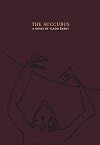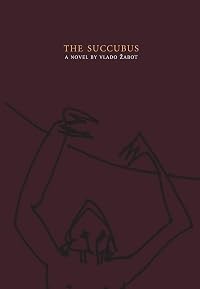
The Succubus (Slovenian Literature Series)
by Vlado Zabot
On This Page
Description
In an unnamed city shrouded in mist, Valent Kosima is a retiree living quietly yet discontentedly with his doped-up, TV-addicted wife. To escape the claustrophobia of home and city, he masquerades as a man of means and takes to spending his nights strolling through an opulent suburb--but when news comes of a gruesome murder on his new turf, Kosima fears that he may be a suspect. Increasingly anxious and paranoid, Kosima begins to see a mysterious dark-haired girl following him show more everywhere--and as this succubus takes hold of him, Kosima finds his familiar city becoming indistinguishable from the landscape of his own nightmares. Gripping and provocative, The Succubus begins where the sleek urban world and the dream logic of the unconscious mix... and produce monsters. show lessTags
Recommendations







Member Reviews
The Succubus is easily summarised: Valent Kosmina is going mad. The story seems to begin just as his odd habits are giving way to actions that are downright bizarre and his thoughts to the floridly psychotic.
Despite having dealt with the mentally ill and having read first-hand accounts of mental illness,I always felt an otherness, something alien and incomprehensible, in psychosis. Succubus is probably so disturbing because Zabot so vividly describes an extension of symptoms I recognise: Having been delirious, I know what it is to have irrational revelations about connections between things; I've been so tired as to have fleeting halllucinations; under prolonged stress I've found my thoughts forever turning to the same subject; because show more I was once 13 years old, I know what it is to be abnormally self-conscious. It's no great leap from these to ideas of reference, recurrent hallucinations and fixed delusions. It seems to me quite an accomplishment for a writer, and one of fiction at that, to make an illness like Kosmina's seem close to home.
And Zabot uses no drama beyond that in Kosmina's mind to do so--no public ructions, no straitjackets, no grand lunatic gestures. To me the most disquieting, even frightening, episode is simply Valent's visit to his apartment tower's attic on a stifling summer afternoon, where he is unsettled by the roof supports, by evidence of others' visits, and by the presence of the caretaker, who is guiltily eating something unnamable. (How much of this is real and how much delusional is left unsaid: the narration is 3rd-person but the events are related from Kosmina's viewpoint.)
The book is oddly timeless and placeless; the account as a whole, though not the prose, has a rather old-fashioned feel and the city and characters could be anywhere, though there's something ineffably central/east European about them. I think that if you liked Topor's The Tenant or The Watchers by Maclean you'd like this, though it's less the page-turner than either. Have a go--when others start discussing British literary fiction you'll be able to put a stop to it by casually drawling, 'Actually, I've just read a rather superior little book by a Slovenian chap. . .' show less
Despite having dealt with the mentally ill and having read first-hand accounts of mental illness,I always felt an otherness, something alien and incomprehensible, in psychosis. Succubus is probably so disturbing because Zabot so vividly describes an extension of symptoms I recognise: Having been delirious, I know what it is to have irrational revelations about connections between things; I've been so tired as to have fleeting halllucinations; under prolonged stress I've found my thoughts forever turning to the same subject; because show more I was once 13 years old, I know what it is to be abnormally self-conscious. It's no great leap from these to ideas of reference, recurrent hallucinations and fixed delusions. It seems to me quite an accomplishment for a writer, and one of fiction at that, to make an illness like Kosmina's seem close to home.
And Zabot uses no drama beyond that in Kosmina's mind to do so--no public ructions, no straitjackets, no grand lunatic gestures. To me the most disquieting, even frightening, episode is simply Valent's visit to his apartment tower's attic on a stifling summer afternoon, where he is unsettled by the roof supports, by evidence of others' visits, and by the presence of the caretaker, who is guiltily eating something unnamable. (How much of this is real and how much delusional is left unsaid: the narration is 3rd-person but the events are related from Kosmina's viewpoint.)
The book is oddly timeless and placeless; the account as a whole, though not the prose, has a rather old-fashioned feel and the city and characters could be anywhere, though there's something ineffably central/east European about them. I think that if you liked Topor's The Tenant or The Watchers by Maclean you'd like this, though it's less the page-turner than either. Have a go--when others start discussing British literary fiction you'll be able to put a stop to it by casually drawling, 'Actually, I've just read a rather superior little book by a Slovenian chap. . .' show less
What a weird book! I was completely absorbed the entire time I was reading this even though I'm still a little unsure about the ending. I think the lack of direct information is what makes the storyline so fascinating. It reminded me a bit of Donnie Darko.
Ratings
Members
- Recently Added By
Lists

Reading Globally
136 works; 15 members

Seldom seen & worth considering
43 works; 2 members
Author Information
5 Works 35 Members
Some Editions
Awards and Honors
Awards
Common Knowledge
- Original publication date
- 2003
Classifications
- Genres
- Fiction and Literature, General Fiction, Fantasy, Suspense & Thriller
- DDC/MDS
- 891.8 — Literature & rhetoric Literatures of other languages East Indo-European and Celtic literatures West and South Slavic languages (Bulgarian, Slovene, Polish, Czech, Slovak, Serbo-Croatian, and Macedonian)
- LCC
- PG1919.36 .A24 .S8513 — Language and Literature Slavic languages and literatures. Baltic languages. Albanian language Slavic. Baltic. Albanian Slovenian
- BISAC
Statistics
- Members
- 27
- Popularity
- 1,014,109
- Reviews
- 2
- Rating
- (4.00)
- Languages
- English, Slovenian
- Media
- Paper
- ISBNs
- 2