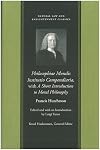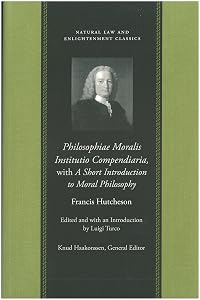
Philosophiae Moralis Institutio Compendi
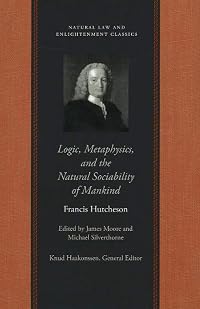
by Francis Hutcheson
On This Page
Description
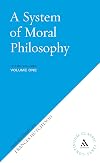
Often described as the father of the Scottish Enlightenment, Francis Hutcheson (1694-1746) was born in the north of Ireland to an Ulster-Scottish Presbyterian family. Organised into three 'books' that were divided between two volumes, A System of Moral Philosophy was his most comprehensive work. It synthesised ideas that he had formulated as a minister and as the Chair of Moral Philosophy at the University of Glasgow (1729-46). Published posthumously by his son in 1755, prefaced by an show more account of his life, it is the only treatise by Hutcheson for which a manuscript is known to have survived. Asserting that individual natural rights derive from an innate understanding of moral behaviour, Hutcheson offers a model that mediates between individual interests and communal ideals. Containing Book 1 and part of Book 2, Volume 1 describes the role and perception of 'perfect' and 'imperfect' natural rights. show lessTags
Recommendations







Members
- Recently Added By
Author Information
22+ Works 375 Members
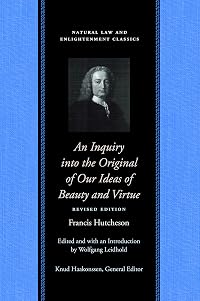
The founder of moral sense theory was born in County Down, Ireland. Francis Hutcheson's father and grandfather were Presbyterian ministers, and he studied at the University of Glasgow from 1711 to 1717 in preparation for the Presbyterian ministry. For the next decade, he taught at an academy for dissenting clergy in Dublin, most of the time show more serving as its head. He was appointed professor of moral philosophy at Glasgow in 1730, a position he held until his death. Hutcheson's principal contributions to philosophy were in the fields of moral philosophy and aesthetics. His chief works are Inquiry into the Original of Our Ideas of Beauty and Virtue (1725), Philosophiae Moralis Institutio (1742), and the posthumously published System of Moral Philosophy (1755). Against the English rationalists Samuel Clarke and Richard Price, Hutcheson rigorously developed Shaftesbury's suggestion that moral distinctions are made by our sensitive rather than our rational nature. In aesthetics he gave an analogous account of our sense of beauty. Hutcheson's theories profoundly influenced Hume and also had a significant impact on Kant in his precritical period. (Bowker Author Biography) show less
Series
Belongs to Publisher Series
Common Knowledge
- Canonical title
- Philosophiae Moralis Institutio Compendi
Classifications
Statistics
- Members
- 61
- Popularity
- 508,226
- Languages
- English, German, Latin
- Media
- Paper, Ebook
- ISBNs
- 16