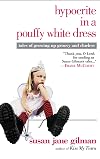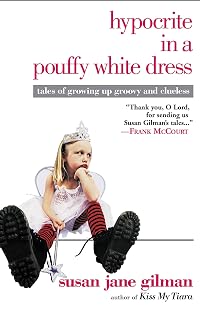
Hypocrite in a Pouffy White Dress
by Susan Jane Gilman
On This Page
Description
A collection of true stories by everyday women follows such remembrances as coming of age as an unfashionable white girl in an all-Puerto Rican neighborhood, experiencing embarrassment in front of a rock star, and receiving horrible mistreatment by a "feminist" boss.Tags
Recommendations












Member Reviews
The first two sections of this book made me laugh out loud regularly; Gilman recounts her childhood and adolescence in loopy, original prose that is delicious, occasionally dazzling. I enjoyed the book overall but felt the final section, which describes Gilman's university experiences and early career (ending with her recent move to Switzerland), loses much of the charm of the earlier chapters. Gilman's account of her parents' divorce is unbelievably whiny, and her story of working in Washington is almost hopelessly naive — here the "clueless" of the subtitle certainly rings true. Women in their thirties may find Gilman's embarrassed enchantment with her wedding dress poignant, but her bride stories are so much better when Susan Jane show more is a kindergartener who insists on wearing a tutu to class every day. Hypocrite is definitely worth your time, but don't expect insightful feminist analysis or deep cultural commentary. Gilman is at her best in the voice of a girl becoming a young woman, and I hope she will continue to mine this vein. show less
Susie Gilman wants us to believe she's subversive, a feminist. Yet, despite her strong, sardonic voice and a writing style that seems filched from Dave Sedaris, she's completely lacking in substance. Her comedic memoir--which in inexplicably arranged into chapters, despite the fact that it lacks a cohesive plot line--is largely without substance. Nearly every chapter describes how Gilman intended, in one way or another, to bedifferent, but she defaults to the expected societal roles time and time again. For example, in one of the strongest chapters, Gilman describes her teenaged obsession with the Rolling Stones. When she finally meets Mick Jagger (and this is the type of book where these sort of things happen--Gilman was obviously show more raised white, wealthy, and blessed), he tells her she has nice tits. She should be horrified, she informs us, because she's a feminist, but clearly she's tickled pink. I think this was supposed to be somehow chilling but, like later chapters which describe her, among other things, buying a traditional white wedding gown, it just feels expected. Gilman's just not that weird, only privileged enough to think she is. In this way, Hypocrite in a Poufy White Dress constitutes the worst sort of chick-lit. By presenting herself as a subversive feminist, Gilman tries to convince her readers that they can still be feminists and get all giggly when men compliment their anatomy. But the problem was that I was utterly unconvinced--and her shallow life story did little to persuade me. show less
THIS BOOK IS AWESOME!!!!! Originally suggested to me as an interpretation piece for debate, my friend's mother warned me that I may take a liking to the protagonist....understatement of the week. Gilman's recreation of her childhood and adult experiences are hilarious and easily related to, and the descriptions leave nothing to the imagination. Her gritty description of the punk streets of NYC as a teenager are everything that VH1 describes and complaints about being a feminist bride who is planning her wedding are nothing short of hilarious, even if you have never been around a wedding being planned or never been subjected to the Bridezilla television show. As an 18 year old about to enter college, this book helped me to gain show more perspective on what it means to be a strong woman, to find your identity and to never lose it, in a very subtle and unique way. If you are open minded and looking for an amusing laugh, I highly recommend this book...you won't be disappointed show less
Susan Gilman grew up in a "transitional" (pre-gentrified), mixed-race neighborhood on the Upper West Side of New York City during the 1970's which reminded me of the transitional neighborhood about an hour's drive away where I did some of my own growing up during the same time period. But Susan was quite a bit more adventurous than I was, and her upbringing was more influenced by the experimental culture of the time - family transcendental-meditation classes, for example. As she moved into her teens, drugs and sex became the most frequent areas of experimentation, as she became consumed with terror that she'd be the only girl in her high-school class still burdened with virginity at graduation. (No spoiler, but her fear was unfounded. show more However, it did ring a bell with me. I was in high school around the same time, before HIV and treatment-resistant STDs, and there was a sense among at least some of my classmates that they'd "get it over with" sooner rather than later - possibly at a party like any of the ones Gilman describes and that I was too much of a "straight" to be invited to.) College was more of the same, but as she developed her writing career through a mix of freelancing and offbeat staff positions - writer/reporter for a Jewish weekly newspaper, communications director for a freshman Congresswoman - she became obsessed with different things.
Despite what I've mentioned in the previous paragraph, though, this is not a party-girl memoir. Gilman consistently places her experiences within the social and cultural framework of their times, reflects on them with insight and affection, and doesn't spare the embarrassing details. But Gilman's "cultural framework" includes a feminist consciousness which the reader can see emerging as her story builds, culminating in the essay that lends its title to the book. She's not the first woman who's fought to reconcile her feminism and intention to be the "Anti-Bride" with the longing to feel "like a bride" upon meeting the wedding-industrial complex, she's not likely to be the last, and her efforts to come to terms with the trappings of gender roles and The Big Day definitely struck a chord.
Susan Jane Gilman has some great stories to tell, and an engaging and humorous way of telling them. I think women of our generation - the same generation I addressed in reviewing Gail Collins' history of the modern women's movement, When Everything Changed - will encounter a lot in Hypocrite in a Pouffy White Dress that resonates, from pop-culture references to adolescent feelings and fears to perceptions of the world around us, but I don't think the appeal of this book is by any means limited to my own age group. This is memoir of OUR times as much as the times of one particular woman. show less
Despite what I've mentioned in the previous paragraph, though, this is not a party-girl memoir. Gilman consistently places her experiences within the social and cultural framework of their times, reflects on them with insight and affection, and doesn't spare the embarrassing details. But Gilman's "cultural framework" includes a feminist consciousness which the reader can see emerging as her story builds, culminating in the essay that lends its title to the book. She's not the first woman who's fought to reconcile her feminism and intention to be the "Anti-Bride" with the longing to feel "like a bride" upon meeting the wedding-industrial complex, she's not likely to be the last, and her efforts to come to terms with the trappings of gender roles and The Big Day definitely struck a chord.
Susan Jane Gilman has some great stories to tell, and an engaging and humorous way of telling them. I think women of our generation - the same generation I addressed in reviewing Gail Collins' history of the modern women's movement, When Everything Changed - will encounter a lot in Hypocrite in a Pouffy White Dress that resonates, from pop-culture references to adolescent feelings and fears to perceptions of the world around us, but I don't think the appeal of this book is by any means limited to my own age group. This is memoir of OUR times as much as the times of one particular woman. show less
Susan Jane Gilman was raised in Upper West Manhattan in the 1970’s, before it became gentrified. Her family was pretty laid back and “groovy” - her grandmother claimed to be a Communist and her mother signed the whole family up for Transcendental Meditation. Throughout it all, Susie retained an active imagination and developed a sense of humor. Her family motto was, “Reality is for people with no imagination.” Hypocrite in a Pouffy White Dress: Tales of Growing Up Groovy and Clueless by Susan Jane Gilman is her memoir. It starts in her pre-school years and ends when she moved to Geneva shortly after her marriage.
Some of her stories are hilarious - she was tired of her ordinary name, so she convinced her kindergarten teacher show more that she was changing her name to Sapphire. Her mother signed the whole family up to learn Transcendental Meditation, and her biggest concern was that she might run into a boy she had a crush on who happened to live in the same building as the TM Center. When she wrote an article about gay Rabbis, everyone assumed she was a lesbian and she had to figure out a way to “come out of the closet.”
Parts of the book were touching. Susan was assigned to go to Poland to write an article on the March of the Living - an event where three thousand Jewish teen-agers met in Poland to learn about the Holocaust. Her parents broke up when her brother was in college and she felt her family suffered from a “temporary psychosis that plagued every other divorcing family in America.”
I thoroughly enjoyed this book. I laughed out loud quite a few times. After reading this book, I feel like I could sit and talk to Susan Jane Gilman for hours - she’s so interesting and funny! show less
Some of her stories are hilarious - she was tired of her ordinary name, so she convinced her kindergarten teacher show more that she was changing her name to Sapphire. Her mother signed the whole family up to learn Transcendental Meditation, and her biggest concern was that she might run into a boy she had a crush on who happened to live in the same building as the TM Center. When she wrote an article about gay Rabbis, everyone assumed she was a lesbian and she had to figure out a way to “come out of the closet.”
Parts of the book were touching. Susan was assigned to go to Poland to write an article on the March of the Living - an event where three thousand Jewish teen-agers met in Poland to learn about the Holocaust. Her parents broke up when her brother was in college and she felt her family suffered from a “temporary psychosis that plagued every other divorcing family in America.”
I thoroughly enjoyed this book. I laughed out loud quite a few times. After reading this book, I feel like I could sit and talk to Susan Jane Gilman for hours - she’s so interesting and funny! show less
Susan Gilman is quite the writer. Like other great writers, she was born to write. This book was published in 2005 and how it missed my bookshelf is beyond me. I would compare her to a female David Sedaris. Her book is a compilation of short stories that commence with her early childhood through getting married and moving to Geneva. She has a way of looking at life through such a truthful and witty set of glasses. Like, I am sure, most of her readers, I have picked out my favorite stories of hers in this book. Let me give you a quick “run-down” of this great written work:
Part I – Grape Juice and Humiliation
Part I commences with Susan’s early childhood vacation at Silver Lake in the late 60’s/early 70’s timeframe in which show more peace, love and VW buses were the “rage.” At Silver Lake, a chubby Gilman finds stardom in her first cameo role in an independent film as a naked “cherub” dancing around a freaky hippie with another naked child. It was one of those movies where the people try to fit like 100 people in the VW bus and climb out one by one to show how many people they can cram into that darned thing. From this story, Gilman takes us to kindergarten with her to enjoy her on-going display of creative lies that she dreams up for “show and tell.” Thereafter, we learn about her life in the streets of New York and growing up in a multi-cultural demographic. She decides, based upon the beautiful communion dresses, that she’d like to be Puerto Rican rather than a white, Jewish girl. There are just fabulous parts of this section where she exposes the white childrens’ desire to be more “ethnic” and use accents and dialects of the other children because being white plainly sucked and had no “umpfh” to it (for lack of better wording). When she is put in a private school, she is then faced with the decision making of becoming a Christian or remaining a “Jew.” She felt that the worst downside of Judaism was having to wait for the Messiah… I mean, why just not have him now! I loved her confident use of the word “Virgin” (pertaining to the Virgin Mary) while not knowing what it meant at all. The first part of the book was, by far, my favorite.
Part II – Not Just Horny, But Obnoxious, Too
We get a back-stage pass to Susan’s growing of age in this section. I could COMPLETELY relate to Susan’s infatuation with rock-stars and famous entertainers of her day. Although, she is a bit older than I and The Stones were just a bit ahead of my time, I enjoyed reading about her “love affair” with Mick Jagger in which he would someday arrive at her high school in his limo, only to emerge from such and pick her up from Geometry class. (hee hee). I had that with Duran Duran and John Taylor (who, by the way… I heard is appearing on an episode of Samantha Who in the next couple of weeks). The funniest part of all is that she actually does meet Mick at a holiday party. He dons her “the girl there with the biggest ta ta’s” (I’m not using the word from the book). This section goes on to take you through her abstinence from sexual intercourse and the completely overactive hormones of typical teenagers. What I liked about this section is that, when she finally loses her virginity, she is more obsessed with calling her best friend to talk about it than actually the act itself. Classic!
Part III – Reality Says “Hello”
The final section of the book takes the readers through her young adulthood into her early marriage. This section is nearly equally as good as the first. Gilman writes beautifully about her parents’ divorce after 26 years of marriage and what it is like to be an adult child of a divorced couple. I loved what her mother ended up doing with her life and turning her situation around. My favorite “laugh out loud” moment was when she makes a bet with her father over what her younger brother would say when her father asked him about piercing his ear at the age of 52… classic! The reader accompanies Gilman through her first paying jobs as a writer, first for a Jewish newspaper and then for a Congresswoman, both are equally funny. Although, in the chapter in which she describes her work at the Jewish publication, she actually goes to Poland for the press on an event which consisted of an event called the “March of the Living,” in which 3,000 Jewish teenagers from around the world came to Poland for a week to learn about Jewish history and the Holocaust. While in Poland, she visited the sites of the concentration camps and the site of the killings in Auschwitz. The way she described these locations made me sick to my stomach… the atrocities of man’s history. When she returns home, she goes through many funny adventures, including her masquerade as a lesbian after writing a column about gay and lesbian rabbis. I loved one of the final sections she wrote about her experience in David’s Bridal when shopping for her wedding dress.
This book had some “laugh out loud” moments and was very well written. I would most definitely recommend this book. It was light, funny, and a walk through memory lane in comparing her history to my own.
Favorite Quotes:
“White dorkiness was glaring and embarrassing. Augh, how we wanted to wriggle away from it! Our black and Hispanic friends seemed all-knowing, almost invincible to us. They were like the superheros of the neighborhood. They were clearly the best at anything that truly mattered to us kids: Loyalty. Cracking Jokes. Thinking Quickly. Musical Taste. Opening Up a Big Fresh Mouth. Playing Stickball and Basketball. Bravery. Resisting Pompous Authority Figures. Jumping Rope. Beating Up People. Telling It like It is. Hairdos.”
“So the girls who poked me at the movies and the older boys who threaten John do so because we’re all human?” (asking her father)… “Of course,” said my father. “Only humans do crazy sh%t like that. The day that a cow or a Chihuahua hits you in the ass with an umbrella or an ice pick, you let me know.”
“Yet, the idea of making Congress comprehensible to ‘ordinary folks’ sent me into a panic. Because what the hell did I know about Congress? The total sum of my knowledge consisted of the two minute jingle ‘I’m Just a Bill’ from Schoolhouse Rock. Why, I could barely distinguish between the House and the Senate, and I’d once – albeit drunkenly – confused a picture of the Capitol with that of the Vatican.”
On Sher’s “Out of Ten” Scale:
This book, I would put in the same genre as a David Sedaris’ book… but, with a female viewpoint. I liked it. I would recommend it for a fun summer-read… or just something to take your mind off of coming out of a heavy read. It’s relatable and enjoyable. I’d give it, within that genre, a 9 out of 10. Thank you, Michelle, for lending me the book. show less
Part I – Grape Juice and Humiliation
Part I commences with Susan’s early childhood vacation at Silver Lake in the late 60’s/early 70’s timeframe in which show more peace, love and VW buses were the “rage.” At Silver Lake, a chubby Gilman finds stardom in her first cameo role in an independent film as a naked “cherub” dancing around a freaky hippie with another naked child. It was one of those movies where the people try to fit like 100 people in the VW bus and climb out one by one to show how many people they can cram into that darned thing. From this story, Gilman takes us to kindergarten with her to enjoy her on-going display of creative lies that she dreams up for “show and tell.” Thereafter, we learn about her life in the streets of New York and growing up in a multi-cultural demographic. She decides, based upon the beautiful communion dresses, that she’d like to be Puerto Rican rather than a white, Jewish girl. There are just fabulous parts of this section where she exposes the white childrens’ desire to be more “ethnic” and use accents and dialects of the other children because being white plainly sucked and had no “umpfh” to it (for lack of better wording). When she is put in a private school, she is then faced with the decision making of becoming a Christian or remaining a “Jew.” She felt that the worst downside of Judaism was having to wait for the Messiah… I mean, why just not have him now! I loved her confident use of the word “Virgin” (pertaining to the Virgin Mary) while not knowing what it meant at all. The first part of the book was, by far, my favorite.
Part II – Not Just Horny, But Obnoxious, Too
We get a back-stage pass to Susan’s growing of age in this section. I could COMPLETELY relate to Susan’s infatuation with rock-stars and famous entertainers of her day. Although, she is a bit older than I and The Stones were just a bit ahead of my time, I enjoyed reading about her “love affair” with Mick Jagger in which he would someday arrive at her high school in his limo, only to emerge from such and pick her up from Geometry class. (hee hee). I had that with Duran Duran and John Taylor (who, by the way… I heard is appearing on an episode of Samantha Who in the next couple of weeks). The funniest part of all is that she actually does meet Mick at a holiday party. He dons her “the girl there with the biggest ta ta’s” (I’m not using the word from the book). This section goes on to take you through her abstinence from sexual intercourse and the completely overactive hormones of typical teenagers. What I liked about this section is that, when she finally loses her virginity, she is more obsessed with calling her best friend to talk about it than actually the act itself. Classic!
Part III – Reality Says “Hello”
The final section of the book takes the readers through her young adulthood into her early marriage. This section is nearly equally as good as the first. Gilman writes beautifully about her parents’ divorce after 26 years of marriage and what it is like to be an adult child of a divorced couple. I loved what her mother ended up doing with her life and turning her situation around. My favorite “laugh out loud” moment was when she makes a bet with her father over what her younger brother would say when her father asked him about piercing his ear at the age of 52… classic! The reader accompanies Gilman through her first paying jobs as a writer, first for a Jewish newspaper and then for a Congresswoman, both are equally funny. Although, in the chapter in which she describes her work at the Jewish publication, she actually goes to Poland for the press on an event which consisted of an event called the “March of the Living,” in which 3,000 Jewish teenagers from around the world came to Poland for a week to learn about Jewish history and the Holocaust. While in Poland, she visited the sites of the concentration camps and the site of the killings in Auschwitz. The way she described these locations made me sick to my stomach… the atrocities of man’s history. When she returns home, she goes through many funny adventures, including her masquerade as a lesbian after writing a column about gay and lesbian rabbis. I loved one of the final sections she wrote about her experience in David’s Bridal when shopping for her wedding dress.
This book had some “laugh out loud” moments and was very well written. I would most definitely recommend this book. It was light, funny, and a walk through memory lane in comparing her history to my own.
Favorite Quotes:
“White dorkiness was glaring and embarrassing. Augh, how we wanted to wriggle away from it! Our black and Hispanic friends seemed all-knowing, almost invincible to us. They were like the superheros of the neighborhood. They were clearly the best at anything that truly mattered to us kids: Loyalty. Cracking Jokes. Thinking Quickly. Musical Taste. Opening Up a Big Fresh Mouth. Playing Stickball and Basketball. Bravery. Resisting Pompous Authority Figures. Jumping Rope. Beating Up People. Telling It like It is. Hairdos.”
“So the girls who poked me at the movies and the older boys who threaten John do so because we’re all human?” (asking her father)… “Of course,” said my father. “Only humans do crazy sh%t like that. The day that a cow or a Chihuahua hits you in the ass with an umbrella or an ice pick, you let me know.”
“Yet, the idea of making Congress comprehensible to ‘ordinary folks’ sent me into a panic. Because what the hell did I know about Congress? The total sum of my knowledge consisted of the two minute jingle ‘I’m Just a Bill’ from Schoolhouse Rock. Why, I could barely distinguish between the House and the Senate, and I’d once – albeit drunkenly – confused a picture of the Capitol with that of the Vatican.”
On Sher’s “Out of Ten” Scale:
This book, I would put in the same genre as a David Sedaris’ book… but, with a female viewpoint. I liked it. I would recommend it for a fun summer-read… or just something to take your mind off of coming out of a heavy read. It’s relatable and enjoyable. I’d give it, within that genre, a 9 out of 10. Thank you, Michelle, for lending me the book. show less
I quite enjoyed this, although it felt a bit disjointed towards the end: the last few chapters didn't flow on as closely from the previous ones, reading more like separate essays. There wasn't an essay on how she met her husband, for example.
Members
- Recently Added By
Author Information

8+ Works 2,806 Members
Susan Jane Gilman has written commentary for the New York Times, Ms., US, and the Los Angeles Times, among others. Winner of several literary awards for her fiction and essays, she is a native New Yorker who currently lives in "rent exile" in Washington, D.C.
Common Knowledge
- Original publication date
- 2004
- Dedication
- For my family
- First words
- When I was little, I was so girlie and ambitious, I was practically a drag queen.
- Last words
- (Click to show. Warning: May contain spoilers.)I had absolutely no idea what would happen next. But then, I suppose no one ever does.
- Blurbers
- McCourt, Frank; Notaro, Laurie; Hanauer, Cathi
Classifications
- Genres
- Biography & Memoir, Nonfiction, General Nonfiction
- DDC/MDS
- 974.71043092 — History & geography History of North America Northeastern United States (New England and Middle Atlantic states) New York New York (N.Y.)
- LCC
- CT275 .G4295 .A3 — Auxiliary Sciences of History Biography Biography National biography
- BISAC
Statistics
- Members
- 972
- Popularity
- 27,222
- Reviews
- 30
- Rating
- (3.71)
- Languages
- English
- Media
- Paper, Audiobook, Ebook
- ISBNs
- 8
- ASINs
- 5