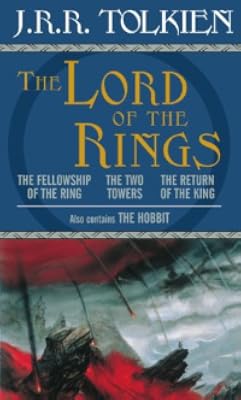
The Hobbit / The Lord of the Rings
by J. R. R. Tolkien
On This Page
Description
Immerse yourself in Middle-earth with Tolkien's classic masterpieces behind the films, telling the complete story of Bilbo Baggins and the Hobbits' epic encounters with Gandalf, Gollum, dragons and monsters, in the quest to destroy the One Ring. When they were first published, The Hobbit and The Lord of the Rings became instant classics. Treasured by readers young and old, these works of sweeping fantasy, steeped in unrivalled magic and otherworldliness have sold more than 150 million copies show more around the world. This new boxed gift set, published to celebrate the release of the first of Peter Jackson's three-part film adaptation of JRR Tolkien's The Hobbit, THE HOBBIT: AN UNEXPECTED JOURNEY, contains both titles and features cover images from both films. It offers readers a new opportunity to discover Tolkien's remarkable world of Middle-earth and to follow the complete story of Bilbo Baggins and the Hobbits' part in the epic quest for the Ring - beginning with Bilbo's fateful visit from Gandalf and culminating in the dramatic climax between Frodo and Gollum atop Mount Doom. show lessTags
Recommendations
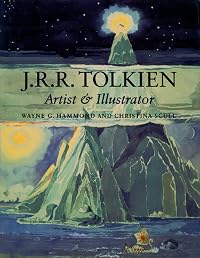
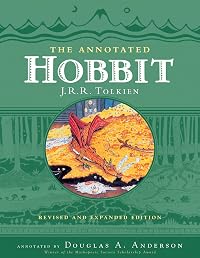
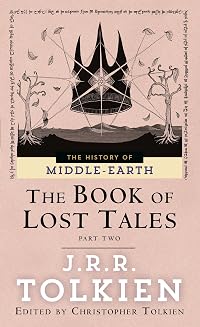
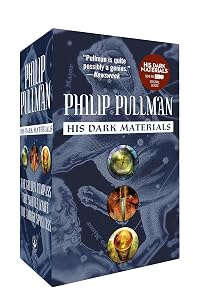

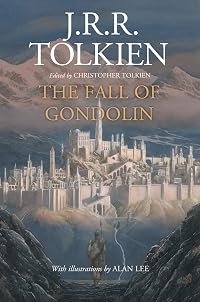
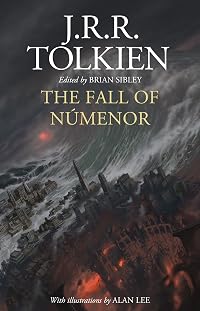
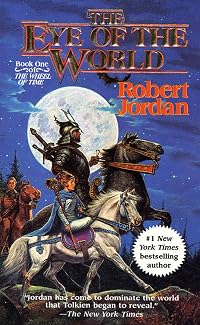


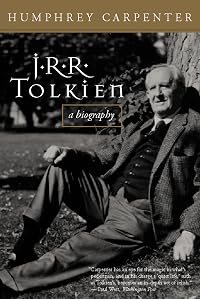



Member Recommendations
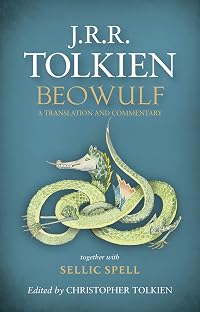
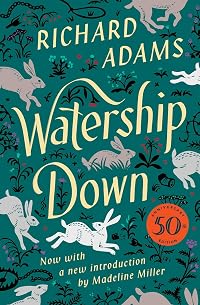
artturnerjr An important influence on Tolkien's Middle-earth books; also an entertaining and occasionally hilarious read in its own right.
20
MarcusBrutus Similar races and battles of good vs. evil.
Member Reviews
When I was in 3rd grade my family took a trip to visit relatives in Boston and my Dad gave me a copy of The Hobbit to read while we traveled. I’ve never forgotten my first taste of Middle Earth. Bilbo Baggin’s journey was much simpler than his nephew Frodo’s in the books that followed, but it was the perfect introduction to Tolkien’s epic world.
The plot, in a nutshell, is as follows. There is one ring of power, created by a dark lord, which ends up in the hands of a simple hobbit. Once the good people of Middle Earth realize what the ring is, they must band together and travel to Mt. Doom to destroy it. A fellowship of four hobbits, two men, a wizard, an elf and a dwarf take on the quest.
One of my favorite things about the show more trilogy is that their world is so different from ours, filled with wizards, elves and orcs, yet the relationships are so similar. Tolkien created such original creatures, like the tree-herding ents, but the emphasis is really on the friendships that have to withstand such intense trials.
Tolkien’s story is memorable not only for the plot, but because of the wonderful characters that fill it. There’s Gandalf, a powerful but wise wizard, Aragorn, a reluctant leader, Gollum, a broken, depraved creature, Samwise, the most loyal friend a person could hope for, and so many others.
Our hero is not a powerful man, but instead a small hobbit, the gentlest people in the land. Our villain is Sauron, the ultimate embodiment of evil. He has no redeeming qualities, just an all-encompassing need for power. He is the inspiration for future characters like Voldemort. Yet at the same time we also have other characters that used to be good or are still trying to be, that succumb to the temptation of the ring, like the Ringwraiths, Boromir and Saruman. These characters demonstrate how even good people can become weak when tempted by something so powerful. Their failure to resist just makes Frodo and Sam’s journey all the more poignant.
I’ve heard people complain that the books are too long, too boring, too detailed, etc. I understand those thoughts, but I think people are more forgiving with other classics, like Anna Karenina, than they are with these fantasy novels. People expect aspects of Charles Dickens work to be too detailed, so they read it and judge the book by its overall plot, but LOTR is sometimes overlook by those same people. I would argue that the story Tolkien created is just as powerful as many classic tales from centuries gone by. So don’t skip these because fantasy isn’t your thing or some other silly reason. show less
The plot, in a nutshell, is as follows. There is one ring of power, created by a dark lord, which ends up in the hands of a simple hobbit. Once the good people of Middle Earth realize what the ring is, they must band together and travel to Mt. Doom to destroy it. A fellowship of four hobbits, two men, a wizard, an elf and a dwarf take on the quest.
One of my favorite things about the show more trilogy is that their world is so different from ours, filled with wizards, elves and orcs, yet the relationships are so similar. Tolkien created such original creatures, like the tree-herding ents, but the emphasis is really on the friendships that have to withstand such intense trials.
Tolkien’s story is memorable not only for the plot, but because of the wonderful characters that fill it. There’s Gandalf, a powerful but wise wizard, Aragorn, a reluctant leader, Gollum, a broken, depraved creature, Samwise, the most loyal friend a person could hope for, and so many others.
Our hero is not a powerful man, but instead a small hobbit, the gentlest people in the land. Our villain is Sauron, the ultimate embodiment of evil. He has no redeeming qualities, just an all-encompassing need for power. He is the inspiration for future characters like Voldemort. Yet at the same time we also have other characters that used to be good or are still trying to be, that succumb to the temptation of the ring, like the Ringwraiths, Boromir and Saruman. These characters demonstrate how even good people can become weak when tempted by something so powerful. Their failure to resist just makes Frodo and Sam’s journey all the more poignant.
I’ve heard people complain that the books are too long, too boring, too detailed, etc. I understand those thoughts, but I think people are more forgiving with other classics, like Anna Karenina, than they are with these fantasy novels. People expect aspects of Charles Dickens work to be too detailed, so they read it and judge the book by its overall plot, but LOTR is sometimes overlook by those same people. I would argue that the story Tolkien created is just as powerful as many classic tales from centuries gone by. So don’t skip these because fantasy isn’t your thing or some other silly reason. show less
Ok so whether you like fantasy (or love it like me!) or hate it, these books are a MUST READ for everyone.
I've read this series three times in my life now (i'm 26) and I'll probably read them at least once more. Tolkien creates some of the most fascinating characters you'll ever read, and the epic scale of the history he's created can't be understated!! He even went so far as to create separate languages for elves and dwarves in the appendix.
It's just a great story and it stands up today as probably the best fantasy series ever written. And it's one that MANY series try to imitate, but often fall short.
I've read this series three times in my life now (i'm 26) and I'll probably read them at least once more. Tolkien creates some of the most fascinating characters you'll ever read, and the epic scale of the history he's created can't be understated!! He even went so far as to create separate languages for elves and dwarves in the appendix.
It's just a great story and it stands up today as probably the best fantasy series ever written. And it's one that MANY series try to imitate, but often fall short.
I almost hesitate to review this book series because it has become so iconic in our culture - especially since the release of the excellent movie adaptatations released in the early 2000s.
If you have never read these books, you should be warned that they are not always easy reading. Tolkien was an academic, steeped in old languages and mythology. His use of English can be a little ponderous in places - especially to people who are used to reading light "page turners" written to eigth grade reading level. (8th grade reading level is the publishing industry standard for all but scholarly treatise and high literary fiction.)
However, for those who persevere to the end, these books greatly reward the effort. Tolkien used his knowledge of show more mythology to create a richly imagined world with vivid characters and levels of symbolism that run deep. I have found elements of Norse mythology (notably the Ring of the Niebling - Fall of the Gods) , Saxon mythology (the Elves, ents, Balrog...) , Greek Mythology (the Atlantean legends, and descriptions of the Elven aristocracy - this is more evident in the Ring pre-quel, The Silmarillion), Celtic Mythology (the sacred elven homelands in the west, and European mystery schools (The hierachies and initiation levels of the wizards - Gandolf's transformation from "Gray' wizard to 'White' wizard after his battle with his ancient subterrean foe.)
Of course, you don't have to see of understand these influences to enjoy the books. For for those who are interested in such things, recognizing some of the influences behind the stories adds a level of appreciation. show less
If you have never read these books, you should be warned that they are not always easy reading. Tolkien was an academic, steeped in old languages and mythology. His use of English can be a little ponderous in places - especially to people who are used to reading light "page turners" written to eigth grade reading level. (8th grade reading level is the publishing industry standard for all but scholarly treatise and high literary fiction.)
However, for those who persevere to the end, these books greatly reward the effort. Tolkien used his knowledge of show more mythology to create a richly imagined world with vivid characters and levels of symbolism that run deep. I have found elements of Norse mythology (notably the Ring of the Niebling - Fall of the Gods) , Saxon mythology (the Elves, ents, Balrog...) , Greek Mythology (the Atlantean legends, and descriptions of the Elven aristocracy - this is more evident in the Ring pre-quel, The Silmarillion), Celtic Mythology (the sacred elven homelands in the west, and European mystery schools (The hierachies and initiation levels of the wizards - Gandolf's transformation from "Gray' wizard to 'White' wizard after his battle with his ancient subterrean foe.)
Of course, you don't have to see of understand these influences to enjoy the books. For for those who are interested in such things, recognizing some of the influences behind the stories adds a level of appreciation. show less
Unevenly written at times, it still is a masterpiece of conception and character. It reshaped heroic fantasy in the 1960s and continues to influence anyone interested in "secondary creations."
If The Hobbit is Tolkien’s opening salvo into the world of epic fantasy literature, then The Lord Of The Rings [LOTR] is his full fledged assault on the genre cementing his name in epic fantasy’s timeless lore.
Thankfully, The Lord of The Rings picked off right where The Hobbit left off, building and expanding on Tolkien’s Universe to a whole different level.
The Lord Of The Rings is, as many of you may know, the sequel to The Hobbit, which is set in Tolkien’s Legendarium, and also plays a part in the world of Arda.
One of the simplest ways a reader may note the quality of a fantasy book is asking themselves: does it conjure magic?
Evoking literary mastery in a genre that was nigh nonexistent, and which many outright shunned, what show more J.R.R. Tolkien did with his entire Middle-Earth Series [check name] was nothing less than astonishing. Not only did Tolkien write a veritable milestone in literature to boot, but he did so in a time where not many souls cared to venture upon the genre of fantasy.
Touching upon this very issue,medieval literature specialist and writer Corey Olsen Ph.D. puts it in his intriguing and in-depth book, Exploring J.R.R. Tolkien’s The Hobbit:
“Tolkien was very aware of the artistic challenge he faced in writing a work of fantasy, especially since fantasy literature was far from the literary mainstream in the early twentieth century. He knew that when they encountered his story in The Hobbit, his readers would have to leave their mundane and comfortable world behind and invest their imaginations in a world that contains magic and unexpected marvels. In chapter One, Tolkien gives us a model for this very process within the story itself. We begin in our safe and predictable world, and in the first chapter, we find ourselves in a world of wizard and dwarves and dragons. In this transition, we find ourselves coming alongside a protagonist who is struggling through the exactly the same process, a character who himself internalizes the conflict between the mundane and the marvelous Our first introduction to this magical, grim, and dangerous world of adventure is also his introduction, and his reluctance and difficulty in adjusting to it give us time to ease past our own discomfort and reservations. Bilbo Baggins serves as a perfect touchstone for readers, both exploring and embodying the trickier frontier between the predictable and the unexpected.”[1][Bold Emphasis Added]
This goes to show that Tolkien wasn’t simply a savvy writer, but understood societal challenges he was facing at the time and made sure to do his best to address this notable issue. What’s more, Tolkien simply didn’t stop there.
The Lord Of The Rings shows why Tolkien’s imagination was not only gratifyingly limitless, but how it was rather robust with meaning in many ways.
In fact, the power of this book is so profound and meaningful that philosopher and writer Peter Kreeft Ph.D. said the following words of it:
“The deepest healing is the healing of the deepest wound. The deepest wound is the frustration of the deepest need. The deepest need is the need for meaning, purpose, and hope. And that is what The Lord Of The Rings offers us.”[2]
And still there’s more:
“…The Lord Of The Rings is infused with the same light that illumined the man who wrote it. And that light is true, for it reveals the reality of the world and life. And it is also good, because it heals our blindness. Like the Fellowship itself, Tolkien’s philosophy fights. It conquers what George Orwell called the “smelly little orthodoxies” of political correctness that have twisted and wounded our souls. In other words, it is like the healing herb athelas.”[3]
Such is the potentiality held within Lord Of The Rings.
Although at times called a trilogy, The Lord Of The Rings is in fact a stand-alone novel that is split up into six separate books.[4]
The mythical and expansive universe created by Tolkien is one that still ignites the imagination in a way that nigh no other books do, except the greatest ones. In like fashion, not only does Tolkien fuse fantasy with Norse myth and folklore, but The Lord Of The Rings features a plot that is robust, characters that grow and change with the plot, a setting that is phenomenal and enchanting, all woven within a seamless story that vaults the imagination into other worlds.
Throughout the book, the uniqueness and authenticity the characters echo shows the realism of the novel. For instance, temptation sinks its teeth into Boromir and Galadriel, each displaying their own set of circumstances in battling against this malevolence.
Instances as the above and many more show many examples that this particular book is chock-full of life lessons to boot.
That’s what makes this particular book great piece of literature.
On the forward of On The Shoulders Of Hobbits – The Road To Virtue With Tolkien & Lewis Peter Kreeft Ph.D. comments:
“That’s why reading literature, next to meeting people, is the single most effective way to learn not to flunk life. Life is a story, and therefore moral education happens first and foremost powerfully through stories, e.g., through books.”[5]
Why this is so is because:
“…Tolkien bequeathed to the world a new treasure trove of heroic tales and adventures with the power to reinvigorate classical and medieval virtues that our modern technological age has deemed irrelevant. Together with The Hobbit and its prequel (the Silmarillion) The Lord Of The Rings stands as a lighthouse in a world that has not only lost its way, but has lost much of its virtue, its integrity and its purpose.”[6]
In a modern age that is starving for virtuous souls from which to learn from, Lord Of The Rings by J.R.R Tolkien has much depth to offer.
For all of the above reasons, Tolkien’s crown jewel – The Lord Of The Rings – has stood the test of time and will continue to enthrall readers for ages to come. Just like the characters in it, the story grows with every new pass you give it.
This understanding is best grasped by what J. Adler & Charles Van Doren shared in, How To Read A Book – The Classic Guide To Intelligent Reading, which is the touchstone of critical reading:
“…if the book belongs to the highest class – the very small number of inexhaustible books – you discover on returning that the book seems to have grown with you. You see new things in it – whole new sets of new things – that you did not see before. Your previous understanding of the book is not invalidated; it is just as true as it ever was, and in the same ways that it was true before. But now it is true in still other ways, too.”[7][Bold Emphasis Added]
Lord Of The Rings helps expand the bounds of imagination the more an individual journeys within its realm. Even better, this book helps one see whole new perspectives and ideas that one had not previously considered. Just like life offers ample opportunities for much learning, this book does as well.
Whether you’re looking for a great story, epic fantasy, incredible depth, mindful philosophy, or simply want to take a audacious adventure into a different setting, this book has much to offer.
Tolkien’s crown jewel – The Lord Of The Rings – has stood the test of time and will continue to enthrall readers for ages to come. It has enthralled readers not simply because it’s a great piece of fantasy fiction, but also because this book and the lessons of virtue woven therein echo directly into your soul. For those very reasons, this book will continue to be a touchstone for life, for not only does it teach you what happens when evil rises unabated, but more importantly, it teaches you what happens when individuals with high quality of consciousness help good conquer evil. That alone makes this book a timeless possession in an age where virtues and goodness continue to dissipate
_____________________________________________________________________
Footnotes:
[1] Corey Olsen Ph.D., Exploring J.R.R. Tolkien’s The Hobbit, p. 35
[2] Peter Kreeft Ph.D., The Philosophy Of Tolkien, p 17.
[3] Ibid., p. 3.
[4] J.R.R. Tolkien, The Fellowship Of The Ring, p. 9., HoughtonMifflin.
[5] Louis Markos, The Shoulders Of Hobbits – The Road To Virtue With Tolkien & Lewis, p. 8, citing Peter Kreeft in the forward.
[6] Ibid., p. 14.
[7] Mortimer J. Adler & Charles Van Doren, How To Read A Book – The Classic Guide To Intelligent Reading, p. 333. show less
Thankfully, The Lord of The Rings picked off right where The Hobbit left off, building and expanding on Tolkien’s Universe to a whole different level.
The Lord Of The Rings is, as many of you may know, the sequel to The Hobbit, which is set in Tolkien’s Legendarium, and also plays a part in the world of Arda.
One of the simplest ways a reader may note the quality of a fantasy book is asking themselves: does it conjure magic?
Evoking literary mastery in a genre that was nigh nonexistent, and which many outright shunned, what show more J.R.R. Tolkien did with his entire Middle-Earth Series [check name] was nothing less than astonishing. Not only did Tolkien write a veritable milestone in literature to boot, but he did so in a time where not many souls cared to venture upon the genre of fantasy.
Touching upon this very issue,medieval literature specialist and writer Corey Olsen Ph.D. puts it in his intriguing and in-depth book, Exploring J.R.R. Tolkien’s The Hobbit:
“Tolkien was very aware of the artistic challenge he faced in writing a work of fantasy, especially since fantasy literature was far from the literary mainstream in the early twentieth century. He knew that when they encountered his story in The Hobbit, his readers would have to leave their mundane and comfortable world behind and invest their imaginations in a world that contains magic and unexpected marvels. In chapter One, Tolkien gives us a model for this very process within the story itself. We begin in our safe and predictable world, and in the first chapter, we find ourselves in a world of wizard and dwarves and dragons. In this transition, we find ourselves coming alongside a protagonist who is struggling through the exactly the same process, a character who himself internalizes the conflict between the mundane and the marvelous Our first introduction to this magical, grim, and dangerous world of adventure is also his introduction, and his reluctance and difficulty in adjusting to it give us time to ease past our own discomfort and reservations. Bilbo Baggins serves as a perfect touchstone for readers, both exploring and embodying the trickier frontier between the predictable and the unexpected.”[1][Bold Emphasis Added]
This goes to show that Tolkien wasn’t simply a savvy writer, but understood societal challenges he was facing at the time and made sure to do his best to address this notable issue. What’s more, Tolkien simply didn’t stop there.
The Lord Of The Rings shows why Tolkien’s imagination was not only gratifyingly limitless, but how it was rather robust with meaning in many ways.
In fact, the power of this book is so profound and meaningful that philosopher and writer Peter Kreeft Ph.D. said the following words of it:
“The deepest healing is the healing of the deepest wound. The deepest wound is the frustration of the deepest need. The deepest need is the need for meaning, purpose, and hope. And that is what The Lord Of The Rings offers us.”[2]
And still there’s more:
“…The Lord Of The Rings is infused with the same light that illumined the man who wrote it. And that light is true, for it reveals the reality of the world and life. And it is also good, because it heals our blindness. Like the Fellowship itself, Tolkien’s philosophy fights. It conquers what George Orwell called the “smelly little orthodoxies” of political correctness that have twisted and wounded our souls. In other words, it is like the healing herb athelas.”[3]
Such is the potentiality held within Lord Of The Rings.
Although at times called a trilogy, The Lord Of The Rings is in fact a stand-alone novel that is split up into six separate books.[4]
The mythical and expansive universe created by Tolkien is one that still ignites the imagination in a way that nigh no other books do, except the greatest ones. In like fashion, not only does Tolkien fuse fantasy with Norse myth and folklore, but The Lord Of The Rings features a plot that is robust, characters that grow and change with the plot, a setting that is phenomenal and enchanting, all woven within a seamless story that vaults the imagination into other worlds.
Throughout the book, the uniqueness and authenticity the characters echo shows the realism of the novel. For instance, temptation sinks its teeth into Boromir and Galadriel, each displaying their own set of circumstances in battling against this malevolence.
Instances as the above and many more show many examples that this particular book is chock-full of life lessons to boot.
That’s what makes this particular book great piece of literature.
On the forward of On The Shoulders Of Hobbits – The Road To Virtue With Tolkien & Lewis Peter Kreeft Ph.D. comments:
“That’s why reading literature, next to meeting people, is the single most effective way to learn not to flunk life. Life is a story, and therefore moral education happens first and foremost powerfully through stories, e.g., through books.”[5]
Why this is so is because:
“…Tolkien bequeathed to the world a new treasure trove of heroic tales and adventures with the power to reinvigorate classical and medieval virtues that our modern technological age has deemed irrelevant. Together with The Hobbit and its prequel (the Silmarillion) The Lord Of The Rings stands as a lighthouse in a world that has not only lost its way, but has lost much of its virtue, its integrity and its purpose.”[6]
In a modern age that is starving for virtuous souls from which to learn from, Lord Of The Rings by J.R.R Tolkien has much depth to offer.
For all of the above reasons, Tolkien’s crown jewel – The Lord Of The Rings – has stood the test of time and will continue to enthrall readers for ages to come. Just like the characters in it, the story grows with every new pass you give it.
This understanding is best grasped by what J. Adler & Charles Van Doren shared in, How To Read A Book – The Classic Guide To Intelligent Reading, which is the touchstone of critical reading:
“…if the book belongs to the highest class – the very small number of inexhaustible books – you discover on returning that the book seems to have grown with you. You see new things in it – whole new sets of new things – that you did not see before. Your previous understanding of the book is not invalidated; it is just as true as it ever was, and in the same ways that it was true before. But now it is true in still other ways, too.”[7][Bold Emphasis Added]
Lord Of The Rings helps expand the bounds of imagination the more an individual journeys within its realm. Even better, this book helps one see whole new perspectives and ideas that one had not previously considered. Just like life offers ample opportunities for much learning, this book does as well.
Whether you’re looking for a great story, epic fantasy, incredible depth, mindful philosophy, or simply want to take a audacious adventure into a different setting, this book has much to offer.
Tolkien’s crown jewel – The Lord Of The Rings – has stood the test of time and will continue to enthrall readers for ages to come. It has enthralled readers not simply because it’s a great piece of fantasy fiction, but also because this book and the lessons of virtue woven therein echo directly into your soul. For those very reasons, this book will continue to be a touchstone for life, for not only does it teach you what happens when evil rises unabated, but more importantly, it teaches you what happens when individuals with high quality of consciousness help good conquer evil. That alone makes this book a timeless possession in an age where virtues and goodness continue to dissipate
_____________________________________________________________________
Footnotes:
[1] Corey Olsen Ph.D., Exploring J.R.R. Tolkien’s The Hobbit, p. 35
[2] Peter Kreeft Ph.D., The Philosophy Of Tolkien, p 17.
[3] Ibid., p. 3.
[4] J.R.R. Tolkien, The Fellowship Of The Ring, p. 9., HoughtonMifflin.
[5] Louis Markos, The Shoulders Of Hobbits – The Road To Virtue With Tolkien & Lewis, p. 8, citing Peter Kreeft in the forward.
[6] Ibid., p. 14.
[7] Mortimer J. Adler & Charles Van Doren, How To Read A Book – The Classic Guide To Intelligent Reading, p. 333. show less
"The Lord of the Rings" by J.R.R. Tolkien is a timeless classic that has captivated readers for generations. The epic fantasy story is set in the mythical world of Middle-earth and follows the journey of hobbit, Frodo Baggins, as he embarks on a quest to destroy the One Ring and defeat the Dark Lord Sauron. The world building in this book is simply stunning, with rich and detailed descriptions of the different races, cultures, and landscapes of Middle-earth. The characters are equally as impressive, with well-developed motivations, personalities, and backstories that make them feel like real people.
Tolkien's writing style is also a highlight of the book. He weaves an intricate tapestry of subplots and themes that serve to deepen the show more world of Middle-earth and give the story a sense of richness and depth. The themes of friendship, courage, and the fight against evil are timeless and universal, making the book accessible to readers of all ages and backgrounds.
In conclusion, "The Lord of the Rings" is a must-read for fans of the fantasy genre. Its rich world-building, memorable characters, and beautiful writing make it a classic that will endure for generations to come. Whether you are a long-time fan or new to the world of Middle-earth, this book is sure to captivate you from start to finish. show less
Tolkien's writing style is also a highlight of the book. He weaves an intricate tapestry of subplots and themes that serve to deepen the show more world of Middle-earth and give the story a sense of richness and depth. The themes of friendship, courage, and the fight against evil are timeless and universal, making the book accessible to readers of all ages and backgrounds.
In conclusion, "The Lord of the Rings" is a must-read for fans of the fantasy genre. Its rich world-building, memorable characters, and beautiful writing make it a classic that will endure for generations to come. Whether you are a long-time fan or new to the world of Middle-earth, this book is sure to captivate you from start to finish. show less
This was a great read- the right time in my life. Most people read this when they were young, but I read it in my twenties. It still clicked. Tolkien' descriptions and narrative stuck with me and really drew me into the fantasy world of Middle Earth. A real coming of age book for any reader at any age. Read the books before seeing the movies. I love fantasy and imagination, and Tolkien took me for a real ride in his deep, immersive fantasy world.
Members
- Recently Added By
Lists

Radcliffe's 100 Best Novel of the 20th Century
100 works; 32 members

Best of British Literature
226 works; 41 members

Stories About Other Worlds
145 works; 13 members

Favorite Childhood Books
1,651 works; 519 members

Recommend the 20 best books you've read in the last five years
2,168 works; 607 members

LibraryThingers' 1001 Books You Must Read Before You Die
442 works; 30 members

Introduction to Fantasy and Science Fiction (Proposed Reading List)
28 works; 6 members
Best Mythic Fiction
35 works; 6 members
Ten Books That Have Stayed With Me
160 works; 30 members
CCE 100 Great Books List
145 works; 8 members

100 World Classics
99 works; 15 members

Nonhuman Protagonists
245 works; 35 members

The Greatest Books
99 works; 5 members

Top 100 Science-Fiction, Fantasy Books
18 works; 4 members
Books tagged favorites
390 works; 30 members

CCE 1000 Good Books List
1,033 works; 12 members

Children's Classics Worth Reading
68 works; 9 members

Books I've read
87 works; 2 members

Generation Joshua
115 works; 3 members

Books Read in 2015
3,299 works; 129 members

Ryan's Books
34 works; 1 member

Witches and Wizards Oh My
135 works; 12 members
Fiction For Men
142 works; 11 members

el
1,139 works; 1 member

Literary Works Read in College
316 works; 15 members

List of Ten Influential/Important Books
10 works; 1 member

Geek Dad Read to Your Kids List
79 works; 4 members
Literature of Honor for Boys
91 works; 3 members
Children's Adventure
53 works; 4 members

I Can't Finish This Book
189 works; 22 members

Favorite Long Books
330 works; 42 members

Classics you know you should have read but probably haven't
421 works; 409 members

Best of World Literature
437 works; 52 members
Talk Discussions
Past Discussions
OT: What should a fine press Hobbit & Lord of the Rings include? in Fine Press Forum (February 2025)
wishlist: LotR illustrated DLE in Easton Press Collectors (October 2021)
Author Information

613+ Works 519,251 Members
A writer of fantasies, Tolkien, a professor of language and literature at Oxford University, was always intrigued by early English and the imaginative use of language. In his greatest story, the trilogy The Lord of the Rings (1954--56), Tolkien invented a language with vocabulary, grammar, syntax, even poetry of its own. Though readers have show more created various possible allegorical interpretations, Tolkien has said: "It is not about anything but itself. (Certainly it has no allegorical intentions, general, particular or topical, moral, religious or political.)" In The Adventures of Tom Bombadil (1962), Tolkien tells the story of the "master of wood, water, and hill," a jolly teller of tales and singer of songs, one of the multitude of characters in his romance, saga, epic, or fairy tales about his country of the Hobbits. Tolkien was also a formidable medieval scholar, as evidenced by his work, Beowulf: The Monster and the Critics (1936) and his edition of Anciene Wisse: English Text of the Anciene Riwle. Among his works published posthumously, are The Legend of Sigurd and Gudrún and The Fall of Arthur, which was edited by his son, Christopher. In 2013, his title, TheHobbit (Movie Tie-In) made The New York Times Best Seller List. (Bowker Author Biography) show less
Some Editions
Awards and Honors
Work Relationships
Is contained in
Contains
The Treason of Isengard: Being the Third Book of The Lord of the Rings by J. R. R. Tolkien (indirect)
Lord of the Rings Book 5 The Two Towers Part 1-1 {Japanese New Edition} by J. R. R. Tolkien (indirect)
Lord of the Rings Book 6 The Two Towers Part 1-2 {Japanese New Edition} by J. R. R. Tolkien (indirect)
Has the adaptation
Is abridged in
Has as a reference guide/companion
Has as a commentary on the text
Common Knowledge
- Canonical title
- The Hobbit / The Lord of the Rings
- Original publication date
- 1937 (The Hobbit) (The Hobbit); 1954 (The Fellowship of the Ring) (The Fellowship of the Ring); 1954 (The Two Towers) (The Two Towers); 1955 (The Return of the King) (The Return of the King)
- People/Characters
- Frodo Baggins; Bilbo Baggins; Gandalf; Aragorn II; Meriadoc Brandybuck; Peregrin Took (show all 20); Gimli; Sauron; Legolas; Thorin Oakenshield; Smaug; Saruman the White; Théoden; Boromir; Faramir; Shelob; Éowyn; Elrond Half-elven; Beorn; Gollum
- Important places
- Middle-earth
- Related movies
- The Hobbit - An Unexpected Journey (2012); The Hobbit - The Desolation of Smaug (2013); The Hobbit - The Battle of the Five Armies (2014); The Lord of the Rings - The Fellowship of the Ring (2001); The Lord of the Rings - The Two Towers (2002); The Lord of the Rings - The Return of the King (2003)
- Original language
- English
- Canonical DDC/MDS
- 823.087661
- Disambiguation notice
- J.R.R. Tolkien's complete work The Lord of the Rings consists of six Books, frequently bound in three Volumes:
- Volume 1: The Fellowship of the Ring, consisting of Book I, "The Ring Sets Out" and Book II, ... (show all)"The Ring Goes South";
- Volume 2: The Two Towers, consisting of Book III, "The Treason of Isengard," and Book IV, "The Ring Goes East"; and
- Volume 3: The Return of the King, consisting of Book V, "The War of the Ring," and Book VI, "The End of the Third Age," with Appendices.
Classifications
- Genres
- Fantasy, Fiction and Literature, General Fiction
- DDC/MDS
- 823.087661 — Literature & rhetoric English & Old English literatures English fiction By type Genre fiction Adventure fiction Speculative fiction Fantasy fiction High fantasy
- LCC
- PR6039 .O32 — Language and Literature English English Literature 1900-1960
- BISAC
Statistics
- Members
- 10,701
- Popularity
- 891
- Reviews
- 62
- Rating
- (4.60)
- Languages
- 8 — Chinese, Dutch, English, French, German, Russian, Spanish, Portuguese (Portugal)
- Media
- Paper, Audiobook, Ebook
- ISBNs
- 50
- UPCs
- 10
- ASINs
- 93