
Nightwings
by Robert Silverberg
On This Page
Description
Robert Silverberg's enduring classic about one man's journey to find salvation for a planet on the brink of destruction. "Roum is a city built on seven hills. They say it was a capital of man in one of the earlier cycles. I knew nothing of that, for my guild was Watching, not Remembering." For a thousand years, mankind has lived under the threat of invasion from an alien race. After the oceans rose and the continents were reshaped, people divided into guilds-Musicians, Scribes, Merchants, show more Clowns, and more. The Watchers wander the earth, scouring the skies for signs of enemies from the stars. But during one Watcher's journey to the ancient city of Roum with his companion, a Flier named Avluela, a moment of distraction allows the invaders to advance. When the Watcher finally sounds the alarm, it's too late: the star people are poised to conquer all. And so with the world in turmoil, the Watcher sets out alone for the Hall of the Rememberers, keepers of the past, where humanity's last hope for survival might be hidden. show lessTags
Recommendations





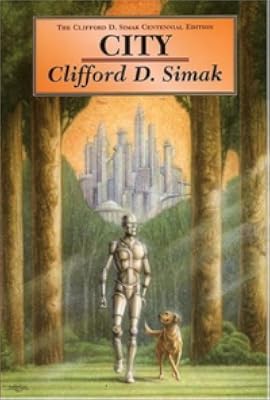
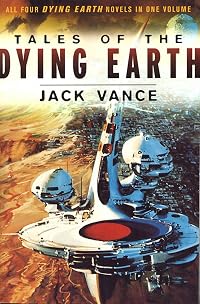

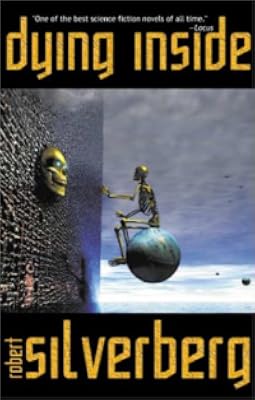


















Member Reviews
**Spoilers** I thought this was a good story, the main character was interesting and sympathetic, and Silverberg does a good job creating an earth that is at once recognizable and very much different. It didn't seem like much happened, although the entire planet gets taken over by aliens--there's almost a sleepwalking quality to the action, as if it's happening all around the narrator but not to him. The other conflicts were muted also, and I think the ending it the weakest part of the book--everything gets resolved and fixed more by a different point of view than any action, and it's all a little too neat and complete for my taste. His novel Dying Inside is one of my all-time favorites, so I'm using the availability of discounted show more ebooks to read more of his stuff. show less
Have you ever noticed the weird psychological effect where, if you're reading a new edition of a work, it just doesn't "feel" old (but if you're reading an old paperback with yellowed pages and a half-naked chick on the cover, it will undoubtedly feel dated?) Well, this copy of 'Nightwings,' which was written in 1968, does, admittedly, have the unclad female (tho' such a pretty, tasteful one!), but it's all new and shiny, and I didn't feel the story seemed dated at all. Interesting.
Anyway.
Silverberg gives us, in his Hugo-award winning 'Nightwings' an Earth approximately 35,000 years in the future. Humanity has risen, and (through hubris, bad political moves, and the unfortunate effects of trying to change the planet's climate) show more subequently fallen.
Society is strictly governed by membership in guilds, some of which fill expected places in society... politics, mercantilism, historians, service industries... and some groups which are odder, such as the beautiful butterfly-winged fliers, created by genetic engineering in the Second Age, or the guildless Changelings, monstrous-looking outcasts, mistakes engendered by that same tinkering.
Our lead character is a Watcher, his life devoted to using a cart of instruments which allow him to monitor space for unknown alien invaders. It is barely remembered why the Watchers were set up - they seem practically useless... but little known to humanity, the invasion is nearly upon Earth...
Through three linked novellas, we follow the elderly Watcher on a journey through three ancient cities... first Roum, where he loves the lovely flier Avluela, but she loves the grotesque changeling(?) Gorman... Invaders set him on the path to Perris, along with a prince in disguise, where he becomes an historian, and later, a traitor(?)... and then to fabled Jorslem, where Pilgrims may have their bodies renewed and their sins cast aside...
At different times, the book reminded me slightly of Tanith Lee's books of Paradys, of Arthur C. Clarke's The City & The Stars, of China Mieville's New Crobuzon.... and also, of Silverberg's own 'Valentine' series... but overall, it was itself... with a beautiful dreamlike quality... very nice. show less
Anyway.
Silverberg gives us, in his Hugo-award winning 'Nightwings' an Earth approximately 35,000 years in the future. Humanity has risen, and (through hubris, bad political moves, and the unfortunate effects of trying to change the planet's climate) show more subequently fallen.
Society is strictly governed by membership in guilds, some of which fill expected places in society... politics, mercantilism, historians, service industries... and some groups which are odder, such as the beautiful butterfly-winged fliers, created by genetic engineering in the Second Age, or the guildless Changelings, monstrous-looking outcasts, mistakes engendered by that same tinkering.
Our lead character is a Watcher, his life devoted to using a cart of instruments which allow him to monitor space for unknown alien invaders. It is barely remembered why the Watchers were set up - they seem practically useless... but little known to humanity, the invasion is nearly upon Earth...
Through three linked novellas, we follow the elderly Watcher on a journey through three ancient cities... first Roum, where he loves the lovely flier Avluela, but she loves the grotesque changeling(?) Gorman... Invaders set him on the path to Perris, along with a prince in disguise, where he becomes an historian, and later, a traitor(?)... and then to fabled Jorslem, where Pilgrims may have their bodies renewed and their sins cast aside...
At different times, the book reminded me slightly of Tanith Lee's books of Paradys, of Arthur C. Clarke's The City & The Stars, of China Mieville's New Crobuzon.... and also, of Silverberg's own 'Valentine' series... but overall, it was itself... with a beautiful dreamlike quality... very nice. show less
My listed Reading Dates are "re-reading dates", at least for the first, Hugo-award-winning novelette "Nightwings."
I first read the tale c. 1972 in the SF Book Club edition of THE HUGO WINNERS Vols. I & II, edited by Isaac Asimov. I do not recall previously reading the second and third novelettes that compose the final "novel." As shared in the new introduction to this book, Silverberg's then editor and friend, Fred Pohl', had profound "reservations" regarding these two subsequent tales -- but still published them. While the novelty of the original tale's world-building cannot be duplicated by a sequel -- this being inherent in any sequel, the experiences that befall the main characters, particularly "the Watcher," the novel's main show more protagonist, remain poignant.
For, it is not the external conflict related to the conquering if the Earth that is the heart and soul of this novel, but, instead, the internal conflict of the Watcher's challenges: the fulfillment of his very long life's professional purpose -- and the subsequent consequences thereof: the loss and search for new purpose, and his confusion and guilt over his more than platonic love for the seventeen year-old winged girl Avluela in his care from which in self-denial he takes refuge in his old age, while pained by her being loved (willingly abd not) by others.
Despite the shared Lolita-like discomfiture with Nabokhov's protagonist, for the Watcher and presumably for Silverberg, where there is love there is hope, and, in this far-flung future Earth, the promise of redemption, new purpose, hope, and (more than metaphorically) a return to youth and ageless love.
Nightwings" remains resplendent in, first, its worldbuilding, of a declined future Earth wary of a centuries-long foretold alien invasion -- as a consequence of the sins of their fathers, as it were (there is a strong spiritual essence, and journey toward redemption, at the heart of this novel), and, second its empathy-inspiring characters bound up in the events and after the conquering and, deserved, and surprisingly benign, subjugation of the Earth.
PER THE PUBLISHER [Nightwings https://share.google/PoT0b5zG65bnri0rf]
Nightwings is a story about the Watcher, a servitor to the stars. Every day he assembles a complicated device made of instruments and levers which is a trance inducing telescope used to open visions of deep space, a radar detection system to look for the arrival of hostile invaders. This is what people do in the future, a future where Earth is in its “Third Cycle,” a future that is both better and worse than now.
Organized religion is over. Spirituality is innately tied to a universal force called “The Will.” Genetic engineering is part of normal everyday reality. Society is made up of “guilds” whose members are divided into sects called Watchers, Rememberers, Dominators, Masters, Swimmers, Somnambulists, Defenders and Fliers, among others including a guildless group called Changelings. Earth’s oceans and geology have been totally rearranged by climate change and the polar ice caps were melted (on purpose!) No need for internet. In this future the archived memories of actual human brains are preserved in electromagnetic tanks. Alien life forms have already arrived/made themselves known during Earth’s Second Cycle and so, by the time of the events in Nightwings, this planet has become an intergalactic tourist trap. A truck stop on the way to scenic nebula clusters, a budget version of Disneyland visited by alien families from outer realms who spent their whole light year’s income on a vehicle capable of star tripping to the other side of space/time.
And the Watcher watches and waits for an invasion. He has been waiting a very long time. It’s been so long that he has become a somewhat creepy old man. In fact, he doesn’t remember why an alien race would want to invade Earth in the first place. Eventually though, during a late in life career change to the Rememberer guild, he learns that humans (never very nice to other species) once kept the ancestors of certain interplanetary visitors in zoos and laboratories for both study and amusement. This species’ ancestors (with a code designation of H362 since their real name is unpronounceable) have now technologically evolved to an extent which spells out a real threat to Earth people.
With Nightwings Robert Silverberg transposes facets of history and global politics onto one possible future that is not much diverged from the past. The planet’s First and Second Cycles have influenced the events of the Third Cycle. Global geography, both spiritual and physical, is permanently altered, but both inter and outer species communication remains central to the intrigue. Indeed, Silverberg’s characters bear resemblance to actors from the Shakespearean Renaissance era. Only instead of stalking the wooden planks of The Globe, these intergalactic players move across living cellular stages of pulsating matter and walk forest paths where menacing spaceships float overhead.
Nightwings has a certain prescience, but is also very much of the time it was written, circa Earth date 1968. The series of cities which the Watcher wanders through are marked more by psychedelic atmosphere than operatic space western environment that had dominated much of science fiction up to that point. The progress through each location comes to resemble a vision quest in more ways than one: vision and eyes being a central plot theme in the literal, figurative, and Oedipal sense. It’s a quest that climbs towards a cosmic peak which almost seemed obtainable in the late 1960s but today is increasingly distant: an interplanetary, interspecies communion between all living beings. There is something recognizable in the similarities between historical transformations of idealist hippie communes into cult-like nightmares and Silverberg’s framing of the dogma in his various guilds. Then there are the characters themselves: The Watcher, the fairy-like Flier Avluela (possessor of the wings which only fly by night), the mutated Changeling who is not what he seems, and other mismatched wanderers met along the way. Together they come to resemble an unsettling version of ragtag travellers stumbling out of the haze of one era into a much more complicated future. Sometimes the future really is what it used to be.
This new edition of Nightwings features an introduction by Robert Silverberg as well as a bonus interview. It has new dustjacket, endpaper, and interior illustrations by Alejandro Olmedo. In addition, the book’s frontispiece is a reprint of Jim Burns’s cover for the 1980s Bantam paperback, here reproduced in gorgeous full color. There are other full-color reproductions of previous covers as well. show less
I first read the tale c. 1972 in the SF Book Club edition of THE HUGO WINNERS Vols. I & II, edited by Isaac Asimov. I do not recall previously reading the second and third novelettes that compose the final "novel." As shared in the new introduction to this book, Silverberg's then editor and friend, Fred Pohl', had profound "reservations" regarding these two subsequent tales -- but still published them. While the novelty of the original tale's world-building cannot be duplicated by a sequel -- this being inherent in any sequel, the experiences that befall the main characters, particularly "the Watcher," the novel's main show more protagonist, remain poignant.
For, it is not the external conflict related to the conquering if the Earth that is the heart and soul of this novel, but, instead, the internal conflict of the Watcher's challenges: the fulfillment of his very long life's professional purpose -- and the subsequent consequences thereof: the loss and search for new purpose, and his confusion and guilt over his more than platonic love for the seventeen year-old winged girl Avluela in his care from which in self-denial he takes refuge in his old age, while pained by her being loved (willingly abd not) by others.
Despite the shared Lolita-like discomfiture with Nabokhov's protagonist, for the Watcher and presumably for Silverberg, where there is love there is hope, and, in this far-flung future Earth, the promise of redemption, new purpose, hope, and (more than metaphorically) a return to youth and ageless love.
Nightwings" remains resplendent in, first, its worldbuilding, of a declined future Earth wary of a centuries-long foretold alien invasion -- as a consequence of the sins of their fathers, as it were (there is a strong spiritual essence, and journey toward redemption, at the heart of this novel), and, second its empathy-inspiring characters bound up in the events and after the conquering and, deserved, and surprisingly benign, subjugation of the Earth.
PER THE PUBLISHER [Nightwings https://share.google/PoT0b5zG65bnri0rf]
Nightwings is a story about the Watcher, a servitor to the stars. Every day he assembles a complicated device made of instruments and levers which is a trance inducing telescope used to open visions of deep space, a radar detection system to look for the arrival of hostile invaders. This is what people do in the future, a future where Earth is in its “Third Cycle,” a future that is both better and worse than now.
Organized religion is over. Spirituality is innately tied to a universal force called “The Will.” Genetic engineering is part of normal everyday reality. Society is made up of “guilds” whose members are divided into sects called Watchers, Rememberers, Dominators, Masters, Swimmers, Somnambulists, Defenders and Fliers, among others including a guildless group called Changelings. Earth’s oceans and geology have been totally rearranged by climate change and the polar ice caps were melted (on purpose!) No need for internet. In this future the archived memories of actual human brains are preserved in electromagnetic tanks. Alien life forms have already arrived/made themselves known during Earth’s Second Cycle and so, by the time of the events in Nightwings, this planet has become an intergalactic tourist trap. A truck stop on the way to scenic nebula clusters, a budget version of Disneyland visited by alien families from outer realms who spent their whole light year’s income on a vehicle capable of star tripping to the other side of space/time.
And the Watcher watches and waits for an invasion. He has been waiting a very long time. It’s been so long that he has become a somewhat creepy old man. In fact, he doesn’t remember why an alien race would want to invade Earth in the first place. Eventually though, during a late in life career change to the Rememberer guild, he learns that humans (never very nice to other species) once kept the ancestors of certain interplanetary visitors in zoos and laboratories for both study and amusement. This species’ ancestors (with a code designation of H362 since their real name is unpronounceable) have now technologically evolved to an extent which spells out a real threat to Earth people.
With Nightwings Robert Silverberg transposes facets of history and global politics onto one possible future that is not much diverged from the past. The planet’s First and Second Cycles have influenced the events of the Third Cycle. Global geography, both spiritual and physical, is permanently altered, but both inter and outer species communication remains central to the intrigue. Indeed, Silverberg’s characters bear resemblance to actors from the Shakespearean Renaissance era. Only instead of stalking the wooden planks of The Globe, these intergalactic players move across living cellular stages of pulsating matter and walk forest paths where menacing spaceships float overhead.
Nightwings has a certain prescience, but is also very much of the time it was written, circa Earth date 1968. The series of cities which the Watcher wanders through are marked more by psychedelic atmosphere than operatic space western environment that had dominated much of science fiction up to that point. The progress through each location comes to resemble a vision quest in more ways than one: vision and eyes being a central plot theme in the literal, figurative, and Oedipal sense. It’s a quest that climbs towards a cosmic peak which almost seemed obtainable in the late 1960s but today is increasingly distant: an interplanetary, interspecies communion between all living beings. There is something recognizable in the similarities between historical transformations of idealist hippie communes into cult-like nightmares and Silverberg’s framing of the dogma in his various guilds. Then there are the characters themselves: The Watcher, the fairy-like Flier Avluela (possessor of the wings which only fly by night), the mutated Changeling who is not what he seems, and other mismatched wanderers met along the way. Together they come to resemble an unsettling version of ragtag travellers stumbling out of the haze of one era into a much more complicated future. Sometimes the future really is what it used to be.
This new edition of Nightwings features an introduction by Robert Silverberg as well as a bonus interview. It has new dustjacket, endpaper, and interior illustrations by Alejandro Olmedo. In addition, the book’s frontispiece is a reprint of Jim Burns’s cover for the 1980s Bantam paperback, here reproduced in gorgeous full color. There are other full-color reproductions of previous covers as well. show less
Now I get why people love Robert Silverberg.
Give me this kind of world building over the over-expository bloat that's popular these days. So many questions left unanswered, and that's perfectly satisfying.
I almost gave it five stars, but a few minor missteps and an ending that didn't quite connect with me, kept me from it.
Give me this kind of world building over the over-expository bloat that's popular these days. So many questions left unanswered, and that's perfectly satisfying.
I almost gave it five stars, but a few minor missteps and an ending that didn't quite connect with me, kept me from it.
In the far future, mankind is separated into guilds, who all perform unique tasks. The main character is a watcher, who keeps looking for signs of an alien invasion, which is triggered by some brutal human behavior thousands of years in the future. Accompanied by a Flyer and a Changling, he travels from "Room" to "Perris" as at the first step in a pilgrimage which will occur during the alien invasion. The tale is well-told, and the main character and some others are well drawn. Still, it's clumsy in spots (as in the names of those cities), but still has a narrative pull.
To say this book was interesting is a back-handed compliment. The initial premise had me hooked - a far future Earth, technology declined, plumbing the achievements of the past and awaiting conquerors from the stars. The story touches on the philosophy of conquest, and that gives the story some depth. But very little actually happens, with most of the interesting events occurring offstage.In the end, we are left with a wandering daze of a story.
An interesting premise, an interesting idea, but very little is delivered.
An interesting premise, an interesting idea, but very little is delivered.
Nightwings is another great Robert Silverberg science fiction novel. This edition contains an introduction written by Silverberg in 2002, which provides a very interesting discussion of how he came to write the three novellas that make up Nightwings and what his life was like when he was writing them. His friend, Frederick Pohl, was editor of Galaxy, the leading science fiction magazine at the time, paid Silverberg $500 each to publish them. The first novella, Nightwings, was published in the September 1968 issue of Galaxy and won the Hugo award for best novella in 1969. The second installment and third installments were published in Galaxy in November 1968 and February 1969 respectively. Silverberg later combined the three and first show more published them as a novel in September 1969. The novel takes place thousands of years in the future on Earth. In it, Silverberg creates a fascinating history of Earth’s civilization. The First Cycle includes the years before earthlings had contact with intelligent beings from other worlds. The Second Cycle began when hamans first encountered intelligent beings from distant worlds. Much technological advancement and trade with other worlds made the Second Cycle very prosperous for Earthlings. However, greed and other human emotions caused much exploitation of the planet and of out-world civilizations. Thus, during the Third Cycle Earthlings came to be viewed by inhabitants from other worlds with contempt. “In many parts of the universe humans were denounced as marauders, kidnapers, and pirates…” The population of at least one planet, who lacked the capability of space travel at the time, vowed to someday invade and conquer Earth as revenge for the cruel treatment of their species by humans. Earth became “a neglected world in a backwater of the universe.” Its economy went bankrupt and resulted in a society or paupers with class and occupational guilds, including Dominators, Masters, Merchants, and many more, to give order to the crumbling society. Silverberg’s engrossing story takes place mostly during the Third Cycle and chronicles the journey and experiences of an aging Watcher, whose purpose is to scan deep space for any signs of impending alien invasion. Carrying his watching equipment on his back, he travels by foot, like most others, stopping several times each day to conduct his watching. He travels with many different companions during his journeys, including beautiful Avluela, a Flier, a member of a re-egineered human species that was created by man for beauty and enjoyment. Her nightwings enable her to fly only at night because they cannot tolerate the sun. His travels take him from Agupt to Roum where he fulfills his responsibilities as a watcher by issuing a warning about an alien invasion. After Earth is conquered he leaves Roum disguised as a Pilgrim with the exiled Prince of Roum and goes to Perris where he becomes an apprentice Rememberer, the guild that researches the past and enables him to learn about Earth’s history. He is later forced from the Remeberer guild and escapes Perris as a member of the Pilgrim guild. He then travels to Jorslem as a pilgrimage and to undergo the renewal procedure. While in Jorslem he reunites with Avluela and plays an important part in the freedom and redemption of earth. Throughout this book Silverberg’s provides a very interesting, enjoyable, satisfying story that is rich in detail. I wish I had read it long ago and I’m certain I will read it again down the road. BTW: As a long-time academic librarian, I was interested that Silverberg included an Indexers guild, and states that they “… record and classify that which they often do not understand…” and that “Without them one scarcely is able to cope with the problems of research.” I wonder why he didn’t call them Librarians. First line: “Roum is a city built on seven hills.” Last line: “And we guided her down through the darkening sky.” show less
Members
- Recently Added By
Lists

Best Books With Aliens
67 works; 10 members

Dying Earth Stories
8 works; 2 members
Author Information

988+ Works 62,617 Members
Some Editions
Awards and Honors
Awards
Series
Belongs to Publisher Series
Work Relationships
Is contained in
Has the adaptation
Has as a commentary on the text
Common Knowledge
- Canonical title
- Nightwings
- Original title
- Nightwings
- Original publication date
- 1969
- Important places
- Roum; Jorslem
- Dedication
- For Harlan, to remind him of open windows, the currents of the Delaware River, quarters with two heads, and other pitfalls.
- First words
- Roum is a city built on seven hills.
- Last words
- (Click to show. Warning: May contain spoilers.)And we guided her down through the darkening sky.
- Original language
- English
- Disambiguation notice
- The novella Nightwings was first published in 1968. In 1969, Silverberg pulled together three linked novellas: Nightwings (1968), Among the Rememberers (1968), and To Jorslem (1969), to form this novel. Please don't combine... (show all) the novel and the novella.
Classifications
Statistics
- Members
- 1,007
- Popularity
- 26,025
- Reviews
- 23
- Rating
- (3.57)
- Languages
- 12 — Czech, Dutch, English, Finnish, French, Hungarian, Italian, Japanese, Polish, Russian, Spanish, Turkish
- Media
- Paper, Audiobook, Ebook
- ISBNs
- 43
- UPCs
- 1
- ASINs
- 25