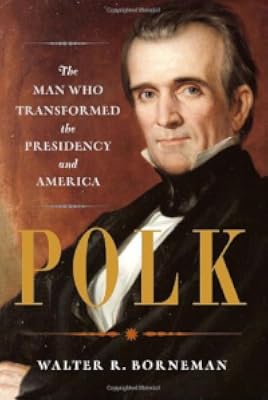
Polk: The Man Who Transformed the Presidency and America
by Walter R. Borneman
On This Page
Description
The first complete biography of a president often overshadowed in image but seldom outdone in accomplishment. James K. Polk's pledge to serve a single term, which many thought would make him a lame duck, enabled him to rise above electoral politics and to outflank his adversaries. Thus he plotted and attained a formidable agenda: He fought for and won tariff reductions, reestablished an independent Treasury, and most notably, brought Texas into the Union, bluffed Great Britain out of the show more lion's share of Oregon, and wrested California and much of the Southwest from Mexico. In tracing Polk's life and career, author Borneman dispels conventional views of Polk as an accidental president. Instead, we see Polk as he was--a decisive, if not partisan, statesman whose near doubling of America's boundaries and expansive broadening of executive powers redefined the country at large, as well as the nature of its highest office.--From publisher description. show lessTags
Recommendations








Member Reviews
The presidency of James K. Polk (1845-1849), rated "near great" by many historians, became largely lost from public consciousness in the furor of the Civil War, but it has been experiencing a renewed respect due to biographies such as this. Polk had four major goals as President, all of which he accomplished: establish a national treasury, reduce the tariff, settle the boundaries of the Oregon Territory with Britain, and acquire California. These last two added modern Oregon, Idaho, Washington state, California, Nevada, Utah, and parts of Arizona, New Mexico, Colorado, Oklahoma, Wyoming, and Montana to our country's territory. Polk was also heavily involved in acquiring Texas, which was annexed by President Tyler the day before Polk show more took office. He is also known for the strength with which he guided his Cabinet and the entire administration and the power he wrested for the Presidency, so visible in recent years.
Borneman provides an evenly-paced and very readable account of Polk's life and work and the political atmosphere in which his career flourished, failed, and then reached its apex. It was eerie, however, to read the means by which the U.S. approached gaining a strong enough foothold in Texas, California and the Oregon Territory that claims for those areas could potentially be made: the government encouraged Americans to move and settle there in large numbers without permission from either the Mexican or British governments, respectively. Sound familiar? show less
Borneman provides an evenly-paced and very readable account of Polk's life and work and the political atmosphere in which his career flourished, failed, and then reached its apex. It was eerie, however, to read the means by which the U.S. approached gaining a strong enough foothold in Texas, California and the Oregon Territory that claims for those areas could potentially be made: the government encouraged Americans to move and settle there in large numbers without permission from either the Mexican or British governments, respectively. Sound familiar? show less
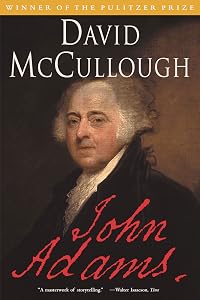
President James K. Polk, our 11th president, was one of our least-known great/near great presidents. In this excellent biography, possibly the best presidential bio I've read since David McCullough's John Adams, I got to know him a whole lot better.
Polk accomplished what he set out to do. One key area was the acquisition of territory in the west, California, the Oregon Territory, among others. The most interesting parts of this book, I thought, dealt with this topic.
Polk also presided over the Mexican-American War (who knew that there were Whig generals and Democrat generals?) and strengthened the presidency, in terms of war declarations and others.
Interestingly, he died soon after he left office. I think he had a post-presidency of 119 show more days. His widow survived him by over 40 years.
This is quite a fascinating book. Highly recommended!! show less
Polk accomplished what he set out to do. One key area was the acquisition of territory in the west, California, the Oregon Territory, among others. The most interesting parts of this book, I thought, dealt with this topic.
Polk also presided over the Mexican-American War (who knew that there were Whig generals and Democrat generals?) and strengthened the presidency, in terms of war declarations and others.
Interestingly, he died soon after he left office. I think he had a post-presidency of 119 show more days. His widow survived him by over 40 years.
This is quite a fascinating book. Highly recommended!! show less
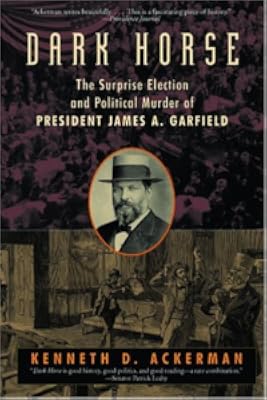
James Knox Polk is remembered mainly as the first "dark horse" president but historians feel that he was a near-great president. He grew as a politician under the tutelage of Andrew Jackson. He was a compromise candidate of the Democrat party in 1844 after serving as Governor of Tennessee and Speaker of the House of Representatives. He promised before election that he would only serve one term ad that his objectives were to reduce the tariff, create an independent federal Treasury, annex Texas and bring in Oregon and California . He accomplished all of these while serving as commander-in chief during the Mexican American War.
Polk was a no-nonsense President who, when Rivers and Harbors legislation was proposed ( the largest bit of pork show more barrel legislation ever put before the congress) at the same time as important legislation regarding tariff reduction, Polk waited for the passage of other vital legislation before vetoing the rivers and harbor bill with the message "many of the projects were of a local measure and far beyond what could be called essential to the nation's commerce" .He stated that "to call the mouth of a creek, a harbor, cannot confer the authority to spend money for its improvement."
"Should this bill become law, the precedent that it establishes will inevitably lead to large and annually increasing appropriations and drains upon the treasury. For it is not to be doubted that new and other localities will demand of their representatives in Congress " equal representation.
POLITICAL COMMENT
Polk presidency seems to be mirror reflection of what is happening in today's politics - he was accused of starting the Mexican War and the Whigs were constantly battling to show him up, but when it came time to act, the appropriations that were needed were passed without issue. To this day we have unnecessary expenses for "improvements" that are not needed simply as part of pork barrel legislation.What a shame that we did not learn from history. show less
Polk was a no-nonsense President who, when Rivers and Harbors legislation was proposed ( the largest bit of pork show more barrel legislation ever put before the congress) at the same time as important legislation regarding tariff reduction, Polk waited for the passage of other vital legislation before vetoing the rivers and harbor bill with the message "many of the projects were of a local measure and far beyond what could be called essential to the nation's commerce" .He stated that "to call the mouth of a creek, a harbor, cannot confer the authority to spend money for its improvement."
"Should this bill become law, the precedent that it establishes will inevitably lead to large and annually increasing appropriations and drains upon the treasury. For it is not to be doubted that new and other localities will demand of their representatives in Congress " equal representation.
POLITICAL COMMENT
Polk presidency seems to be mirror reflection of what is happening in today's politics - he was accused of starting the Mexican War and the Whigs were constantly battling to show him up, but when it came time to act, the appropriations that were needed were passed without issue. To this day we have unnecessary expenses for "improvements" that are not needed simply as part of pork barrel legislation.What a shame that we did not learn from history. show less
I liked it and I did not like it, except for the "Mexican War" which was clearly a main part of the book. I would have put it down ere the first shot was ever fired and it would be one more book unfinished! This book was, to a great extent, also a book about Jackson, Clay, Van Buren, and as a side note only, Lincoln.
Very little was written about the native population that was so dearly affected by the western expansion. Borneman wrote, "A man with no qualms about buying and selling other human beings [Polk enslaved more than one, though this book is not about slavery] probably did not dwell on how expansionist policies might affect indigenous Native Americans or, for that matter, any nationality occupying coveted tarritory" (location show more 634).
In 1948 Arthur M. Schlesinger asked prominent historians to rank U.S. Presidents, on their performance in the White House. Polk came in at 10 out of 29. He repeated this poll in 1962, and Polk came in at 8 out of 31. Then Schlesinger, Jr. put the poll out once more in 1996, and Polk came in at 9 out of 39.
I don't know who Random House uses to copy edit their digitization of books, but I'd be happy to oblige them. Consistently when the book referred to Mr. & Mrs. Smith (or similarly named folks), they were referred to as "the Smiths," (which is correct). But when James Polk and Sarah Polk were referred to jointly, they were consistently referred to as "the Polk's." Argh. Are we no longer teaching punctuation grammar? show less
Very little was written about the native population that was so dearly affected by the western expansion. Borneman wrote, "A man with no qualms about buying and selling other human beings [Polk enslaved more than one, though this book is not about slavery] probably did not dwell on how expansionist policies might affect indigenous Native Americans or, for that matter, any nationality occupying coveted tarritory" (location show more 634).
In 1948 Arthur M. Schlesinger asked prominent historians to rank U.S. Presidents, on their performance in the White House. Polk came in at 10 out of 29. He repeated this poll in 1962, and Polk came in at 8 out of 31. Then Schlesinger, Jr. put the poll out once more in 1996, and Polk came in at 9 out of 39.
I don't know who Random House uses to copy edit their digitization of books, but I'd be happy to oblige them. Consistently when the book referred to Mr. & Mrs. Smith (or similarly named folks), they were referred to as "the Smiths," (which is correct). But when James Polk and Sarah Polk were referred to jointly, they were consistently referred to as "the Polk's." Argh. Are we no longer teaching punctuation grammar? show less
I was pleasantly surprised by this biography. It was incredibly well-researched, noted and argued. While I really only remembered Polk for the "54' 40" or Fight!" slogan, this author makes a compelling argument that Polk was one of the most able of presidents. (He also taught me that the 54' 40" slogan came into play after Polk was elected.) I would highly recommend this biography to anyone looking for a closer look into American history in the murky era of Presidents between Andrew Jackson and Abraham Lincoln.
A thorough and well-researched biography detailing the life and times of one of America's inexplicably less-known presidents. The author fairly presents Polk's accomplishments without espousing any particular ideology.
I would have ranked this book higher but for the fact that the author's style is sometimes tedious, most often in his presentation of unnecessary minutiae which detract from the main thrust of his work.
Nevertheless, a recommended read for those who want to learn more about this much underappreciated early president.
I would have ranked this book higher but for the fact that the author's style is sometimes tedious, most often in his presentation of unnecessary minutiae which detract from the main thrust of his work.
Nevertheless, a recommended read for those who want to learn more about this much underappreciated early president.
While I am conversant with 19th century U.S. history I knew almost nothing about James Knox Polk, I knew more of Henry Clay, John Fremont, and Thomas Hart Benton who figure in the Polk story. I wonder why it is that the Polk: The Man Who Transformed the Presidency is so little known.
Two relationships formed bedrock on which the achievements of this very able man rested. One was his wife, Mary Childress Polk, whom the author maintains was the most influential first lady after Dolley Madison until Edith Wilson. She and Polk met when she was 12 and he was 19. They married about 10 years later by which time he was already embarked on his political career. Their union was long, powerful, and happy. She was a devoted partner and confidante, show more an able hostess, and possessed considerable political knowledge. The other powerful relationship in the Polk story is Andrew Jackson who was Polk's mentor and backer throughout his political life. I found tales illustrating Jackson's influence quite interesting.
Polk’s presidential accomplishments include the admission of Texas, California, and Oregon into the Union. During his one-term presidency, the land area of the United States increased by one-third. In addition, Polk changed the nature of the presidency from one in which the legislature initiated war to one in which the president presented war resolutions to the Congress. This difference was profound, and this was only one of the ways he increased the power of the executive branch.
I found the personalities in this story the best part of the work. It was, however, first and foremost a political biography. This angle held less interest for me and at times I had to force myself to stick with it. Nevertheless, the story is quite interesting and well worth the time. show less
Two relationships formed bedrock on which the achievements of this very able man rested. One was his wife, Mary Childress Polk, whom the author maintains was the most influential first lady after Dolley Madison until Edith Wilson. She and Polk met when she was 12 and he was 19. They married about 10 years later by which time he was already embarked on his political career. Their union was long, powerful, and happy. She was a devoted partner and confidante, show more an able hostess, and possessed considerable political knowledge. The other powerful relationship in the Polk story is Andrew Jackson who was Polk's mentor and backer throughout his political life. I found tales illustrating Jackson's influence quite interesting.
Polk’s presidential accomplishments include the admission of Texas, California, and Oregon into the Union. During his one-term presidency, the land area of the United States increased by one-third. In addition, Polk changed the nature of the presidency from one in which the legislature initiated war to one in which the president presented war resolutions to the Congress. This difference was profound, and this was only one of the ways he increased the power of the executive branch.
I found the personalities in this story the best part of the work. It was, however, first and foremost a political biography. This angle held less interest for me and at times I had to force myself to stick with it. Nevertheless, the story is quite interesting and well worth the time. show less
Members
- Recently Added By
Lists

The Presidents
42 works; 2 members
Author Information

18 Works 3,537 Members
Walter R. Borneman is the author of nine works of nonfiction, including MacArthur at War, American Spring, The Admirals, Iron Horses, Polk, and The French and Indian War. He holds both a master's degree in history and a law degree. He lives in Colorado.
Awards and Honors
Awards
Common Knowledge
- Original publication date
- 2008
- People/Characters
- James Knox Polk; Sarah Childress Polk; Andrew Jackson; Henry Clay; Martin Van Buren; Cave Johnson (show all 14); John Tyler; John Quincy Adams; George M. Dallas; Benjamin Butler; George Bancroft; Zachary Taylor (General); John Charles Frémont; Thomas Hart Benton, Senator
- Important places
- Washington, D.C., USA; Tennessee, USA; Texas, USA; Oregon Territory, USA
- Important events
- Oregon Territory Annexed; Texas Annexation
- Epigraph
- Strike boldly; it [is] your habit,
and the means of your elevation.
~U.S. Supreme Court Justice John Catron to James K. Polk, September 27, 1837 - Dedication
- For Marlene, First, Last and Always
- Blurbers
- Brinkley, Douglas; Middlekauff, Robert; Holtzapple, John
Classifications
- Genres
- Biography & Memoir, History, Nonfiction, General Nonfiction
- DDC/MDS
- 973.6 — History & geography History of North America United States Antebellum Era (1845-1857)
- LCC
- E417 .B67 — History of the United States United States Revolution to the Civil War, 1775/1783-1861 By period Middle nineteenth century, 1845/1848-1861 Polk's administration, 1845-1849
- BISAC
Statistics
- Members
- 640
- Popularity
- 45,370
- Reviews
- 16
- Rating
- (3.83)
- Languages
- English
- Media
- Paper, Audiobook, Ebook
- ISBNs
- 9
- ASINs
- 5