
On This Page
Description
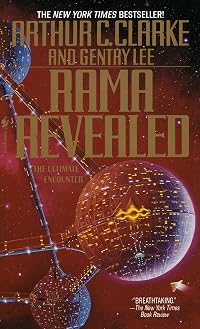
In the New York Times-bestselling conclusion to the award-winning Rama series, a human colony aboard Rama III approaches the ultimate confrontation. Two thousand humans have been trapped on the enormous spaceship Rama III, bound for the Raman Node orbiting Sirius. As they hurtle through interstellar space, the human population has formed a violent authoritarian society-one that has imprisoned astronaut Nicole Wakefield. After a daring escape with help from her husband Richard, the Wakefields show more flee into the labyrinthine bowels of the ship, where they find themselves in the domain of the octospiders-technologically advanced beings that may be friend or foe. As the human colony pursues the Wakefields, the situation aboard Rama III approaches all-out war. But Rama's Nodal intelligence is always watching . . . Written by Clarke's longtime collaborator Gentry Lee, Rama Revealed marks the climax of the popular and critically acclaimed Rama series-in which humans finally encounter the advanced alien intelligences behind the vast and mysterious spaceships. show lessTags
Recommendations








Member Reviews
How do you ruin a great idea? Find another author, destroy the original idea, turn it into a social commentary that seems completely out of place, and wrap all these things into two novels. This is what the end to the Rama series seems like. What started as a great and wonderfully original idea, turned into something that was at best comically bad and at worst a disgrace to the wonderful name of Arthur Clarke. Rama Revealed was the nail in the coffin of the once great Rendezvous with Rama. I can still read Rendezvous with the same joy that I did originally, but I know that in the end there is no wonderful sequel, just these three stories that seem lost and out of place.
So, four years after my first attempt, I've finally finished the Rama series. This book, the fourth and final one in the quadrilogy, is not the worst of the batch. But then being better than the unmitigated drivel that was [b:The Garden of Rama|112518|The Garden of Rama (Rama, #3)|Arthur C. Clarke|http://photo.goodreads.com/books/1171659410s/112518.jpg|876293] is not a particularly trying task.
Despite my misgivings that all the important things about Rama had been "revealed" in this book's predecessor, we do in fact find out who created Rama and its related infrastructure, and why. It's an answer that I feel should be powerful and thought provoking, but it's thrown out there by an unreliable figure, and then confirmed later by someone show more more reliable who also admits he might be wrong. Certainly, the answer seems like an attempt to make the series seem more profound, but instead serves to trivialise life, religion, and our Universe as a whole frankly.
The philosophical antics only arrive at the very end of the book, though. For the most part it's a dummy's guide to the biology and culture of the octospiders from [b:Rama II|10612691|Rama II (Rama, #2)|Arthur C. Clarke|http://photo.goodreads.com/books/1298827472s/10612691.jpg|1907786]. This in itself is mildly interesting but doesn't really warrant the four hundred pages that it takes up. After that there's a lot of complaints about being old and then the last philosophical twenty pages. The last section just saves the book but I still wouldn't readily recommend it. show less
Despite my misgivings that all the important things about Rama had been "revealed" in this book's predecessor, we do in fact find out who created Rama and its related infrastructure, and why. It's an answer that I feel should be powerful and thought provoking, but it's thrown out there by an unreliable figure, and then confirmed later by someone show more more reliable who also admits he might be wrong. Certainly, the answer seems like an attempt to make the series seem more profound, but instead serves to trivialise life, religion, and our Universe as a whole frankly.
The philosophical antics only arrive at the very end of the book, though. For the most part it's a dummy's guide to the biology and culture of the octospiders from [b:Rama II|10612691|Rama II (Rama, #2)|Arthur C. Clarke|http://photo.goodreads.com/books/1298827472s/10612691.jpg|1907786]. This in itself is mildly interesting but doesn't really warrant the four hundred pages that it takes up. After that there's a lot of complaints about being old and then the last philosophical twenty pages. The last section just saves the book but I still wouldn't readily recommend it. show less
In my opinion, this was by far the best of the sequels.
They start by doing exactly what I wanted out of the middle two books: getting away from the human settlement and into a situation where they are learning and experiencing something strange. In this case, they go to live among the octospiders, an intelligent civilization highly skilled in genetics and biological science who are completely deaf and only speak in color. It's a fascinating and nicely thought out situation and I did like it.
Even when, halfway through the book, the focus shifts back partially to the rest of the human colony in Rama, it still maintains a tight focus, with the bigger scale events going on behind the scenes. There was still a particular feel of exploring show more how different societies deal with issues (such as war: the octospiders view all war as terrible, not just certain kinds).
The final section, when the return to another Node felt a little strange. Either because it was rushed or because it felt sort of artificial. I didn't particularly mind though, since it still was working out echoes of events from all of the previous books and acted as a sufficient capstone to the series. I did think it was nice that Michael and Simone make another appearance, even if the latter replied her mother's odd fixation with a two person continuation of the species.
At the very end, the book veers somewhat towards a philosophical / religions tangent, which felt a little odd (the Ramas are essentially God) but still thought provoking.
Overall, I was pleasantly surprised by this book. If you made it through the middle two books, you should probably read this one as well. show less
They start by doing exactly what I wanted out of the middle two books: getting away from the human settlement and into a situation where they are learning and experiencing something strange. In this case, they go to live among the octospiders, an intelligent civilization highly skilled in genetics and biological science who are completely deaf and only speak in color. It's a fascinating and nicely thought out situation and I did like it.
Even when, halfway through the book, the focus shifts back partially to the rest of the human colony in Rama, it still maintains a tight focus, with the bigger scale events going on behind the scenes. There was still a particular feel of exploring show more how different societies deal with issues (such as war: the octospiders view all war as terrible, not just certain kinds).
The final section, when the return to another Node felt a little strange. Either because it was rushed or because it felt sort of artificial. I didn't particularly mind though, since it still was working out echoes of events from all of the previous books and acted as a sufficient capstone to the series. I did think it was nice that Michael and Simone make another appearance, even if the latter replied her mother's odd fixation with a two person continuation of the species.
At the very end, the book veers somewhat towards a philosophical / religions tangent, which felt a little odd (the Ramas are essentially God) but still thought provoking.
Overall, I was pleasantly surprised by this book. If you made it through the middle two books, you should probably read this one as well. show less
Being the completist that I am I had to read this last and final installment of the RAMA series and after the Garden of Rama I was not hopeful that it was going to be a good ending. Boy was I surprised by how much I enjoyed it. Yes, there was a fair amount of fluff in the story with respect to reminiscing over what has happened in the past, but which great series does not do this, and it does have some appeal in terms of validating that we as the reader have walked the steps besides the book's protagonists and it also helps for folks who have questionable memories like I do. So yes, a whole lot of the book is devoted to the alien species and their biology's but this was also an enjoyable aspect of the story for me. The message was clear show more that the human race left to its own devices will self-implode and end in disaster and that humans may not be the most developed species in the universe and how would we deal with that eventuality. The ending does lead more to philosophical questions about the meaning and beginnings of life, the universe and yes off course GOD but there were only a few pages dedicated to this at the very ending. Overall, I believe that I enjoyed the Rama series and I look forward to the movie which I believe is in development phase as I write this review. show less
So, four years after my first attempt, I've finally finished the Rama series. This book, the fourth and final one in the quadrilogy, is not the worst of the batch. But then being better than the unmitigated drivel that was [b:The Garden of Rama|112518|The Garden of Rama (Rama, #3)|Arthur C. Clarke|http://photo.goodreads.com/books/1171659410s/112518.jpg|876293] is not a particularly trying task.
Despite my misgivings that all the important things about Rama had been "revealed" in this book's predecessor, we do in fact find out who created Rama and its related infrastructure, and why. It's an answer that I feel should be powerful and thought provoking, but it's thrown out there by an unreliable figure, and then confirmed later by someone show more more reliable who also admits he might be wrong. Certainly, the answer seems like an attempt to make the series seem more profound, but instead serves to trivialise life, religion, and our Universe as a whole frankly.
The philosophical antics only arrive at the very end of the book, though. For the most part it's a dummy's guide to the biology and culture of the octospiders from [b:Rama II|10612691|Rama II (Rama, #2)|Arthur C. Clarke|http://photo.goodreads.com/books/1298827472s/10612691.jpg|1907786]. This in itself is mildly interesting but doesn't really warrant the four hundred pages that it takes up. After that there's a lot of complaints about being old and then the last philosophical twenty pages. The last section just saves the book but I still wouldn't readily recommend it. show less
Despite my misgivings that all the important things about Rama had been "revealed" in this book's predecessor, we do in fact find out who created Rama and its related infrastructure, and why. It's an answer that I feel should be powerful and thought provoking, but it's thrown out there by an unreliable figure, and then confirmed later by someone show more more reliable who also admits he might be wrong. Certainly, the answer seems like an attempt to make the series seem more profound, but instead serves to trivialise life, religion, and our Universe as a whole frankly.
The philosophical antics only arrive at the very end of the book, though. For the most part it's a dummy's guide to the biology and culture of the octospiders from [b:Rama II|10612691|Rama II (Rama, #2)|Arthur C. Clarke|http://photo.goodreads.com/books/1298827472s/10612691.jpg|1907786]. This in itself is mildly interesting but doesn't really warrant the four hundred pages that it takes up. After that there's a lot of complaints about being old and then the last philosophical twenty pages. The last section just saves the book but I still wouldn't readily recommend it. show less
I read this book when I was in eighth grade and though it was very good. Its the kind of science fiction that I like, full of cool new technology and who wouldn't love octopus aliens that speak through color?
UPDATE (2008):
Despite my glowing review above, I hate this book. I re-read it and found it to be unbearable. The author's ideal man is a sappy little girl who always wants to talk about his emotions and cuddle. His ideal woman is exactly the same thing. The characterization is horrible. Most of the characters are indistinguishable. The screwed-up drug addict talks and thinks exactly like the wise, sappy old lady. The immensely rational octospiders understand and account for every annoying emotionalist sappy impulse the sappy old show more lady has. The Eagle is exactly the same as the octospider. No one in this book has their own point of view. The author makes any disagreement with the main character's point of view insanely irrational. Which brings me to the never-ending personal conflicts. They are all exactly the same, except in degree and the indistinguishable characters are interchanged. The plot does have its good points, which I mentioned in my earlier review, but a huge issue is just dropped. The octospiders are portrayed as if they're evil under their rational friendly surface, and lots of hints are dropped suggesting this. There is a mural with the octos crushing a human woman, they terminate their old, they're communists, etc. But this is never developed. Even when Nicole finds a human baby in their zoo, she never calls them out! That is the worst part of the book, and I will never read another Gentry Lee book again because of it. show less
UPDATE (2008):
Despite my glowing review above, I hate this book. I re-read it and found it to be unbearable. The author's ideal man is a sappy little girl who always wants to talk about his emotions and cuddle. His ideal woman is exactly the same thing. The characterization is horrible. Most of the characters are indistinguishable. The screwed-up drug addict talks and thinks exactly like the wise, sappy old lady. The immensely rational octospiders understand and account for every annoying emotionalist sappy impulse the sappy old show more lady has. The Eagle is exactly the same as the octospider. No one in this book has their own point of view. The author makes any disagreement with the main character's point of view insanely irrational. Which brings me to the never-ending personal conflicts. They are all exactly the same, except in degree and the indistinguishable characters are interchanged. The plot does have its good points, which I mentioned in my earlier review, but a huge issue is just dropped. The octospiders are portrayed as if they're evil under their rational friendly surface, and lots of hints are dropped suggesting this. There is a mural with the octos crushing a human woman, they terminate their old, they're communists, etc. But this is never developed. Even when Nicole finds a human baby in their zoo, she never calls them out! That is the worst part of the book, and I will never read another Gentry Lee book again because of it. show less
My comments in my review of 'Rama II' also apply here; once again, despite the extreme length and tediousness of this novel, I found myself identifying with the characters, much to my surprise. Indeed, towards the end of the book, when the main protagonist knows she will face her inevitable death on the morrow, and her handicapped son asks her to 'tuck me up in bed once more, the way you did when I was a child', I wept for the awful sense of impending loss in that exchange, and that is why I shall defend this book.
But not too strongly. It is a shaggy God story; we are promised revelations and none arrive; and the journey to get to this point has been so very, very long.
But not too strongly. It is a shaggy God story; we are promised revelations and none arrive; and the journey to get to this point has been so very, very long.
Members
- Recently Added By
Published Reviews
ThingScore 25
Only readers who are genuinely curious about the nature of the Rama enterprise and the mysterious intelligences behind it will find reason to struggle through this inert narrative.
added by stephmo
Lists

Best Science Fiction Novels
816 works; 430 members
Author Information

860+ Works 130,164 Members
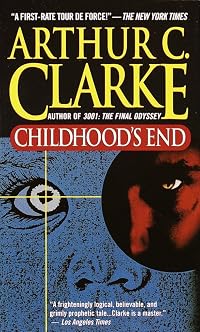
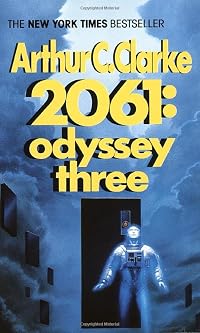
Arthur C. Clarke was born in Minehead, Somerset, England, on December 16, 1917. During World War II, he served as a radar specialist in the RAF. His first published piece of fiction was Rescue Party and appeared in Astounding Science, May 1946. He graduated from King's College in London with honors in physics and mathematics, and worked in show more scientific research before turning his attention to writing fiction. His first book, Prelude to Space, was published in 1951. He is best known for his book 2001: A Space Odyssey, which was later turned into a highly successful and controversial film under the direction of Stanley Kubrick. His other works include Childhood's End, Rendezvous with Rama, The Garden of Rama, The Snows of Olympus, 2010: A Space Odyssey II, 2062: Odyssey III, and 3001: The Final Odyssey. During his lifetime, he received at least three Hugo Awards and two Nebula Awards. He died of heart failure on March 19, 2008 at the age of 90. (Bowker Author Biography) show less

13 Works 14,118 Members
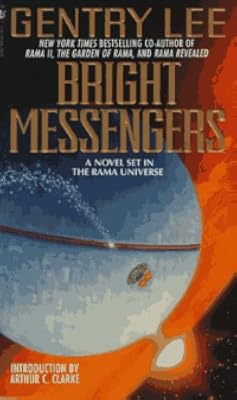
Gentry Lee has been chief engineer on Project Galileo, director of science analysis & mission planning for NASA's Viking mission to Mars, & partner with Carl Sagan in the design, development, & implementation of the television series "Cosmos." He is the co-author of "Rama II," "The Garden of Rama" & "Rama Revealed," & author of "Bright Messengers" show more & "Double Full Moon." He lives in Frisco, Texas. (Bowker Author Biography) show less
Some Editions
Awards and Honors
Awards
Distinctions
Series

Belongs to Publisher Series
Work Relationships
Common Knowledge
- Canonical title
- Rama Revealed
- Original title
- Rama Revealed
- Original publication date
- 1993
- People/Characters
- Nicole Wakefield; The Octospiders; Maria; Richard Wakefield; The Eagle; Dr. Blue (show all 9); Archie; Ellie Wakefield; Patrick Wakefield
- Important places
- Rama III; New York, Rama (colony); Library Node
- First words
- "Nicole." At first the soft, mechanical voice seemed to be part of her dream.
- Last words
- (Click to show. Warning: May contain spoilers.)Nicole dropped to her knees slowly. She turned to face the Eagle. "I understand," she said with a smile.
And understanding is happiness, she thought. - Original language
- English
Classifications
Statistics
- Members
- 3,199
- Popularity
- 5,392
- Reviews
- 22
- Rating
- (3.41)
- Languages
- 9 — Czech, English, French, German, Polish, Portuguese, Russian, Spanish, Turkish
- Media
- Paper, Audiobook, Ebook
- ISBNs
- 29
- ASINs
- 12