Fifteen Sermons Preached Before the University of Oxford Between A.D. 1826 and 1843
by John Henry Newman
162 Members (4.33)
On This Page
Description
An edition, with introduction and comprehensive notes, of one of Newman's best-known works. The sermons, which explore the relation of faith and reason, are a key document of the Oxford Movement. - ;Newman himself called the Oxford University Sermons, first published in 1843, `the best, not the most perfect, book I have done'. He added, `I mean there is more to develop in it'. Indeed, the book is a precursor of all his major later works, including especially the Essay on the Development of show more Christian Doctrine and the Grammar of Assent. Dealing with the relationship of faith and reason, the fifteen sermons represent Newman's resolution of the conflict. between heart and head that so troubled believers, non-believers, and agnostics of the nineteenth century, Their controversial nature also makes them one of the primary documents of the Oxford Movement. This new edition provides an introduction to the sermons, a definitive text with textual variants, extensive annotation, and. appendices containing previously unpublished material. - ;This superb critical edition not only sets Newman's University Sermons in the context of his own life and thought, and of the cultural acids that he saw so clearly were eating away at Christian culture; the detailed annotation and careful indexing provide future scholars with the tools to set Newman in context and identify his varying interlocutors. Editors and publisher are indeed to be congratulated. - Geoffrey Rowell The Journal of Theological Studies;The power and stories these letters tell in enhanced by the high editorial standards we have come to expect from this series. It is to be hoped that such excellence will be displayed in other edited works, both by Newman and by the other members of the Tractarian circles. - Robert Ellison, English Historical Review. show lessTags
Recommendations


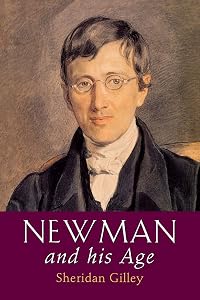













Member Reviews
Members
- Recently Added By
Author Information

582+ Works 10,662 Members
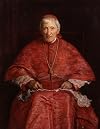
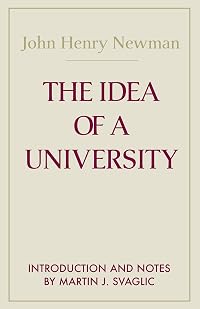
English clergyman John Henry Newman was born on February 21, 1801. He was educated at Trinity College, University of Oxford. He was the leader of the Oxford movement and cardinal after his conversion to the Roman Catholic Church. In 1822, he received an Oriel College fellowship, which was then the highest distinction of Oxford scholarship, and was show more appointed a tutor at Oriel. Two years later, he became vicar of St. Mary's, the Anglican church of the University of Oxford, and exerted influence on the religious thought through his sermons. When Newman resigned his tutorship in 1832, he made a tour of the Mediterranean region and wrote the hymn "Lead Kindly Light." He was also one of the chief contributors to "Tracts for the Times" (1833-1841), writing 29 papers including "Tract 90", which terminated the series. The final tract was met with opposition because of its claim that the Thirty-nine Articles of the Church of England are aimed primarily at the abuses of Roman Catholicism. Newman retired from Oxford in 1842 to the village of Littlemore. He spent three years in seclusion and resigned his post as vicar of St. Mary's on October 9, 1845. During this time, he wrote a retraction of his criticisms of the Roman Catholic Church and after writing his "Essay on the Development of Christian Doctrine," he became a Roman Catholic. The following year, he went to Rome and was ordained a priest and entered the Congregation of the Oratory. The remainder of Newman's life was spent in the house of the Oratory that he established near Birmingham. He also served as rector of a Roman Catholic university that the bishops of Ireland were trying to establish in Dublin from 1854-1858. While there, he delivered a series of lectures that were later published as "The Idea of a University Defined" (1873), which says the function of a university is the training of the mind instead of the giving of practical information. In 1864, Newman published "Apologia pro Vita Sua (Apology for His Life)" in response to the charge that Roman Catholicism was indifferent to the truth. It is an account of his spiritual development and regarded as both a religious autobiography and English prose. Newman also wrote "An Essay in Aid of a Grammar of Assent" (1870), and the novels "Loss and Gain" (1848), Callista" (1856) and "The Dream of Gerontius" (1865). Newman was elected an honorary fellow of Trinity College, Oxford, in 1877 and was made cardinal by Pope Leo XIII in 1879. He died on August 11, 1890. (Bowker Author Biography) show less
Series
Belongs to Publisher Series
Common Knowledge
- Canonical title
- Fifteen Sermons Preached Before the University of Oxford Between A.D. 1826 and 1843
Classifications
- Genres
- Religion & Spirituality, Nonfiction, General Nonfiction
- DDC/MDS
- 252.03 — Religion Christian pastoral practice & religious orders Texts of sermons Anglican And Episcopal
- LCC
- BX5133 .N4 .F5 — Philosophy, Psychology and Religion Christian Denominations Christian Denominations Protestantism Church of England Sermons. Tracts. Addresses. Essays
- BISAC
Statistics
- Members
- 162
- Popularity
- 202,619
- Rating
- (4.33)
- Languages
- English, Polish
- Media
- Paper, Ebook
- ISBNs
- 14
- ASINs
- 8