Ship of Fools
by Richard Paul Russo
On This Page
Description
Fiction. Horror. Science Fiction. Thriller. HTML:Home to generations of humans, the starship Argonos has wandered aimlessly throughout the galaxy for hundreds of years, desperately searching for other signs of life. Now, a steady, unidentified transmission lures them toward a nearby planet, where the grisly remains of a former colony await the crew. Haunted by what they have seen, the crew has no choice but to follow when another signal beckons the Argonos into deep space—and into the dark show more heart of an alien mystery...“[Russo] is not afraid to take on the question of evil in a divinely ordered universe...This is an ambitious novel of ideas that generates considerable suspense while respecting its sources, its characters, and most important, the reader.”—The New York Times
“A tale of high adventure and personal drama in the far future.”—Library Journal
“Relentlessly suspenseful...full of mystery...very exciting.”—Science Fiction Chronicle. show less
Tags
Recommendations
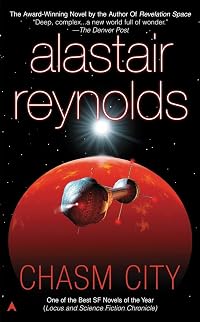

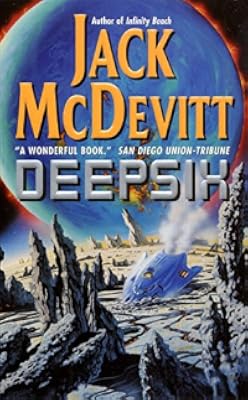
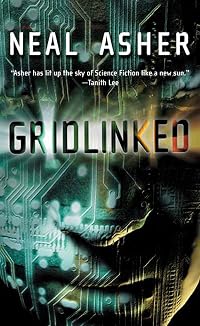

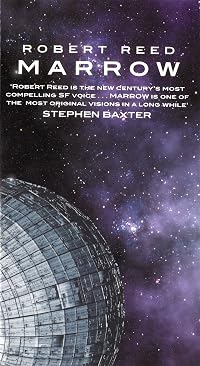










Member Reviews
The starship Argonos is wandering through space, generations of crews manning the ship with no idea where they are headed or where they’ve come from. After finding an island whose colony has met a gruesome fate, the ship receives a signal from an alien ship that they can’t seem to resist.
LibraryThing is telling me I’ve had this book in my library since March of 2012, so I’ve owned it for at least four and a half years now (assuming I logged it right after purchase, which I’m not certain I did back then). Damn! I’m slightly ashamed to admit that Ship of Fools is probably not alone in this category.
At any rate, I finally picked this up thanks to a readalong and I’m so glad I did! The idea of a wandering ship with a crew show more that has no idea of what their purpose is or when they might be able to colonize, scares the shit out of me, but in the best way. Thinking about being stuck on a ship, even one as large as the Argonos seemed, makes me feel helpless, but it’s exciting to read about because it’s not happening to me.
This is primarily a plot-driven novel, though I did like our main character and I think he showed some growth and gave enough hints about his past to keep me satisfied. Plus, the main draw for me was finding out what happened to the colony and what the hell was going on with the ship they discovered. I also enjoyed one character’s perspective on religion – I didn’t really agree with her view, however it was well spoken and gave me something to think about (which I do enjoy now and then.)
My only real complaint is that the book ended and I still had questions – I want to know all the things! show less
LibraryThing is telling me I’ve had this book in my library since March of 2012, so I’ve owned it for at least four and a half years now (assuming I logged it right after purchase, which I’m not certain I did back then). Damn! I’m slightly ashamed to admit that Ship of Fools is probably not alone in this category.
At any rate, I finally picked this up thanks to a readalong and I’m so glad I did! The idea of a wandering ship with a crew show more that has no idea of what their purpose is or when they might be able to colonize, scares the shit out of me, but in the best way. Thinking about being stuck on a ship, even one as large as the Argonos seemed, makes me feel helpless, but it’s exciting to read about because it’s not happening to me.
This is primarily a plot-driven novel, though I did like our main character and I think he showed some growth and gave enough hints about his past to keep me satisfied. Plus, the main draw for me was finding out what happened to the colony and what the hell was going on with the ship they discovered. I also enjoyed one character’s perspective on religion – I didn’t really agree with her view, however it was well spoken and gave me something to think about (which I do enjoy now and then.)
My only real complaint is that the book ended and I still had questions – I want to know all the things! show less
Superb space opera that will divide opinion. It finishes without answering some questions but that is the whole point. The big theme here is the Problem of Evil (how to reconcile the concept of evil existing at the same time as an Omnipotent, omniscient God). Finished this in three nights which is super fast for me seeing as I sacrifice sleep time to read.
If you know me at all, you'll know that my favorite horror film and my favorite science fiction is Alien. I found Ship of Fools to be akin to Ridley Scott's sci-fi/horror classic, although Russo's novel is more psychological horror rather than "slasher in space". Ship of Fools and Alien both have a similar tone and somewhat similar plot in that a seemingly-abandoned alien spaceship is discovered by the crew of a human-occupied ship. But this is about the extent of similarities between the two.
The set-up of Ship of Fools is amazing and most of the novel is quite intriguing. We follow Bartholomeo, resident of the upper levels of the generation starship Argonos, which is where the more privileged citizens of the ship reside (government show more officials, ship crew, etc.), while the bottom levels are reserved for the lower classes. It's pretty much a city in space. The ship has been traveling through the galaxy for so long in search of a habitable planet that no one really knows the ship's origin. Some, like the ship's bishop, believe it has always existed. Finally the ship lands on an unknown planet. There the crew finds a Dante-esque scene in a chamber located deep within a jungle: ""There were hundreds of bones scattered about the floor, strips of decayed flesh, pools and smears of viscous fluid. Just as it was impossible to avoid brushing against the hanging skeletons, so was it impossible to avoid stepping on bone or in thick, sticky liquid as I moved through the room."" A mutiny follows. Bartolomeo is imprisoned, but when a mysterious ship, seemingly imbued with evil, shows up, he is released and named leader of an exploration team. Terror ensues. As well as philosophical and moral debates.
Ship of Fools is a fast-paced novel that deals with the tension of interpersonal and societal conflicts on a space ship whose mission seems futile and whose discovery mandates a response. It also deals with issues of faith. Its horror comes not from the unknown alien ship necessarily but from what this discovery does to the inhabitants of Argonos. The horror also comes from the existential fear of abandonment that Russo puts within the novel. Since Bartholomeo has only ever known the starship he lives on, why should he believe in a God that has seemed to abandon him and those on Argonos and allow evil to exist, even when his friend, Father Veronica is so convincing in her arguments about the existence of God?
While the end of the novel does appear to be a bit abrupt, I thought Russo gave us a hopeful conclusion to the plight of the Argonos and its inhabitants. It might not have been the payoff we were expecting but I liked it. The crux of this story is about humans trying to survive in space and find a new home for themselves amidst the realization that the problem of evil will follow us wherever we may roam. And the evil can manifest itself in various ways. With that knowledge, we have to choose life in the end. The Argonos after years of drifting in space, has found a path forward.
As Batholomeo states: "Life. That, at least, is something I believe in." show less
The set-up of Ship of Fools is amazing and most of the novel is quite intriguing. We follow Bartholomeo, resident of the upper levels of the generation starship Argonos, which is where the more privileged citizens of the ship reside (government show more officials, ship crew, etc.), while the bottom levels are reserved for the lower classes. It's pretty much a city in space. The ship has been traveling through the galaxy for so long in search of a habitable planet that no one really knows the ship's origin. Some, like the ship's bishop, believe it has always existed. Finally the ship lands on an unknown planet. There the crew finds a Dante-esque scene in a chamber located deep within a jungle: ""There were hundreds of bones scattered about the floor, strips of decayed flesh, pools and smears of viscous fluid. Just as it was impossible to avoid brushing against the hanging skeletons, so was it impossible to avoid stepping on bone or in thick, sticky liquid as I moved through the room."" A mutiny follows. Bartolomeo is imprisoned, but when a mysterious ship, seemingly imbued with evil, shows up, he is released and named leader of an exploration team. Terror ensues. As well as philosophical and moral debates.
Ship of Fools is a fast-paced novel that deals with the tension of interpersonal and societal conflicts on a space ship whose mission seems futile and whose discovery mandates a response. It also deals with issues of faith. Its horror comes not from the unknown alien ship necessarily but from what this discovery does to the inhabitants of Argonos. The horror also comes from the existential fear of abandonment that Russo puts within the novel. Since Bartholomeo has only ever known the starship he lives on, why should he believe in a God that has seemed to abandon him and those on Argonos and allow evil to exist, even when his friend, Father Veronica is so convincing in her arguments about the existence of God?
While the end of the novel does appear to be a bit abrupt, I thought Russo gave us a hopeful conclusion to the plight of the Argonos and its inhabitants. It might not have been the payoff we were expecting but I liked it. The crux of this story is about humans trying to survive in space and find a new home for themselves amidst the realization that the problem of evil will follow us wherever we may roam. And the evil can manifest itself in various ways. With that knowledge, we have to choose life in the end. The Argonos after years of drifting in space, has found a path forward.
As Batholomeo states: "Life. That, at least, is something I believe in." show less
The book cover hooked my eye. I didn't know that the author, Richard Paul Russo, had won the Philip K. Dick Award for this work, his second. I'd never even heard of him. I was looking for someone new to try so I read the back cover.
No one remembers where they came from or where they're going. For hundreds of years, the starship Argonos, home to generations of humans, has wandered throughout the galaxy, searching for other signs of life. Now, a steady, unidentified transmission lures them toward a nearby planet.
The colony has vanished. But deep within the planet's steamy jungles, the exploration team finds horrible evidence of its fate.
Once more, a signal lures the crew of the Argonos. Haunted by what they have seen, they have no choice show more but to follow - deep into space, where an alien mystery awaits...
"Interesting," I thought. So I bought it. But the book really wasn't about all that. Oh sure, it's the story, but it's not what the book is about. Despite the fact that the book won the Philip K Dick Award in 2001, it turned some people off, including this guy. While I don't agree with his conclusions, he makes several good points that I won't refute. He's right about the story, but not what the book is about. What the book really is about, IMO, is our beliefs.
The story is told from the viewpoint of one man: Bartolomeo Aguilera. He was born with several physical deformities: stunted arms, a damaged spine, and a club foot. He makes up for it through the use of prosthetics and a metallic exoskeleton. He's a negative atheist who's intrigued by Father Veronica (yes, a woman priest), her faith in particular.
Bartolomeo and Veronica are among the team sent down to the mysterious planet to investigate the source of the signal and the fate of the colony there. The two spend time together and slowly, over the course of the story, Father Veronica reveals a bit more of her faith to him. He also finds himself falling in love with her. In fact, since Bart isn't a member of the crew (he's the captain's adviser, a political position), he's free to dwell on these things while everyone else is engaged in their work.
So how did Bart find himself in this crisis of belief systems? His aforementioned deformities resulted in his being abandoned at birth. He was raised by the upper class community of which his parents, though he doesn't know who they are, are a part of. No compassionate conservatives here. He spent his whole life trying to find his own path. His deformities kept him isolated from the others and he had few friends (the captain being one). His predicament is just like the Argonos, the generational starship that he lives on.
Over a century ago, there was a strange plague that drove a large percentage of the ship's population mad. In the ensuing chaos, there was a lot of internal damage. Among the casualties were the historical records and navigational database. The ship has been lost since then and has no way of finding the other worlds that humans have colonized. They stumble upon habitable planets by accident. A star is chosen and they journey towards it, but it's been 14 years since their last contact. An ill-fated attempt by the bishop to play missionary to the masses of that world forced the Argonos to leave. So the ship keeps wandering around, lost, with no idea as to what its mission is or even its destination. Bart is merely the embodiment of that rudderlessness.
Bart learns that Father Veronica doesn't blindly follow her faith, nor is she the preaching type. She doesn't patronize, condescend, or condemn. She questions her faith regularly and periodically steals herself away for introspection. I won't reveal Father Veronica's confession to Bart and spoil it for would-be readers. Let's just say I found it to be intriguing. I'm sure that there are plenty people of faith who will disagree with what Russo has her say. And he certainly won't convince atheists to pick up a Bible. But it might give some people something to think about.
There's no point discussing many of the "real" plot elements. Russo leaves so many unanswered whys and hows that I can't see why I should bother. It's the faux story, which pissed some people off. The real story is Bart's quest for purpose, meaning, and belief. If the back cover was the real story, we would've been offered other viewpoints in the book. All of the major characters actions are revealed to us only through Bart's interaction with them. Reading Ship of Fools for the mystery teaser on the back cover is Russo's deceit to get readers to explore even deeper mysteries. show less
No one remembers where they came from or where they're going. For hundreds of years, the starship Argonos, home to generations of humans, has wandered throughout the galaxy, searching for other signs of life. Now, a steady, unidentified transmission lures them toward a nearby planet.
The colony has vanished. But deep within the planet's steamy jungles, the exploration team finds horrible evidence of its fate.
Once more, a signal lures the crew of the Argonos. Haunted by what they have seen, they have no choice show more but to follow - deep into space, where an alien mystery awaits...
"Interesting," I thought. So I bought it. But the book really wasn't about all that. Oh sure, it's the story, but it's not what the book is about. Despite the fact that the book won the Philip K Dick Award in 2001, it turned some people off, including this guy. While I don't agree with his conclusions, he makes several good points that I won't refute. He's right about the story, but not what the book is about. What the book really is about, IMO, is our beliefs.
The story is told from the viewpoint of one man: Bartolomeo Aguilera. He was born with several physical deformities: stunted arms, a damaged spine, and a club foot. He makes up for it through the use of prosthetics and a metallic exoskeleton. He's a negative atheist who's intrigued by Father Veronica (yes, a woman priest), her faith in particular.
"I understand hypocrites, like the bishop, and I understand fanatics, or at least I can more easily predict their behavior, which is much the same thing, as far as I am concerned. But I admit I did not know what to make of true believers like Father Veronica. Her belief, her faith, was both profound and real. Her faith disturbed me."
Bartolomeo and Veronica are among the team sent down to the mysterious planet to investigate the source of the signal and the fate of the colony there. The two spend time together and slowly, over the course of the story, Father Veronica reveals a bit more of her faith to him. He also finds himself falling in love with her. In fact, since Bart isn't a member of the crew (he's the captain's adviser, a political position), he's free to dwell on these things while everyone else is engaged in their work.
So how did Bart find himself in this crisis of belief systems? His aforementioned deformities resulted in his being abandoned at birth. He was raised by the upper class community of which his parents, though he doesn't know who they are, are a part of. No compassionate conservatives here. He spent his whole life trying to find his own path. His deformities kept him isolated from the others and he had few friends (the captain being one). His predicament is just like the Argonos, the generational starship that he lives on.
Over a century ago, there was a strange plague that drove a large percentage of the ship's population mad. In the ensuing chaos, there was a lot of internal damage. Among the casualties were the historical records and navigational database. The ship has been lost since then and has no way of finding the other worlds that humans have colonized. They stumble upon habitable planets by accident. A star is chosen and they journey towards it, but it's been 14 years since their last contact. An ill-fated attempt by the bishop to play missionary to the masses of that world forced the Argonos to leave. So the ship keeps wandering around, lost, with no idea as to what its mission is or even its destination. Bart is merely the embodiment of that rudderlessness.
Bart learns that Father Veronica doesn't blindly follow her faith, nor is she the preaching type. She doesn't patronize, condescend, or condemn. She questions her faith regularly and periodically steals herself away for introspection. I won't reveal Father Veronica's confession to Bart and spoil it for would-be readers. Let's just say I found it to be intriguing. I'm sure that there are plenty people of faith who will disagree with what Russo has her say. And he certainly won't convince atheists to pick up a Bible. But it might give some people something to think about.
There's no point discussing many of the "real" plot elements. Russo leaves so many unanswered whys and hows that I can't see why I should bother. It's the faux story, which pissed some people off. The real story is Bart's quest for purpose, meaning, and belief. If the back cover was the real story, we would've been offered other viewpoints in the book. All of the major characters actions are revealed to us only through Bart's interaction with them. Reading Ship of Fools for the mystery teaser on the back cover is Russo's deceit to get readers to explore even deeper mysteries. show less
No one remembers where they came from or where they're going. For hundreds of years, the starship Argonos, home to generations of humans, has wandered throughout the galaxy, searching for other signs of life. Now, a steady, unidentified transmission lures them toward a nearby planet, where remnants of shocking brutality will send the ship reeling into deep space-and into a haunting alien mystery.
I read this as part of a November Ship Them Fools read hosted by Red Star Reviews. Horror is a new genre for me, so one set in space seemed just my sort.
This was creepy - less because of the monster (who is alluded to more than shown) but creepy because of the characters and the volatile nature of humans when we are afraid. Often, it was the show more characters who scared me more than the monster. The idea of being trapped on the Argonos for generations, the unknown, the inability to escape, the darkness inside the people who live there – that is the true terror to me.
Russo did an excellent job of creating a creepy, suspenseful world. show less
I read this as part of a November Ship Them Fools read hosted by Red Star Reviews. Horror is a new genre for me, so one set in space seemed just my sort.
This was creepy - less because of the monster (who is alluded to more than shown) but creepy because of the characters and the volatile nature of humans when we are afraid. Often, it was the show more characters who scared me more than the monster. The idea of being trapped on the Argonos for generations, the unknown, the inability to escape, the darkness inside the people who live there – that is the true terror to me.
Russo did an excellent job of creating a creepy, suspenseful world. show less
I picked this up on a recent trip to Lahore, having never heard about either the book or the author. On finishing this, I realised my ignorance was inexcusable; this was a real gem. The basic premise is a familiar one - at its heart its a ghost ship story set in space - but its done well, with a well-realized backdrop and engaging, sympathetic characters. The prose is simple in style but very, very effective, and I found myself being sucked into the story which has a real 'just one more chapter before I stop reading' kind of quality. The plot is slow burning, but the author manages to build a real air of mystery and dread to the derelict spaceship. The tension ratchets up until a final flurry of events and activity towards the end of show more the book. I can understand why some found the ending unsatisfying - there are plenty of questions left unanswered, but I was willing to forgive this as I felt the story arcs dealing with the main characters and their personal quests/development were well handled. All in all, well worth reading. show less
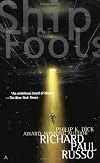
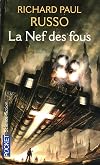
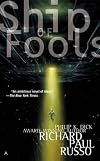
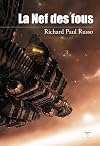
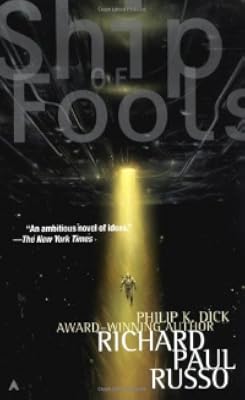
I'm forced to admit that this is one book I did judge by its cover, if only because the cover had so many things wrong with it. Beginning with the not-quite-but-almost-spoilerish blurb, moving on to the New York Times review quote on the back that seems to almost entirely miss the point; followed by the listing of the author's name on the front cover AND spine as "Philip K. Dick award-winning author Richard Paul Russo", with Philip K. Dick almost as big as Richard Paul Russo; then the generic "big spaceship" cover art; then an entirely superfluous two word review from the Romantic Times. (I never trust any book review consisting only of an adjectival phrase, as I can never quite escape the suspicion that the rest of the sentence read show more "This book is not....")
Anyway....
Once I opened the book, I was, if not "riveted intensely" at least fairly caught up. The base story (people find alien artifact, Things Start To Go Wrong) is well done, and Russo incorporates some other interesting elements. We have a generation ship eons out from its (long forgotten) origin; questions of faith and belief raised through the interactions between the non-believing narrator, a sympathetic devout priest, and her cynical and corrupt bishop; a touch of class conflict; and a deformed narrator. Actually that last did seem somewhat unnecessary, but Bartolomeo Aguilera, as he is rather awkwardly named, makes so little of his deformities that this isn't really an issue.
Russo does a fine job of capturing the sense of alien mystery inherent in first contact, but although the book is competently written and packs a fair punch in terms of plot twists and turns, it all seems something of a well trodden path. Whilst reading I was reminded of Heinlein's generation ships, Clarke's Rendezvous with Rama, elements of a Star Wars novel of which I forget the name, a short story by Campbell, and, most frequently, Michael Crichton's Sphere. None of this is bad, but the book read to me like a decades old classic that's been heavily influential, but that most people remember for the film version. The book was in fact written in 2001, and there hasn't been a film yet, but I wouldn't be surprised if there is one, given that parts of the book seem written with the screenplay in mind - perhaps why Sphere kept coming to mind.
I'm not going to detail plot specifics as I think it's the sort of book approached knowing as little as possible. I'd recommend it to anyone who values gradual suspense over pure action, but I just can't help feeling it'd have been better thirty years ago. show less
Anyway....
Once I opened the book, I was, if not "riveted intensely" at least fairly caught up. The base story (people find alien artifact, Things Start To Go Wrong) is well done, and Russo incorporates some other interesting elements. We have a generation ship eons out from its (long forgotten) origin; questions of faith and belief raised through the interactions between the non-believing narrator, a sympathetic devout priest, and her cynical and corrupt bishop; a touch of class conflict; and a deformed narrator. Actually that last did seem somewhat unnecessary, but Bartolomeo Aguilera, as he is rather awkwardly named, makes so little of his deformities that this isn't really an issue.
Russo does a fine job of capturing the sense of alien mystery inherent in first contact, but although the book is competently written and packs a fair punch in terms of plot twists and turns, it all seems something of a well trodden path. Whilst reading I was reminded of Heinlein's generation ships, Clarke's Rendezvous with Rama, elements of a Star Wars novel of which I forget the name, a short story by Campbell, and, most frequently, Michael Crichton's Sphere. None of this is bad, but the book read to me like a decades old classic that's been heavily influential, but that most people remember for the film version. The book was in fact written in 2001, and there hasn't been a film yet, but I wouldn't be surprised if there is one, given that parts of the book seem written with the screenplay in mind - perhaps why Sphere kept coming to mind.
I'm not going to detail plot specifics as I think it's the sort of book approached knowing as little as possible. I'd recommend it to anyone who values gradual suspense over pure action, but I just can't help feeling it'd have been better thirty years ago. show less
Members
- Recently Added By
Lists

Generation Ship
28 works; 7 members
Author Information

22+ Works 2,033 Members
Some Editions
Awards and Honors
Awards
Distinctions
Notable Lists
Common Knowledge
- Original title
- Ship of Fools
- Alternate titles
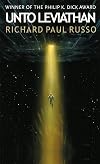
- Unto Leviathan
- Original publication date
- 2001-01
- Important places
- Argonos (starship); Antioch (planet)
- Dedication
- For Candace
All my love - First words
- We had not made landfall in more than fourteen years.
- Last words
- (Click to show. Warning: May contain spoilers.)Life. That, at least, is something I believe in.
- Publisher's editor
- Allison, Susan
- Original language*
- English
- Disambiguation notice
- a/k/a Unto Leviathan in the UK
Ship of Fools in US
*Some information comes from Common Knowledge in other languages. Click "Edit" for more information.
Classifications
Statistics
- Members
- 970
- Popularity
- 27,317
- Reviews
- 26
- Rating
- (3.53)
- Languages
- English, French, Spanish
- Media
- Paper, Ebook
- ISBNs
- 10
- ASINs
- 7