The Big Sort: Why the Clustering of Like-Minded America Is Tearing Us Apart
by Bill Bishop
On This Page
Description
The award-winning journalist reveals the untold story of why America is so culturally and politically divided in this groundbreaking book.Armed with startling demographic data, Bill Bishop demonstrates how Americans have spent decades sorting themselves into alarmingly homogeneous communities—not by region or by state, but by city and neighborhood. With ever-increasing specificity, we choose the communities and media that are compatible with our lifestyles and beliefs. The result is a show more country that has become so ideologically inbred that people don't know and can't understand those who live just a few miles away.
In The Big Sort, Bishop explores how this phenomenon came to be, and its dire implications for our country. He begins with stories about how we live today and then draws on history, economics, and our changing political landscape to create one of the most compelling big-picture accounts of America in recent memory. show less
Tags
Recommendations
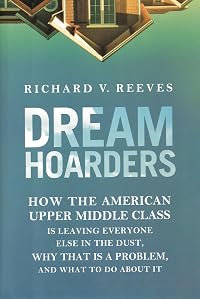
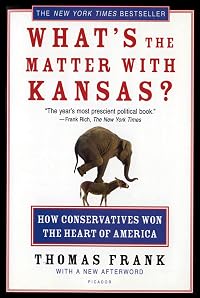
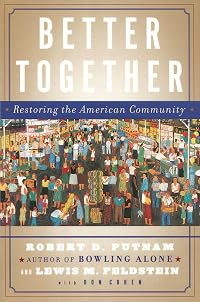

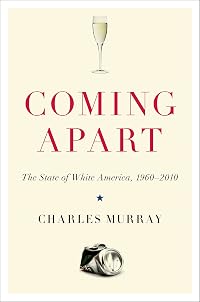



Member Recommendations
Member Reviews
A standard part of contemporary American culture is the division of society into “red” and “blue” components. Whether concerning states, cities, or ways of life, American society has become more polarized. Instead of the regionalism before the Civil War, these separations often have broken down between a rural versus urban dynamic. Some cities are even considered “red” havens. Bill Bishop first made these observations about 20 years ago, and this book culminated to define the dynamic in detail.
Religion, politics, professions, journalism, and personal interests are all caught up in the cultural separations. Interestingly, these divisions have happened naturally over time. Americans have self-sorted themselves into seeking show more tribes of people just like them. They have increasingly become siloed into communities that reflect and support their personal identities. Bishop traces this historical force back to 1965 when American public religion lessened as a national unifier.
As a lifelong Christian, I found the religious perspectives most interesting. I grew up in conservative evangelical circles, which Bishop labels private Protestantism, but found great meaning attending an “emerging church” during college, with people from many backgrounds. Now, I am active in a mainline church and follow social justice themes in religion, which Bishop labels public Protestantism. The book outlines all three phenomena in detail. I’m concerned that Christians’ ability to dialogue has become forked into two conversations; as such, we’re missing the full expression of God’s revelation in today’s world.
This book achieved significant impact in its time, and I’m grateful to have read the original work, in a new audiobook format. In the intervening years, cultural dynamics of American breakdown have only worsened, sadly. Unifying forces seem hard to come by. Understanding the diagnosis is the first step to identifying the treatment. This book will continue to speak to new generations and influence “red” and “blue” thinkers alike. show less
Religion, politics, professions, journalism, and personal interests are all caught up in the cultural separations. Interestingly, these divisions have happened naturally over time. Americans have self-sorted themselves into seeking show more tribes of people just like them. They have increasingly become siloed into communities that reflect and support their personal identities. Bishop traces this historical force back to 1965 when American public religion lessened as a national unifier.
As a lifelong Christian, I found the religious perspectives most interesting. I grew up in conservative evangelical circles, which Bishop labels private Protestantism, but found great meaning attending an “emerging church” during college, with people from many backgrounds. Now, I am active in a mainline church and follow social justice themes in religion, which Bishop labels public Protestantism. The book outlines all three phenomena in detail. I’m concerned that Christians’ ability to dialogue has become forked into two conversations; as such, we’re missing the full expression of God’s revelation in today’s world.
This book achieved significant impact in its time, and I’m grateful to have read the original work, in a new audiobook format. In the intervening years, cultural dynamics of American breakdown have only worsened, sadly. Unifying forces seem hard to come by. Understanding the diagnosis is the first step to identifying the treatment. This book will continue to speak to new generations and influence “red” and “blue” thinkers alike. show less
Most provocative book I've read on American life since Jane Jacobs' "Death and Life of Great American Cities." Bishop says gerrymandering isn't the key cause of entrenched Washington members of Congress; rather, Americans have been segregating themselves sociologically and politically since 1965 into increasingly homogeneous counties and election districts. People are clustering with PLUs, "people like us." This clustering generates increasingly partisan and intemperate political results, as members of the majority socially vie with each other to be "more" mainstream, and the disaffected minority increasingly opts out of political activity or simply moves to a more socially/politically comfortable town. Very scary.
Read more on my blog: show more target="_top">http://barleyliterate.blogspot.com/ show less
Read more on my blog: show more target="_top">http://barleyliterate.blogspot.com/ show less
The central theory is interesting: that politics has become a central identity point in America that predicts everything about us down to where we live. Since 2008, that has largely become conventional wisdom, so long lists of things that political identity predicts (including ones that feel obvious because they're political, like school choice and book bannings) feel a little obvious. The conclusion that polarization of physical places resulting in people never meeting those with differing political views, and that this increases polarization and extreme opinions is important, but no solutions are suggested.
But to a modern reader, the changes of the last 16 years since the book was published make a lot of the premises feel silly and show more shallow. "There will never be political violence in the US" is a claim that looks pretty stupid after 2021. 2016, 2020 and 2024 have a lot to say to the "hyperpolarization of the 2004 election". Indeed, I started reading this book in 2016, and couldn't quite stomach it and the distance between my reality and where the book was, and have struggled every time I've picked it up for the last 8 years. show less
But to a modern reader, the changes of the last 16 years since the book was published make a lot of the premises feel silly and show more shallow. "There will never be political violence in the US" is a claim that looks pretty stupid after 2021. 2016, 2020 and 2024 have a lot to say to the "hyperpolarization of the 2004 election". Indeed, I started reading this book in 2016, and couldn't quite stomach it and the distance between my reality and where the book was, and have struggled every time I've picked it up for the last 8 years. show less
I never took a course in political science. In high school, we were required to take a semester of American Government, and a year of American History. Unfortunately, as I've mentioned before (in a previous review or two) classes have their limits. Even in college, there's only so much history you can study and actually learn in the course of a semester.
Having lived through the past few (increasingly controversial) elections, however, has definitely given me a decent amount of schooling in voter demographics and in the growing rift between the Republican and Democratic parties.
This rift is brilliantly illustrated by Bill Bishop in his book, The Big Sort which details the way in which both parties have reinforced themselves over the last show more few years, creating two extremes, with little to no middle ground. Most of us are partisan these days, living in shrinking communities with specific homogeneous interests, driving ourselves away from those whose opinions differ even in the slightest, nurturing our political and moral certainties and severing us from the coinciding concepts of tolerance and compromise. While Bishop's personal feelings are obviously skewed towards the liberal end of things, the book saves neither party from its due censure. And he does it without relying too heavily on numbers and statistics which will be forgotten at the turn of a page.
The facts are clear: neither party is willing to budge. And with the introduction of ultra-extreme party offshoots like The Tea Party, there seems little hope for mending the gap of beliefs in America. The ultra-conservative only drink tea with other ultra-conservatives, engendering a whirlpool of hate and ill-feeling toward anyone with a liberal bone in their body. And the ultra-liberal only interact with other ultra-liberals, creating an equally frightening force of hate and fear from conservatives. We all think we're right with pretty much no room for debate. In a world like this, where anyone who is an "other" is a fool or a sham, how is bipartisanship ever to be regained?
America seems to be on a path towards destruction. We can't see the light at the end of the tunnel because there is no light there, the only light seems to be at the center, in moderation. I will never agree with a lot of what the Republican party believes. But I do believe in compromise. I also believe that Glenn Beck is a fool, and I believe that he is one of the tools the conservatives are using to drive a deeper wedge between the parties. But if we want tolerance, if we want compassion and solidity as a nation, and if we want an end to this rift we all need to move towards the middle, even if it means compromising with those whom we consider "rubes, fools and hate-mongers." To get tolerance, you need to give it.
Bishop has a great quote at the end of his afterword to the 2009 edition of the book: "The message people living in a democracy must understand, more than any other message, is that there are Americans who aren't just like you. They don't live like you, they don't have families like yours, and they don't think like you. They may not live in your neighborhood, but this is their country, too." What this book has done, for me at least, is not convert me to a conservative or even reinforced my liberal standing: it has made me willing to listen. I may not side with conservatives and I may disagree with 90% of their rationale, but I think it's important that we all hear each other out and understand where the differences are, and how to bridge the gaps that currently separate us.
Lauren Cartelli
www.theliterarygothamite.com show less
Having lived through the past few (increasingly controversial) elections, however, has definitely given me a decent amount of schooling in voter demographics and in the growing rift between the Republican and Democratic parties.
This rift is brilliantly illustrated by Bill Bishop in his book, The Big Sort which details the way in which both parties have reinforced themselves over the last show more few years, creating two extremes, with little to no middle ground. Most of us are partisan these days, living in shrinking communities with specific homogeneous interests, driving ourselves away from those whose opinions differ even in the slightest, nurturing our political and moral certainties and severing us from the coinciding concepts of tolerance and compromise. While Bishop's personal feelings are obviously skewed towards the liberal end of things, the book saves neither party from its due censure. And he does it without relying too heavily on numbers and statistics which will be forgotten at the turn of a page.
The facts are clear: neither party is willing to budge. And with the introduction of ultra-extreme party offshoots like The Tea Party, there seems little hope for mending the gap of beliefs in America. The ultra-conservative only drink tea with other ultra-conservatives, engendering a whirlpool of hate and ill-feeling toward anyone with a liberal bone in their body. And the ultra-liberal only interact with other ultra-liberals, creating an equally frightening force of hate and fear from conservatives. We all think we're right with pretty much no room for debate. In a world like this, where anyone who is an "other" is a fool or a sham, how is bipartisanship ever to be regained?
America seems to be on a path towards destruction. We can't see the light at the end of the tunnel because there is no light there, the only light seems to be at the center, in moderation. I will never agree with a lot of what the Republican party believes. But I do believe in compromise. I also believe that Glenn Beck is a fool, and I believe that he is one of the tools the conservatives are using to drive a deeper wedge between the parties. But if we want tolerance, if we want compassion and solidity as a nation, and if we want an end to this rift we all need to move towards the middle, even if it means compromising with those whom we consider "rubes, fools and hate-mongers." To get tolerance, you need to give it.
Bishop has a great quote at the end of his afterword to the 2009 edition of the book: "The message people living in a democracy must understand, more than any other message, is that there are Americans who aren't just like you. They don't live like you, they don't have families like yours, and they don't think like you. They may not live in your neighborhood, but this is their country, too." What this book has done, for me at least, is not convert me to a conservative or even reinforced my liberal standing: it has made me willing to listen. I may not side with conservatives and I may disagree with 90% of their rationale, but I think it's important that we all hear each other out and understand where the differences are, and how to bridge the gaps that currently separate us.
Lauren Cartelli
www.theliterarygothamite.com show less
At first, I was concerned that there couldn’t possibly be enough proof for the book’s basic thesis that America had sorted itself into self-segregated communities to fill a whole book. I was right, but the histories of how we got to 2008, how religion and (to some extent) politics changed, and why this matters was quite well done, with well sourced statistics to back it up (though I occasionally wish he’d put P values in-text). It’s not mindblowing results, and things have continued in interesting directions since mid-2008 with the rise of the Tea Party and Occupy, but there are a lot of great quotes and explanations for some subtle social structures like apathy. Well worth the read.
The book's basic premise of how people sort themselves out by their politics, or to better put it, seeking out others who share their same views, is an interesting idea. It is also an idea that can help explain what we see in the United States as a red and blue divide. Bishop's books is well-researched, so it has that going for it looking over things like Census records and Pew studies, two examples of reputable sources. However, this book is extremely dry to read. The first three chapters are pretty much a bombardment of Census data with discussion that, unless you are really into statistics, your eyes will pretty much glaze over the stuff. The chapter on church and religion (7) was a bit interesting as it looks at the rise of the show more megachurch phenomenon. Notice I say "a bit." I like learning about the origins of the church movement and learning that many of the ideas that megachurches use now to attract and keep members are not exactly new American ideas. A lot come from a certain minister and his church all the way in Korea. The chapter on niche lifestyles (9) was the other one I found slightly interesting, giving a pretty look at Portland, and I learned a bit also about the rise of Dark Horse Comics, one of my favorite imprints. That Dark Horse arose in a place like Portland makes perfect sense. There is no way in hell a company like that would rise in a place like Texas, especially East Texas. Bishop does betray a degree of liberal (or progressive, if you prefer the term), but then again I will say that I would much rather prefer living in places where things like good public transportation, a good library system, where people watch out for each other, and value things like health care for all is preferable.
At any rate, the book contains some good ideas, but it is a real drag to read, so to speak. It is a pity for me as I had looked forward to reading this book. show less
At any rate, the book contains some good ideas, but it is a real drag to read, so to speak. It is a pity for me as I had looked forward to reading this book. show less
Quite good if quirky demographics work that the author stretches WAY too far. Must be read with a critical eye but quite useful if you know how to do that.
Members
- Recently Added By
Published Reviews
ThingScore 75
As the journalist Bill Bishop shows in his eye-opening demographic study The Big Sort, for decades we have been withdrawing into “communities of like-mindedness” where the gap between individual and collective closes. These are places where elective affinities are supplanting electoral politics.
added by Shortride
Lists

The Joe Rogan Experience Library
254 works; 3 members
Author Information

1 Work 579 Members
Some Editions
Awards and Honors
Distinctions
Classifications
- Genres
- Sociology, Nonfiction, General Nonfiction, Politics and Government, History
- DDC/MDS
- 305.800973 — Society, government, & culture Social sciences, sociology & anthropology Social group - Age, Gender, Ethnicity Ethnic and national groups standard subdivisions / Ethnic and national groups with ethnic origins from more than one continent, of European descent standard subdivisions Biography And History North America United States
- LCC
- E184 .A1 .B5527 — History of the United States United States Elements in the population Afro-Americans
- BISAC
Statistics
- Members
- 582
- Popularity
- 50,646
- Reviews
- 22
- Rating
- (3.49)
- Languages
- English
- Media
- Paper, Audiobook, Ebook
- ISBNs
- 7
- UPCs
- 1
- ASINs
- 8