On This Page
Description
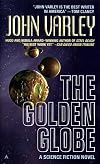
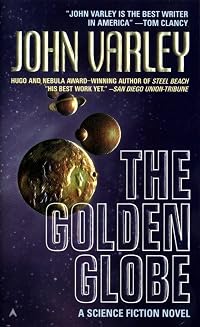
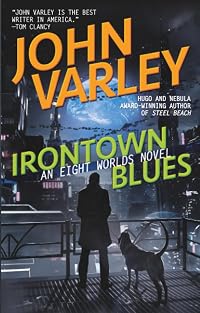
"This is an engrossing novel by one of the genre's most accomplished storytellers." --Publishers Weekly All the universe is a stage...and Sparky Valentine is its itinerant thespian. He brings Shakespeare--a version of it anyway--to the outer reaches of Earth's solar system. Sparky can transform himself from young to old, fat to thin, even male to female, by altering magnetic implants beneath his skin. Indispensible hardware for a career actor--and an interstellar con man wanted for murder...Tags
Recommendations














Member Reviews
By sitting on the couch I think he meant to signal he was still with me in spirit, but by taking the distant ground he was letting me know that, if she gets violent again, Sparky, you're on your own. Toby was an artist, not a pugilist. If I'd wanted a bodyguard, I'd have bought a Rottweiler.
Considering how much I liked the other novels and short stories in the EightWorlds series, I was surprised to find that I wasn't enjoying the last book in the series very much. Although the story did drag a bit at times, the main reason is because I just didn't like the main characters, Sparky Valentine and (in the flashbacks) his father John B. Valentine. Ex-child star Sparky is a card-sharp, a con-man and a thief as well as a stage magician, Punch show more and Judy man and actor, and spends most of the story on the run, with his faithful and intelligent bichon frise Toby. show less
Considering how much I liked the other novels and short stories in the EightWorlds series, I was surprised to find that I wasn't enjoying the last book in the series very much. Although the story did drag a bit at times, the main reason is because I just didn't like the main characters, Sparky Valentine and (in the flashbacks) his father John B. Valentine. Ex-child star Sparky is a card-sharp, a con-man and a thief as well as a stage magician, Punch show more and Judy man and actor, and spends most of the story on the run, with his faithful and intelligent bichon frise Toby. show less
This SF is well-nigh unclassifiable. For glorious reasons.
I mean, sure, you could call it a Heinleinesque romance in the vein of [b:Double Star|175324|Double Star|Robert A. Heinlein|https://images.gr-assets.com/books/1327984434s/175324.jpg|2887127], or call it a thespian-ish thriller revolving an immensely popular child star turned murderer who has been on the run for 70 years, or you could call it the One Last Great Shakespearian tragedy.
I mean, damn, I'm caught thinking that this is as glorious as (and is) a great mashup of Alfred Bester's best book, [b:The Demolished Man|76740|The Demolished Man|Alfred Bester|https://images.gr-assets.com/books/1360171879s/76740.jpg|1247570], and [b:The Stainless Steel Rat|64394|The Stainless Steel show more Rat (Stainless Steel Rat, #4)|Harry Harrison|https://images.gr-assets.com/books/1328073906s/64394.jpg|824589], full of on-the-run acting, con-jobs, a little madness, and a LOT of Lear. :) And let's not forget to send Valentine across the full Solar System as we do it. :)
This book might rank up there with one of the best SF ever written. It breaks all molds and does its own glorious thing, never apologizing, never doing the expected thing. Flashbacks? Sure! Tons. Flashforwards? Fourth-wall breaking? Third-person, First-person, Second-Person? Yep. :) And you know what? It all works. :)
It has PERSONALITY. :)
Varley is one of the greats, indeed. Now, why the hell is this book relatively unknown? Sheesh. It's a travesty!!! show less
I mean, sure, you could call it a Heinleinesque romance in the vein of [b:Double Star|175324|Double Star|Robert A. Heinlein|https://images.gr-assets.com/books/1327984434s/175324.jpg|2887127], or call it a thespian-ish thriller revolving an immensely popular child star turned murderer who has been on the run for 70 years, or you could call it the One Last Great Shakespearian tragedy.
I mean, damn, I'm caught thinking that this is as glorious as (and is) a great mashup of Alfred Bester's best book, [b:The Demolished Man|76740|The Demolished Man|Alfred Bester|https://images.gr-assets.com/books/1360171879s/76740.jpg|1247570], and [b:The Stainless Steel Rat|64394|The Stainless Steel show more Rat (Stainless Steel Rat, #4)|Harry Harrison|https://images.gr-assets.com/books/1328073906s/64394.jpg|824589], full of on-the-run acting, con-jobs, a little madness, and a LOT of Lear. :) And let's not forget to send Valentine across the full Solar System as we do it. :)
This book might rank up there with one of the best SF ever written. It breaks all molds and does its own glorious thing, never apologizing, never doing the expected thing. Flashbacks? Sure! Tons. Flashforwards? Fourth-wall breaking? Third-person, First-person, Second-Person? Yep. :) And you know what? It all works. :)
It has PERSONALITY. :)
Varley is one of the greats, indeed. Now, why the hell is this book relatively unknown? Sheesh. It's a travesty!!! show less
This book took some time to grow on me; I spent the first quarter waiting for some plot to develop; then once I got to Act II, I was plunged into Kenneth Valentine's back story and things took a different turn as we meet Valentine's father, a domineering and abusive personality. It changes the nature of the book, but we still veer between horror and humour as we return to Varley's wisecracking narrator.
Valentine roams the Solar System, doing whatever he must to survive and evade the law for a serious crime. He switches fairly effortlessly from actor to con man and back again, aided by a eidetic knowledge of the works of Shakespeare, a highly competant piece of luggage that seems very much like Pratchett's Luggage given a technological show more makeover, and a genetically enhanced dog.
We get more detail of Varley's Eight Worlds, mainly delivered in extended asides; it must be a good ten or more years since I read his previuous outing in this milieu, 'Steel Beach', but I quickly settled back into it (though it wasn't until I read other reviews that I realised that these two novels share a character).
One thing did stick out for me, however. For a human future set some five hundred years hence, for Kenneth Valentine drama mainly finished at the end of the Twentieth Century. I know that in this series, humanity has been exiled from Earth and scattered across the rest of the Solar System; and so there has been a reduction in the overall population, the survivors will have had other things to worry about other than writing plays, and the nostalgia industry, once the human populations had become settled and (sort of) secure, would become a major enterprise that would drive a lot of the entertainment and leisure industries. But experience also tells us that creatives will be creative no matter what the circumstances - even the Nazi concentration camps produced music, art and writing despite their objective of exploitation and extermination - so the comparative lack of new plays is noticeable as Valentine roams the Solar System. Building an artificial repertoire is a difficult trick to pull off convincingly, but its absence is equally noticeable. Are we supposed to think that Mankind (and I use that word very intentionally) has been so busy surviving and building new lives on a new frontier that people haven't had time to write and create new art? Yet the settled societies of Luna and some of the other more established Eight Worlds have had time to create amusement parks and an extensive video industry with all its trappings, so why is there very little sign of new art? Is it just a foible of Kenneth Valentine that nearly all his dramatic touchstones date from roughly the first half of the Twentieth Century?
We also get continual deii ex machina: the Luggage - sorry, the Pantechnicon - an AI-run spaceship, Valentine's dog and indeed a late revelation about Valentine himself all emerge to surprise the reader, though the last revelation introduces a topic that I don't recollect from other stories Varley set in the Eight Worlds, and so which rather feels dumped into the narrative.
Others have commented on Varley's indebtedness to Heinlein; certainly, I visualised the action of the book taking place in a Heinleinesque setting, and the rough-and-ready nature of the boondocks of the Solar Systerm suggests worlds full of competant men, all pioneers who need an itinerant thespian to bring Art into their otherwise blighted and empty lives. Later, Heinlein is directly referenced; and the Lunar Central Computer is a thinly-disguised Mycroft Holmes from 'The Moon is a Harsh Mistress'.
In other ways, this is a twenty-year-old novel and it shows. Attitudes are firmly stuck in the 1990s or earlier; there is a distinct lack of personal technology. This is noticeable but not intrusive. The richly-detailed story and the larger-than-life protagonist make up for this, but by the end there is a sense of all loose ends neatly tied up; perhaps too neatly. show less
Valentine roams the Solar System, doing whatever he must to survive and evade the law for a serious crime. He switches fairly effortlessly from actor to con man and back again, aided by a eidetic knowledge of the works of Shakespeare, a highly competant piece of luggage that seems very much like Pratchett's Luggage given a technological show more makeover, and a genetically enhanced dog.
We get more detail of Varley's Eight Worlds, mainly delivered in extended asides; it must be a good ten or more years since I read his previuous outing in this milieu, 'Steel Beach', but I quickly settled back into it (though it wasn't until I read other reviews that I realised that these two novels share a character).
One thing did stick out for me, however. For a human future set some five hundred years hence, for Kenneth Valentine drama mainly finished at the end of the Twentieth Century. I know that in this series, humanity has been exiled from Earth and scattered across the rest of the Solar System; and so there has been a reduction in the overall population, the survivors will have had other things to worry about other than writing plays, and the nostalgia industry, once the human populations had become settled and (sort of) secure, would become a major enterprise that would drive a lot of the entertainment and leisure industries. But experience also tells us that creatives will be creative no matter what the circumstances - even the Nazi concentration camps produced music, art and writing despite their objective of exploitation and extermination - so the comparative lack of new plays is noticeable as Valentine roams the Solar System. Building an artificial repertoire is a difficult trick to pull off convincingly, but its absence is equally noticeable. Are we supposed to think that Mankind (and I use that word very intentionally) has been so busy surviving and building new lives on a new frontier that people haven't had time to write and create new art? Yet the settled societies of Luna and some of the other more established Eight Worlds have had time to create amusement parks and an extensive video industry with all its trappings, so why is there very little sign of new art? Is it just a foible of Kenneth Valentine that nearly all his dramatic touchstones date from roughly the first half of the Twentieth Century?
We also get continual deii ex machina: the Luggage - sorry, the Pantechnicon - an AI-run spaceship, Valentine's dog and indeed a late revelation about Valentine himself all emerge to surprise the reader, though the last revelation introduces a topic that I don't recollect from other stories Varley set in the Eight Worlds, and so which rather feels dumped into the narrative.
Others have commented on Varley's indebtedness to Heinlein; certainly, I visualised the action of the book taking place in a Heinleinesque setting, and the rough-and-ready nature of the boondocks of the Solar Systerm suggests worlds full of competant men, all pioneers who need an itinerant thespian to bring Art into their otherwise blighted and empty lives. Later, Heinlein is directly referenced; and the Lunar Central Computer is a thinly-disguised Mycroft Holmes from 'The Moon is a Harsh Mistress'.
In other ways, this is a twenty-year-old novel and it shows. Attitudes are firmly stuck in the 1990s or earlier; there is a distinct lack of personal technology. This is noticeable but not intrusive. The richly-detailed story and the larger-than-life protagonist make up for this, but by the end there is a sense of all loose ends neatly tied up; perhaps too neatly. show less
This is my favourite science fiction book by my favourite science fiction author. Set in the same universe as Steel Beach (a modified version of Varley’s “Eight Worlds” universe), The Golden Globe features one of the most memorable narrators in science fiction: Kenneth “Sparky” Valentine, a washed-up child television star who now wanders the Solar System as an itinerant thespian, not to mention conman, thief and general miscreant. Sparky’s wisecracking narratorial voice is easily the most amusing and readable of any I’ve ever come across. He regularly goes off on tangents and anecdotes, often in the employ of worldbuilding, which never fail to entertain and fit in seamlessly with the narrative; something that was often show more beyond Steel Beach’s Hildy Johnson.
While Steel Beach focused on Luna, Sparky’s story takes him from the ramshackle boondock orbitals beyond Pluto, across the system to Luna; a Grand Tour of Varley’s world, and one with a much tighter plot than the loose, rambling story of Steel Beach. Sparky is bound for Luna to play his dream role of King Lear in an upcoming stage production; in pursuit is a near unkillable member of the Charonese Mafia, pursuing him for one of his many crimes. This is nothing new for Sparky, who has spent his adult life on the run for a much more serious crime – which the blurb gives away, so don’t read it.
Like Steel Beach, The Golden Globe retains a certain cartoony, satirical aspect reminiscent of Terry Pratchett; it feels somehow less mature and serious than other science fiction novels, or indeed than Varley’s early novels. It is, however, much more readable, and I feel that this tone is a deliberate result of the specific zeitgeist of the Eight Worlds: namely, they don’t have one. Their culture is entirely derived from Earth, and they are overcome with obsession about the vibrant history of the world they lost: an artificial ocean on Pluto that recreates famous historical scenes from the Pacific, movie studios on Luna modelled after the famous studios of Hollywood’s golden era, Shakespearian productions, fashions and styles taken from centuries past… while the Invaders are barely referenced in these two books, it’s clear that humanity is still mourning for Earth, and that sooner or later a second confrontation will occur.
I dearly hope this happens in Irontown Blues, the as yet unwritten book which Varley has said will feature a police detective and round out the “Metals Trilogy.” This is the book I long for more than any other. Until then, however, The Golden Globe is the most enjoyable and readable science fiction romp I’ve ever read, and Sparky Valentine one of the greatest characters. show less
While Steel Beach focused on Luna, Sparky’s story takes him from the ramshackle boondock orbitals beyond Pluto, across the system to Luna; a Grand Tour of Varley’s world, and one with a much tighter plot than the loose, rambling story of Steel Beach. Sparky is bound for Luna to play his dream role of King Lear in an upcoming stage production; in pursuit is a near unkillable member of the Charonese Mafia, pursuing him for one of his many crimes. This is nothing new for Sparky, who has spent his adult life on the run for a much more serious crime – which the blurb gives away, so don’t read it.
Like Steel Beach, The Golden Globe retains a certain cartoony, satirical aspect reminiscent of Terry Pratchett; it feels somehow less mature and serious than other science fiction novels, or indeed than Varley’s early novels. It is, however, much more readable, and I feel that this tone is a deliberate result of the specific zeitgeist of the Eight Worlds: namely, they don’t have one. Their culture is entirely derived from Earth, and they are overcome with obsession about the vibrant history of the world they lost: an artificial ocean on Pluto that recreates famous historical scenes from the Pacific, movie studios on Luna modelled after the famous studios of Hollywood’s golden era, Shakespearian productions, fashions and styles taken from centuries past… while the Invaders are barely referenced in these two books, it’s clear that humanity is still mourning for Earth, and that sooner or later a second confrontation will occur.
I dearly hope this happens in Irontown Blues, the as yet unwritten book which Varley has said will feature a police detective and round out the “Metals Trilogy.” This is the book I long for more than any other. Until then, however, The Golden Globe is the most enjoyable and readable science fiction romp I’ve ever read, and Sparky Valentine one of the greatest characters. show less
The distance between successful actor and successful con artist is small indeed, and The Golden Globe has a lot of fun exploring the line that separates the two. The main character, Sparky Valentine, is that guy, and Varley has him pulling rabbits out of his hat the whole story long. He's out among the outer planets running from killers, pulling cons, acting in whatever manner he can figure out, loving his dog, and spending time with the lovely ladies he meets along the way.
This book has the strong characterization of most first-person novels, though he slips into an interesting third-person perspective when doing flashbacks, and occasionally breaks the fourth wall when it makes sense. It's got Varley's gizmos and dreams of future tech show more (including a fascinating sub-dermal face changing thing --- great for actors). Ultimately, a book of this kind lives or dies based on how well the main character appeals to the reader; in this case, I thought he was great. I really liked this book. show less
This book has the strong characterization of most first-person novels, though he slips into an interesting third-person perspective when doing flashbacks, and occasionally breaks the fourth wall when it makes sense. It's got Varley's gizmos and dreams of future tech show more (including a fascinating sub-dermal face changing thing --- great for actors). Ultimately, a book of this kind lives or dies based on how well the main character appeals to the reader; in this case, I thought he was great. I really liked this book. show less
Interesting, and (like all Varley books) well imagined. But somehow boring. Spent most of the book wondering where the story was.
The book tells two parallel yarns. One's of Kenneth (aka Sparky) Valentine's life around his 100th birthday (that milestone's important, but less than you'd usually think), traveling from the outer reaches of the Solar System to a gig as Lear on Luna. The other's about Sparky's twenty-year stint as an 8-year-old celebrity--how that began, and how it ended. The two plots merge at the end, as you'd expect, and much is explained. But while the story "makes sense," I'm not convinced it was worth telling.
First read this book when it was new, and I vaguely remembered it from that reading. On re-reading it's clear show more to me why the remembrance was vague. There's really nothing to remember. show less
The book tells two parallel yarns. One's of Kenneth (aka Sparky) Valentine's life around his 100th birthday (that milestone's important, but less than you'd usually think), traveling from the outer reaches of the Solar System to a gig as Lear on Luna. The other's about Sparky's twenty-year stint as an 8-year-old celebrity--how that began, and how it ended. The two plots merge at the end, as you'd expect, and much is explained. But while the story "makes sense," I'm not convinced it was worth telling.
First read this book when it was new, and I vaguely remembered it from that reading. On re-reading it's clear show more to me why the remembrance was vague. There's really nothing to remember. show less
I keep reading Varley because I liked his earlier work so much. This one is my least favorite thus far. I'd have liked Valentine a lot better if his tone (and penchant for quoting theater and film) weren't exactly Hildy's in Steel Beach--put a paragraph of each side by side and you probably won't be able to differentiate between them. The editing seemed poor--to make one small but important point, "prop" guns that fire would clearly have been forbidden on Luna in Steel Beach, but elicit no outcry in this volume. In some ways, the very end of the book recycles the end of Steel Beach. I assume Varley's next will be Heinleiners in Space.
Members
- Recently Added By
Lists

Broderick and Di Filippo's Science Fiction: The 101 Best Novels 1985-2010
103 works; 7 members

hypatian_kat to-read
429 works; 3 members
Talk Discussions
Past Discussions
SciFi--con man w/fluffy white dog that can count in Name that Book (October 2015)
Author Information

82+ Works 16,000 Members
Some Editions
Awards and Honors
Awards
Series


Belongs to Publisher Series
Gallimard, Folio SF (442)
Common Knowledge
- Canonical title
- The Golden Globe
- Original publication date
- 1998-10
- First words
- "I once played Romeo and Juliet as a one-man show," I said. "Doubling with Mercutio won't be a problem."
- Last words
- (Click to show. Warning: May contain spoilers.)Swell or awful, it'll damn sure be the best show between here and the Andromeda Galaxy.
- Blurbers
- Clancy, Tom
Classifications
Statistics
- Members
- 779
- Popularity
- 35,897
- Reviews
- 11
- Rating
- (3.73)
- Languages
- English, French, Spanish
- Media
- Paper, Ebook
- ISBNs
- 8
- ASINs
- 3