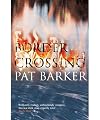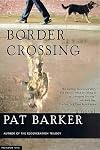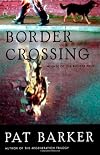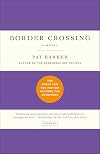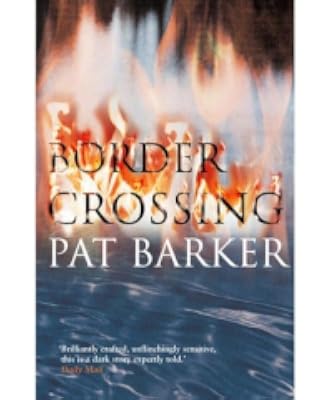
Border Crossing
by Pat Barker
On This Page
Description
Set in the north of England, Pat Barker's Border Crossing, the basis for the major motion picture The Drowning, portrays a child psychiatrist who rescues a man from drowning one day while walking on a beach in Northumberland.Out walking with his wife, Lauren, beside the river Tyne, Tom Seymour instinctively risks his life to save a young man who they happen to notice just before he jumps into the icy current. Tom's spontaneous act saves the life of someone whose past, as well as his future, show more he feels a sense of responsibility towards.Recently released from prison, and living under an assumed name, Danny Miller was tried for murder as a ten-year-old on the basis of Tom's testimony, and assessment of him as a psychologist and an expert witness. When Danny asks Tom to help him sort out his life--beginning with his past--Tom is drawn into a lonely, soul-searching reinvestigation of the child murderer's case. show lessTags
Recommendations



















Member Reviews
Despite winning the Booker prize (The British version of the Pulitzer) nearly every time she writes a book, Pat Barker remains one of the most under-appreciated writers still working today. She is best known for her novel “Regeneration”, a searing portrait of shell shock in British soldiers during World War I, and possibly the best anti-war novel ever written. She followed it up with two others, forming a trilogy that became known as the ‘regeneration trilogy’.
Border Crossing, however, leaves the theme of war behind and turns to a more contemporary era (much to the dismay of several reviewers). The book opens on Tom and Lauren, trudging along a riverside path in a gloomy city in northern England, arguing about their failing show more marriage. As they approach one of the derelict quays, they see a young man cram a handful of pills into his mouth, and dive into the freezing water. Instantly Tom dives in after him, and after ten harrowing minutes manages to pull the boy to safety. It is only later that Tom, who is a child psychologist, realizes that he recognizes the young man. 13 years earlier he had testified as a expert witness in the boy’s much-publicized trial for murder. It was his testimony that was instrumental in getting the boy convicted.
Now, years later, Tom is confronted by the results of his actions, and starts to have doubts about the original case- which was largely circumstantial. Young Danny Miller, equally shocked at seeing Tom, finds that he needs to confront his own past- if only to make sense of what happened, to discover why he was condemned to prison for a crime he always maintained he hadn’t committed.
As the novel progresses, the reader starts to have doubts as well, first about Danny’s guilt, and then about his innocence. He is a charismatic and possibly brilliant young man with a knack of getting people to sympathize and perhaps even fall a little in love with him. The people who come into his life- social workers, parole officers, schoolteachers, tend to cross the border of professional behavior and get personally involved with “his case”. Tom himself is especially at risk. It is a serious breach of ethics for him to begin seeing Danny, even “just to talk”. (A breach that Danny’s parole officer unaccountably supports). As Tom sees further evidence of what he believes is Danny’s guilt, he becomes less and less objective- vacillating between what he thinks is the proper course, and his desire not to betray Danny a second time.
Tom’s point of view is also clouded, where it should have been cleared, by the fact that he is currently writing a book on child psychological trauma. His meetings with Danny are punctuated by his interviews with other at risk children. In fact, these short chapters form some of the most moving parts of the book. A single mother with eight troubled children who fights like St. George to keep them with her, or a young girl who turned violent after being abused by her mother’s boyfriend (something her mother won’t acknowledge and the boyfriend denies).
Like all of her books, this is a novel that confronts- with ferocity- some tough questions: How much can you blame society for the behavior of an individual? What is the real border between mental illness and evil? Can an amoral person ever change? Are they ever safe in civilized society? More importantly, can any culture effectively deal with an amoral person? A society depends on the willing complicity of its members to obey its rules and act with some sense towards the greater good. A truly amoral individual feels no such sense of obligation, and has no compunctions to act for the benefit of anyone but him or herself. Tom’s indecision and impotence in the face of (what seems to be) Danny’s antisocial and violent behavior mirrors the larger society’s inability to cope with such people- to even believe that there are people who can be, in a word, evil.
Against all expectations, what Barker has written is a psychological suspense novel of the first order. In the sessions between Tom and Danny emerges a chilling portrait of a true psychopath- although right until the end the reader questions, as Tom is constantly questioning, what is truth and what is fiction. The final session is positively menacing. It is the author’s answer to at least some of those questions- yes people can be evil, and all to frequently no, there is no justice for children.
Border Crossing is one of those books that will stay with the reader for a long, long time. show less
Border Crossing, however, leaves the theme of war behind and turns to a more contemporary era (much to the dismay of several reviewers). The book opens on Tom and Lauren, trudging along a riverside path in a gloomy city in northern England, arguing about their failing show more marriage. As they approach one of the derelict quays, they see a young man cram a handful of pills into his mouth, and dive into the freezing water. Instantly Tom dives in after him, and after ten harrowing minutes manages to pull the boy to safety. It is only later that Tom, who is a child psychologist, realizes that he recognizes the young man. 13 years earlier he had testified as a expert witness in the boy’s much-publicized trial for murder. It was his testimony that was instrumental in getting the boy convicted.
Now, years later, Tom is confronted by the results of his actions, and starts to have doubts about the original case- which was largely circumstantial. Young Danny Miller, equally shocked at seeing Tom, finds that he needs to confront his own past- if only to make sense of what happened, to discover why he was condemned to prison for a crime he always maintained he hadn’t committed.
As the novel progresses, the reader starts to have doubts as well, first about Danny’s guilt, and then about his innocence. He is a charismatic and possibly brilliant young man with a knack of getting people to sympathize and perhaps even fall a little in love with him. The people who come into his life- social workers, parole officers, schoolteachers, tend to cross the border of professional behavior and get personally involved with “his case”. Tom himself is especially at risk. It is a serious breach of ethics for him to begin seeing Danny, even “just to talk”. (A breach that Danny’s parole officer unaccountably supports). As Tom sees further evidence of what he believes is Danny’s guilt, he becomes less and less objective- vacillating between what he thinks is the proper course, and his desire not to betray Danny a second time.
Tom’s point of view is also clouded, where it should have been cleared, by the fact that he is currently writing a book on child psychological trauma. His meetings with Danny are punctuated by his interviews with other at risk children. In fact, these short chapters form some of the most moving parts of the book. A single mother with eight troubled children who fights like St. George to keep them with her, or a young girl who turned violent after being abused by her mother’s boyfriend (something her mother won’t acknowledge and the boyfriend denies).
Like all of her books, this is a novel that confronts- with ferocity- some tough questions: How much can you blame society for the behavior of an individual? What is the real border between mental illness and evil? Can an amoral person ever change? Are they ever safe in civilized society? More importantly, can any culture effectively deal with an amoral person? A society depends on the willing complicity of its members to obey its rules and act with some sense towards the greater good. A truly amoral individual feels no such sense of obligation, and has no compunctions to act for the benefit of anyone but him or herself. Tom’s indecision and impotence in the face of (what seems to be) Danny’s antisocial and violent behavior mirrors the larger society’s inability to cope with such people- to even believe that there are people who can be, in a word, evil.
Against all expectations, what Barker has written is a psychological suspense novel of the first order. In the sessions between Tom and Danny emerges a chilling portrait of a true psychopath- although right until the end the reader questions, as Tom is constantly questioning, what is truth and what is fiction. The final session is positively menacing. It is the author’s answer to at least some of those questions- yes people can be evil, and all to frequently no, there is no justice for children.
Border Crossing is one of those books that will stay with the reader for a long, long time. show less
Child psychiatrist Tom Seymour is forced to reexamine his role at the trial of child murderer Danny Miller when the adult Danny is released and arranges for Tom to rescue him from attempted suicide by drowning. Pyromaniac who tries to drown himself (water as rebirth); childless protagonist 'births' new Danny (Ian): "The mud smelt sharp and strong. He was concious of his skin chafing against his wet clothes, and he was filled with joy." The elusive nature of boundaries: for Tom, border crossings re love (separating from wife, realizes present feelings tint past memory), responsibility (between professional and personal); Danny's re sanity ('normal', mentally ill, evil).
Ambivalence of involvement - how much is enough? Our breaks with the show more past: "In spite of the connecting thread of memory, the person who'd done that was not sufficiently like his present self for him to feel guilt." Is charm manipulative or just personality? "Danny wasn't breaking the rules. They were. He was very, very good at getting people to step across that invisible border." Are we really to blame if people respond to us? Duality - "That smile...[it] was enough to make an atheist believe in damnation."
Danny tries to challenge each of 3 core factors posed at trial: could he 1) distinguish between fantasy and reality (playing soldiers)? 2) understand that killing was wrong (soldier father, in or outside the circle)? 3) understand death is permanent (fear of still seeing the dead woman)? When Tom was 10 yrs old, a normal boy, yet could have killed a 4 yr old, knowing what he was doing, and possibly comprehending the permanence of it, yet children lack perfect control of the 'off' switch, the ability to stop themselves in mid action. show less
Ambivalence of involvement - how much is enough? Our breaks with the show more past: "In spite of the connecting thread of memory, the person who'd done that was not sufficiently like his present self for him to feel guilt." Is charm manipulative or just personality? "Danny wasn't breaking the rules. They were. He was very, very good at getting people to step across that invisible border." Are we really to blame if people respond to us? Duality - "That smile...[it] was enough to make an atheist believe in damnation."
Danny tries to challenge each of 3 core factors posed at trial: could he 1) distinguish between fantasy and reality (playing soldiers)? 2) understand that killing was wrong (soldier father, in or outside the circle)? 3) understand death is permanent (fear of still seeing the dead woman)? When Tom was 10 yrs old, a normal boy, yet could have killed a 4 yr old, knowing what he was doing, and possibly comprehending the permanence of it, yet children lack perfect control of the 'off' switch, the ability to stop themselves in mid action. show less
Obviously, if you take a particular individual and change his environment, completely, for a long time, he’s going to learn new tricks. He’s got to, the old tricks don’t work any more, and he’s an organism that’s programmed to survive.
As psychological suspense novel, I think it worked well.
The flashback about Tom’s youth where he could have caused a death set up a highly interesting comparison. Children do understand death and still they act wrong. But is Danny somehow ‘worse’ than Tom because he succeeded and Tom didn’t? Is Tom ‘worse’ for having a key role in getting Danny convicted? Did he even present correct evidence that Danny knew killing was wrong given how Danny grew up?
The conversations surrounding show more Danny’s history were laced with a certain kind of dread that came off the pages.
Everything else felt meh, maybe because the book is less than 300 pages and it’s hard to put a proper subplot in that amount.
The whole failing marriage thing made my eyes roll.
Tom doesn’t like feeling like he exists as a sperm bank for Lauren? I don’t like that Lauren’s character felt like it existed as a cheap sympathy ploy for Tom. show less
As psychological suspense novel, I think it worked well.
The flashback about Tom’s youth where he could have caused a death set up a highly interesting comparison. Children do understand death and still they act wrong. But is Danny somehow ‘worse’ than Tom because he succeeded and Tom didn’t? Is Tom ‘worse’ for having a key role in getting Danny convicted? Did he even present correct evidence that Danny knew killing was wrong given how Danny grew up?
The conversations surrounding show more Danny’s history were laced with a certain kind of dread that came off the pages.
Everything else felt meh, maybe because the book is less than 300 pages and it’s hard to put a proper subplot in that amount.
The whole failing marriage thing made my eyes roll.
Tom doesn’t like feeling like he exists as a sperm bank for Lauren? I don’t like that Lauren’s character felt like it existed as a cheap sympathy ploy for Tom. show less
The core of this novel is about a child convicted of a murder at the age of ten, and impact upon him of his sentence and attitudes to him when released. The writing displays all of the hallmarks of the highly accomplished writing that readers of Pat Barker's World War One novels have come to expect. The story is crisply told and the characters vividly brought to life without any sentimentalism. In what is a relatively short book - just over 200 pages - several themes are convincingly addressed. But for all that, though it was interesting to read, it wasn't compelling, like for example Barker's superb Regeneration Trilogy. It is well worth reading, but I doubt very much I'll ever be tempted to read it again.
On a gray September afternoon, Tom and Lauren Seymour are walking along the riverbank arguing about the state of their failing marriage when a young man, after swallowing a bottle of pills, jumps into the river in front of them. Tom rescues the would-be suicide and later discovers that he has saved Danny Miller, a convicted murderer. A child psychologist, Tom had testified 13 years earlier at the then ten-year-old Danny's trial. Did his expert testimony, as Danny believes, sway the jury's verdict and send the boy to prison? Now released and living under an assumed name, Danny asks Tom to help him confront his childhood traumas, especially the murder of the old woman for which he is blamed. Still retaining a trace of guilt about the show more trial (perhaps Danny was as innocent as he claimed), Tom agrees and soon crosses the border between professional detachment and personal involvement. This is a subtle psychological tale with an edge of menace. Is Danny a victim or a manipulative psychopath? Barker also captures the grittiness and bleak beauty of England's north and its people. show less
When child psychologist Tom Seymour pulls a young man, seemingly intent on suicide, from the river during an early-morning walk, he finds himself drawn back to the case of the child-murder of a 78 year old woman, a child whom Seymour helped convict. When Danny Miller asks for Seymour’s help in confronting the truth of his past, Seymour’s ambivalent but fascinated agreement marks the point where borders begin to be crossed and labels such as ‘innocent’, ‘manipulative’ or ‘evil’ are blurred.
Border Crossing doesn’t have the resonance of Barker’s astonishing Regeneration trilogy, but that’s not to suggest it doesn’t have its own gritty, disturbing impact. Barker is not only unafraid of exploring the darker recesses show more of the human psyche, but is especially adept at using it as a source of tension in her books. There’s also a genius of character-building at work here – it’s one thing to create someone who can deliver dialogue or move objects around a room, but Danny Miller’s memory, his motivations and the core of his character are the book, they are what the reader becomes invested in.
Pat Barker writes exceedingly well, and psychology is a subject on which she writes with great authority and a sympathetic touch that colours the reader’s impressions of her characters. I wouldn’t recommend this before Regeneration, because that truly was a masterpiece, but Border Crossing is very worthy of the author’s talents, and the reader’s time. show less
Border Crossing doesn’t have the resonance of Barker’s astonishing Regeneration trilogy, but that’s not to suggest it doesn’t have its own gritty, disturbing impact. Barker is not only unafraid of exploring the darker recesses show more of the human psyche, but is especially adept at using it as a source of tension in her books. There’s also a genius of character-building at work here – it’s one thing to create someone who can deliver dialogue or move objects around a room, but Danny Miller’s memory, his motivations and the core of his character are the book, they are what the reader becomes invested in.
Pat Barker writes exceedingly well, and psychology is a subject on which she writes with great authority and a sympathetic touch that colours the reader’s impressions of her characters. I wouldn’t recommend this before Regeneration, because that truly was a masterpiece, but Border Crossing is very worthy of the author’s talents, and the reader’s time. show less
Slow to begin with, but increasingly emotional exploration of the boundaries between good and evil. Raises as many questions as answers, if not more. An interesting read for anyone interesting in delving into life's emotional rollercoasters.
Members
- Recently Added By
Published Reviews
ThingScore 50
''Border Crossing'' is a far bleaker book, though, and less successful. . . only a few of the characters, all of them women -- the headmaster's wife, for example, and a housing project's Mother Courage with eight troubled children -- emerge as figures to be savored.
added by christiguc
Author Information

31+ Works 21,416 Members
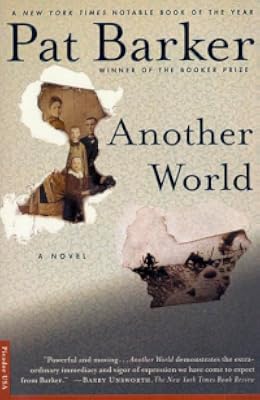
Pat Barker's most recent novel is Another World (FSG, 1999). She is also the author of the highly acclaimed Regeneration trilogy: Regeneration; The Eye in the Door, winner of the 1993 Guardian Fiction Prize; and The Ghost Road, winner of the 1996 Booker Prize. She lives in England. (Bowker Author Biography)
Some Editions
Common Knowledge
- Canonical title
- Border Crossing
- Original title
- Border Crossing
- Alternate titles*
- Chuan yue kan bu jian de jie xian
- Original publication date
- 2001
- People/Characters
- Tom Seymour; Danny Miller "Ian Wilkinson"
- Important places
- Newcastle upon Tyne, England, UK
- Related movies
- Apocalypse Now (1979 | IMDb); An American Werewolf
- Dedication
- For David
- First words
- They were walking along the river path, away from the city, and as far as they knew they were alone.
- Quotations
- He used to say that coincidence was the crack in human affairs that let God or the Devil in.
- Last words
- (Click to show. Warning: May contain spoilers.)There, under the lilacs, with nobody to care or know, he stood for a moment in silence, remembering Lizzie Parks.
*Some information comes from Common Knowledge in other languages. Click "Edit" for more information.
Classifications
Statistics
- Members
- 809
- Popularity
- 34,262
- Reviews
- 21
- Rating
- (3.54)
- Languages
- 14 — Chinese, traditional, Danish, Dutch, English, French, German, Hebrew, Italian, Japanese, Polish, Portuguese (Brazil), Portuguese (Portugal), Romanian, Spanish
- Media
- Paper, Audiobook, Ebook
- ISBNs
- 31
- ASINs
- 6