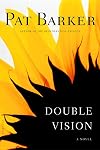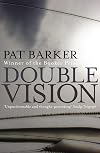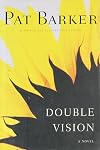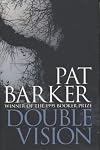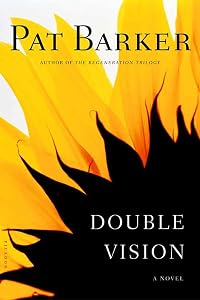
Double Vision
by Pat Barker
On This Page
Description
Double Vision from Pat Barker, a gripping novel about the effects of violence on the journalists and artists who have dedicated themselves to representing itIn the aftermath of September 11, 2001, reeling from the effects of reporting from New York City, two British journalists, a writer, Stephen Sharkey, and a photographer, Ben Frobisher, part ways. Stephen, facing the almost simultaneous discovery that his wife is having an affair, returns to England shattered; he divorces and quits his show more job. Ben returns to his vocation. He follows the war on terror to Afghanistan and is killed.Stephen retreats to a cottage in the country to write a book about violence, and what he sees as the reporting journalist's or photographer's complicity in it; it is a book that will build in large part on Ben's writing and photography. Ben's widow, Kate, a sculptor, lives nearby, and as she and Stephen learn about each other their world speedily shrinks, in pleasing but also disturbing ways; Stephen's maid, with whom he has begun an affair, was once lovers with Kate's new studio assistant, an odd local man named Peter. As these connections become clear, Peter's strange behavior around Stephen and Kate begins to take on threatening implications. The sinister events that take place in this small town, so far from the theaters of war Stephen has retreated from, will force him to act instinctively, violently, and to face his most painful revelations about himself. show lessTags
Recommendations
















Member Reviews
A library sale find, Pat Baker's DOUBLE VISION (2003) was new to me. I have read and thoroughly enjoyed her REGENERATION trilogy, as well as LIFE CLASS and a couple more of her novels. Her characters are always real and compelling, and the ones here are no different. Kate, a sought-after sculptor, is recently widowed, her husband (a war photographer) killed by a sniper in Afghanistan. She is also temporarily disabled from an auto accident, and is working on a larger-than-life Christ, so is forced to hire a studio assistant, Peter, recommended by the local vicar. Turns out Peter has a rather questionable past, did some prison time. The vicar, who tries to help prison parolees, had taken him in. Peter even apparently had a brief, torrid show more affair with the vicar's daughter Justine, who is also an important character. Just nineteen, she takes up with Stephen Sharkey, a forty-something war correspondent who has come back to live in the country guest house of his doctor brother, Robert, where Justine is employed as an au pair for Robert and Beth's precocious ten year-old son, Adam, who has Asperger's syndrome. Stephen, suffering from PTSD, is taking a break from his dangerous profession to write a book about war. Oh, and he was best friends with Kate's late husband, Ben, and was there when Ben was killed.
So, whereas I fully expected Stephen and Kate to end up together, that didn't happen. Oh, and Justine is brutally assaulted by two burglars who break into Robert's home, but is rescued just in time by Stephen.
So here's the thing, plot-wise DOUBLE VISION is all over the place, messy, surprising and unpredictable. But then life can be that way, right? And all of the characters here are just so damn good! The ending was, well, there wasn't much of any actual ending. Did everyone - or ANYone - "live happily ever after?" Hard to say. Nevertheless I'm glad I found this book (only fifty cents), and very glad I read it. Pat Barker is simply a wonderful writer. Very highly recommended.
- Tim Bazzett, author of the memoir, BOOKLOVER show less
So, whereas I fully expected Stephen and Kate to end up together, that didn't happen. Oh, and Justine is brutally assaulted by two burglars who break into Robert's home, but is rescued just in time by Stephen.
So here's the thing, plot-wise DOUBLE VISION is all over the place, messy, surprising and unpredictable. But then life can be that way, right? And all of the characters here are just so damn good! The ending was, well, there wasn't much of any actual ending. Did everyone - or ANYone - "live happily ever after?" Hard to say. Nevertheless I'm glad I found this book (only fifty cents), and very glad I read it. Pat Barker is simply a wonderful writer. Very highly recommended.
- Tim Bazzett, author of the memoir, BOOKLOVER show less
This is different from a lot of the war fiction by Pat Barker in that it deals with the aftermath of war rather than life during war. ‘Double Vision’ is set in Barker’s NE England, with both countryside and city drawn clearly.
War reporter Stephen Sharkey returns to the NE to stay in his brother’s isolated holiday cottage, he has resigned his job and plans to write a book. It seems idyllic, peaceful, but his dreams are full of war memories, particularly the body of a girl discovered in a Sarajevo ruin, raped and murdered. Kate Frobisher, widow of Sharkey’s war photographer colleague Ben, is a sculptor. She is struggling too, with being alone, and with injuries sustained in a car accident. Kate’s progress with the sculpture of show more a man, with the deadline looming, forms the spine of this novel.
This is not a love story in that there is no romance but it is a story about the love of family, of community, of responsibility. And it is also about the opposite of love: hate, as done to the girl in that Sarajevo ruin. The horrors that man does to man, in wartime and ordinary time, and whether forgiveness and love can redeem those horrors.
Barker populates her story with a tightly-drawn circle of characters, puts them into relationships, then mixes things up. Kate cannot physically cope with the work required to sculpt and so hires a man to do the heavy lifting, a man recommended by the local vicar Alec. Justine, the sister of the local vicar, is a part-time nanny for Sharkey’s nephew, she and Sharkey become lovers. Then there is Stephen’s brother Robert and his wife Beth, on the outside their life in a beautiful country house seems beautiful. But is it? And who is Peter, the gardener/labourer who becomes Kate’s assistant, who seems to lurk quietly in the background.
There is a tension underlying this story but it is not a thriller, there is not a murderer lurking in the shadows, but Barker makes you want to read on, to find out what happens to these people. I love Pat Barker’s writing, she has a minimal style which reminds me of Hemingway. She seems incapable of writing an unnecessary word. Here’s one small example: ‘His sleep was threadbare, like cheap curtains letting in too much light.’ I know just what she means.
Read more of my book reviews at http://www.sandradanby.com/book-reviews-a-z/ show less
War reporter Stephen Sharkey returns to the NE to stay in his brother’s isolated holiday cottage, he has resigned his job and plans to write a book. It seems idyllic, peaceful, but his dreams are full of war memories, particularly the body of a girl discovered in a Sarajevo ruin, raped and murdered. Kate Frobisher, widow of Sharkey’s war photographer colleague Ben, is a sculptor. She is struggling too, with being alone, and with injuries sustained in a car accident. Kate’s progress with the sculpture of show more a man, with the deadline looming, forms the spine of this novel.
This is not a love story in that there is no romance but it is a story about the love of family, of community, of responsibility. And it is also about the opposite of love: hate, as done to the girl in that Sarajevo ruin. The horrors that man does to man, in wartime and ordinary time, and whether forgiveness and love can redeem those horrors.
Barker populates her story with a tightly-drawn circle of characters, puts them into relationships, then mixes things up. Kate cannot physically cope with the work required to sculpt and so hires a man to do the heavy lifting, a man recommended by the local vicar Alec. Justine, the sister of the local vicar, is a part-time nanny for Sharkey’s nephew, she and Sharkey become lovers. Then there is Stephen’s brother Robert and his wife Beth, on the outside their life in a beautiful country house seems beautiful. But is it? And who is Peter, the gardener/labourer who becomes Kate’s assistant, who seems to lurk quietly in the background.
There is a tension underlying this story but it is not a thriller, there is not a murderer lurking in the shadows, but Barker makes you want to read on, to find out what happens to these people. I love Pat Barker’s writing, she has a minimal style which reminds me of Hemingway. She seems incapable of writing an unnecessary word. Here’s one small example: ‘His sleep was threadbare, like cheap curtains letting in too much light.’ I know just what she means.
Read more of my book reviews at http://www.sandradanby.com/book-reviews-a-z/ show less
[warning: potential spoilers] I am conflicted about this novel. It develops a lot of psychological tension which almost seems to demand some sort of incident . . . which doesn't really come. The story does see some resolution but in a rather arbitrary, quotidian way. And many of the strands don't really resolve at all. But I think there's a contrast being built between a world of trauma--growing up essentially parentless, war reporting, prison--where stories regularly include those symbolic, violent climaxes we've come to expect in literature, and a world of relative normality where it's more like one thing after another, where one happening is not a resolution to past happenings, where stuff happens and people try to cope.
Imperfectly show more done, I think. It could use to have been somewhat longer, but bringing this novel to a successful, satisfying end would have been very difficult in any case. show less
Imperfectly show more done, I think. It could use to have been somewhat longer, but bringing this novel to a successful, satisfying end would have been very difficult in any case. show less
As always with Pat Barker, reading just one page is enough for her to draw you into the book and the world she has created. Her characters are real people, some nice, some not so nice. Several stories intertwine: a widowed sculptor has a car accident and needs help to finish a commission, the war-correspondent friend of her deceased husband comes to spend some time away from London in his brother's holiday cottage nearby, trying to recover from PTSD on his own. The brother's family is not as happy as it looked at first sight, and there is a lovely au-pair, the not so chaste daughter of the vicar. All written expertly, keeping you going without effort. A very good read, posing some interesting questions
It's not often that I agree with anything in the Telegraph, but the line on the cover "unputdownable and thought-provoking" describes my feelings on this book fairly precisely. A much more modern setting than many of her books, but issues of grief and guilt are again at the core of this book. Her writing is eloquent but never over wordy and she makes you savour many of her sentences. Highly recommended.
Having covered it all, from Bosnia to Ground Zero, foreign correspondent Stephen has hung up his flak jacket and gone to ground in a cottage on his brother's land, in a rural north-east devastated by the foot-and-mouth disaster. Two things have particularly moved him - the body of a raped and mutilated girl on a stairwell in Sarajevo, and the death of his war photographer friend, Ben Frobisher, shot while taking his own last shot on a road in Afghanistan.
Ben's sculptress widow, Kate, lives nearby, neck in a brace from a road accident but determined to complete the huge figure of Christ she is making for the cathedral. Unwillingly, she has hired for the heavy work a young assistant, the personable but unsettling Peter Wingrave, who comes show more recommended by her philanthropic vicar friend. The vicar is father of Stephen's girlfriend, the much younger Justine, a fresh-faced, sensible girl who has a romantic history with the mysterious Peter. show less
Ben's sculptress widow, Kate, lives nearby, neck in a brace from a road accident but determined to complete the huge figure of Christ she is making for the cathedral. Unwillingly, she has hired for the heavy work a young assistant, the personable but unsettling Peter Wingrave, who comes show more recommended by her philanthropic vicar friend. The vicar is father of Stephen's girlfriend, the much younger Justine, a fresh-faced, sensible girl who has a romantic history with the mysterious Peter. show less
Within the first few pages of this book, I knew that I wouldn't be able to recommend 'Double Vision' to any of my male friends, this is a novel geared particularly at a female readership, exploring the complexities of relationships within a small-knit community.
At the heart of it all are two key characters: Stephen and Kate, who are both profoundly affected by the death of Ben, their respective colleague and husband who was killed in Afghanistan. My expectation was that this consequently would play a large part in how the novel panned out, however my feeling was that this event was overshadowed somewhat by their sexual tensions with other characters within the novel, the explicitly sexual Justine, the vicar's 19 year old daughter; and show more Peter, a mysterious young and tanned gentleman with a secret past.
My feeling was that there wasn't much separating this from any other piece of chick-lit, however this is a very well written story, with vivid imagery and a play on the senses, which any female reader could easily lose themselves in.
I suppose I expected more out of this book, but on the whole, it made for an enjoyable read. show less
At the heart of it all are two key characters: Stephen and Kate, who are both profoundly affected by the death of Ben, their respective colleague and husband who was killed in Afghanistan. My expectation was that this consequently would play a large part in how the novel panned out, however my feeling was that this event was overshadowed somewhat by their sexual tensions with other characters within the novel, the explicitly sexual Justine, the vicar's 19 year old daughter; and show more Peter, a mysterious young and tanned gentleman with a secret past.
My feeling was that there wasn't much separating this from any other piece of chick-lit, however this is a very well written story, with vivid imagery and a play on the senses, which any female reader could easily lose themselves in.
I suppose I expected more out of this book, but on the whole, it made for an enjoyable read. show less
Members
- Recently Added By
Author Information

31+ Works 21,416 Members
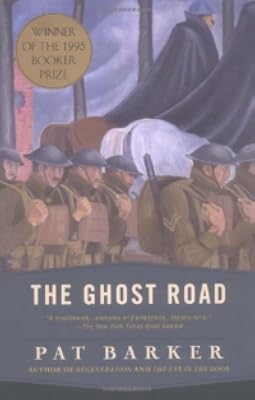
Pat Barker's most recent novel is Another World (FSG, 1999). She is also the author of the highly acclaimed Regeneration trilogy: Regeneration; The Eye in the Door, winner of the 1993 Guardian Fiction Prize; and The Ghost Road, winner of the 1996 Booker Prize. She lives in England. (Bowker Author Biography)
Some Editions
Series
Belongs to Publisher Series
Common Knowledge
- Canonical title
- Double Vision
- Original title
- Double Vision
- Original publication date
- 2003
- People/Characters
- Stephen Sharkey; Ben Frobisher; Kate Frobisher
- Important places
- Afghanistan; England, UK; Sarajevo, Bosnia
- Important events
- September 11 Attacks
- Original language*
- Engels
*Some information comes from Common Knowledge in other languages. Click "Edit" for more information.
Classifications
Statistics
- Members
- 515
- Popularity
- 58,502
- Reviews
- 17
- Rating
- (3.52)
- Languages
- 6 — Danish, Dutch, English, French, Croatian, Spanish
- Media
- Paper, Audiobook, Ebook
- ISBNs
- 25
- ASINs
- 7