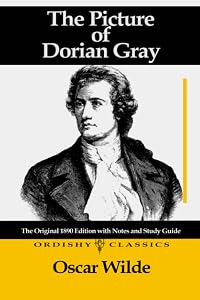
The Picture of Dorian Gray; The Complete Short Stories; De Profundis; Poems; The Importance of Being Earnest & Other Plays (Treasury of World Masterpieces)
by Oscar Wilde 
121 Members (4.19)
On This Page
Description
This volume contains a collection of the work of Irish writer, poet, and prominent aesthete, Oscar Wilde (1854-1900). The Picture of Dorian Gray is the only published novel by Wilde. Considered a work of classic gothic horror fiction, it tells of a young man named Dorian Gray, the subject of a painting by artist Basil Hallward. Basil is impressed by Dorian's beauty and becomes infatuated with him, believing his beauty is responsible for a new mode in his art. Dorian meets Lord Henry Wotton, show more a friend of Basil's, and becomes enthralled by Lord Henry's world view. Espousing a new hedonism, Lord Henry suggests the only things worth pursuing in life are beauty and fulfillment of the senses. Realizing that one day his beauty will fade, Dorian expresses his desire to sell his soul to ensure the portrait Basil has painted would age rather than himself. Dorian's wish is fulfilled, plunging him into debauched acts. The portrait serves as a reminder of the effect each act has upon his soul, with each sin displayed as a disfigurement of his form, or through a sign of aging. The section of Wilde's short stories and plays showcases Wilde's brilliant storytelling skills and stylistic versatility. The selections include -- "Lord Arthur Savile's Crime", "The Canterville Ghost", "A House of Pomegranates", "The Fisherman and His Soul", "The Nightingale and the Rose" and "The Remarkable Rocket". The selection of plays include "Lady Windermere's Fan", "An Ideal Husband", "The Importance of Being Earnest", "Vera, or the Nihilists", "A Florentine Tragedy" and "La Sainte Courtisane". Set in late Victorian England in 1895, the play "The Importance of Being Earnest" derives its humor in part from characters maintaining fictitious identities to escape unwelcome social obligations. It is replete with witty dialog and satirizes some of the foibles and hypocrisy of late Victorian society. It has proved Wilde's most enduringly popular play. De Profundis was written by Wilde during his imprisonment in Reading Gaol. It is a 50,000 word letter to Lord Alfred Douglas, his erstwhile lover, where he repudiates Lord Douglas for what Wilde finally sees as his arrogance and vanity. The Ballad of Reading Gaol is a poem by Wilde, written after his release from prison. The poem is written in memory of "C.T.W." who died in Reading prison in July 1896 and it traces the feelings of an imprisoned man towards a fellow inmate who is to be hanged. For Wilde, the purpose of art was to guide life, and to do this it must concern itself only with the pursuit of beauty, disdaining morality. Wilde's deepest concern was with man's soul; when he analyzed poverty, its causes and effects was not simply the material well-being of the poor that distressed him, but how society does not allow them to individualize and reach a form of self-understanding and enlightenment. show lessTags
Recommendations






















Member Reviews
Members
- Recently Added By
Author Information

1,778+ Works 121,108 Members
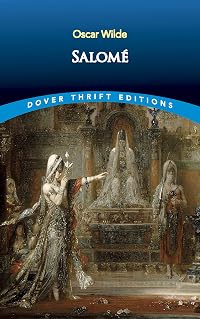
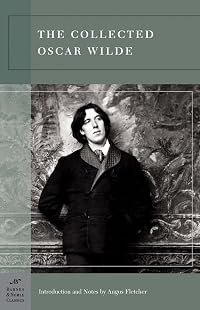
Flamboyant man-about-town, Oscar Wilde had a reputation that preceded him, especially in his early career. He was born to a middle-class Irish family (his father was a surgeon) and was trained as a scholarship boy at Trinity College, Dublin. He subsequently won a scholarship to Magdalen College, Oxford, where he was heavily influenced by John show more Ruskin and Walter Pater, whose aestheticism was taken to its radical extreme in Wilde's work. By 1879 he was already known as a wit and a dandy; soon after, in fact, he was satirized in Gilbert and Sullivan's Patience. Largely on the strength of his public persona, Wilde undertook a lecture tour to the United States in 1882, where he saw his play Vera open---unsuccessfully---in New York. His first published volume, Poems, which met with some degree of approbation, appeared at this time. In 1884 he married Constance Lloyd, the daughter of an Irish lawyer, and within two years they had two sons. During this period he wrote, among others, The Picture of Dorian Gray (1891), his only novel, which scandalized many readers and was widely denounced as immoral. Wilde simultaneously dismissed and encouraged such criticism with his statement in the preface, "There is no such thing as a moral or an immoral book. Books are well written or badly written. That is all." In 1891 Wilde published A House of Pomegranates, a collection of fantasy tales, and in 1892 gained commercial and critical success with his play, Lady Windermere's Fan He followed this comedy with A Woman of No Importance (1893), An Ideal Husband (1895), and his most famous play, The Importance of Being Earnest (1895). During this period he also wrote Salome, in French, but was unable to obtain a license for it in England. Performed in Paris in 1896, the play was translated and published in England in 1894 by Lord Alfred Douglas and was illustrated by Aubrey Beardsley. Lord Alfred was the son of the Marquess of Queensbury, who objected to his son's spending so much time with Wilde because of Wilde's flamboyant behavior and homosexual relationships. In 1895, after being publicly insulted by the marquess, Wilde brought an unsuccessful slander suit against the peer. The result of his inability to prove slander was his own trial on charges of sodomy, of which he was found guilty and sentenced to two years of hard labor. During his time in prison, he wrote a scathing rebuke to Lord Alfred, published in 1905 as De Profundis. In it he argues that his conduct was a result of his standing "in symbolic relations to the art and culture" of his time. After his release, Wilde left England for Paris, where he wrote what may be his most famous poem, The Ballad of Reading Gaol (1898), drawn from his prison experiences. Among his other notable writing is The Soul of Man under Socialism (1891), which argues for individualism and freedom of artistic expression. There has been a revived interest in Wilde's work; among the best recent volumes are Richard Ellmann's, Oscar Wilde and Regenia Gagnier's Idylls of the Marketplace , two works that vary widely in their critical assumptions and approach to Wilde but that offer rich insights into his complex character. (Bowker Author Biography) show less
Oscar Wilde has a Legacy Library. Legacy libraries are the personal libraries of famous readers, entered by LibraryThing members from the Legacy Libraries group.
Series
Belongs to Publisher Series
Common Knowledge
- Original publication date
- 1880-1908
- Disambiguation notice
- Contents: The Picture of Dorian Gray; The Complete Short Stories; De Profundis; Poems; The Importance of Being Earnest & Other Plays
Classifications
Statistics
- Members
- 121
- Popularity
- 269,248
- Rating
- (4.19)
- Languages
- English
- Media
- Paper
- ISBNs
- 1