On This Page
Description
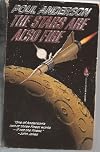
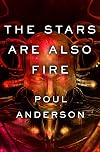
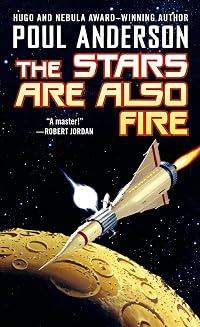
Humans and their genetically altered descendants struggle to find their place in a universe controlled by a benevolent artificial intelligence in this brilliant classic of future speculation. On a far-future Earth, a linked system of artificial intelligences called the cybercosm runs the planet and the universe far more efficiently than any flesh and blood ruler ever could, in essence rendering the human race obsolete. On the Earth's moon, genetically engineered Lunarians carrying the DNA of show more Dagney Beynac - a descendant of the legendary Anton Guthrie, founder of the powerful and visionary Fireball Enterprises - struggle to preserve their lives, their freedom, and their satellite's resources in the face of threats posed by encroaching humans and controlling machines. Over a span of five centuries, tensions have increased in the wake of the political and technological revolutions that reshaped their universe. And suddenly radical change is in the offing once more, as a secret kept hidden since the earliest days of Lunar colonization is about to be revealed - one that could effectively shut down the cybercosm and plunge the universe into chaos. Poul Anderson advances the worlds-shattering circumstances he so brilliantly introduced in Harvest of Stars, creating a vision of the future that is at once astonishing, provocative, and troubling. A true science fiction classic, The Stars Are Also Fire explores deep questions about the nature, complexity, and worth of humankind in an unforgettable novel considered by many to be Anderson's masterpiece. show lessTags
Recommendations























Member Reviews
Nicely paced and plotted story with a nicely converged past and present timeline, but like much scifi of this period, it comes to the end trying to resolve metaphysical issues while trying to stay true to it's philosophical materialism and so is ultimately unsatisfying.
Billions and billions of years ago when I first bought and read Harvest of Stars and its sequel The Stars Are Also Fire, I loved those books. I can't remember or imagine why. Before embarking upon a reread I could remember nothing about either book, and that's usually a bad sign--that it didn't make a lasting impression, even though plenty of books--often much shorter and read even longer ago--made a bigger impact.
Usually though, even if I've outgrown a book, I can remember and understand what I once loved in it. Even if I don't remember the book at first, I can get glimmers why. For the life of me I don't get why this book once appealed to me. I didn't connect with the characters and this time around I found the novel tedious, preachy, show more bloated. With Harvest of Stars I thought it might be the libertarian themes that attracted me--I was a newly minted libertarian back when I first read this and it was fun, even a thrill, to see my beliefs reflected back at me in fiction. Doing a reread of a lot of such books this year, I find few hold up well. It's not that I've changed in my worldview, it's that I have a lot less patience for being preached at even when I agree with the views presented. A liberal friend of mine says if anything she holds books that fit her worldview to a higher standard, because if it fails it's like letting the cause down.
I guess I'm with her in this, but even books of libertarian science fiction by L. Neil Smith, James P. Hogan and J. Neil Schulman I didn't love as much as I once did upon reread were memorable and engaging in ways this one wasn't. It was just soooooooooo slow and after reading a hundred pages, seeing there was still 400 plus pages to go I could only whimper... That makes it quite a bit worse actually than Harvest of Stars, which if it had some of the same flaws, didn't make me so impatient to be done. I should add, I still found The High Crusade a blast, and am enjoying my reread so far of Three Hearts and Three Lions. So it's not that I wouldn't recommend Poul Anderson--just not this one. show less
Usually though, even if I've outgrown a book, I can remember and understand what I once loved in it. Even if I don't remember the book at first, I can get glimmers why. For the life of me I don't get why this book once appealed to me. I didn't connect with the characters and this time around I found the novel tedious, preachy, show more bloated. With Harvest of Stars I thought it might be the libertarian themes that attracted me--I was a newly minted libertarian back when I first read this and it was fun, even a thrill, to see my beliefs reflected back at me in fiction. Doing a reread of a lot of such books this year, I find few hold up well. It's not that I've changed in my worldview, it's that I have a lot less patience for being preached at even when I agree with the views presented. A liberal friend of mine says if anything she holds books that fit her worldview to a higher standard, because if it fails it's like letting the cause down.
I guess I'm with her in this, but even books of libertarian science fiction by L. Neil Smith, James P. Hogan and J. Neil Schulman I didn't love as much as I once did upon reread were memorable and engaging in ways this one wasn't. It was just soooooooooo slow and after reading a hundred pages, seeing there was still 400 plus pages to go I could only whimper... That makes it quite a bit worse actually than Harvest of Stars, which if it had some of the same flaws, didn't make me so impatient to be done. I should add, I still found The High Crusade a blast, and am enjoying my reread so far of Three Hearts and Three Lions. So it's not that I wouldn't recommend Poul Anderson--just not this one. show less
A gripping and nuanced exploration of humanity's long-term options. Anderson convincingly shows how human imagination and dogged stubbornness eventually knock down the most daunting obstacles. Along with "Harvest of Stars," this is a must-read for anyone interested in technology and politics.
Related to Harvest of Stars
En el amanecer de la nueva era de la exploración y colonización del espacio, Dagny Beynac se convierte en la heroína de la nueva civilización lunariana de humanos modificados genéticamente que luchan por independizarse de la influencia de la Tierra. Tres siglos después, la Tierra y el sistema solar en general parecen un lugar mucho mejor gracias a la evolución experimentada por el cibercosmo, una red de inteligencias artificiales que ha logrado gestionar los sistemas sociales y ecológicos de forma muy superior a la alcanzada nunca por la humanidad.
Jul 20, 2022Spanish
Ratings
Members
- Recently Added By
Lists

Libertarian Books
102 works; 19 members
Author Information

693+ Works 53,561 Members
Poul Anderson, November 25, 1926 - July 31, 2001 Poul Anderson was born on November 25, 1926 in Bristol, Pennsylvania to parents Anton and Astrid. After his father's death, Poul's mother took them first to Denmark and then to Maryland and Minnesota. He earned his degree in Physics from the University of Minnesota, but chose instead to write show more stories for science fiction magazines, such as "Astounding." Anderson is considered a "hard science fiction" writer, meaning that his books have a basis in scientific fact. To attain this high level of scientific realism, Anderson spent many hours researching his topics with scientists and professors. He liked to write about individual liberty and free will, which was a well known theme in many of his books. He also liked to incorporate his love of Norse mythology into his stories, sometimes causing his modern day characters to find themselves in fantastical worlds, such as in "Three Hearts and Three Lions," published in 1961. Anderson has written over a hundred books, his last novel, "Genesis" won the John W. Campbell Award, one of the three major science fiction awards. He is a former president of the Science Fiction and Fantasy Writers of America and won three Nebula awards and nine Hugo Awards. In 1997, Anderson was named a Grandmaster by the Science Fiction and Fantasy Writers of America and was also inducted into the Science Fiction Fantasy Hall of Fame. Poul Anderson died on July 31, 2001 at the age of 74. (Bowker Author Biography) show less
Awards and Honors
Awards
Series

Belongs to Publisher Series
Bastei Lübbe Taschenbuch (24224)
Common Knowledge
- Canonical title
- The Stars Are Also Fire
- Original title
- The Stars Are Also Fire
- Original publication date
- 1994
Classifications
Statistics
- Members
- 576
- Popularity
- 51,246
- Reviews
- 6
- Rating
- (3.15)
- Languages
- 5 — Czech, English, German, Norwegian, Spanish
- Media
- Paper, Audiobook, Ebook
- ISBNs
- 9
- ASINs
- 3