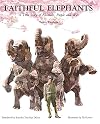
Faithful Elephants: A True Story of Animals, People, and War
by Yukio Tsuchiya
On This Page
Description
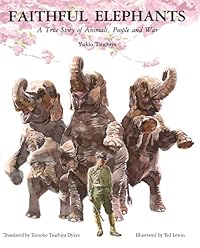
Recounts how three elephants in a Tokyo zoo were put to death because of the war, focusing on the pain shared by the elephants and the keepers who must starve them.Tags
Recommendations



Member Reviews
"Faithful Elephants" is a heart-wrenching story about the effects of WWII bombing in Tokyo on poor innocent animals in the zoo. The Scholastic Readability Level for this book is 4th through 6th grades. This book falls under the historical fiction category because it highlights a real time period in history. A zoo in Tokyo makes the decision to poison/kill all of their animals, just in case war bombs are dropped and the animals escape their cages. Most of the animals are either poisoned in their food or injected with substances that will kill them. However, three elephants will not eat the poisoned food and their skin is to thick for the injection. The zoo makes the decision to starve the animals to death instead. The animal trainer show more can't stand to face the starving elephants as they perform their tricks in order to get some food. Their death is long and drawn out, which highlights yet another effect of war. I would use this story in my classroom to examine the effects of war on animals. I would allow students to share how the story made them feel. I would also ask them to hypothesize why the author had the elephants die in the position of their famous trick. This is such a powerful story with gorgeous pictures and a heavy message. show less
Beyond a shadow of a doubt, this is the most depressing book I have read in quite some time. Originally, I heard of it when Young et al. listed it in the back of Chapter 13 (p. 184). I figured that since I like elephants, I would read a lighthearted story about the bond between these creatures and their owners; boy was I wrong. Having never heard of the Japanese government ordering the euthanasia of animals at the Ueno Zoo during World War II, this book really tugged at my heartstrings. Reading about the slow death of the elephants was sad enough, but it became even more heartbreaking when research I did afterwards suggested that there was no danger to the animals to begin with, and the killings were going to be used as propaganda show more against the Allied forces. All in all, even though this book’s overall message about the depravity of war is powerful, I would recommend reading it only if you are looking to have a good cry. show less
So I was not expecting to be crying over elephants this morning but here I am.
Because of the mature subject matter please be sure before you read this book with your children. Picture books can be a good way to introduce hard things.
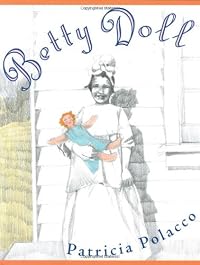
Much like Betty Doll by Patricia Pollacco I did not go into this knowing what was coming.
This tells the story of desperate choices with no good solutions.
For my family I rated this 13+.
Because of the mature subject matter please be sure before you read this book with your children. Picture books can be a good way to introduce hard things.
Much like Betty Doll by Patricia Pollacco I did not go into this knowing what was coming.
This tells the story of desperate choices with no good solutions.
For my family I rated this 13+.
Faithful Elephants is the true story of three elephants' deaths at the Ueno Zoo in Tokyo during WWII. With the uncertainty of where exactly bombs would be dropped over Tokyo, government officials ordered all dangerous animals in the zoo be put to death. Lions, tigers, leopards, and other animals were fed poison, but the elephants were too smart to eat the poisoned food. With seemingly no other option, the zoo officials were forced to reluctantly stand by as the elephants slowly starved to death. When the war was over, a monument was made to honor the poor elephants who fell victim to the causalities of war.
I'm not going to lie, this book made me cry. Being such an animal lover it was extremely difficult to read and imagine the show more suffering those poor, gentle elephants had to endure. Although it is a powerful way to shed light on the horrors of war that not many people realize, I'm not sure I would be able to hold it together while reading it to a class. show less
I'm not going to lie, this book made me cry. Being such an animal lover it was extremely difficult to read and imagine the show more suffering those poor, gentle elephants had to endure. Although it is a powerful way to shed light on the horrors of war that not many people realize, I'm not sure I would be able to hold it together while reading it to a class. show less
This is among the most heart-wrenching picture books ever written. Plainly anti-war sentiment in a true story. I had to read this one through the tears and have a good cry after I finished. In the short term, I regretted reading it because it really brought me down, but in the long term I loved the book for all that it was.
I liked the story Faithful Elephants by Yukio Tsuchiya for multiple reasons, from the story’s language, writing, and plot, to the characters, and thought provoking content. In the story the author uses very descriptive information to describe the conditions of the elephants as they were dying. Tsuchiya states, “ as the days passed, the elephants became thinner and thinner, weaker and weaker… Their small, loving eyes began to look like round rubber balls in their dropping, shrunken faces. Their ears seemed too large for their bodies”. This helps the reader to visualize the despair that the elephants faced as they were reaching the end of their lives. Because of Tsuchiya’s descriptive language the writing was very engaging, and show more made the reader feel as if they were watching the elephants undergo their unfortunate and unjust changes. I also enjoyed the characters, from the elephants, to the zoo keepers the characters were well developed and the reader is able to get a sense of the emotional turmoil that the elephants and the zookeepers experienced throughout the story. The story highlights the reaction of the elephant keeper upon discovering the lifeless bodies of his beloved elephants “as he buried his head in his arms and cried, beating the desk top with his fist”. The plot builds suspense, as there is a constant reference to the fact that if the war stops the elephants’ lives will be spared. The reader is left wondering if the war will suddenly end and stop the elephants’ suffering. The overall meaning of the story is that war not only affects innocent human lives, but the lives of animals. War subjects every living being to unspeakable tragedy, and it is our job as humans to ensure that all lives are seen as precious, even the lives of animals. This is a wonderful book; it pushes the reader to truly think about the issue of war. It also forces the reader to realize that war is not just a human problem, but also a problem for all lives living in the areas that are feuding. show less
This book was very informative about Japanese culture, and war. I specifically think that the message was to captivate a bigger picture about how animals are mistreated, and imagine if those same things happened to people during a bombing session. I also think that it is a sad, and controversial book for children, but it definitely is important for them to know specifically about war, and how war impacts not only humans, but also animals. I also felt like there was a lot of animal rights, and relationships between animals and humans, and I noted this in the story when the two elephants are being starved, and it said that when they died, their trunks remained up, as if they were to do a trick for food. This clearly showed the bond show more between humans and animals. show less
Members
- Recently Added By
Lists

A Child's Book Tour of Japan
58 works; 4 members
Author Information
3 Works 753 Members
Awards and Honors
Classifications
Statistics
- Members
- 752
- Popularity
- 37,215
- Reviews
- 75
- Rating
- (4.17)
- Languages
- English, French, Japanese
- Media
- Paper, Ebook
- ISBNs
- 12
- UPCs
- 2
- ASINs
- 4