On This Page
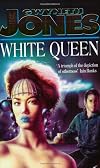
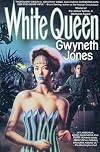
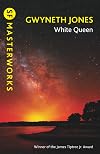
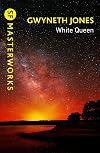
Description
In the year 2038, the earth has been ravaged by earthquakes and volcanic eruptions. Retroviruses run rampant through humanity. Economic disaster has destabilised the world, the US has undergone a socialist revolution, and the balance of power has changed. Then the aliens arrive. With no clear understanding of the visitors' intent, factions form, including the anti-alien group White Queen, working to turn humans against these extra-terrestrial tourists. Caught in the middle is Johnny Guglio, show more an American exile whose only fault was living near the landing site, and Braemar Wilson, a cutthroat reporter who will do whatever she needs to get ahead of the story. And for better or for worse, it seems being caught in the middle is the best place for them to uncover the truth. Winner of the 1991 James Tiptree Jr. Award, WHITE QUEEN is the first in Gwyneth Jones' critically acclaimed Aleutian Trilogy. show lessTags
Recommendations



















Member Reviews
I’ve been meaning to reread this book, and its two sequels, for a long time, but in the continual chase to main a positive TBR balance (ie, reading more books than I buy) I usually don’t find time for rereads. But then I agreed to write something about Jones’s aliens for a critical work, not just because I welcomed the opportunity to write about Jones but also because it would force me to do that long-put-off reread. And so it did. And… White Queen was not only better than I’d remembered it, but also a good deal nastier than I’d remembered. True, I’m a different reader now than I was twenty-five years ago – who isn’t? – when I last read the book. I can see how some of the characterisation was of that time… but it show more does read differently now. The word “whore”, for example, is thrown around a lot more than you’d find in a novel of the second decade of the twenty-first century. The characterisation also seems not as I remember it – the aliens are better drawn than the humans, basically. Some time hence, a decade or two, aliens land secretly on Earth. These are the Aleutians, so called because of their original landing place. They resemble humans, but have no noses, a single gender, and bio-technology based on “wandering cells” from their own individual bodies. Johnny Guglioni is an engineer/journalist, or eejay, (one of the novel’s less impressive neologisms), who has been infected with a virus which can degrade coralin, the “living clay” on which all modern electronics are based. He becomes involved with the Aleutians through Clavel, one of the three Aleutian “captains”, in an invented African country. Braemar Wilson is a tabloid television journalist who thinks Earth cannot survive an encounter with superior aliens, and who seduces Johnny as a means of gaining access to Clavel. Then the Aleutians reveal themselves to what they think is the world government, an international conference on women’s rights taking place in Thailand… The Aleutians are one of sf’s great alien races without a doubt, thoroughly convincing with the minimum of hand-waving. And the novel has plenty of the latter, as the plot soon congregates around a FTL drive, or instantaneous transportation method, invented by eccentric engineered genius Peenemunde Buonarotti, and which features in later stories and novels set in the same universe, notably Spirit and the stories in The Buonarotti Quartet. It seems an odd hook on which to hang the narrative up to that point, although it does handily lead into Johnny’s Christ-like redemption – and I have to wonder if that was the point of it all. It was Jones’s ‘Forward Echoes’, published in an issue of Interzone in late 1990 which made me sit up and take notice of Jones’s fiction (perversely, a revised edition of the story, ‘Identifying the Object’, in a chapbook collection of the same title, doesn’t give me that same jolt), and ‘Forward Echoes’ is about the first contact with the Aleutians in an African country. White Queen is an extension of it… and yet it’s not my favourite Jones novel, which is Kairos. But rereading White Queen after so long reinforced my admiration of Jones’s prose and made me realise how very very good she is at depicting the alien (and, on reflection, that ties in quite well to the fracturing of reality which is one of the strengths of Kairos). Jones is one of my favourite writers, and still, to my mind, one of the best science fiction writers this country has produced. And being at an age when rereading old favourites usually ends up poisoning the well of my childhood, it’s heartening– no, it’s a delight… to discover my appreciation of Jones’s writing not only remains undimmed but has probably been strengthened. show less
As intelligent and uncompromising as any of Gwyneth Jones' other works, this boasts the creation of a* truly* alien society, and examines the tragic misunderstandings that ensue when humanity and aliens make first contact while labouring under some fundamentally flawed assumptions. It has her usual searing and frequently discomfort-inducing treatments of politics and sexuality, and some solid characterisation and carefully-considered world-building.
I admire the hell out of her writing, but (small confession) I don't necessarily enjoy reading her books all that much. However, she *always* provides me with food for thought, and that is why I'll continue to read her work.
I admire the hell out of her writing, but (small confession) I don't necessarily enjoy reading her books all that much. However, she *always* provides me with food for thought, and that is why I'll continue to read her work.
A weird one this. Bits are amazing, so clever and interesting that it blows your mind, but it feels so incomplete. Was it heavily edited? Is it intended to be an avante-garde text of incompleteness? Am i missig the point? Bad humans, incomprehensible plot, incredible world building, wonderful aliens.
It's 2038. and aliens have mysteriously appeared among us. Among those trying to figure out what they want and what their presence means are a cynical reporter and a guy who may or may not be infected with a virus that can damage the organic components used in computer technology.
The world-building here is is interesting and pretty well done, and the aliens are gratifyingly alien (in their mindset, if not necessarily in their appearance). But I just could not get into this one anywhere near as much as I'd hoped to. It's a little too dense, a little too indirect and cryptic, a little too full of dialog that seems carefully crafted to sound profound, but not carefully crafted to sound like dialog. When that sort of thing works, it can show more work very well, but in this case it just never really came together for me into anything that felt coherent. It's an interesting book, most certainly, but also a slightly frustrating one. Ultimately I'm not at all sure quite what to make of it. show less
The world-building here is is interesting and pretty well done, and the aliens are gratifyingly alien (in their mindset, if not necessarily in their appearance). But I just could not get into this one anywhere near as much as I'd hoped to. It's a little too dense, a little too indirect and cryptic, a little too full of dialog that seems carefully crafted to sound profound, but not carefully crafted to sound like dialog. When that sort of thing works, it can show more work very well, but in this case it just never really came together for me into anything that felt coherent. It's an interesting book, most certainly, but also a slightly frustrating one. Ultimately I'm not at all sure quite what to make of it. show less
http://nwhyte.livejournal.com/1833686.html
started off very much enjoying the well-constructed future Earth of the story - the decayed America, the peculiar infections, the African setting for many of the chapters, the aliens who are more than human and less than human in various ways, the central character who is a newsblogger avant la lettre. But I didn't quite feel that the plot then did much with this promising elements. Perhaps it's just that I got to it towards the end of a long plane flight, but I also remember having much the same reaction to Bold As Love.
started off very much enjoying the well-constructed future Earth of the story - the decayed America, the peculiar infections, the African setting for many of the chapters, the aliens who are more than human and less than human in various ways, the central character who is a newsblogger avant la lettre. But I didn't quite feel that the plot then did much with this promising elements. Perhaps it's just that I got to it towards the end of a long plane flight, but I also remember having much the same reaction to Bold As Love.
Set in the near future, two journalists try to break the story of an alien landing. Although the characters were well-developed, the technology was casually used and often gritty, and the aliens quite alien, I just didn't like this book much.
Only the second book I've ever given up on (Appleseed by John Clute was the other) - just couldn't care about the story or the characters.
Members
- Recently Added By
Lists

Favorite Science Fiction by Women Authors
737 works; 196 members

Best Feminist Science Fiction
188 works; 35 members
Arthur C. Clarke Award Winners and Shortlisted Books
219 works; 14 members

Broderick and Di Filippo's Science Fiction: The 101 Best Novels 1985-2010
103 works; 7 members

SF Masterworks
193 works; 8 members
Author Information

69+ Works 2,362 Members
Some Editions
Awards and Honors
Awards
Series

Belongs to Publisher Series
SF Masterworks (New design)
Common Knowledge
- Original title
- White Queen
- Original publication date
- 1991
- First words
- Johnny could never sleep in Africa.
- Blurbers
- Sterling, Bruce; Cadigan, Pat; Charnas, Suzy McKee; Banks, Iain; Tuttle, Lisa
Classifications
Statistics
- Members
- 303
- Popularity
- 106,003
- Reviews
- 10
- Rating
- (2.92)
- Languages
- English, German
- Media
- Paper, Audiobook, Ebook
- ISBNs
- 9
- ASINs
- 4