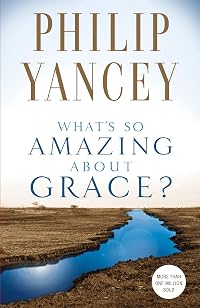
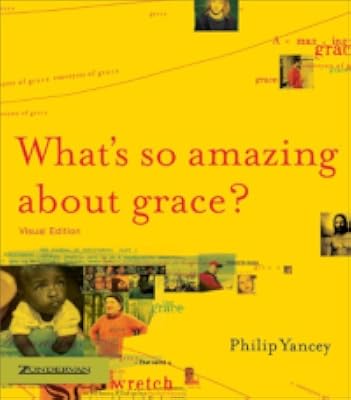
What's So Amazing About Grace?
by Philip Yancey
On This Page
Description
In 1987, an IRA bomb buried Gordon Wilson and his twenty-year-old daughter beneath five feet of rubble. Gordon alone survived. And forgave. He said of the bombers, " I have lost my daughter, but I bear no grudge . . . I shall pray, tonight and every night, that God will forgive them." His words caught the media's ears -- and out of one man's grief, the world got a glimpse of grace. Grace is the church's great distinctive. It's the one thing the world cannot duplicate, and the one thing it show more craves above all else -- for only grace can bring hope and transformation to a jaded world. In What's So Amazing About Grace? award-winning author Philip Yancey explores grace at street level. If grace is God's love for the undeserving, he asks, then what does it look like in action? And if Christians are its sole dispensers, then how are we doing at lavishing grace on a world that knows far more of cruelty and unforgiveness than it does of mercy? Yancey sets grace in the midst of life's stark images, tests its mettle against horrific "ungrace." Can grace survive in the midst of such atrocities as the Nazi holocaust? Can it triumph over the brutality of the Ku Klux Klan? Should any grace at all be shown to the likes of Jeffrey Dahmer, who killed and cannibalized seventeen young men? Grace does not excuse sin, says Yancey, but it treasures the sinner. True grace is shocking, scandalous. It shakes our conventions with its insistence on getting close to sinners and touching them with mercy and hope. It forgives the unfaithful spouse, the racist, the child abuser. It loves today's AIDS-ridden addict as much as the tax collector of Jesus' day. In his most personal and provocative book ever, Yancey offers compelling, true portraits of grace's life-changing power. He searches for its presence in his own life and in the church. He asks, How can Christians contend graciously with moral issues that threaten all they hold dear? And he challenges us to become living answers to a world that desperately wants to know, What's So Amazing About Grace? show lessTags
Recommendations









Member Reviews
Yancey's just slightly ahead of his time. In 1997 he realizes there's a sickness at the heart of American Fundamentalism's soul, even if he misdiagnoses a vicious pneumonia as a cold. Unlike Gabe Lyons (unChristian) writing several years later, Yancey's honest enough to know that what the cult needs is more than a better PR job. He is even honest enough to allow that Fundamentalism's approach to belief may not be perfect, a difficult assertion for a member of a movement that values obedience to authority above all else to make. He sees so clearly... up to a point, and then, Yancey goes completely blind again. He's happy to question how religious leaders have used and abused God language, happy to note some of the missteps of show more Fundamentalism, but utterly unable to even begin to question the rotted core of Fundamentalist belief. Yancey, for example, can understand that a gay friend is hurt by self righteous Fundamentalists telling him he's going to hell and his sins are unforgivable. Still Yancey will not even for a nanosecond allow himself to wonder if maybe Fundamentalism is known by its fruits, and if its fruits are hatred and bigotry it might be time to pause and reflect. Yancey is quick to tell us that ultimately, he too, has to consign his friend to hell. Realizing that the word "love" has become diminished and exhausted through misuse and overuse, Yancey cleverly suggests that faith be reviewed using the relatively unadulterated word "grace." If only he, or some other Fundamentalist, would go one step further and examine their own beliefs in a new light instead of simply crafting a convenient, non-threatening, definition of grace that reinforces a misguided and unhaopoy set of religious ideas. show less
This is a quite amazing book, one I would recommend to all Christians whatever their background, and to anyone who's interested in knowing about Christianity, or indeed anyone who's been hurt by Christians.
The book's been criticised by fundamentalists; not surprisingly perhaps since Yancey grew up fundamentalist - and racist - himself. But now he accepts that God is found in many places and people, and can be part of all denominations whether Protestant, Orthodox or Catholic. His writing makes such intuitive sense, and is so well expressed, that I find it hard to see how anyone could disagree with it. This is how the church should be, and it's a massive challenge for the 21st century where Christianity is more often associated with show more anger and critisism than with compassion and grace.
Re-read eight years later, and still found it powerful, even if a little over-political in places. show less
The book's been criticised by fundamentalists; not surprisingly perhaps since Yancey grew up fundamentalist - and racist - himself. But now he accepts that God is found in many places and people, and can be part of all denominations whether Protestant, Orthodox or Catholic. His writing makes such intuitive sense, and is so well expressed, that I find it hard to see how anyone could disagree with it. This is how the church should be, and it's a massive challenge for the 21st century where Christianity is more often associated with show more anger and critisism than with compassion and grace.
Re-read eight years later, and still found it powerful, even if a little over-political in places. show less
In this book, Philip Yancey explores the concept of grace. He does a very good job and this book brought me to tears. It brought me back to my personal reckoning with grace was after see Les Miserables and Yancey discusses this in the book. Yancey discusses how forgiving the guilty really frees the forgiver. So true.
Thought-provoking. I don't agree with everything he said. The author's recent revelation of adultery taints things a bit. But there's some thought-provoking stuff to chew on in this book.
I read this in conjunction with the video series and study at church. I found the concept of the book excellent, challenging and helpful, but as a non-American a generation younger than Philip Yancey, parts of it seemed a bit time and culture-specific. I thought he was best on the personal and inter-personal level; the sections about nations discovering grace felt superficial and unconvincing and the parts about the church and politics (and the slight blurring of the falling of the Iron Curtain with salvation) again probably speak more to Americans than to me.
My favourite idea is a quotation from CS Lewis about the concept of loving the sinner while hating the sin: we have felt this way about ourselves all our life: "There had never show more been the slightest difficulty about it. ... Just because I loved myself, I was sorry to find that I was the sort of man who did those things." show less
My favourite idea is a quotation from CS Lewis about the concept of loving the sinner while hating the sin: we have felt this way about ourselves all our life: "There had never show more been the slightest difficulty about it. ... Just because I loved myself, I was sorry to find that I was the sort of man who did those things." show less
A wonderful reflection on what grace is, how it seems to be lacking in some churches, and how it appears in the most unexpected places.
Yancey provides lots of great anecdotes on the way to illustrate his points; some of them moved me to tears. He has a wonderful vision of what the church could and should be, and the realism to know what it all too often is.
Yancey provides lots of great anecdotes on the way to illustrate his points; some of them moved me to tears. He has a wonderful vision of what the church could and should be, and the realism to know what it all too often is.
I once read Brennan Manning's "Ragamuffin Gospel" several years ago and thought it was the best book ever written that best captures and defines the very essence of grace. While it still remains one of my all-time favorite books, "What's So Amazing About Grace?" stands right next to it. Yancey never disappoints with his raw grit stories and life-changing quotes. He tells like it is, and in many cases may make many Christians uncomfortable. Yancey tells of many true-life stories of what grace looks like in the real world. On the other hand, he also tells of many stories of what the other side of grace looks like, he calls "ungrace". Sadly, this "ungrace" comes from many who call themselves evangelical Christian. Fortunately, ungrace show more doesn't have to be the way it remains. Many Christians have shown grace and continue to live it and act it out in ways that have changed the world and continue to do so today. At the conclusion of this book, Yancey summarizes what grace should look like. I highly recommend this book to those who have bad taste of Christians in their mouth, and to those of us who need a reminder of what Jesus exemplified and how we ought to be living like... through the eyes of grace.
Some of my favorite quotes from this book:
Grace does not depend on what we have done for God but rather what God has done for us.
Only Christianity dares to make God's love unconditional.
Grace comes free of charge to people who do not deserve it and I am one of those people.
There is perhaps no one of natural passions so hard to subdue as pride... Even if I could conceive that I had completely overcome it, I should probably be proud of my humility. (Benjamin Franklin)
Grace, my friends, demands nothing from us but that we shall await it with confidence and acknowledge it in gratitude.
Some of us seem so anxious about avoiding hell that we forget to celebrate our journey toward heaven.
Grace means there is nothing we can do to make God love us more. And, grace means there is nothing we can do to make God love us less.
To be a Christian means to forgive the inexcusable, because God has forgiven the inexcusable in you. (C.S. Lewis)
If everyone followed the "eye for an eye" principle of justice, eventually the whole world would go blind. (Mohandas Gandhi)
Christianity has always insisted that the cross we bear precedes the crown we wear. (MLK Jr.)
Law merely indicated the sickness; grace brought about the cure.
Our real challenge should not be to Christianize the United States but rather to strive to be Christ's church in an increasingly hostile world.
Moralism apart from grace solves little.
Of one hundred men, one will read the Bible; the ninety-nine will read the Christian. (D.L. Moody)
A grace-full Christian is one who looks at the world through "grace-tinted lenses". show less
Some of my favorite quotes from this book:
Grace does not depend on what we have done for God but rather what God has done for us.
Only Christianity dares to make God's love unconditional.
Grace comes free of charge to people who do not deserve it and I am one of those people.
There is perhaps no one of natural passions so hard to subdue as pride... Even if I could conceive that I had completely overcome it, I should probably be proud of my humility. (Benjamin Franklin)
Grace, my friends, demands nothing from us but that we shall await it with confidence and acknowledge it in gratitude.
Some of us seem so anxious about avoiding hell that we forget to celebrate our journey toward heaven.
Grace means there is nothing we can do to make God love us more. And, grace means there is nothing we can do to make God love us less.
To be a Christian means to forgive the inexcusable, because God has forgiven the inexcusable in you. (C.S. Lewis)
If everyone followed the "eye for an eye" principle of justice, eventually the whole world would go blind. (Mohandas Gandhi)
Christianity has always insisted that the cross we bear precedes the crown we wear. (MLK Jr.)
Law merely indicated the sickness; grace brought about the cure.
Our real challenge should not be to Christianize the United States but rather to strive to be Christ's church in an increasingly hostile world.
Moralism apart from grace solves little.
Of one hundred men, one will read the Bible; the ninety-nine will read the Christian. (D.L. Moody)
A grace-full Christian is one who looks at the world through "grace-tinted lenses". show less
Members
- Recently Added By
Lists

Top 50 Books That Have Shaped Evangelical Christians
49 works; 6 members
Author Information

241+ Works 40,317 Members
Philip Yancey is a journalist and writer who writes a featured column in Christianity Today. The author of more than a dozen books. He is the recipient of a Christianity Today Book of the Year Award, two ECPA Book of the Year Awards, and eleven Gold Medallions. He lives in Evergreen, Colorado. (Publisher Provided) Philip Yancey received graduate show more degrees in communication and English from Wheaton College and the University of Chicago. He worked as a journalist in Chicago for about twenty years, editing the youth magazine Campus Life and writing for a wide variety of magazines including Reader's Digest and the Saturday Evening Post. He is an editor at large of Christianity Today. His Christianity Today column ran from 1985 to 2009. He is the author of numerous books including Disappointment with God, Where Is God When It Hurts?, The Jesus I Never Knew, What's So Amazing About Grace?, The Bible Jesus Read, Reaching for the Invisible God, Rumors of Another World, Prayer: Does It Make Any Difference?, and What Good Is God?: In Search of a Faith That Matters. He has received 13 Gold Medallion Awards from Christian publishers and booksellers. (Bowker Author Biography) show less
Awards and Honors
Awards
Notable Lists
Work Relationships
Is contained in
Common Knowledge
- Original title
- What's so amazing about grace?; What's so amazing about grace
- Alternate titles*
- 恩典多奇異. English
- Original publication date
- 1997
- Epigraph
- I know nothing, except what everyone knows---if there when Grace dances, I should dance. -W.H. Auden
- First words
- I told a story in my book The Jesus I Never Knew, a true story that long afterward continued to haunt me.
- Quotations
- "What good is a street that doesn't lead to a church?"
- Last words
- (Click to show. Warning: May contain spoilers.)When grace descends, the world falls silent before it.
*Some information comes from Common Knowledge in other languages. Click "Edit" for more information.
Classifications
Statistics
- Members
- 5,821
- Popularity
- 2,254
- Reviews
- 50
- Rating
- (4.16)
- Languages
- 14 — Chinese, Danish, Dutch, English, Estonian, Finnish, French, German, Hungarian, Korean, Norwegian (Bokmål), Portuguese, Spanish, Swedish
- Media
- Paper, Audiobook, Ebook
- ISBNs
- 51
- UPCs
- 14
- ASINs
- 23