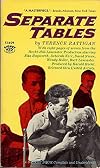
Separate Tables
by Terence Rattigan
On This Page
Description
Set in a run-down residential hotel in Bournemouth, Separate Tables consists of two linked one-act plays. In the first a lonely divorcee tracks down her former husband in order to resume a kind of half-life with him. In the other a repressed young spinster offers brave moral support to a fake major accused of importuning women in a local cinema. In an alternative version, only recently discovered among Rattigan's papers, the major's offence was revealed to be homosexual; these show more 'alternative' scenes are published here for the first time. This edition includes an authoritative introduction, show lessTags
Recommendations

























Member Reviews
An interesting set of what is actually two plays, though it reads more like two acts of one play, connected only by the same characters and setting. The stories could be told independently, and no one would ever know they were connected. I found both of them somewhat disturbing, but particularly the second. They are steeped in the ideas and morals of their time, and that means that the characters fuss about things no one would likely notice today. The dialogue is often quotidian, but I think that is the direct intention of the author. He intends this to be about people in their usual mode of interaction, thrown into a new situation. I didn't find the stories particularly compelling, but perhaps onstage they would play better than they show more read. The edition included some alternate scenes for the second act, which were never performed because they were too...problematic...for the time, I suppose. I must say, I preferred the alternate scenes. The original act as written was difficult to deal with because it depicted actions that were then and remain criminal, and violated the rights of various women, and we are expected to forgive the act. In the alternate scenes, the ones where the actions were too troubling for audiences, most of us would probably say, so what? But at the time this play came out, those were criminal actions that got much more serious penalty than the much more disturbing (to modern minds, especially women) scenes that were deemed more acceptable for stage. So this was an interesting exercise in trying to view a work through the eyes of its own time. At the very least, it made me glad I live in this time, warts and all. show less
The version I read had two pictures of the actors in character and on stage, which was nice to get a feel for things. I saw the David Niven movie, loved it, and loved this just as well. In fact, better, since it's written as two separate plays, which makes more sense. Very good.
Ratings
Members
- Recently Added By
Author Information

53+ Works 1,170 Members
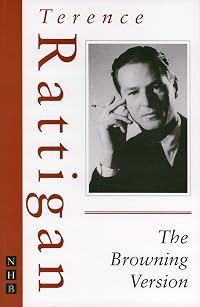
Rattigan, who had been a playwright since leaving Oxford University at the age of 22, boasted of his workmanship---"I believe sloppy construction, untidy technique, and lack of craftsmanship to be great faults"---and of his ability to please the British playgoer, the archetypical "Aunt Edna," a "middle-class, middle-aged maiden lady with time on show more her hands." Not surprisingly, he fell out of favor in the Britain of the 1960s. (He had never been particularly popular in the United States, which looked on his work as inspirationally lacking.) At the time of his death, criticism, still taking him at his word, faintly praised Rattigan's expositions, his management of interleaving characters (as in Separate Tables, 1954), and his artful episodic development in Ross (1960). But Darlow and Hodson's revelations of Rattigan's tormented personal life have helped readers acknowledge that, despite imposed or sentimental endings, his plays are often full of genuine anguish---in the relations of parents and children (Man and Boy, 1963) and obsessed lovers (The Deep Blue Sea, 1952), and in recognition of weakness that vitiates heroism (Ross, 1960, which is based on the life of T. E. Lawrence. And revivals of the 1948 play The Browning Version (at the National Theatre) and of The Winslow Boy (1946) moved the critic Harold Hobson to concede that "there are many things in Rattigan that have not yet been properly perceived." (Bowker Author Biography) show less
Awards and Honors
Awards
Work Relationships
Is contained in
Common Knowledge
- Original publication date
- 1954
- Related movies
- Separate Tables (1958 | IMDb); Separate Tables (1983 | IMDb)
- Disambiguation notice
- These two short plays: Table by the Window and Table Number Seven are performed together under the title Separate Tables
Classifications
Statistics
- Members
- 106
- Popularity
- 305,516
- Reviews
- 2
- Rating
- (3.83)
- Languages
- English
- Media
- Paper, Ebook
- ISBNs
- 7
- ASINs
- 17