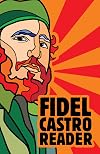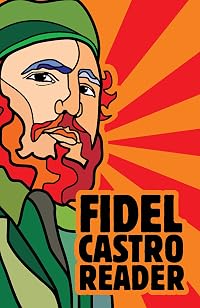
Fidel Castro Reader
by Fidel Castro
On This Page
Description
By his mastery of the spoken word, Fidel Castro reveals the unfolding process of the Cuban revolution, its extraordinary challenges, crises, chaos and achievements. Part of a two-volume anthology, this first volume is based on Castro's speeches.Tags
Recommendations










Member Reviews
By his mastery of the spoken word, Fidel Castro reveals the unfolding process of the Cuban revolution, its extraordinary challenges, crises, chaos and achievements. Part of a two-volume anthology, this first volume is based on Castro's speeches.
Ratings
Members
- Recently Added By
Author Information

381+ Works 2,320 Members
Fidel Alejandro Castro Ruz was born on August 13, 1926 in province of Oriente, Cuba. He entered the University of Havana's law school in 1945 and became involved in radical politics. After receiving his law degree, Castro briefly represented the poor, often bartering his services for food. In 1952, he ran for Congress as a candidate for the show more opposition Orthodox Party. However, the election was rushed because of a coup staged by Fulgencio Batista. Castro's initial response to the Batista government was to challenge it with a legal appeal, claiming that Batista's actions had violated the Constitution. The attempt failed. On July 26, 1953, Castro led a group of radical students in an attack on the Moncada barracks in Santiago de Cuba. Many of the rebels were killed. He was arrested and sentenced to 15 years in prison. To show the people that he was not a dictator, Batista released Castro and his followers in an amnesty after the 1954 presidential election. Once Castro returned to Cuba after an exile in Mexico, he began a campaign of harassment and guerrilla warfare against Batista. Batista fled Cuba on January 1, 1959. Under Castro's rule, more than 500 Batista-era officials were brought before courts-martial and special tribunals, convicted, and shot to death. Castro cut ties with the United States after President Dwight D. Eisenhower cut the American sugar quota and turned to the Soviet Union for assistance, eventually becoming a Communist. The Escambray Revolt, led by peasants and anti-Communist insurgents against the Castro government, lasted from 1959 to 1965, before it was crushed by Castro's army. Cuban exiles arrived in the United States by the thousands. The Central Intelligence Agency helped train an exile army to retake Cuba by force. On April 17, 1961, 1,500 Cuban fighters landed at the Bay of Pigs. Castro was waiting for them and most of the invaders were either captured or killed. Castro was the leader of Cuba until stepping down in 2006 due to diverticulitis. He died on November 25, 2016 at the age of 90. (Bowker Author Biography) show less
All Editions
Classifications
- Genres
- Nonfiction, History, Politics and Government, General Nonfiction, Biography & Memoir
- DDC/MDS
- 972.991064092 — History & geography History of North America Mexico, Central America, West Indies, Bermuda West Indies (Antilles) and Bermuda; Caribbean Bermuda
- LCC
- F1788.22 .C3 .A5 — Local History of the United States, Canada and Latin America Latin America. Spanish America Greater Antilles Cuba Communist regime
- BISAC
Statistics
- Members
- 41
- Popularity
- 717,806
- Reviews
- 1
- Rating
- (4.00)
- Languages
- English
- Media
- Paper, Ebook
- ISBNs
- 5
- ASINs
- 1