On This Page
Description
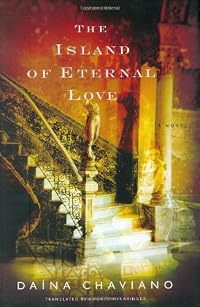
Hearing the life story of a mysterious old woman in a Little Havana bar, Cuban-American Cecilia learns about three generations of a family of diverse origins that includes such members as a reverent Chinese widow, an African slave, and a Spanish matriarch.Tags
Recommendations












Member Reviews
Latin American literature is famous for the genre of magical realism, but this was really only "magical" (and how I wish I meant that as a euphemism for "good"). It blends myths and concepts of magic from the Spanish, African and Chinese cultures that contributed to making Cuba, placing this hybridised concept of magic even in present-day Miami, which could potentially be interesting, but in this book it's not.
To be honest, most of this book is not interesting. As the blurb will tell you, the novel begins when reclusive Cuban emigrant Cecilia is dragged out of the house by two male friends who she ditches to meet an old woman, Amalia, at a Miami bar. The book is made up of short chapters that alternate between telling Amalia's entire show more family history and Cecilia's very boring, mundane existence.
Basically, Cecilia is a journalist and she is investigating some ghost house, since apparently she works for the kind of publication where a ghost house is a valid idea for a story. She gets involved in a lot of kooky New Age stuff and she also, at some point, meets a guy (Roberto) who is a rich businessman who just can't stop talking about his successful business and also, all the businesses he will open in Cuba once his profit-minded family can return. Cecilia doesn't even like him that much but she's devastated when he dumps her, to the point that she develops a psychosomatic illness that she is able to banish just by willing her blood pressure to go down. Hmmm…
Amalia's family history is more interesting, but still not that great. The characters aren't very well realised; they mostly just kind of blur together and I had to keep referring to the family trees in the first few pages because I just could not remember who had done what, or even who was who. Also, guess what, (almost) everyone was a successful small business owner. It was very unrealistic.
So we come to the other reason I didn't like this book – in addition to the badly realised characters, the awkward pacing, and so on, it was kind of right-wing. When early on it talks about shortages (Cecilia's musing that she'd never had hot chocolate in Cuba), the US embargo goes unmentioned. Later, you have the clairvoyant Delfina claiming that the failure of the US-backed Bay of Pigs invasion will be the greatest tragedy ever to befall Cuba, you have one of the small-business-owning (actually by this time, franchise-chain-owning) characters whingeing that he supported the rebels and don't they understand that private property is sacrosanct… blah blah blah blah blah. Over the entire book, Cecilia alternately conceives of Cuba as hell or else a once-beautiful country trashed and burned by criminals. This is frustrating. Mostly, it's just so damned shallow. I'm not trying to say it shouldn't have criticised Castro's regime at all – the pettiness making emigrants wait years for their exit permits, the stifling of dissent, persecution and harassment of dissidents etc. are all important – but any analysis of Cuba that states that the failure of the Bay of Pigs invasion was the greatest tragedy ever to befall Cuba is just trash. I mean, it's also a book largely set among the Cuban emigrant milieu in Miami written by a Cuban emigrant, so maybe I'm expecting a bit much from this politically. But like, there is left-wing criticism of the Castro regime and there is right-wing criticism, and I wasn't expecting this book to be so far to the right (the blurb makes it seem pretty apolitical).
So. Ultimately this is a kind of boring book that serves as a lament to the losses of the old Cuban bourgeoisie, and I did not like it. Unless you have no choice (like you find yourself in an airport where the bookstore has nothing except copies of this?), avoid. show less
To be honest, most of this book is not interesting. As the blurb will tell you, the novel begins when reclusive Cuban emigrant Cecilia is dragged out of the house by two male friends who she ditches to meet an old woman, Amalia, at a Miami bar. The book is made up of short chapters that alternate between telling Amalia's entire show more family history and Cecilia's very boring, mundane existence.
Basically, Cecilia is a journalist and she is investigating some ghost house, since apparently she works for the kind of publication where a ghost house is a valid idea for a story. She gets involved in a lot of kooky New Age stuff and she also, at some point, meets a guy (Roberto) who is a rich businessman who just can't stop talking about his successful business and also, all the businesses he will open in Cuba once his profit-minded family can return. Cecilia doesn't even like him that much but she's devastated when he dumps her, to the point that she develops a psychosomatic illness that she is able to banish just by willing her blood pressure to go down. Hmmm…
Amalia's family history is more interesting, but still not that great. The characters aren't very well realised; they mostly just kind of blur together and I had to keep referring to the family trees in the first few pages because I just could not remember who had done what, or even who was who. Also, guess what, (almost) everyone was a successful small business owner. It was very unrealistic.
So we come to the other reason I didn't like this book – in addition to the badly realised characters, the awkward pacing, and so on, it was kind of right-wing. When early on it talks about shortages (Cecilia's musing that she'd never had hot chocolate in Cuba), the US embargo goes unmentioned. Later, you have the clairvoyant Delfina claiming that the failure of the US-backed Bay of Pigs invasion will be the greatest tragedy ever to befall Cuba, you have one of the small-business-owning (actually by this time, franchise-chain-owning) characters whingeing that he supported the rebels and don't they understand that private property is sacrosanct… blah blah blah blah blah. Over the entire book, Cecilia alternately conceives of Cuba as hell or else a once-beautiful country trashed and burned by criminals. This is frustrating. Mostly, it's just so damned shallow. I'm not trying to say it shouldn't have criticised Castro's regime at all – the pettiness making emigrants wait years for their exit permits, the stifling of dissent, persecution and harassment of dissidents etc. are all important – but any analysis of Cuba that states that the failure of the Bay of Pigs invasion was the greatest tragedy ever to befall Cuba is just trash. I mean, it's also a book largely set among the Cuban emigrant milieu in Miami written by a Cuban emigrant, so maybe I'm expecting a bit much from this politically. But like, there is left-wing criticism of the Castro regime and there is right-wing criticism, and I wasn't expecting this book to be so far to the right (the blurb makes it seem pretty apolitical).
So. Ultimately this is a kind of boring book that serves as a lament to the losses of the old Cuban bourgeoisie, and I did not like it. Unless you have no choice (like you find yourself in an airport where the bookstore has nothing except copies of this?), avoid. show less
'The visions conjured from the old woman’s tale - the evocation of a Havana filled with music and life - had left her with an odd sensation of dislocation. She felt like one of those saints that can be in two places at the same time.' -from The Island of Eternal Love, page 10-
And that is exactly how I felt reading Daina Chaviano’s novel The Island of Eternal Love - dislocated. The novel is set in Miami and its protagonist is a young woman named Cecelia. Cecelia meets an old woman in a bar who begins to tell her strange tales about Cuba. Night after night, Cecelia returns to the bar to hear more of the woman’s stories. In between nights at the bar, Cecelia (who is a writer) also begins to track a mysterious tale about a ghost show more house.
I read to page 110 of this 313 page novel before setting it aside. The book did not capture me at all - instead it floated from one image to the next, never connecting the dots. The chapters can only be described as ephemeral - fleeting and strangely unsatisfying. In fairness to Chaviano, this novel is a translation and the stilted language (especially the dialogue) seemed to be related to translation difficulties. I have a feeling that I would have enjoyed the writing more had I been able to read the book in its original Spanish language.
M.E. Collins in a Chicago Sun Times review wrote:
'[The book] … weaves a sometimes disjointed but finally gratifying tale of loss and love across more than a century of Cuba’s past. Chaviano tenders intriguing love stories that illuminate “the symbolic union of the three ethnicities that make up the Cuban nation” through her passionate recreation of a Havana of yesterday and a Miami of today.'
Unfortunately I couldn’t stick with the story for its duration, so I don’t know if it would have been ultimately gratifying. But, perhaps it is a book you might enjoy.
I received this Advance Reader’s Edition from Riverhead Books. It was published in June.
Unrated (since I didn’t finish the book). show less
And that is exactly how I felt reading Daina Chaviano’s novel The Island of Eternal Love - dislocated. The novel is set in Miami and its protagonist is a young woman named Cecelia. Cecelia meets an old woman in a bar who begins to tell her strange tales about Cuba. Night after night, Cecelia returns to the bar to hear more of the woman’s stories. In between nights at the bar, Cecelia (who is a writer) also begins to track a mysterious tale about a ghost show more house.
I read to page 110 of this 313 page novel before setting it aside. The book did not capture me at all - instead it floated from one image to the next, never connecting the dots. The chapters can only be described as ephemeral - fleeting and strangely unsatisfying. In fairness to Chaviano, this novel is a translation and the stilted language (especially the dialogue) seemed to be related to translation difficulties. I have a feeling that I would have enjoyed the writing more had I been able to read the book in its original Spanish language.
M.E. Collins in a Chicago Sun Times review wrote:
'[The book] … weaves a sometimes disjointed but finally gratifying tale of loss and love across more than a century of Cuba’s past. Chaviano tenders intriguing love stories that illuminate “the symbolic union of the three ethnicities that make up the Cuban nation” through her passionate recreation of a Havana of yesterday and a Miami of today.'
Unfortunately I couldn’t stick with the story for its duration, so I don’t know if it would have been ultimately gratifying. But, perhaps it is a book you might enjoy.
I received this Advance Reader’s Edition from Riverhead Books. It was published in June.
Unrated (since I didn’t finish the book). show less
This is a pretty good read despite some minor flaws. It goes back and forth between modern day Miami and historical Cuba. Cecilia left Cuba and is currently living in Miami, but her past haunts her. She misses Cuba but also hates Cuba, or what Cuba has become. She meets an old lady in a bar who begins to tell her a tale of three separate families, all having made Cuba their home. There is a Chinese family that fled war torn China in hopes of finding refuge in the tropics, a family descendend from slaves, and a Spanish family. Each one of these families has stories of love, loss, revolution, and hope. Somehow, they all connect to each other. While Cecilia learns of all these families, she is forced to come to terms with her own history show more and losses while chasing a "phantom" house and dabbling in a bit of magic herself. Can she overcome her bitterness and move on? Can she find happiness in Miami?
There was a lot of magic and talking dead people, but I rather liked it all except the dwarf imp. I found that just a bit too.. preposterous. Otherwise, a very engaging read. I enjoyed all the stories when the imp wasn't popping up. However, are some things that seem to have been lost or neglected in the translation. Angela leaves Cuba for America while she is pregnant with Pepe and the book fails to tell the reader when they went back to Cuba. I was still under the impression that Angela and Pepe still lived in America until all of a sudden Pepe is visiting Mercedes in a house of ill repute in Cuba. It wasn't a short island hop back then so I was left scratching my head. Also, Pepe was born in America on one page and a few chapters later, the book says he was born in Cuba. Some things were just off. Thus, four stars. show less
There was a lot of magic and talking dead people, but I rather liked it all except the dwarf imp. I found that just a bit too.. preposterous. Otherwise, a very engaging read. I enjoyed all the stories when the imp wasn't popping up. However, are some things that seem to have been lost or neglected in the translation. Angela leaves Cuba for America while she is pregnant with Pepe and the book fails to tell the reader when they went back to Cuba. I was still under the impression that Angela and Pepe still lived in America until all of a sudden Pepe is visiting Mercedes in a house of ill repute in Cuba. It wasn't a short island hop back then so I was left scratching my head. Also, Pepe was born in America on one page and a few chapters later, the book says he was born in Cuba. Some things were just off. Thus, four stars. show less
This is a family saga that takes place along two parallel lines: one in our time and another that begins in the 19 Century. The modern story revolves around the paranormal investigations of a young journalist researching a phantom house that appears and disappears in different parts of her city, Miami. Different magical or supernatural events conspire to make these three stories from the past begin to mix. One of the best things is the interaction between the fantastic and the real worlds. I enjoyed the connection between humans and fantasy creatures. Once I began reading, I could not stop. I literally devoured the almost 400 pages.
Tres familias de orígenes y culturas dispares protagonizan esta apasionante saga de emigrantes que recalan en Cuba y cuyos destinos a lo largo de más de 150 años correrán parejos con los de la bella isla. Desde el Miami actual, la historia retrocede hasta 1856, cuando entran en contacto los personajes, procedentes de China, España y África, y surge el amor, que hallará una mágica continuidad un siglo más tarde. Una hermosa historia de esperanzas y sueños rotos, de nostalgia, exilio y amores unidos por el destino.
Jul 18, 2022Spanish
Tres familias de orígenes y culturas dispares protagonizan esta apasionante saga de emigrantes que recalan en Cuba y cuyos destinos a lo largo de más de 150 años correrán parejos con los de la bella isla. Desde el Miami actual, la historia retrocede hasta 1856, cuando entran en contacto los personajes, procedentes de China, España y África, y surge el amor, que hallará una mágica continuidad un siglo más tarde. Una hermosa historia de esperanzas y sueños rotos, de nostalgia, exilio y amores unidos por el destino. Esta novela ha ganado la Medalla de Oro en el certamen Florida Book Awards 2007
Jan 13, 2011Spanish
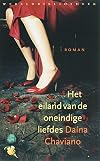
Een ongewone ontmoeting in een rokerige Cubaanse bar, is de opmaat voor een verhaal vol liefde, familie en geschiedenis.
Nov 13, 2009Dutch
Members
- Recently Added By
Lists

Bookriot's 100 Must-Read Sci-Fi Fantasy Novels By Female Authors
100 works; 9 members
Author Information

16+ Works 282 Members

Daína Chaviano is a LibraryThing Author, an author who lists their personal library on LibraryThing.
Some Editions
Awards and Honors
Awards
Distinctions
Series

Common Knowledge
- Original publication date
- 2006 (Spanish) (Spanish)
- People/Characters
- Cecilia; Amalia; Pablo; Lolo; Delfina; Kui-fa/Rosa (show all 8); Rita Montaner; Síu Mend/Manuel
- Important places
- Miami, Florida, USA; Havana, Cuba
- Epigraph
- You are always in my heart,
Even though you're far away:
Ernesto Lecuona (Cuba, 1895-Canary Islands, 1963) - Dedication
- To my parents
- First words
- It was so dark that Cecilia could hardly see her. Rather, she intuited her silhouette behind the small table next to the wall, beside the photos of the sacred dead: Beny Moré the genius of the bolero; Rita Montaner, adored d... (show all)iva of Cuban composers; the night-black chansonnier Bola de Nieve, with his smile, white and sweet as sugar.
Classifications
- Genres
- Fiction and Literature, General Fiction, Historical Fiction
- DDC/MDS
- 863.64 — Literature & rhetoric Spanish Literature Spanish fiction 20th Century 1945-2000
- LCC
- PQ7390 .C52 .I7513 — Language and Literature French, Italian, Spanish and Portuguese literatures Spanish literature Provincial, local, colonial, etc. Spanish America
- BISAC
Statistics
- Members
- 194
- Popularity
- 168,003
- Reviews
- 8
- Rating
- (3.42)
- Languages
- 11 — Czech, Danish, Dutch, English, Finnish, French, German, Hungarian, Italian, Slovak, Spanish
- Media
- Paper, Ebook
- ISBNs
- 23
- ASINs
- 1