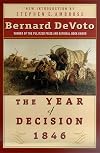
The Year of Decision: 1846
by Bernard DeVoto
On This Page
Description
This book tells many fascinating stories of the U.S. explorers who began the Western march from the Mississippi to the Pacific, from Canada to the annexation of Texas, California, and the Southwest lands from Mexico. It is the penultimate book of a trilogy which includes Across the Wide Missouri, for which DeVoto won both the Pulitzer and Bancroft prizes in 1948, and The Course of Empire, which won the National Book Award for Nonfiction in 1953. DeVoto's narrative covers the expanding show more Western frontier, the Mormons, the Donner party, Fremont's exploration, the Army of the West, and takes readers into Native American tribal life. show lessTags
Recommendations





















Member Reviews
Where to start? It's brilliant. It's engaging. It's unique. It's beautifully written. DeVoto is an inconoclast and loves knocking off the pedestal heroes like Zachary Taylor and John C. Fremont. And he loves the West, particularly the mountains. And he loves the Mountain Men.
This is not a chronological history book. It weaves together a number of stories: The Mexican American War, The Mormon migration, the migrations to Oregon and California (including the Donner party) and the ultimate creation of a continental American empire.
DeVoto asserts the creation of that empire doomed the idea of a loose affiliation of states, an affiliation the allowed slavery, the country's central contradiction. Once we became an empire, with stronger show more centralized government, confronting slavery was inevitable.
Maybe my favorite part of all DeVoto's books is the clear love, and fear, he has of the mountains. And equally for those people who are able to survive in that environment, and/or tame it. He writes, "Remember that the yield of a hard country is a love deeper than a fat and easy land inspires, that throughout the arid West the Americans have found a secret treasure." Maybe you have to have grown up in the mountains to understand.
If you like history, read this book. If you like literature, read this book. show less
This is not a chronological history book. It weaves together a number of stories: The Mexican American War, The Mormon migration, the migrations to Oregon and California (including the Donner party) and the ultimate creation of a continental American empire.
DeVoto asserts the creation of that empire doomed the idea of a loose affiliation of states, an affiliation the allowed slavery, the country's central contradiction. Once we became an empire, with stronger show more centralized government, confronting slavery was inevitable.
Maybe my favorite part of all DeVoto's books is the clear love, and fear, he has of the mountains. And equally for those people who are able to survive in that environment, and/or tame it. He writes, "Remember that the yield of a hard country is a love deeper than a fat and easy land inspires, that throughout the arid West the Americans have found a secret treasure." Maybe you have to have grown up in the mountains to understand.
If you like history, read this book. If you like literature, read this book. show less
Told in a friendly, accessible style, 1846 is a comprehensive look at the dynamics of the western migrations and the inner mood of a young, vigorous nationalism. I was hardly surprised to learn of the all too familiar ways of cunning politicians like James K. Polk and Senator Thomas Hart Benton, a primary mojo behind the aggressive push west termed 'Manifest Destiny'. DeVoto's love of detail bring the journey alive. The tribulations of the Mormons, the Donner Party, and Polk's War with Mexico are just a few of the major events covered in this fine book. The reader is introduced to all the major players in the country. Besides colorful tableaus of stars like Emerson, Whitman, and Thoreau we witness countless, humble pioneers, as well as show more famous mountain men like Jim Clyman, Jim Bridger and Jedediah Smith. The enormity of the journey and the mysterious natural history of a region famous for roaming bands of Indians, great herds of buffalo, endless deserts and impassable mountains, provide a majestic backdrop for strong leaders like Brigham Young or Stephen Kearney on the one hand and pathetic glory seekers like like John C. Fremont and General Taylor, who both deserve a wider, more critical exposure.
DeVoto throws light on that shadowy period between Cherokee removal and the Civil War. He is one of those few authors who makes me want to read more of his work. . show less
DeVoto throws light on that shadowy period between Cherokee removal and the Civil War. He is one of those few authors who makes me want to read more of his work. . show less
A good deal of focussed research underlay a lively account of the year in question. It presents the activities clearly, and is a good explanation of the intellectual and social underpinnings of the massive expansion of the USA. De Voto writes well, and provides many possible epigraphs for other writers.
2199 The Year of Decision:1846, by Bernard DeVoto (read 23 Mar 1989) When this book was published in 1942 I really wanted to read it but I have not till now. It certainly wasn't what I thought. It has no source footnotes and no bibliography. It tells in a kind of literary way a lot about the Donner party, while acknowledging George Stewart's book as the authority thereon, and a lot about the Mormons' journey to Utah, and some about the Mexican War and James K. Polk and Francis Parkman. But it is all kind of a mish-mash, and not history told as I like it. I definitely did not care for the book, even though it tells of interesting things. He sure has nothing but bad to say for Zachary Taylor and John C. Fremont.
Excellent but Devoto does like to ramble on
Bernard DeVoto is a forgotten great. Most people have never heard of him. This is my favorite of all his books. It is a close examination of what happened in 1846...a more important year than most would think.
A must read.
A must read.
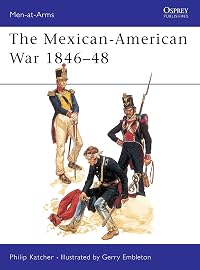
Relates the events that led up to the Mexican American War and the events of the war itself.
Members
- Recently Added By
Lists

Trinity College Booklist (1951): Class Four, History
120 works; 2 members
Author Information

30+ Works 5,116 Members
A Harvard University graduate and impassioned student and teacher of American history and literature, Utah-born Bernard de Voto held faculty positions at Northwestern University and Harvard University. He was also the second editor of the Saturday Review of Literature and for many years wrote "The Editor's Easy Chair" column in Harper's magazine. show more At Harvard, de Voto was the editor of the Mark Twain manuscripts and produced several works about Twain and his time. He is best known for his trilogy-The Year of Decision: 1846 (1943), Across the Wide Missouri (1947), and The Course of Empire (1952). For Across the Wide Missouri, he personally traced the western trails first blazed by Lewis and Clark. Although recent scholarship has changed many perceptions about the West, de Voto's splendid accounts continue to have wide appeal. (Bowker Author Biography) show less
Awards and Honors
Series
Belongs to Publisher Series
Sentry Editions (11)
Common Knowledge
- Canonical title
- The Year of Decision: 1846
- Original title
- The Year of Decision 1846
- Original publication date
- 1943
- People/Characters
- Thomas Hart Benton; Jim Bridger; Edwin Bryant; Kit Carson; James Clyman; Alexander Doniphan (show all 21); Ralph Waldo Emerson; John Charles Frémont; Lansford Hastings; Stephen Watts Kearny (General); James Knox Polk; Abraham Lincoln; Francis Parkman; James Frazier Reed; Margaret Keyes Reed; Virginia Reed, nee Backenstoe; Antonio López de Santa Anna; Zachary Taylor; Henry David Thoreau; Jessy Quinn Thornton; Brigham Young (1801–1877)
- Important places
- California, USA; Texas, USA; Mexico; Oregon, USA; Fort Bridger, Wyoming, USA; Fort Hall, Idaho (show all 19); Fort Laramie, Wyoming Territory, USA; Fort Leavenworth, Kansas, USA; New Mexico, USA; St. Louis, Missouri, USA; Santa Fe Trail; Rio Grande River; Great Salt Lake Desert; Oregon Trail, USA; Independence, Missouri, USA; Sierra Nevada Mountains; Truckee (now Donner) Lake, California (now Donner); Continental Divide; Fremont (now Donner) Pass (now Donner)
- Important events
- Bear Flag Revolt; Western Migration (1846); Mexican-American War (1846 | 1848); Fall of Mexico City (1847-09-14); Manifest Destiny; Wilmot Proviso (show all 7); Donner Party Departs Missouri for California
- Dedication
- DEDICATION
Dear Kate:
While I was writing this book you sometimes asked me what it was about. Reading it now, you will see that, though it is about a good many things, one theme that recurs is the basic courage and h... (show all)onor in the face of adversity which we call gallantry. It is always good to remember human gallantry, and it is especially good in times like the present. So I want to dedicate a book about the American past written in a time of national danger to a very gallant woman,
to
Katharine Grant Sterne
Yours, Benny - First words
- PREFACE
The purpose of this book as stated in the opening pages is a literary purpose: to realize the pre-Civil War, Far Western frontier as personal experience.
INVOCATION
When I go out of the house for a walk, uncertain as yet whither I will bend my steps, and submit myself to my instinct to decide for me, I find, strange and whimsical as it may seem, that I finally and inevit... (show all)ably settle southwest, toward some particular word or meadow or deserted pasture or hill in that direction....
Henry Thoreau - Last words
- (Click to show. Warning: May contain spoilers.)The past was not going to win the appeal to arms, the continental nation was not going to be Balkanized, it was going to remain an empire and dominate the future.
Classifications
Statistics
- Members
- 651
- Popularity
- 44,441
- Reviews
- 8
- Rating
- (3.96)
- Languages
- English
- Media
- Paper, Ebook
- ISBNs
- 10
- ASINs
- 31