On This Page
Description
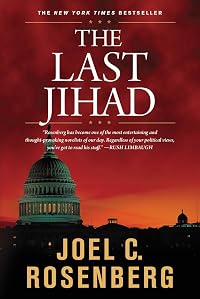
Jon Bennett is a senior White House advisor, but nothing has prepared him for the terror that he will face. Saddam Hussein dispatches his top hit men to assassinate the President of the United States. Iraqi terrorists spread carnage throughout London, Paris, and Riyadh ... and the Butcher of Baghdad has a nuclear ace in his hand that he has not yet played.Tags
Recommendations
Member Reviews
"3 stars for the book; 1 star for the reader..."
Okay... let's get this out on the table: I am a Christian, Christ-follower, Believer, pick your favorite monicker for someone espousing personal faith in Jesus Christ, and belief in the Bible as the inspired Word of God. And this book was recommended to me this year (2011) by a friend of the same ilk who framed their recommendation by making sure I knew the author was a "Christian novelist".
Joel Rosenberg was capable and clearly did his homework, effectively applying this into a technically accurate portrayal of the key backdrops of the story: world politics of the day, international finance, and the seamy realms of military and government intelligence and espionage. Also, the show more high-voltage topic proclaimed in the title of Western vs. Islamic tension and conflict prepared me to be riveted.
Alas, I was anything but riveted. Why? Because I failed to perform my due-diligence and discover the book was first published in 2002. Nothing knocks the props out from under a topical novel more effectively than the passage of time and actual historical events. As it turns out, the Republicans weren’t repeatedly reelected after 911 and Sadaam Hussein, though a dirtbag, wasn’t much of an evil geopolitical mastermind.
Still I decided to put aside the facts in order to fairly judge the fiction and stuck with the book. I quickly faced my next challenge. In his attempts to be edgy while still holding fast to Christian mores (i.e., avoiding dirty words and suggestive situations) Rosenberg sacrifices a good bit of realism and comes off smarmy and contrived. Christian friends, forgive me...but, really...you know what I'm talking about. Having read a couple of outstanding novels by secular authors lately, there was just no comparison. Rosenberg is a competent writer, and my opinion of him would not have been diminished if he wrote the way real people speak. Jesus didn't decide who to interact with based on their deportment. And I find I enjoy reading more with my head out of the sand. show less
Okay... let's get this out on the table: I am a Christian, Christ-follower, Believer, pick your favorite monicker for someone espousing personal faith in Jesus Christ, and belief in the Bible as the inspired Word of God. And this book was recommended to me this year (2011) by a friend of the same ilk who framed their recommendation by making sure I knew the author was a "Christian novelist".
Joel Rosenberg was capable and clearly did his homework, effectively applying this into a technically accurate portrayal of the key backdrops of the story: world politics of the day, international finance, and the seamy realms of military and government intelligence and espionage. Also, the show more high-voltage topic proclaimed in the title of Western vs. Islamic tension and conflict prepared me to be riveted.
Alas, I was anything but riveted. Why? Because I failed to perform my due-diligence and discover the book was first published in 2002. Nothing knocks the props out from under a topical novel more effectively than the passage of time and actual historical events. As it turns out, the Republicans weren’t repeatedly reelected after 911 and Sadaam Hussein, though a dirtbag, wasn’t much of an evil geopolitical mastermind.
Still I decided to put aside the facts in order to fairly judge the fiction and stuck with the book. I quickly faced my next challenge. In his attempts to be edgy while still holding fast to Christian mores (i.e., avoiding dirty words and suggestive situations) Rosenberg sacrifices a good bit of realism and comes off smarmy and contrived. Christian friends, forgive me...but, really...you know what I'm talking about. Having read a couple of outstanding novels by secular authors lately, there was just no comparison. Rosenberg is a competent writer, and my opinion of him would not have been diminished if he wrote the way real people speak. Jesus didn't decide who to interact with based on their deportment. And I find I enjoy reading more with my head out of the sand. show less
Some excellent action, starting with the opening sequence where a rogue Gulfstream IV is shot down, but the explosion trashes the President's limo, the ending shootout in the former top Mossad agent's house in Jerusalem with the four horseman of the apocalypse Arab hitmen, and the roughly simultaneous sniper sequence prior to the memorial service for the secret service agents killed in the opening scene. However, there were some parts that could have been better, with some of the denouement coming from less than likely places and failure to fully utilize the main character's expertise: the ability to synthesize patterns in obscure details. But, the basic premise of the book, threats to Israel's existence from a nuclear-capable Iraq, led show more by a dying Saddam Hussein was well done. show less
The initial allure of this doomsday thriller, the way it builds a diabolical plot around real public figures and political conflicts, turns out to be its major weakness. Set in the year 2010 during the presidency of Bush's successor, the novel dazzles the reader at first with its compelling characters, knowledge of the president's inner circle, and descriptions of military hardware and geopolitical events. But like Rosenberg's protagonist Jon Bennett, who prides himself on his ability to foresee future trends, the author makes bold and unnecessary predictions about the war on terror and the situation in Iraq, many of which were almost immediately overcome by real world events. These false predictions, which could have been avoided by show more populating his novel with fictitious villians, end up sacrificing what might have been a powerful story in order to further Rosenberg's thinly-veiled political agenda.
Another problem with the novel is the bumpiness of the plotting after the first few chapters. Instead of allowing the reader to witness these shocking events through the eyes of his core characters, Rosenberg jumps from scene to scene and viewpoint to viewpoint every few paragraphs or less. While this keeps the attention deficit types turning pages, it also renders the story telling more impersonal and disjointed than it could have been.
And then there's the ending, which I can only liken to the sensation of rounding a sharp turn in the road and driving off a cliff. No time for reflection. No tying up of loose ends. Just a big unfulfilling void.
-Kevin Joseph, author of "The Champion Maker" show less
Another problem with the novel is the bumpiness of the plotting after the first few chapters. Instead of allowing the reader to witness these shocking events through the eyes of his core characters, Rosenberg jumps from scene to scene and viewpoint to viewpoint every few paragraphs or less. While this keeps the attention deficit types turning pages, it also renders the story telling more impersonal and disjointed than it could have been.
And then there's the ending, which I can only liken to the sensation of rounding a sharp turn in the road and driving off a cliff. No time for reflection. No tying up of loose ends. Just a big unfulfilling void.
-Kevin Joseph, author of "The Champion Maker" show less
The Last Jihad is a tightly plotted political thriller that blends high-stakes suspense with geopolitical intrigue. Set against a backdrop of terrorism, international conflict, and strategic maneuvering, the novel follows its characters through a narrative that aims to reflect contemporary anxieties about global security while maintaining the conventions of the genre.
Joel C. Rosenberg utilizes detailed knowledge of political structures and crisis scenarios to create a story that is rich in action and premise, though its speculative elements and bold plot devices may align more with the expectations of thriller readers than with strict realism. The pacing keeps the narrative engaging, and the interplay of characters and political events show more gives the book a compelling momentum.
Readers interested in fast-paced fiction that intersects with modern political themes and the thriller tradition will likely find The Last Jihad a provocative and entertaining read. show less
Joel C. Rosenberg utilizes detailed knowledge of political structures and crisis scenarios to create a story that is rich in action and premise, though its speculative elements and bold plot devices may align more with the expectations of thriller readers than with strict realism. The pacing keeps the narrative engaging, and the interplay of characters and political events show more gives the book a compelling momentum.
Readers interested in fast-paced fiction that intersects with modern political themes and the thriller tradition will likely find The Last Jihad a provocative and entertaining read. show less
This was an okay read. It kept me interested and was fast paced. Like other readers, I was a bit put off by Rush Limbaugh's endorsement of this book, but overall I didn't find anything objectionable. It got a bit preachy at times but it was refreshing to see characters talk about their faith, especially considering the fact so much of the history of the Middle East is centered around disagreements about faith. The book is a little dated, though, as it has Saddam Hussein still in power, Yassar Arafat still alive, etc. And since we have gone to war in Iraq and it has not been as "tidy" as these characters hope, it's a little farfetched now. I guess that's the danger of writing books based on current events.
The last part of the book show more disappointed me for a couple of reasons. For one, he killed off one of my favorite characters (sorry if this is a spoiler--I won't say who). And second, the ending is so abrupt I figure he had a sequel in mind. The last sentence is "And yet, in his heart, MacPherson knew it had really just begun." I don't know how you can call it a complete story with an ending like the one this has--what happens now?! All that fairy tale stuff they discussed about the oil deal? Yeah, right. Sorry--I'm feeling cynical :)
Anyway, here's one quote I liked from this book (because I think it is probably true):
"The problem with you Americans is that you don't believe in evil...the CIA and FBI and definitely the guys at State don't properly anticipate horrible, catastrophic events because we don't really believe in the presence of evil, the presence of a dark and wicked and nefarious spiritual dimension that drives some men to do the unthinkable." show less
The last part of the book show more disappointed me for a couple of reasons. For one, he killed off one of my favorite characters (sorry if this is a spoiler--I won't say who). And second, the ending is so abrupt I figure he had a sequel in mind. The last sentence is "And yet, in his heart, MacPherson knew it had really just begun." I don't know how you can call it a complete story with an ending like the one this has--what happens now?! All that fairy tale stuff they discussed about the oil deal? Yeah, right. Sorry--I'm feeling cynical :)
Anyway, here's one quote I liked from this book (because I think it is probably true):
"The problem with you Americans is that you don't believe in evil...the CIA and FBI and definitely the guys at State don't properly anticipate horrible, catastrophic events because we don't really believe in the presence of evil, the presence of a dark and wicked and nefarious spiritual dimension that drives some men to do the unthinkable." show less
I believe this is the third of Rosenberg's fiction books. A bit dated now (first released in 2002) but still enjoyable as an early effort. The finish certainly comes with a dose of adrenaline. Rosenberg writes geopolitical ficton based on a Christian world view of current/future world events, which is subtly presented through characters of faith who depend upon God's wisdom and mercy. Character development is good but not great in this book, but it is also the first in a series. It was strong enough that I will read the next. He is out of his element when he gets into military operations and tech, but there isn't enough of that to spoil the story, just enough to make things happen.
Overall I give this one a 3.5. His later Twelfth Imam show more series is stronger so there is hope for this one as it develops. show less
Overall I give this one a 3.5. His later Twelfth Imam show more series is stronger so there is hope for this one as it develops. show less
Lots of people have called Rosenberg a modern Nostradamus, but I think that he is simply someone who pays attention to events and the ripple effect they have on other events. For instance the first book in his Political Thrillers series (creative series title I know), The Last Jihad begins with a hijacked plane, and while it refers a couple of times in the beginning to 9/11, the majority of the book was written pre-9/11 and those bits were added in later rewrites according the preface in the second book The Last Days.
The characters in the book are well thought out most notably in their background which gives them more rounding than otherwise would. There's a lot of history built into what happens in the book, and a lot of it is show more explained. Most of it isn't things that would be internationally well known either. One particularly pivotal character to the entire book (though not the main characters), just happened to be curious and bored ten years or more ago and it resulted in the opening scenes of the book.
At the same time anyone who keeps up with politics would find it interesting as an alternative history: What if? The plot is a logical production of what would have happened if, rather than going into Iraq in a post 9/11 world we dealt with them diplomatically, but hunted out and tracked down most of the terrorists. The biggest initial thing that changed was that following bush a Colorado Republican named MacPherson was elected into office to continue the work. Though the date of the opening is never given clues lead to the deduction that the book opens on the lead up to Thanksgiving 2010. The clues include: that it's Thanksgiving week, he's returning home for it; that it's just passed mid-term elections; and that he could get reelected with a landslide if his popularity holds. From there the tangents begin to diverge quickly.
The first two chapters of the book are the hardest to read. The first one because it jumps right into action packed drama, but you're still adjusting to the author's style of writing (which skips around though each scene is a complete scene). The second one is hard because, even without technical terms, a lot of financial thoughts and paragraphs occur and if you don't think in terms of high finance you might have to wade through it twice, or at least slow down (which is what I did).
This is the first book, and if you like nice wrapped up endings to the end of your books be ready with the second book on hand. The plot of the first book is wrapped up to my satisfaction and I will be trying to read a few other things first. However, the plot in general is not wrapped up; and will continue on for another four books (thus far) the second of which also is eerily accurate. According to the reviews.
The settings are well described when they deviate from something that anyone would know. For instance in the airport the biggest description refers to the long lines and is about that long; but when they go off the beaten path the descriptions get much more detailed and take in all the senses. I am thinking of one scene in particular, but because it is in the latter half of the book I won't bother to share it, but let you discover it.
The book does have Christian leanings. It isn't overwhelming, or preachy, but consider the factions involved - Israel and Iraq (which are at each other's throats over religion). Bible verses are quoted a few times, but that's about it. Just thought I should make anyone who was thinking about reading it, but has very set views of religion and politics aware of it.
The second cautionary note is that there are a lot of players. If you have trouble keeping names and jobs and personalities straight ... (Normally I'd say names and faces, but there aren't really faces here) get a pencil and a piece of paper ready; jot down the name and the political position or job association. That will help keep you straight.
Over all it was a great book, but I'm holding off on the next one because it sucks a lot out of you. It's not for children, nor is it for everyone; but those who like political thrillers will enjoy this one.
Now because political thrillers aren't generally my cup of tea, but I wanted to try something new, I don't have a lot of "If you like X try Y" for you.
If you want a little more religious studies with your thriller try Tim LaHaye's and Jerry B. Jenkin's Left Behind series which is based on Revelations (the last book of the Bible).
If you would prefer your thriller with less overt religion I would say try the series 24, which is actually a television series, but I did say that I didn't have a lot of Political Thrillers in my background.
http://casinerina.blogspot.com show less
The characters in the book are well thought out most notably in their background which gives them more rounding than otherwise would. There's a lot of history built into what happens in the book, and a lot of it is show more explained. Most of it isn't things that would be internationally well known either. One particularly pivotal character to the entire book (though not the main characters), just happened to be curious and bored ten years or more ago and it resulted in the opening scenes of the book.
At the same time anyone who keeps up with politics would find it interesting as an alternative history: What if? The plot is a logical production of what would have happened if, rather than going into Iraq in a post 9/11 world we dealt with them diplomatically, but hunted out and tracked down most of the terrorists. The biggest initial thing that changed was that following bush a Colorado Republican named MacPherson was elected into office to continue the work. Though the date of the opening is never given clues lead to the deduction that the book opens on the lead up to Thanksgiving 2010. The clues include: that it's Thanksgiving week, he's returning home for it; that it's just passed mid-term elections; and that he could get reelected with a landslide if his popularity holds. From there the tangents begin to diverge quickly.
The first two chapters of the book are the hardest to read. The first one because it jumps right into action packed drama, but you're still adjusting to the author's style of writing (which skips around though each scene is a complete scene). The second one is hard because, even without technical terms, a lot of financial thoughts and paragraphs occur and if you don't think in terms of high finance you might have to wade through it twice, or at least slow down (which is what I did).
This is the first book, and if you like nice wrapped up endings to the end of your books be ready with the second book on hand. The plot of the first book is wrapped up to my satisfaction and I will be trying to read a few other things first. However, the plot in general is not wrapped up; and will continue on for another four books (thus far) the second of which also is eerily accurate. According to the reviews.
The settings are well described when they deviate from something that anyone would know. For instance in the airport the biggest description refers to the long lines and is about that long; but when they go off the beaten path the descriptions get much more detailed and take in all the senses. I am thinking of one scene in particular, but because it is in the latter half of the book I won't bother to share it, but let you discover it.
The book does have Christian leanings. It isn't overwhelming, or preachy, but consider the factions involved - Israel and Iraq (which are at each other's throats over religion). Bible verses are quoted a few times, but that's about it. Just thought I should make anyone who was thinking about reading it, but has very set views of religion and politics aware of it.
The second cautionary note is that there are a lot of players. If you have trouble keeping names and jobs and personalities straight ... (Normally I'd say names and faces, but there aren't really faces here) get a pencil and a piece of paper ready; jot down the name and the political position or job association. That will help keep you straight.
Over all it was a great book, but I'm holding off on the next one because it sucks a lot out of you. It's not for children, nor is it for everyone; but those who like political thrillers will enjoy this one.
Now because political thrillers aren't generally my cup of tea, but I wanted to try something new, I don't have a lot of "If you like X try Y" for you.
If you want a little more religious studies with your thriller try Tim LaHaye's and Jerry B. Jenkin's Left Behind series which is based on Revelations (the last book of the Bible).
If you would prefer your thriller with less overt religion I would say try the series 24, which is actually a television series, but I did say that I didn't have a lot of Political Thrillers in my background.
http://casinerina.blogspot.com show less
Members
- Recently Added By
Author Information

63+ Works 12,523 Members
Joel C. Rosenberg was born on April 17, 1967 in Rochester, New York. He received a BFA in filmmaking from Syracuse University in 1988. He writes both fiction and nonfiction books. His fiction works include The Last Jihad, The Last Days, The Copper Scroll, Dead Heat, The Twelfth Imam, The Tehran Initiative, The Auschwitz Escape, and the J. B. show more Collins series. The Ezekiel Option was named by the Evangelical Christian Publishers Association as the Gold Medallion winner of the Best Novel of 2006. His nonfiction works include Epicenter, Inside the Revolution, and Implosion: Can America Recover from Its Economic and Spiritual Challenges in Time?. He is also a communications strategist and has worked with Steve Forbes, Rush Limbaugh, former Israeli deputy prime minister Natan Sharansky, and Israeli Prime Minister Benjamin Netanyahu. He writes commentaries for National Review as well as a weekly e-mail update known as "Flash Traffic" for business and political leaders. (Bowker Author Biography) show less
Awards and Honors
Distinctions
Series

Work Relationships
Common Knowledge
- Canonical title
- The Last Jihad
- Original title
- The Last Jihad
- Original publication date
- 2002
- People/Characters
- Jon Bennett; Erin McCoy
Classifications
Statistics
- Members
- 1,460
- Popularity
- 16,119
- Reviews
- 32
- Rating
- (3.86)
- Languages
- Dutch, English, Portuguese, Spanish
- Media
- Paper, Audiobook, Ebook
- ISBNs
- 29
- UPCs
- 1
- ASINs
- 6