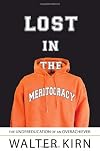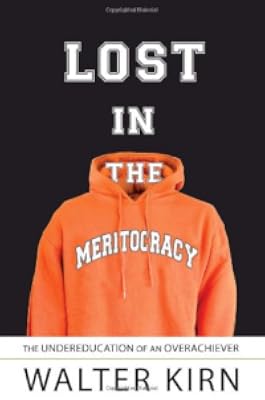
Lost in the Meritocracy: The Undereducation of an Overachiever
by Walter Kirn
On This Page
Description
Chronicles the author's trip through American higher education, where standardized tests, class rankings and gamesmanship stand in the way of true intellectual fulfillment, revealing the psychic costs of the American educational system.Tags
Recommendations





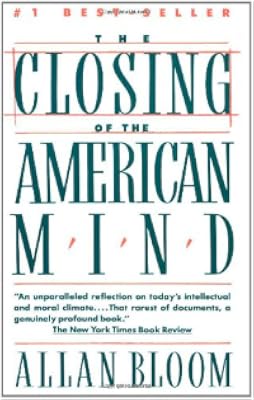

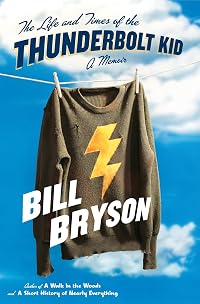

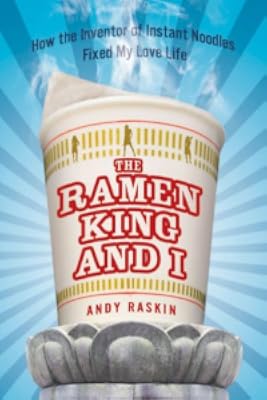


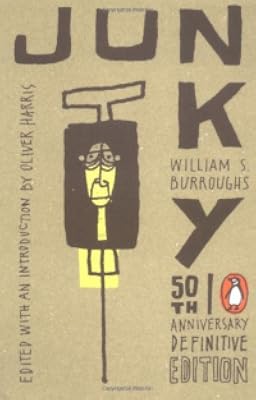







Member Recommendations
Member Reviews
I didn't actually read this book, but I did read the essay of the same name in the Atlantic and if there's one thing Kirn taught me, it's that that entitles me to fake it. With that in mind, allow me to pronounce this the apotheosis of young-provincial-freshman-finds-feet-and-dupes-rich-kids-at-elite-school literature (a surprisingly limited category: Jim Dixon? Prof at a red-brick. Michael Pemulis? Second fiddle. Felix Krull? Didn't even go to university, fleecing your way into the elite back then was more about hanging out in hotel lobbies and faro games I guess?) in English.
"We'd been discussing books, at his request. He'd looked me up that night for this very purpose. While I'd been off at Princeton, polishing my act, he'd become a show more real reader and also a devoted Buddhist. He said he had no one to talk to, no one who shared his interest in art and literature, so when he'd heard I was home, he'd driven right over. We had a great deal in common, Karl said.
But we didn't, in fact, and I didn't know how to tell him this. To begin with, I couldn't quote the Transcendentalists as accurately and effortlessly as he could. I couldn't quote anyone. I'd honed more-marketable skills: for flattering those in authority without appearing to, for ranking artistic reputations according to the latest academic fashions, for matching my intonations and vocabulary to the background of my listener, for placing certain words in smirking quotation marks and rolling my eyes when someone spoke too earnestly about some "classic" work of "literature," for veering left when the conventional wisdom went right and then doubling back if the consensus changed.
Flexibility, irony, class consciousness, contrarianism." show less
"We'd been discussing books, at his request. He'd looked me up that night for this very purpose. While I'd been off at Princeton, polishing my act, he'd become a show more real reader and also a devoted Buddhist. He said he had no one to talk to, no one who shared his interest in art and literature, so when he'd heard I was home, he'd driven right over. We had a great deal in common, Karl said.
But we didn't, in fact, and I didn't know how to tell him this. To begin with, I couldn't quote the Transcendentalists as accurately and effortlessly as he could. I couldn't quote anyone. I'd honed more-marketable skills: for flattering those in authority without appearing to, for ranking artistic reputations according to the latest academic fashions, for matching my intonations and vocabulary to the background of my listener, for placing certain words in smirking quotation marks and rolling my eyes when someone spoke too earnestly about some "classic" work of "literature," for veering left when the conventional wisdom went right and then doubling back if the consensus changed.
Flexibility, irony, class consciousness, contrarianism." show less
I was expecting to be impressed with this book, since I agreed with its main idea, that there are "costs of an educational system where the point is simply to keep accumulating points and never to look back-- or within" (back cover), and identified with its central experience, having a "talent for some things, a knack for many things, and a genius for one thing: running up the count.... Nobody told us it wouldn't be enough" (ch. 1), but, maybe because this sort of thing is familiar for me, probably because the 'execution' isn't what it could have been, the result is a book that I'll read once, not treasure forever. (To indulge in comparison, Ned Vizzini's "It's Kind of a Funny Story" does a better job with the idea of being held back by show more advanced education, and he lacks the sheer autobiographical skill of Augusten Burroughs ('Running with Scissors').) The result is a book which is acceptable, rather than exceptional.
(8/10) show less
(8/10) show less
I liked this memoir. It reinforced for me some thoughts I've had in the last 20 years about what kind of teaching is going on in English departments at universities and colleges across the nation. Post-modernism be damned. There are books that are classics, that have something to teach us about being human, and the smug purveyors of literary theory claptrap are nothing but intellectual phonies. Kirn begins his real education when he proceeds to start reading from the canon. This is a book worth reading.
It's hard to come up with an incisive review of a book when it took you about an hour to read on a bumpy bus. So for entertaining travel reading, I give it five stars.
However, I found Kirn's memoir of sorts to be excessively self-indulgent, excessively "woe-is-me," and (I hope, at least) exaggerated. Either that, or Kirn and his fellow Princetonians live in a hellish netherworld that is completely unfamiliar.
What I did like, though, were his reflections on being elite, on being somebody who can spit up a good SAT score without understanding or enjoying the material, his ability to pose his way through countless English classes, and his writing style.
The book is not as satisfying as I'd like it to be, and rather than reading like a show more psychological exploration of the self or an exploration of the educational system, it comes off as a series of sexcapades and drug binges relevant to the story only because they happened at Princeton. show less
However, I found Kirn's memoir of sorts to be excessively self-indulgent, excessively "woe-is-me," and (I hope, at least) exaggerated. Either that, or Kirn and his fellow Princetonians live in a hellish netherworld that is completely unfamiliar.
What I did like, though, were his reflections on being elite, on being somebody who can spit up a good SAT score without understanding or enjoying the material, his ability to pose his way through countless English classes, and his writing style.
The book is not as satisfying as I'd like it to be, and rather than reading like a show more psychological exploration of the self or an exploration of the educational system, it comes off as a series of sexcapades and drug binges relevant to the story only because they happened at Princeton. show less
This book was well written, other than that, I'm not sure what to say about. Kirn's background is unusual and not at all what I has assumed it to be. His father dragged the family about the country in search of something which he may never have found. Kirn learned how to work the system but never found any substance in his life. For all his efforts, he never seemed to derive pleasure or even satisfaction. That is what puzzles me - I didn't come away with the feeling that he is now beyond that.
He worked the system. Better, he knew how to work the system.He was not particularly well educated. He faked it. He scammed his teachers. He took the right classes. He aced the SAT.I’m not sure I really wanted to know this. Is he typical? I know I don’t want to know the answer to that.
If you've read the article in The Atlantic Monthly that this was based on, there's not much added here to enlarge on the idea there that the elite of academia are just professional bullshitters. What is added is a selection of autobiographical details, many of them sexual, surrounding his time of getting into and being at Princeton.
I think the Atlantic article was a better piece of writing, because it was a coherent piece. Its being fleshed out into this book for the most part just dilutes the original point.
There is one story that was added in this novelization which exemplifies the whole: Mr. Kirn helped out with a student-created play on the Princeton campus, called "Plants and Waiters." The curtain opens with a stage that is empty show more except for a large number of potted plants. There is silence. The silence continues. As the audience "waits" for something to happen, the authors snicker backstage, wondering how long it will take for someone to leave. show less
I think the Atlantic article was a better piece of writing, because it was a coherent piece. Its being fleshed out into this book for the most part just dilutes the original point.
There is one story that was added in this novelization which exemplifies the whole: Mr. Kirn helped out with a student-created play on the Princeton campus, called "Plants and Waiters." The curtain opens with a stage that is empty show more except for a large number of potted plants. There is silence. The silence continues. As the audience "waits" for something to happen, the authors snicker backstage, wondering how long it will take for someone to leave. show less
Members
- Recently Added By
Author Information

24+ Works 2,252 Members
Walter Kirn (born 1962) is an American novelist, literary critic, and essayist. He graduated from princeton University in 1983. Kirn is the author of eight books, including Up in the Air, which was made into a movie starring George Clooney, and Blood Will Out, a memoir of his friendship with the imposter and convicted murderer, Clark Rockefeller. show more he has also reviewed books for New York Magazine and has written for The New York Times Book Review and New York Times Sunday Magazine, and is a contributing editor of Time magazine. In addition to teaching nonfiction writing at the University of Montana, Kirn was the 2008-09 Vare Nonfiction Writer in Residence at the University of Chicago. (Bowker Author Biography) show less
Awards and Honors
Distinctions
Common Knowledge
- Original publication date
- 2009-05-19
- Important places
- Princeton University, Princeton, New Jersey, USA; Minnesota, USA
Classifications
Statistics
- Members
- 287
- Popularity
- 112,706
- Reviews
- 9
- Rating
- (3.07)
- Languages
- English
- Media
- Paper, Ebook
- ISBNs
- 3
- ASINs
- 5