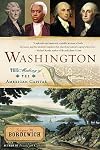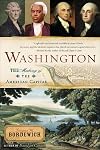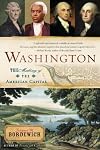
Washington: The Making of the American Capital
by Fergus Bordewich 
On This Page
Description
From the acclaimed author of "Bound for Canaan" comes a major work of American history on the astonishing compromises and alliances involved in making Washington, D.C., the capital of the new nation..Tags
Recommendations







Member Reviews
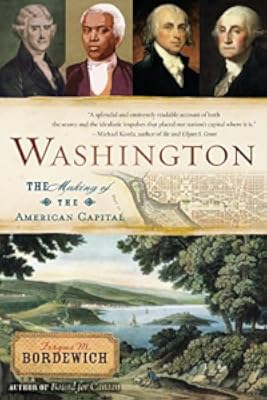
Bordewich’s narrative about the “making” of Washington DC is quite an engaging read. Evidencing a strong critical demeanor – occasionally bordering on angst – the author covers the agendas and foibles of such figures as L’Enfant, the commissioners, the speculators, and the Founding Fathers as the Potomac deal developed. Also significant is the laudable focus on the central role of African Americans – free and enslaved – in the building of the city. There’s such an emphasis, in fact, that I’m surprised this doesn’t at least inform the book's subtitle. The inclusion of a Benjamin Banneker portrait – Mt Rushmore-like – alongside three of the white dudes that show up on our currency is the only tell-tale sign of show more Bordewich’s serious presentation of the issues around slavery, Philadelphia’s abolitionist milieu, and the impossibility of DC’s realization without such forced labor.
To balance his focus on this oft-ignored contribution (which, unfortunately must cope with an obvious dearth of archival documentation), Bordewich openly portrays the bumbling incompetence, graft, and/or self-interest that tended to undermine the supposed noble intentions granted to many of the original movers, shakers, and (literally) Big Wigs involved. It’s very entertaining - I could easily imagine our contemporary political elite repeating this near-fiasco today (if only they could figure out how to collect taxes from billionaires).
My only disappointment (as is typical, through not reading the book jacket description) is that – after recently reading a biography about L’Enfant – I had hoped that this book would cover a longer period of Washington’s development. I somehow thought that Bordewich would conclude with Marion Barry’s pipe or something. But alas, the timeline is exactly the same; tons of attention to the first 10 ill-fated years with a quick segue to Grant’s decision to finally fund this damn thing once and for all. Nonetheless, this is certainly a terrific story of our Capital’s origins. show less
To balance his focus on this oft-ignored contribution (which, unfortunately must cope with an obvious dearth of archival documentation), Bordewich openly portrays the bumbling incompetence, graft, and/or self-interest that tended to undermine the supposed noble intentions granted to many of the original movers, shakers, and (literally) Big Wigs involved. It’s very entertaining - I could easily imagine our contemporary political elite repeating this near-fiasco today (if only they could figure out how to collect taxes from billionaires).
My only disappointment (as is typical, through not reading the book jacket description) is that – after recently reading a biography about L’Enfant – I had hoped that this book would cover a longer period of Washington’s development. I somehow thought that Bordewich would conclude with Marion Barry’s pipe or something. But alas, the timeline is exactly the same; tons of attention to the first 10 ill-fated years with a quick segue to Grant’s decision to finally fund this damn thing once and for all. Nonetheless, this is certainly a terrific story of our Capital’s origins. show less
Bordewich’s narrative about the “making” of Washington DC is quite an engaging read. Evidencing a strong critical demeanor – occasionally bordering on angst – the author covers the agendas and foibles of such figures as L’Enfant, the commissioners, the speculators, and the Founding Fathers as the Potomac deal developed. Also significant is the laudable focus on the central role of African Americans – free and enslaved – in the building of the city. There’s such an emphasis, in fact, that I’m surprised this doesn’t at least inform the book's subtitle. The inclusion of a Benjamin Banneker portrait – Mt Rushmore-like – alongside three of the white dudes that show up on our currency is the only tell-tale sign of show more Bordewich’s serious presentation of the issues around slavery, Philadelphia’s abolitionist milieu, and the impossibility of DC’s realization without such forced labor.
To balance his focus on this oft-ignored contribution (which, unfortunately must cope with an obvious dearth of archival documentation), Bordewich openly portrays the bumbling incompetence, graft, and/or self-interest that tended to undermine the supposed noble intentions granted to many of the original movers, shakers, and (literally) Big Wigs involved. It’s very entertaining - I could easily imagine our contemporary political elite repeating this near-fiasco today (if only they could figure out how to collect taxes from billionaires).
My only disappointment (as is typical, through not reading the book jacket description) is that – after recently reading a biography about L’Enfant – I had hoped that this book would cover a longer period of Washington’s development. I somehow thought that Bordewich would conclude with Marion Barry’s pipe or something. But alas, the timeline is exactly the same; tons of attention to the first ten ill-fated years with a quick segue to Grant’s decision to finally fund this damn thing once and for all. Nonetheless, this is certainly a terrific story of our Capital’s origins. show less
To balance his focus on this oft-ignored contribution (which, unfortunately must cope with an obvious dearth of archival documentation), Bordewich openly portrays the bumbling incompetence, graft, and/or self-interest that tended to undermine the supposed noble intentions granted to many of the original movers, shakers, and (literally) Big Wigs involved. It’s very entertaining - I could easily imagine our contemporary political elite repeating this near-fiasco today (if only they could figure out how to collect taxes from billionaires).
My only disappointment (as is typical, through not reading the book jacket description) is that – after recently reading a biography about L’Enfant – I had hoped that this book would cover a longer period of Washington’s development. I somehow thought that Bordewich would conclude with Marion Barry’s pipe or something. But alas, the timeline is exactly the same; tons of attention to the first ten ill-fated years with a quick segue to Grant’s decision to finally fund this damn thing once and for all. Nonetheless, this is certainly a terrific story of our Capital’s origins. show less
I had a particular interest in this book because I was born and raised in Washington. I expected some discussion of Pierre L'Enfant's design (and L'Enfant comes off very badly herein). To my surprise, This book lays bare the disgraceful fact that slavery was a huge reason behind the placement of the capital, and that information alone is worth the read. Apparently the famous statement that "all men are created equal" (from the Declaration of Independence) did not truly apply to all men, as George Orwell pointed out in Animal Farm ("All animals are equal, but some animals are more equal than others"). This is a very dense read, but I feel that it is worth the effort for every American who wants to learn more about their country's history.
Deals with the mess involved in deciding where to put the capital city and how to get it built in the ten years between 1790 and 1800. The slavery issue was a big factor in its placement on the Potomac instead of in or near Philadelphia, and land speculation almost ruined it anyway. Having read the book, I'm surprised it survived. Of course, the city as we know it really only started to come together in 1901, when the MacMillan Plan got back to some of L'Enfant's original ideas (now that the country was more suited to them in size/wealth). Pretty good narrative. I'm wondering why a similar book (Washington Burning, also about L'Enfant) came out on the same day.
If you've ever wondered how and why some very improbable and unwelcoming terrain on the Potomac came to be chosen in 1790 as the site for the nation's capital, this is the book for you.
I approached the reading of this book with a lot of enthusiasm. I was honestly interested in learning more about the capital and how it came to be. I can't say I was disappointed with the information I received. The book is full of interesting pieces of history that paint a sometimes bleak and pessimistic canvas of our nation's founders. I was disappointed to learn some things about some of our founders. I was surprised at other times. But I was never disappointed.
I was, however, slightly disappointed with the narrative itself. It wasn't bad but it also show more wasn't as engaging as some books I've read (1776 comes to mind). The information was there and the stories were there but I felt like I was working when I read about them. It wasn't an easy read.
Still, though, I do recommend this book to anyone with a real interest in the American Revolutionary period as this book contains a lot of little tidbits you aren't likely to find anywhere else. show less
I approached the reading of this book with a lot of enthusiasm. I was honestly interested in learning more about the capital and how it came to be. I can't say I was disappointed with the information I received. The book is full of interesting pieces of history that paint a sometimes bleak and pessimistic canvas of our nation's founders. I was disappointed to learn some things about some of our founders. I was surprised at other times. But I was never disappointed.
I was, however, slightly disappointed with the narrative itself. It wasn't bad but it also show more wasn't as engaging as some books I've read (1776 comes to mind). The information was there and the stories were there but I felt like I was working when I read about them. It wasn't an easy read.
Still, though, I do recommend this book to anyone with a real interest in the American Revolutionary period as this book contains a lot of little tidbits you aren't likely to find anywhere else. show less
In this book Fergus M. Bordewich chronicles the early history of the nation's capital of the U.S.A., highlighting the political struggles, sectional rivalry, backroom dealing, and big money that led to the 1790 establishment of Washington, D.C. The author discusses the people involved in the city's construction, including engineer Peter L'Enfant, African American surveyor Benjamin Banneker, and he does write about the slaves who did a majority of the heavy labor. If it was the author's intent to just write about the original choice of placement, the difficulties and corruption that took place to give the U.S.A. the capital they have now he did a good introduction and that is what I rated it on. As to the actual construction and show more completion of the nation's capital this book is just a look at the beginning with mention of how the completion came to be. It is a shame that the author's polemics could not have been left out of this writing. show less
Great Book Makes you think twice abut how our nations capitol was conceived and who is responsible for the greedy dream to be reality
Members
- Recently Added By
Lists

Chronological 2019
12 works; 1 member

Chronological 2018
17 works; 1 member

Books Cited in Digging Up the Dead by Michael Kammen
183 works; 1 member
Author Information

16 Works 1,920 Members
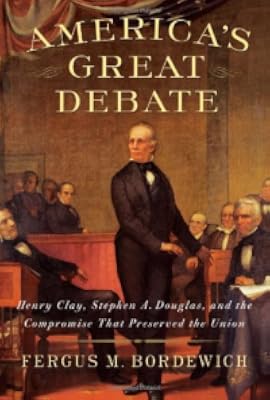
Fergus M. Bordewich is the author of several books, including America's Great Debate: Henry Clay, Stephen A. Douglas, and the Compromise That Preserved the Union, which won the Los Angeles Times Book Prize in history. He lives in San Francisco. Visit him at FergusBordewich.com.
Fergus Bordewich is a LibraryThing Author, an author who lists their personal library on LibraryThing.
Common Knowledge
- Original publication date
- 2008
- People/Characters
- Thomas Jefferson; John Adams; Peter Charles L'Enfant; James Madison; Robert Morris; Benjamin Rush (show all 13); George Washington; Samuel Blodget; Benjamin Banneker; Alexander Hamilton; William Thornton; James Hoban; James Greenleaf
- Important places
- Washington, D.C., USA; Philadelphia, Pennsylvania, USA; New York, New York, USA; Maryland, USA; Viginia, USA
- Important events
- Revolutionary War; War of 1812; Constitutional Convention
- Epigraph
- "A great city would really and absolutely be raised up, as if by magic." -- "A Citizen of the World," in The Maryland Journal and Baltimore Advertiser, 1789.
"This place is the mere whim of the President of the United ... (show all)States. During his life, it may out of compliment to him be carried on in a slow manner, but I am apprehensive as soon as he is defunct, the city, which is to be the boasted monument of his greatness, will also be the same." -- An immigrant stonemason, 1795. - Dedication
- For Richard H. Parvin and Marjorie Allen Parvin
- First words
- PROLOGUE
THE QUESTION OF THE CAPITAL
As the last decade of the eighteenth century dawned, the United States was the third world of its time, less a nation than a weak disorderly congeries of semi-independent states,... (show all) more like the rickety Yugoslavia of the 1990s than the superpower of today. - Last words
- (Click to show. Warning: May contain spoilers.)Were Peter L'Enfant to somehow return to life, he would doubtless find more that a few modern Americans ready to agree with his fear that a moral simplicity of the Revolutionary age might someday give way to political deceit, self-interest, and scheming ambition to betray the lofty ideals that he wished so much to embed in the nation's new capital. But the L'Enfant was a bit of an innocent even in the feral political jungle of the 1790s.
- Blurbers
- Schumer, Charles E., U.S. Senator; Korda, Michael; Levering, David; Russell, Graham; Ricks, Mary Kay; Larson, Kate Clifford (show all 9); Pryor, Elizabeth; Nash, Gary B.; Yardley, Jonathan
- Original language
- English
Classifications
- Genres
- History, Nonfiction, General Nonfiction, Art & Design
- DDC/MDS
- 975.3 — History & geography History of North America Southeastern United States (South Atlantic states) District Of Columbia
- LCC
- F197 .B67 — Local History of the United States, Canada and Latin America United States local history District of Columbia. Washington
- BISAC
Statistics
- Members
- 272
- Popularity
- 118,808
- Reviews
- 7
- Rating
- (3.80)
- Languages
- English
- Media
- Paper, Audiobook, Ebook
- ISBNs
- 11
- ASINs
- 4