On This Page
Description
In this propulsive novel, one of the most idiosyncratically brilliant writers at work in any language fuses science fiction, the hard-boiled thriller, and white-hot satire into a new element of the literary periodic table. As he searches for a mysteriously vanished girlfriend, Haruki Murakami's protagonist plunges into a wind tunnel of sexual violence and metaphysical dread in which he collides with call girls, plays chaperone to a lovely teenaged psychic, and receives cryptic instructions show more from a shabby but oracular Sheep Man. Dance Dance Dance is a tense, poignant, and often hilarious ride through the cultural Cuisinart that is contemporary Japan, a place where everything that is not up for sale is up for grabs. show lessTags
Recommendations

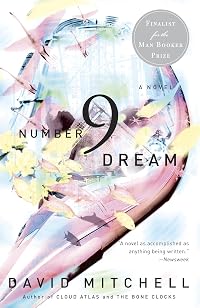
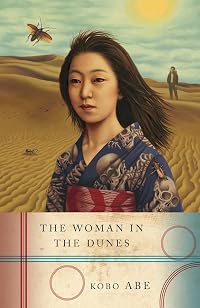
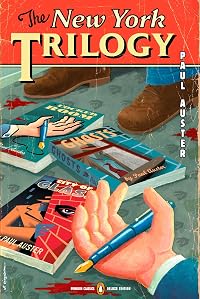
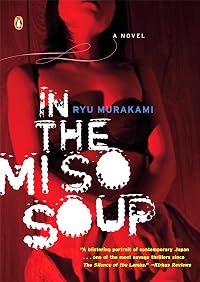



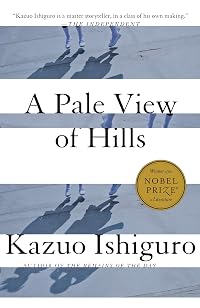
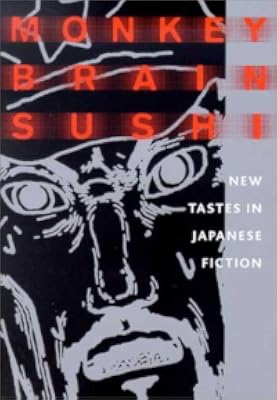
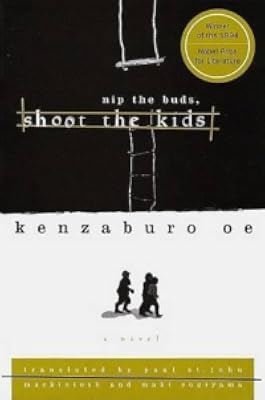


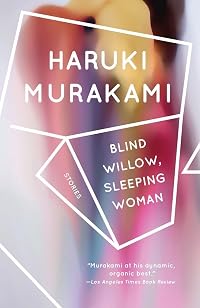

Member Recommendations
cpav55 Dance Dance Dance (Dans Dans Dans) maakt met Pinball 1973 en De jacht op het verloren schaap min of meer deel uit van de serie, maar het zijn wel losstaande verhalen.
Disco_grinch Dance, Dance, Dance is a sequel to Murakami's novel A Wild Sheep Chase
21
Member Reviews
I have finally read a Murakami. I picked this up on a market stall and didn't realise it was part of a series until I listed it on GR and saw "The Rat, #4", but it works as a standalone story, albeit an intriguingly odd one. In conjures exciting unease and bafflement. It is a book of paradoxes and uncertainty, leaving me satisfied with being left, in some ways, unsatisfied.
What sort of story?
Genre labels can be useful, but can also be an irrelevant distraction. However, with this book, I found myself repeatedly wondering what type of story it was. By the end, I was still unsure, but glad of the tension caused by doubt.
At various times, this was magical-realism, murder mystery, sci-fi, political thriller, romance (not too much, show more thankfully!), Kafkaesque, premature mid-life crisis story, surrealist, spiritual allegory, horror/ghost story, hints of Lolita, and the narrator likens a high-tech hotel to something out of Star Wars... It might have been easier to consider what it was not.
Quirk of the '80s
It's a strange time to read a book like this: it was published, and apparently set, in 1988, which is recent enough that it feels more or less contemporary. However, that was just before Google, laptops, mobile phones etc, which means the protagonists do not have the opportunities one now takes for granted.
Set it now, and the plot would need tweaking, but in 50 years, it will be historical enough for no one to notice. Reading it now, gave it an intriguing edge that added to the general sense of shifting reality.
Connectedness and (un)reality
Connectedness is the clearest theme of the book (and one that links it to David Mitchell, a known fan of Murakami, especially Ghostwritten and Cloud Atlas).
There is perhaps unintended (or prescient?) irony in the fact that a novel that is all about connectness was written and set just before the world became dramatically more connected.
Ambiguity about what is real is the other thread: we assume the narrator is reliable (he's a journalist), but there are visions of various kinds, films, vague memories, a bit of mind reading. What is real, and what is not? As things get really weird, the narrator asks, "was the sickness in here or out there?"
Plot and Meaning
The unnamed narrator is a divorced man in his mid-30s; a freelance journalist, mostly writing restaurant reviews - a job he describes as "Shovelling snow. You know, cultural snow."
It opens with him talking about The Dolphin Hotel, and how he often dreams of it after a previous girlfriend, Kiki, took him there, then disappeared. It was a strange place: "The Dolphin Hotel was conceptually sorry... Normalness it lacked... Its corners caked with unfulfilled dreams." Four years on, he feels as if she's calling him to return, so he does. In its place, he finds the swish new Hotel Dauphin.
Dabbling in his past brings him into contact with Gotunda, a high school class mate, who is now a successful (but unfulfilled, divorced and working to pay debts and alimony) actor. They become close friends, which they hadn't been at school. Other key characters are Yumiyoshi, a pretty hotel receptionist, and Yuki, a bright thirteen year old rich drop-out, largely ignored by her divorced parents.
Characters, plot lines and reality twist and tangle, aided by dream-like visions, a portal to another dimension of reality, and a character with mild psychic abilities.
The title relates to an instruction given to the narrator quite early and that seems as if it will be the key to everything, or at least something, but nothing really comes of it (more details in spoiler).
All the way through, and especially towards the end, the narrator is musing on fate and destiny, and looking for meaning in all this - as is the reader. It never really comes, but I think that's rather the point. Had Murakami tied it all together with some ghastly homily, I think it would have ruined the book. After all, a recurring line is " What was that all about?", uttered by Kiki in a much-watched film.
In more detail:
Yumi and then the narrator accidentally (and separately) find themselves in a parallel world, in the Old Dolphin Hotel, where they meet the old owner, who the narrator nicknames Sheep Man because of all the pictures and books about sheep. He resisted selling up, and only gave in on condition the new hotel retained the name. He tells the narrator "Thisisyourplace. It'sthenkot. It'stiedtoeverything. Thisisyourworld" and that he (Sheep Man) works hard "Tokeepthings - fromfalllingapart. Tokeepyoufromforgetting." He stresses, "Yougottadance. Aslongasthemusicplays." It is not the place of the dead, and it is real, "Butit'snottheonlyreality."
As well as being drawn to Kiki and wondering what happened to her, he fancies Yumi. He also discovers that Kiki had a bit part in a film of Gotunda's ("Unrequited Love", that the narrator watches obsessively) because Gotunda was a client and Kiki was one of the call girls at a secretive and very high-end agency.
Through Yumi, the narrator gets to know Yuki, whose flighty photographer mother had left behind at the hotel to travel abroad! He took back to her home in Tokyo and keeps a (mostly) paternal eye on her. Their relationship ought to be creepy, especially when he comments how pretty she is, but it's actually rather sweet and innocent. Even her parents think so, as they each (separately) get him to take more charge of her.
Yuki has also seen Sheep Man, though by some sort of mental connection to the narrator, rather than going through the portal.
Gotunda calls the agency to get a couple of girls for him and the narrator. The latter has Mei, who he quizzes about the missing Kiki, but she knows nothing useful. A few days later, he is arrested for her murder and interrogated in a most unorthodox way, slightly reminiscent of Kafka's The Trial, which he had been reading the night before. He denies ever having met her, not wanting to tarnish Gotunda's reputation.
Yuki's rich father (Makimura) pulls strings to get the narrator released from interrogation and suggests he takes Yuki to visit her mother (Amé), currently in Hawaii with her new partner (Dick).
In one dip to the other world, Kiki shows the narrator a room with six skeletons, one of which has a single arm. Later, when a one-armed man he knows dies, he realises they represent people close to him who have died, and fears for the lives of Gotunda, Yuki and Yumi. Another death seems to confirm his theory, though we never know who the sixth is (maybe the narrator himself).
While in Hawaii, another prostitute turns up (June), sent from the same agency, but by Makimura. However, when Gotunda later enquires about her, he's told she'd disappeared three months earlier.
Yuki gets spookily sick when they borrow Gotunda's Maserati, and when she sees him and Kiki in the film, is so unwell, she has to leave the cinema.She says that the actor (Gotunda) killed the actress (Kiki) in real life and that she "saw" it. Later, when the narrator asks Gotunda if he killed Kiki or Mei, Gotunda is unsure about Kiki (he's not certain which reality it might have been in), but says he did kill Mei because she asked him to) - yet the narrator overlooks this and plans a trip together! .
More visions, more possible deaths, more crossings over and shadows, finally get round to visiting Yumi again, and reality more blurred than ever. The end!
Quotes
Surprisingly few, for me:
* "Financial dealings have practically become a religious activity."
* "You can now enjoy hybrid styles of morality."
* "You leave things to an interior designer and it ends up looking like this. Something you want to photograph, not live in."
* "Reality receded until you can't tell who's sane and who' not."
* "Amé didn't give anything. She only took. She consumed those around her to sustain herself... Her talent was manifested in a powerful gravitational pull."
* "The passage of time wasn't a practical component in her life."
* "Her ears had special power. They were like some great whirlpool of fate sucking me in." show less
What sort of story?
Genre labels can be useful, but can also be an irrelevant distraction. However, with this book, I found myself repeatedly wondering what type of story it was. By the end, I was still unsure, but glad of the tension caused by doubt.
At various times, this was magical-realism, murder mystery, sci-fi, political thriller, romance (not too much, show more thankfully!), Kafkaesque, premature mid-life crisis story, surrealist, spiritual allegory, horror/ghost story, hints of Lolita, and the narrator likens a high-tech hotel to something out of Star Wars... It might have been easier to consider what it was not.
Quirk of the '80s
It's a strange time to read a book like this: it was published, and apparently set, in 1988, which is recent enough that it feels more or less contemporary. However, that was just before Google, laptops, mobile phones etc, which means the protagonists do not have the opportunities one now takes for granted.
Set it now, and the plot would need tweaking, but in 50 years, it will be historical enough for no one to notice. Reading it now, gave it an intriguing edge that added to the general sense of shifting reality.
Connectedness and (un)reality
Connectedness is the clearest theme of the book (and one that links it to David Mitchell, a known fan of Murakami, especially Ghostwritten and Cloud Atlas).
There is perhaps unintended (or prescient?) irony in the fact that a novel that is all about connectness was written and set just before the world became dramatically more connected.
Ambiguity about what is real is the other thread: we assume the narrator is reliable (he's a journalist), but there are visions of various kinds, films, vague memories, a bit of mind reading. What is real, and what is not? As things get really weird, the narrator asks, "was the sickness in here or out there?"
Plot and Meaning
The unnamed narrator is a divorced man in his mid-30s; a freelance journalist, mostly writing restaurant reviews - a job he describes as "Shovelling snow. You know, cultural snow."
It opens with him talking about The Dolphin Hotel, and how he often dreams of it after a previous girlfriend, Kiki, took him there, then disappeared. It was a strange place: "The Dolphin Hotel was conceptually sorry... Normalness it lacked... Its corners caked with unfulfilled dreams." Four years on, he feels as if she's calling him to return, so he does. In its place, he finds the swish new Hotel Dauphin.
Dabbling in his past brings him into contact with Gotunda, a high school class mate, who is now a successful (but unfulfilled, divorced and working to pay debts and alimony) actor. They become close friends, which they hadn't been at school. Other key characters are Yumiyoshi, a pretty hotel receptionist, and Yuki, a bright thirteen year old rich drop-out, largely ignored by her divorced parents.
Characters, plot lines and reality twist and tangle, aided by dream-like visions, a portal to another dimension of reality, and a character with mild psychic abilities.
The title relates to an instruction given to the narrator quite early and that seems as if it will be the key to everything, or at least something, but nothing really comes of it (more details in spoiler).
All the way through, and especially towards the end, the narrator is musing on fate and destiny, and looking for meaning in all this - as is the reader. It never really comes, but I think that's rather the point. Had Murakami tied it all together with some ghastly homily, I think it would have ruined the book. After all, a recurring line is " What was that all about?", uttered by Kiki in a much-watched film.
In more detail:
Yumi and then the narrator accidentally (and separately) find themselves in a parallel world, in the Old Dolphin Hotel, where they meet the old owner, who the narrator nicknames Sheep Man because of all the pictures and books about sheep. He resisted selling up, and only gave in on condition the new hotel retained the name. He tells the narrator "Thisisyourplace. It'sthenkot. It'stiedtoeverything. Thisisyourworld" and that he (Sheep Man) works hard "Tokeepthings - fromfalllingapart. Tokeepyoufromforgetting." He stresses, "Yougottadance. Aslongasthemusicplays." It is not the place of the dead, and it is real, "Butit'snottheonlyreality."
As well as being drawn to Kiki and wondering what happened to her, he fancies Yumi. He also discovers that Kiki had a bit part in a film of Gotunda's ("Unrequited Love", that the narrator watches obsessively) because Gotunda was a client and Kiki was one of the call girls at a secretive and very high-end agency.
Through Yumi, the narrator gets to know Yuki, whose flighty photographer mother had left behind at the hotel to travel abroad! He took back to her home in Tokyo and keeps a (mostly) paternal eye on her. Their relationship ought to be creepy, especially when he comments how pretty she is, but it's actually rather sweet and innocent. Even her parents think so, as they each (separately) get him to take more charge of her.
Yuki has also seen Sheep Man, though by some sort of mental connection to the narrator, rather than going through the portal.
Gotunda calls the agency to get a couple of girls for him and the narrator. The latter has Mei, who he quizzes about the missing Kiki, but she knows nothing useful. A few days later, he is arrested for her murder and interrogated in a most unorthodox way, slightly reminiscent of Kafka's The Trial, which he had been reading the night before. He denies ever having met her, not wanting to tarnish Gotunda's reputation.
Yuki's rich father (Makimura) pulls strings to get the narrator released from interrogation and suggests he takes Yuki to visit her mother (Amé), currently in Hawaii with her new partner (Dick).
In one dip to the other world, Kiki shows the narrator a room with six skeletons, one of which has a single arm. Later, when a one-armed man he knows dies, he realises they represent people close to him who have died, and fears for the lives of Gotunda, Yuki and Yumi. Another death seems to confirm his theory, though we never know who the sixth is (maybe the narrator himself).
While in Hawaii, another prostitute turns up (June), sent from the same agency, but by Makimura. However, when Gotunda later enquires about her, he's told she'd disappeared three months earlier.
Yuki gets spookily sick when they borrow Gotunda's Maserati, and when she sees him and Kiki in the film, is so unwell, she has to leave the cinema.
More visions, more possible deaths, more crossings over and shadows, finally get round to visiting Yumi again, and reality more blurred than ever. The end!
Quotes
Surprisingly few, for me:
* "Financial dealings have practically become a religious activity."
* "You can now enjoy hybrid styles of morality."
* "You leave things to an interior designer and it ends up looking like this. Something you want to photograph, not live in."
* "Reality receded until you can't tell who's sane and who' not."
* "Amé didn't give anything. She only took. She consumed those around her to sustain herself... Her talent was manifested in a powerful gravitational pull."
* "The passage of time wasn't a practical component in her life."
* "Her ears had special power. They were like some great whirlpool of fate sucking me in." show less
I have trouble motivating myself to write about the works of Haruki Murakami. The fact of the matter is, I have read all of his work in English, I love it, I know it has flaws, and I don't care.
He has a legion of followers, rivaling Neil Gaiman, but I believe, at least in my eyes, his literature has lasting value, and literary merit in its own right. His work poses as pulp, lite magical realism, but it touches something deep. It is at times incongruous, dreamlike and silly, but it is always readable.
H. M. is an unexplainable phenomenon. Imagine a batter that gets called in out of nowhere late in the game, during the last inning. No one has ever heard of him before. He is about two feet tall, a hundred pounds overweight and has one eye. show more The whole crowd laughs him off in the stands. The pitcher shrugs. The game is already in the bag, he thinks. Then this little batter stands at the plate, wears this incredibly serious look on his face, and waits. The pitcher tosses him a defiant pitch and the guy knocks it out of the park. The ball heads straight for the Jumbotron, pierces it like a comet, and shatters it with a huge explosion. Then the batter snaps the bat over his knee and strolls around the plates without a care in the world.
This strained analogy reminds me the career of Haruki Murakami. In his own words he has dug down deep into himself and written about what he found there. What an interesting guy, I keep finding myself saying. What makes his scenes feel so real, so memorable? What gives his characters such wacky charm? Why do I not care that what I am reading hardly makes sense? I think some of the answer lies in the author's inability to hide his personality in his writing. His heart is revealed often, and it communicates messages most people can relate to.
I think Dance Dance Dance is a good book, but if it were rewritten by someone else, in any other voice but the inimitable Murakami's it would have been, simply, bad. Like Rodrigo Fresan, Murakami does not put on a show when he writes. It is unfiltered, unplanned, jazzy improvisation. But what he writes is still a spectacular show. In all of his interviews, he comes off as someone who cares little about public opinion. Nonetheless the populace has largely been on his side. How is it possible for him to be so unpretentious? He either does not provide an explanation for his works or genuinely doesn't know how he writes them. Philip K. Dick blamed an alternate consciousness invading his own for the insane ideas he had, at least toward the end of his life. Murakami seems to believe there is an abyss of dreams within us, which he needs merely to siphon off in order to produce literature.
Only after thirty years has the Japanese literary society begun to take him seriously. In more time, probably, his goofy body of work may attain the status of "classic." Does it deserve that status? Who can really say? If he wins the Nobel Prize, perhaps. This impending event is a source of constant annoyance to him, like every time the possibility is mentioned, he throws a temper tantrum and withdraws from the public eye.
If there is one sense I get from reading this and other books by him, it is that he is largely solitary. Sometimes, Murakami describes people like animals, pacing their cages, interacting and coupling like insensate entities. Other times they are communicating spirits, intertwining in physical and mental synchronization.
As a translator of Carver, you can see subtle and not-so-subtle influences. Murakami has resisted the pull of influence from his homeland endlessly, only to dawdle overlong in American easy-reads, and stake a claim for himself as a competent, and even brilliant translator into Japanese. In his introductions, novels and statements, he has admitted to having read Faulkner, Dickens, Salinger, John Irving, Dag Solstad, Agota Kristof, Kafka, Carver, Chandler, Ross MacDonald, Chekhov, Fitzgerald, Vonnegut, Brautigan, Stephen King, Kerouac, and then he skimmed the Japanese classics when he was bored one day.
He has embodied some antiestablishment principles in regards to the Japanese literary climate, and since the beginning, always done his own thing, an outsider who draws a crowd. Someone who might gain some respect from and be compared to other writers like Banana Yoshimoto, but if you start talking about Tanizaki or even Ryu Murakami, you are talking about a different thing - that is, actual literature.
Which brings me to the book Dance Dance Dance, which I have obviously avoided mentioning. The politics spouted off by the characters is straightforward anti-Consumerism, and not exactly central to the plot. There are so many tangents and asides by the narrator that it is a miracle the novel stays relevant to its own narrator. The plot is a cooked up caper involving confusing characters acting out random conflicts and interests, all the while charming the pants off you, the reader, with their witty, blasé, selfish attitudes. The prose glows with sappy, effortless nostalgia. Murakami is a genius with an average IQ. I think he has admitted to being 'average' in more than one interview, but his ability to zero in on people is remarkable. They take on full-blooded life, even when they are caricatures. The bottom line is, this book is a convincing distraction, with a lot of satisfying moments. While the real meat of themes and subtleties are forsaken for mysterious, ominous presences, unexplained emotional outbursts, and truly affecting, beautiful atmosphere.
You can love and hate this book at the same time. It is the second book by the author I read. The first was Wind-Up Bird. This book, more than the first, cemented my love for his writing style. I have read it twice. The second time I was examining it, mainly to see if it was actually as good as I thought. It has undeniable mesmeric power, at least to me. It would be easy to point out things that just don't work in the novelistic sense, but they work for Murakami's skewed, dislocated reality.
By this time, Murakami was feeling the pressures of, what was to him, celebrity status, and it caused him to speak out against celebs, to lampoon them in a way, and like all of his opinions, he is completely transparent about it. Everywhere there is the same existentialist dread you should get comfortable with, the discombobulation and the "obsession with music to the point of insanity" as Seiji Ozawa remarked.
Does it really matter if elements of the plot are advanced by a man wearing a sheep costume? What about fetishization of ears? Random portals popping up leading to localized, video game like debug rooms? This is an ecstatic work of fiction. A breathtaking accomplishment in absurdist folly, a hairy dog joke carried to the heights of Mount Everest, and then whispered into a whistling cave never plumbed by the tread of Man.
If you are anything like me, you will finish this book thinking: "where can I find me more of this stuff?" show less
He has a legion of followers, rivaling Neil Gaiman, but I believe, at least in my eyes, his literature has lasting value, and literary merit in its own right. His work poses as pulp, lite magical realism, but it touches something deep. It is at times incongruous, dreamlike and silly, but it is always readable.
H. M. is an unexplainable phenomenon. Imagine a batter that gets called in out of nowhere late in the game, during the last inning. No one has ever heard of him before. He is about two feet tall, a hundred pounds overweight and has one eye. show more The whole crowd laughs him off in the stands. The pitcher shrugs. The game is already in the bag, he thinks. Then this little batter stands at the plate, wears this incredibly serious look on his face, and waits. The pitcher tosses him a defiant pitch and the guy knocks it out of the park. The ball heads straight for the Jumbotron, pierces it like a comet, and shatters it with a huge explosion. Then the batter snaps the bat over his knee and strolls around the plates without a care in the world.
This strained analogy reminds me the career of Haruki Murakami. In his own words he has dug down deep into himself and written about what he found there. What an interesting guy, I keep finding myself saying. What makes his scenes feel so real, so memorable? What gives his characters such wacky charm? Why do I not care that what I am reading hardly makes sense? I think some of the answer lies in the author's inability to hide his personality in his writing. His heart is revealed often, and it communicates messages most people can relate to.
I think Dance Dance Dance is a good book, but if it were rewritten by someone else, in any other voice but the inimitable Murakami's it would have been, simply, bad. Like Rodrigo Fresan, Murakami does not put on a show when he writes. It is unfiltered, unplanned, jazzy improvisation. But what he writes is still a spectacular show. In all of his interviews, he comes off as someone who cares little about public opinion. Nonetheless the populace has largely been on his side. How is it possible for him to be so unpretentious? He either does not provide an explanation for his works or genuinely doesn't know how he writes them. Philip K. Dick blamed an alternate consciousness invading his own for the insane ideas he had, at least toward the end of his life. Murakami seems to believe there is an abyss of dreams within us, which he needs merely to siphon off in order to produce literature.
Only after thirty years has the Japanese literary society begun to take him seriously. In more time, probably, his goofy body of work may attain the status of "classic." Does it deserve that status? Who can really say? If he wins the Nobel Prize, perhaps. This impending event is a source of constant annoyance to him, like every time the possibility is mentioned, he throws a temper tantrum and withdraws from the public eye.
If there is one sense I get from reading this and other books by him, it is that he is largely solitary. Sometimes, Murakami describes people like animals, pacing their cages, interacting and coupling like insensate entities. Other times they are communicating spirits, intertwining in physical and mental synchronization.
As a translator of Carver, you can see subtle and not-so-subtle influences. Murakami has resisted the pull of influence from his homeland endlessly, only to dawdle overlong in American easy-reads, and stake a claim for himself as a competent, and even brilliant translator into Japanese. In his introductions, novels and statements, he has admitted to having read Faulkner, Dickens, Salinger, John Irving, Dag Solstad, Agota Kristof, Kafka, Carver, Chandler, Ross MacDonald, Chekhov, Fitzgerald, Vonnegut, Brautigan, Stephen King, Kerouac, and then he skimmed the Japanese classics when he was bored one day.
He has embodied some antiestablishment principles in regards to the Japanese literary climate, and since the beginning, always done his own thing, an outsider who draws a crowd. Someone who might gain some respect from and be compared to other writers like Banana Yoshimoto, but if you start talking about Tanizaki or even Ryu Murakami, you are talking about a different thing - that is, actual literature.
Which brings me to the book Dance Dance Dance, which I have obviously avoided mentioning. The politics spouted off by the characters is straightforward anti-Consumerism, and not exactly central to the plot. There are so many tangents and asides by the narrator that it is a miracle the novel stays relevant to its own narrator. The plot is a cooked up caper involving confusing characters acting out random conflicts and interests, all the while charming the pants off you, the reader, with their witty, blasé, selfish attitudes. The prose glows with sappy, effortless nostalgia. Murakami is a genius with an average IQ. I think he has admitted to being 'average' in more than one interview, but his ability to zero in on people is remarkable. They take on full-blooded life, even when they are caricatures. The bottom line is, this book is a convincing distraction, with a lot of satisfying moments. While the real meat of themes and subtleties are forsaken for mysterious, ominous presences, unexplained emotional outbursts, and truly affecting, beautiful atmosphere.
You can love and hate this book at the same time. It is the second book by the author I read. The first was Wind-Up Bird. This book, more than the first, cemented my love for his writing style. I have read it twice. The second time I was examining it, mainly to see if it was actually as good as I thought. It has undeniable mesmeric power, at least to me. It would be easy to point out things that just don't work in the novelistic sense, but they work for Murakami's skewed, dislocated reality.
By this time, Murakami was feeling the pressures of, what was to him, celebrity status, and it caused him to speak out against celebs, to lampoon them in a way, and like all of his opinions, he is completely transparent about it. Everywhere there is the same existentialist dread you should get comfortable with, the discombobulation and the "obsession with music to the point of insanity" as Seiji Ozawa remarked.
Does it really matter if elements of the plot are advanced by a man wearing a sheep costume? What about fetishization of ears? Random portals popping up leading to localized, video game like debug rooms? This is an ecstatic work of fiction. A breathtaking accomplishment in absurdist folly, a hairy dog joke carried to the heights of Mount Everest, and then whispered into a whistling cave never plumbed by the tread of Man.
If you are anything like me, you will finish this book thinking: "where can I find me more of this stuff?" show less
I don't like magical realism, I'm on the fence about Japanese literature and I don't listen to audiobooks that go into double figure listening time, yet - surprise! I really enjoyed this book (eventually).
This is book #4 in The Rat series, but I was coming into the series cold with this last book. I'd read that it wasn't necessary to read the other books, but having read more around this after finishing Dance, Dance, Dance I think it would have been useful to have at least red #3 A Wild Sheep Chase, as apparently it sets the context of why the narrator is so alone, and who The Rat was.
The magic realism aspect was a very part of the novel, so that was a win for me. The novel starts with our novel being drawn to go back to The Dolphin show more Hotel (which I believe would have made more sense had I read A Wild Sheep Chase) in search of Kiki, the ex-girlfriend he'd gone there with previously. There's a pull that he can't quite understand, but all he knows is that he has to sideline his work for a while in pursuit of this calling. I don't want to give the plot away from there, but what I will say is that this starts a journey in which the narrator becomes involved with a host of offbeat characters, such as a moody 13 year old girl lacking proper parental care, high-class call girls, a one-armed poet and an ex-high school peer who's become a B movie / advertising actor.
It's a weird ride of a novel - you're not sure where it's going, who can be trusted, why our narrator has been drawn to them all, and what they have to do with the mysticism of the original Dolphin Hotel.
It definitely took me quite a while to warm up to it, mostly because I find Japanese literature can be quite bleak. It's different to British bleakness in novels, which often feels more melancholy; for me, Japanese novels can often have an air of hopelessness and resignation that life is terrible. Once the novel left the confines of The Dolphin Hotel I started to enjoy the novel more - I knew then it was opening up and wasn't going to be stuck in the mysticism surrounding the hotel, which somehow felt quite depressing.
This is my first Murakami book, and had #3 in the series been available on audiobook I would have started right into it after finishing Dance, Dance, Dance.
It's one of those books I'm not sure if enjoy is the right word because it felt tinged with so much bleakness, but I'm glad I persisted with it as I got a lot out of it in the end. It's weird and a bit crazy in places, but I enjoyed its uniqueness.
4 stars - weird and wonderful (in a slightly depressing way) show less
This is book #4 in The Rat series, but I was coming into the series cold with this last book. I'd read that it wasn't necessary to read the other books, but having read more around this after finishing Dance, Dance, Dance I think it would have been useful to have at least red #3 A Wild Sheep Chase, as apparently it sets the context of why the narrator is so alone, and who The Rat was.
The magic realism aspect was a very part of the novel, so that was a win for me. The novel starts with our novel being drawn to go back to The Dolphin show more Hotel (which I believe would have made more sense had I read A Wild Sheep Chase) in search of Kiki, the ex-girlfriend he'd gone there with previously. There's a pull that he can't quite understand, but all he knows is that he has to sideline his work for a while in pursuit of this calling. I don't want to give the plot away from there, but what I will say is that this starts a journey in which the narrator becomes involved with a host of offbeat characters, such as a moody 13 year old girl lacking proper parental care, high-class call girls, a one-armed poet and an ex-high school peer who's become a B movie / advertising actor.
It's a weird ride of a novel - you're not sure where it's going, who can be trusted, why our narrator has been drawn to them all, and what they have to do with the mysticism of the original Dolphin Hotel.
It definitely took me quite a while to warm up to it, mostly because I find Japanese literature can be quite bleak. It's different to British bleakness in novels, which often feels more melancholy; for me, Japanese novels can often have an air of hopelessness and resignation that life is terrible. Once the novel left the confines of The Dolphin Hotel I started to enjoy the novel more - I knew then it was opening up and wasn't going to be stuck in the mysticism surrounding the hotel, which somehow felt quite depressing.
This is my first Murakami book, and had #3 in the series been available on audiobook I would have started right into it after finishing Dance, Dance, Dance.
It's one of those books I'm not sure if enjoy is the right word because it felt tinged with so much bleakness, but I'm glad I persisted with it as I got a lot out of it in the end. It's weird and a bit crazy in places, but I enjoyed its uniqueness.
4 stars - weird and wonderful (in a slightly depressing way) show less
****.5
Four years have passed since A Wild Sheep Chase, and in this fourth and final book in The Rat series, we've finally reached peak Murakami. From dead prostitutes to underaged girls, disconcertingly bizarre weirdness, metaphysical and socioeconomic commentary, it's the complete package.
No longer the listless twenty-something wasting away his life drinking beer and playing pinball, our [still nameless] protagonist finds himself in his mid-30's, and to everyone's surprise is suddenly the adult in the room. The hip music of the late 60's that was so groovy in the first book is now on the oldies station, and he's even managed to eek out something of a career without turning into a wage slave. But underneath the veneer of stability and show more competence he's the same confused guy, going through the motions but still somewhat aloof from mainstream society, questioning the fundamental nature of his existence.
I wish that Murakami had spent a bit more effort on wrapping up all of the messy loose ends in the plot, but I suppose that leaving things unresolved is part of the point. show less
Four years have passed since A Wild Sheep Chase, and in this fourth and final book in The Rat series, we've finally reached peak Murakami. From dead prostitutes to underaged girls, disconcertingly bizarre weirdness, metaphysical and socioeconomic commentary, it's the complete package.
No longer the listless twenty-something wasting away his life drinking beer and playing pinball, our [still nameless] protagonist finds himself in his mid-30's, and to everyone's surprise is suddenly the adult in the room. The hip music of the late 60's that was so groovy in the first book is now on the oldies station, and he's even managed to eek out something of a career without turning into a wage slave. But underneath the veneer of stability and show more competence he's the same confused guy, going through the motions but still somewhat aloof from mainstream society, questioning the fundamental nature of his existence.
I wish that Murakami had spent a bit more effort on wrapping up all of the messy loose ends in the plot, but I suppose that leaving things unresolved is part of the point. show less
This is my first Haruki Murakami book. I have heard great things and wasn't disappointed. Dance Dance Dance is unlike any story I've ever read, but I was pulled in from the emotive writing alone. The pacing is contemplative, which isn't to say slow but some might see it that way. The protagonist—who isn't named by the way, and you hardly notice—almost seems to float through this emergent supernatural world of a 1980's east Asian metropolis. The tone is odd but noir-ish enough that it works and you want to see where it leads. Or as Murakami writes, just keep dancing along.
The things that I’ve come to expect from Murakami (from reading just two books) come out in this book also. There is a wide and strange array of characters (that, for all their strangeness belong together), there is an element of surrealism (as though we are visiting an alternate world were the abnormal is okay), and, ultimately, an engrossing read. Not quite as strong as the other pieces I have read (Kafka on the Shore and The Wind-Up Bird Chronicles – see my review of the latter), but that is somewhat akin to saying Beethoven’s Fifth was just not up to his Ninth. I also had the unique opportunity to read this in (effectively) one sitting – on a flight from Phoenix to England – and it added a further dimension to the story. show more It all starts a little slowly, and I was beginning to wonder if maybe this piece was written too early in the author’s career; resulting in a piece without the power he now exhibits. Then, the protagonist visits the Sheep Man on the nonexistent 16th floor of a hotel that isn’t the one he remembers. That point is pivotal in taking the story new directions that, while logical in context, were unexpected. A satisfying read, and an excellent story.
Just a couple of comments, more in general about Murakami than about the book itself. A respected author was recently quoted as saying they enjoyed Murakami’s writing, even if they were sure they did not understand everything that was in them. This is true. If nothing else, you feel you may be missing the Japanese cultural innuendos that exist in the book. Do not let that dissuade you. There is more than enough for any reader of any culture, and the texture is there for you to understand, even if you don’t fully understand. Second, beyond the overall arch of any Murakami book, beyond the story that exists (and the writing that supports it), are the individual gems of his writing. From this book, here is one that made me dog-ear the page. “’I used to think the years would go by in order, that you get older one year at a time…But it’s not like that. It happens overnight.”’ Finally, there is a blurb on the back cover quoting Newsday as saying “’A Japanese Philip K. Dick with a sense of humor.’” This insults both writers. I’ve read a lot of Philip K. Dick’s stuff, and the analogy is the work of a lazy reviewer. The reader going in expecting this style will be disappointed, and it misses the difference in the types of power with which these two authors write. show less
Just a couple of comments, more in general about Murakami than about the book itself. A respected author was recently quoted as saying they enjoyed Murakami’s writing, even if they were sure they did not understand everything that was in them. This is true. If nothing else, you feel you may be missing the Japanese cultural innuendos that exist in the book. Do not let that dissuade you. There is more than enough for any reader of any culture, and the texture is there for you to understand, even if you don’t fully understand. Second, beyond the overall arch of any Murakami book, beyond the story that exists (and the writing that supports it), are the individual gems of his writing. From this book, here is one that made me dog-ear the page. “’I used to think the years would go by in order, that you get older one year at a time…But it’s not like that. It happens overnight.”’ Finally, there is a blurb on the back cover quoting Newsday as saying “’A Japanese Philip K. Dick with a sense of humor.’” This insults both writers. I’ve read a lot of Philip K. Dick’s stuff, and the analogy is the work of a lazy reviewer. The reader going in expecting this style will be disappointed, and it misses the difference in the types of power with which these two authors write. show less
The distinct impression that I'm missing something. Noir plus unreliable narrator plus expansive, poppy hopefulness equals very confused reader. Part of the essence of noir is that the narrator is, even if neurotic, grounded; this narrator appears grounded, and he comes out okay in the end in true Hollywood fashion - or does he? There's something Brazil-like about the delirious, philanthropic tone the narrator takes at the end, and of course Murakami leaves open the question of the sixth death predicted by one of the more vivid, grim, but possibly completely internal scenes, in such a way as to call into question whether the narrator is actually dead and romanticizing at the end.
I'm not calling it bad. I'm not calling it good. Nothing show more so simple. I'm just still very early in the stages of unpacking, and I'm so swamped by all the socioeconomic blandness and very unbland internal narrative fixations - indeed, it seems almost like the narrator's protagonism consists in the solidifying of his at first nebulous, dream-induced questions into serious, stability-undermining idees fixes - and meanwhile I'm running on this parallel track of trying to get my head around how deeply cinema has influenced the novel, and I'm just exhausted by the book. show less
I'm not calling it bad. I'm not calling it good. Nothing show more so simple. I'm just still very early in the stages of unpacking, and I'm so swamped by all the socioeconomic blandness and very unbland internal narrative fixations - indeed, it seems almost like the narrator's protagonism consists in the solidifying of his at first nebulous, dream-induced questions into serious, stability-undermining idees fixes - and meanwhile I'm running on this parallel track of trying to get my head around how deeply cinema has influenced the novel, and I'm just exhausted by the book. show less
Members
- Recently Added By
Lists

Japanese Literature
230 works; 40 members

Best of World Literature
432 works; 51 members

Magic Realism
371 works; 52 members

20th Century Literature
1,161 works; 54 members

Top Five Books of 2020
982 works; 348 members

Cerebral Mysteries
34 works; 23 members

1980s
356 works; 23 members
Haruki Murakami's Books
16 works; 5 members

Blue Pyramid 1,276 Best Books of All Time
1,248 works; 32 members

Stories set on Island Country of Japan
18 works; 3 members

Five star books
1,755 works; 107 members

Favorite Books from the 1980s
27 works; 3 members

Books Read in 2016
4,666 works; 197 members

Plan to Read Books
75 works; 1 member

Books Read in 2020
4,379 works; 124 members

Global Reads: Books Set in East Asia
139 works; 12 members
Books With Our Favorite First Lines
168 works; 104 members

Books We'd Want on a Desert Island
203 works; 131 members

Favorite Books in Translation
320 works; 133 members
Book Worlds We'd Like To Visit
322 works; 158 members
Books We Want To Read Again For The First Time
384 works; 160 members
Author Information

292+ Works 174,565 Members
Haruki Murakami was born on January 12, 1949 in Kyoto, Japan and studied at Tokyo's Waseda University. He opened a coffeehouse/jazz bar in the capital called Peter Cat with his wife. He became a full-time author following the publication of his first novel, Hear the Wind Sing, in 1979. He writes both fiction and non-fiction works. His fiction show more works include Norwegian Wood, Colorless Tsukuru Tazaki and His Years of Pilgrimage, The Strange Library, and Men Without Women. Several of his stories have been adapted for the stage and as films. His nonfiction works include What I Talk About When I Talk About Running. He has received numerous literary awards including the Franz Kafka Prize for Kafka on the Shore, the Yomiuri Prize for The Wind-Up Bird Chronicle, and the Jerusalem Prize. He has translated into Japanese literature written by F. Scott Fitzgerald, Raymond Carver, Truman Capote, John Irving, and Paul Theroux. (Bowker Author Biography) show less
Some Editions
Awards and Honors
Distinctions
Series

Belongs to Publisher Series
Work Relationships
Contains
Common Knowledge
- Canonical title*
- Tanz mit dem Schafsmann
- Original title
- Dansu Dansu Dansu; ダンス・ダンス・ダンス
- Original publication date
- 1988; 1994 (English: Birnbaum) (English: Birnbaum); 2012 (Argentina) (Argentina)
- People/Characters
- Kiki; The Sheep Man; Yuki; Yumiyoshi; Gotanda; Mai (show all 7); Dick North
- Important places
- Tokyo, Japan; Sapporo, Japan; Honolulu, O'ahu, Hawai'i, USA; The Dolphin Hotel; Japan; Hakone (show all 7); Akasaka
- First words
- I often dream about the Dolphin Hotel.
- Quotations
- "But when I think back on my life, it's like I didn't make one choice. Sometimes I wake up in the middle of the night and it scares me. Where's the first-person "I"? Where's the beef?"
Gotanda, p146, Vintage ed.
"Dance," said the Sheep Man. "Yougottadance. Aslongasthemusicplays. Yougottadance. Don'teventhinkwhy. Startothink, yourfeetstop. Yourfeetstop, wegetstuck. Wegetstuck, you'restuck. Sodon'tpayanymind, nomatterhowdumb. ... (show all)Yougottakeepthestep. Yougottalimberup. Yougottaloosenwhatyoubolteddown. Yougottauseallyougot. Weknowyou'retired, tiredandscared. Happenstoeveryone, okay? Justdon'tletyourfeetstop." --The Sheep Man, p. 86, Vintage ed. - Last words
- (Click to show. Warning: May contain spoilers.)"Yumiyoshi," I whispered. "It's morning."
- Original language
- Japanese
*Some information comes from Common Knowledge in other languages. Click "Edit" for more information.
Classifications
- Genres
- Fiction and Literature, General Fiction
- DDC/MDS
- 895.635 — Literature & rhetoric Literatures of other languages Literatures of East and Southeast Asia Japanese Japanese fiction 1945–2000
- LCC
- PL856 .U673 .D3613 — Language and Literature Languages and literatures of Eastern Asia, Africa, Oceania Languages of Eastern Asia, Africa, Oceania Japanese language and literature Japanese literature Individual authors and works
- BISAC
Statistics
- Members
- 6,566
- Popularity
- 1,844
- Reviews
- 102
- Rating
- (3.95)
- Languages
- 26 — Arabic, Catalan, Chinese, Czech, Danish, Dutch, English, Estonian, Finnish, French, German, Hungarian, Italian, Japanese, Latvian, Lithuanian, Macedonian, Norwegian (Bokmål), Polish, Portuguese, Romanian, Russian, Serbian, Slovak, Spanish, Turkish
- Media
- Paper, Audiobook, Ebook
- ISBNs
- 112
- UPCs
- 2
- ASINs
- 27