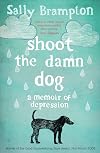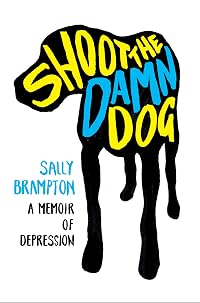
Shoot the Damn Dog: A Memoir of Depression
by Sally Brampton
On This Page
Description
A successful magazine editor and prize-winning journalist, Sally Brampton launched Elle magazine in the UK in 1985. But behind the successful, glamorous career was a story that many of her friends and colleagues knew nothing about--her ongoing struggle with severe depression and alcoholism. Brampton's is a candid, tremendously honest telling of how she was finally able to "address the elephant in the room," and of a culture that sends the overriding message that people who suffer from show more depression are somehow responsible for their own illness. She offers readers a unique perspective of depression from the inside that is at times wrenching, but ultimately inspirational, as it charts her own coming back to life. Beyond her personal story, Brampton offers practical advice to all those affected by this illness. This book will resonate with any person whose life has been haunted by depression, at the same time offering help and understanding to those whose loved ones suffer from this debilitating condition. show lessTags
Recommendations




























Member Reviews
This memoir of the bleakest form of severe depression was a tough read in places, and the author sometimes came across rather unsympathetically, but this reflects the brutal and uncompromising reality that she experienced over a period of a few years, that caused a very successful magazine editor to become incapable of reading, writing, or even living rather than existing. My own depression has, mercifully, never been this severe, but I recognised the traits of hopelessness and emotional numbness. A difficult but important read.
An excellent first person account of the experience of severe clinical depression. This book should be read by anyone with the illness or their loved ones. She treats the illness with the seriousness that it deserves, but manages to inject some humour along the way. She also gives hope in that she tells the reader the things that worked to pull her out of the darkness.
This is a tough read, particularly if you have depression yourself, so raw and exposed that I often had to take it in little chunks, but it is extremely inspiring. I honestly couldn't believe that Brampton survived her severe depression, but seeing her come out the other side--and hearing all the things that worked (and didn't work) for her--are invaluable for anyone who is going through something similar.
An excellent memoir.
This review is from: Shoot the Damn Dog: A Memoir of Depression (Paperback)
I was really impressed with this book. It was brutally honest about the desperate condition known as depression, yet it also gave hope for sufferers and practical tips to direct those who can see no way out. Written from first hand experience by a sufferer who does not respond to anti-depression medcation (30% of all depressives), and who reached the depths of despair that were hard to read about, let alone live through, it still managed an upbeat note towards the end.
Sally Brampton was a driven, highly motivated woman. She was editor of two well known magazines, Elle and Red, and a journalist for many major newspapapers. Then her marriage show more collapsed and her ability to cope seemed to crumble. Soon after that she was sacked from Red and sank into major depression. This was not an inability to be cheerful and see the bright side of life, this was a total, devastating inability to function on any level - a highly literate woman found herself unable even to read. Only her young daughter, Molly, kept her alive, though she did make a couple of attempts at suicide.
It took several years and a bout of alcoholism, before Sally managed to drag herself back into the land of the living. But the important fact is that she did. And having done so, she wrote this excellent memoir to help other sufferers see the light at the end of the tunnel.
Not everything will work for everyone, but the author gained great benefit from group therapy, private therapy (with an empathetic therapist), yoga and meditation.
My copy is littered with stick-it notes marking the parts I found inspiring and I am hoping that the depressive close to me can be persuaded to read this and benefit from it. show less
This review is from: Shoot the Damn Dog: A Memoir of Depression (Paperback)
I was really impressed with this book. It was brutally honest about the desperate condition known as depression, yet it also gave hope for sufferers and practical tips to direct those who can see no way out. Written from first hand experience by a sufferer who does not respond to anti-depression medcation (30% of all depressives), and who reached the depths of despair that were hard to read about, let alone live through, it still managed an upbeat note towards the end.
Sally Brampton was a driven, highly motivated woman. She was editor of two well known magazines, Elle and Red, and a journalist for many major newspapapers. Then her marriage show more collapsed and her ability to cope seemed to crumble. Soon after that she was sacked from Red and sank into major depression. This was not an inability to be cheerful and see the bright side of life, this was a total, devastating inability to function on any level - a highly literate woman found herself unable even to read. Only her young daughter, Molly, kept her alive, though she did make a couple of attempts at suicide.
It took several years and a bout of alcoholism, before Sally managed to drag herself back into the land of the living. But the important fact is that she did. And having done so, she wrote this excellent memoir to help other sufferers see the light at the end of the tunnel.
Not everything will work for everyone, but the author gained great benefit from group therapy, private therapy (with an empathetic therapist), yoga and meditation.
My copy is littered with stick-it notes marking the parts I found inspiring and I am hoping that the depressive close to me can be persuaded to read this and benefit from it. show less
Excellent memoir that explains how a clinically depressed person feels, see the world, deal with the surroundings and trying everything to get better. Reading this, I felt that I am not a hopeless case because there are some people out there who are sharing this sufferings. It makes me understand what I am going through, accept what I am suffering from and slowly, patiently find my own path to get better.
The beginning of the book is a tough read. It's a thick mucky quagmire groping in darkness through a labyrinth without direction or any desire for that matter.
Once the author begins discussion of her childhood the book becomes more clear and is easier to read.
Pg. 190 Emotions/memories don't always have language and sometimes settle in our bodies: a knot in the stomach, a pain in the neck.
Pg. 217 "Any drug that creates dependency is addictive. Any medicine that creates withdrawal that extreme should be classified as a class A drug."
I don't know what a class A drug is, but it makes me wonder about the chemicals in our foods.
pg. 245 She writes about crying in a public park, sometimes trying to hide it and sometimes not. I wonder if show more someone ever asked if they could assist her, or if she needed help or just a hug? I couldn't imagine seeing someone crying as she described and not approaching them. She concluded, "after an hour of fast walking, I always feel better." Of course that would be her changing the chemicals in her body, i.e. endorphins.
pg. 251 "American term 'our issues are in our tissues' was something I'd never heard before, but makes sense. Our emotions and or old unresolved feelings can cause neck pain, or a back ache or a throat monster, (which is what she had).
pg. 271 'Tired is not a feeling. It is a physical state. How are you feeling?' asked a therapist to another woman. I disagree with this. One can be mentally exhausted.
pg. 287 Alcoholism is not a disease.
pg. 291 Johann Wolfgang von Goethe "Whatever you think you can do or believe you can do, begin it. Action has magic, grace and power in it."
pg. 299 Low levels of vitamin B12 are often linked to higher incidences of depression.
pg. 307 Kindness of strangers goes a long way.
pg. 309 "When we think about how other people are feeling, we stop concentrating so hard on ourselves. By thinking outside ourselves, we also stop thinking about how life isn't giving us happiness and how we might give a little happiness to life."
I'm happy that Sally is doing better and she was able to write this book. show less
Once the author begins discussion of her childhood the book becomes more clear and is easier to read.
Pg. 190 Emotions/memories don't always have language and sometimes settle in our bodies: a knot in the stomach, a pain in the neck.
Pg. 217 "Any drug that creates dependency is addictive. Any medicine that creates withdrawal that extreme should be classified as a class A drug."
I don't know what a class A drug is, but it makes me wonder about the chemicals in our foods.
pg. 245 She writes about crying in a public park, sometimes trying to hide it and sometimes not. I wonder if show more someone ever asked if they could assist her, or if she needed help or just a hug? I couldn't imagine seeing someone crying as she described and not approaching them. She concluded, "after an hour of fast walking, I always feel better." Of course that would be her changing the chemicals in her body, i.e. endorphins.
pg. 251 "American term 'our issues are in our tissues' was something I'd never heard before, but makes sense. Our emotions and or old unresolved feelings can cause neck pain, or a back ache or a throat monster, (which is what she had).
pg. 271 'Tired is not a feeling. It is a physical state. How are you feeling?' asked a therapist to another woman. I disagree with this. One can be mentally exhausted.
pg. 287 Alcoholism is not a disease.
pg. 291 Johann Wolfgang von Goethe "Whatever you think you can do or believe you can do, begin it. Action has magic, grace and power in it."
pg. 299 Low levels of vitamin B12 are often linked to higher incidences of depression.
pg. 307 Kindness of strangers goes a long way.
pg. 309 "When we think about how other people are feeling, we stop concentrating so hard on ourselves. By thinking outside ourselves, we also stop thinking about how life isn't giving us happiness and how we might give a little happiness to life."
I'm happy that Sally is doing better and she was able to write this book. show less
This book was excellent. I highly recommend it for people suffering with depression. For me, it was equally useful (wow, I guess I really *am* depressed, I should start taking this seriously) and terrifying (wow, I guess I really *am* depressed, this is kind of scary). It's good to know that others have been there and lived to tell the tale.
Members
- Recently Added By
Lists

Animals in the Title
498 works; 11 members

Reading List: Depression
9 works; 2 members

Books Read in 2018
4,360 works; 110 members

Books With Complete Sentence Titles
502 works; 17 members
Author Information

7 Works 312 Members
Sally Brampton was born in 1955. She studied fashion at Central St Martin's College in London. She began her career writing for Vogue before being recruited in 1985 to set up the UK version of Elle magazine. As the founding editor, she championed healthier bodies for models. She left after five years to work full time as a writer. She wrote four show more novels and a non-fiction memoir about depression entitled Shoot the Damn Dog. Her novels are Concerning Lily, Lovesick, Good Grief, and Love, Always. She also worked as a journalist most recently for the Sunday Times and Psychologies magazine. She suffered from depression and wrote a regular advice column for the Daily Mail raising awareness about the condition. She committed suicide by walking into the sea on May 10, 2016 at the age of 60. (Bowker Author Biography) show less
Common Knowledge
- Original publication date
- 2008
- First words
- This is a memoir of depression.
- Last words
- (Click to show. Warning: May contain spoilers.)It is, in its own particular way, bliss.
Classifications
- Genres
- Nonfiction, Biography & Memoir, General Nonfiction
- DDC/MDS
- 616.85270092 — Applied science & technology Medicine & health Diseases, Allergies, Skin Conditions Nervous Disorders: Autism, Anorexia, OCD Miscellaneous Neuroses Depression
- LCC
- RC537 .B677 — Medicine Internal medicine Internal medicine Neurosciences. Biological psychiatry. Neuropsychiatry Psychiatry Psychopathology Neuroses
- BISAC
Statistics
- Members
- 265
- Popularity
- 122,205
- Reviews
- 9
- Rating
- (4.03)
- Languages
- Dutch, English, German, Swedish
- Media
- Paper, Ebook
- ISBNs
- 11
- ASINs
- 3