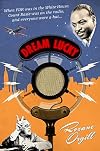
Dream Lucky: When FDR was in the White House, Count Basie was on the radio, and everyone wore a hat...
by Roxane Orgill
On This Page
Description
The time: 1936-1938. The mood: Hopeful. It wasn't wartime, not yet. The music: The incomparable Count Basie and Benny Goodman, among others. The setting: Living rooms across America and, most of all, New York City. Dream Lucky covers politics, race, religion, arts, and sports, but the central focus is the period's soundtrack--specifically big band jazz--and the big-hearted piano player William "Count" Basie. His ascent is the narrative thread of the book--how he made it and what made his show more music different from the rest. But many other stories weave in and out: Amelia Earhart pursues her dream of flying "around the world at its waistline." Adam Clayton Powell, Jr., stages a boycott on 125th Street. And Mae West shocks radio listeners as a naked Eve tempting the snake. Critic Nat Hentoff praises the "precise originality" with which Roxane Orgill writes about music. In Dream Lucky, she magically lets readers hear the past. show lessTags
Recommendations









Member Recommendations
Member Reviews
Like a jazz theme effortlessly rolling from Count Basie's own keyboard, Roxane Orgill's prolouge provides the basic notes upon which she will improvise and expand with each passing chapter, adding new facts or more background, like subtle changes in key.
Capturing the feel, look, and sound of an era is difficult, especially one seventy years gone. Often the result is sentimental and saccharine. Not so here. Orgill is not only able to transport the reader to Yankee Stadium for the Brown Bomber's devasting loss and eventual redeeming re-match, but also to a multitude of other unknown corners of the country to examine the everyday struggles to overcome economic depression and racial hatred.
Count Basie, the main character of this show more barnstorming tour of 1937 and 1938, is described in full here. The book never shortcuts Basie, or any of the people of the time, by focusing only on the most well-known aspect of their lives. It would be easy to zero in on Basie's music and his struggle to succeed but to do so would leave out his humble beginnings, his fear of failure, or hiseven fear of wooden bridges. In one chapter, Orgill even imagines Basie's realization that he has transformed himself from a regional attraction to a national band leader. Though the description of the epiphany is not based on any specific source, Orgill's knowledge of Basie is so complete, the passage reads as if she is merely transcribing Basie's own recollections. Orgill focuses the same expert eye on the other subjects of the book, narrating with ease the lives and private thoughts of FDR, Eleanor Roosevelt, Adam Clayton Powell, Jr., and Amelia Earhart.
The surprise of the book is Orgill's focus on the radio and its ever present place in the American experience of the time. Basie longs for national radio broadcasts, as that is a true measure of success. And, indeed, Basie's big break comes when he is heard by a music writer on a local broadcast out of Kansas City. FDR, Jack Benny, Charlie McCarthy all became national icons with radio broadcasts. The explosive amount and variety of music, news, and entertainment available on the radio echos the current explosive internet culture.
I knew about Count Basie, and most of Orgill's subjects, before reading this book, but I feel like I know them in a much more personal now. As I write this, I am re-visiting Count Basie, listening to an ablum from his late life, recorded from shows in Munich and the south of France in the 1970's. Even at 70, the Count and his band could swing. The revelation, for me, is listening to this music, with a better understanding of the era which shaped Basie's swing. show less
Capturing the feel, look, and sound of an era is difficult, especially one seventy years gone. Often the result is sentimental and saccharine. Not so here. Orgill is not only able to transport the reader to Yankee Stadium for the Brown Bomber's devasting loss and eventual redeeming re-match, but also to a multitude of other unknown corners of the country to examine the everyday struggles to overcome economic depression and racial hatred.
Count Basie, the main character of this show more barnstorming tour of 1937 and 1938, is described in full here. The book never shortcuts Basie, or any of the people of the time, by focusing only on the most well-known aspect of their lives. It would be easy to zero in on Basie's music and his struggle to succeed but to do so would leave out his humble beginnings, his fear of failure, or hiseven fear of wooden bridges. In one chapter, Orgill even imagines Basie's realization that he has transformed himself from a regional attraction to a national band leader. Though the description of the epiphany is not based on any specific source, Orgill's knowledge of Basie is so complete, the passage reads as if she is merely transcribing Basie's own recollections. Orgill focuses the same expert eye on the other subjects of the book, narrating with ease the lives and private thoughts of FDR, Eleanor Roosevelt, Adam Clayton Powell, Jr., and Amelia Earhart.
The surprise of the book is Orgill's focus on the radio and its ever present place in the American experience of the time. Basie longs for national radio broadcasts, as that is a true measure of success. And, indeed, Basie's big break comes when he is heard by a music writer on a local broadcast out of Kansas City. FDR, Jack Benny, Charlie McCarthy all became national icons with radio broadcasts. The explosive amount and variety of music, news, and entertainment available on the radio echos the current explosive internet culture.
I knew about Count Basie, and most of Orgill's subjects, before reading this book, but I feel like I know them in a much more personal now. As I write this, I am re-visiting Count Basie, listening to an ablum from his late life, recorded from shows in Munich and the south of France in the 1970's. Even at 70, the Count and his band could swing. The revelation, for me, is listening to this music, with a better understanding of the era which shaped Basie's swing. show less
 This review was written for LibraryThing Early Reviewers.
It took a little while for me to get used to the tone of this book -- the author's voice, and her approach to history and storytelling. Once I figured out, however, to think of it as the print equivalent of a jazz album, with the author riffing on a series of repeated themes, the book became not only much more accessible, but enjoyable. Even ... dare I say? ... swinging.
"Dream Lucky" isn't really a history book about the days "when FDR was in the White House, Count Basie was on the radio, and everyone wore a hat," even though it sometimes feels like it wants to be. Nor is it really a view of America during the years in question, except insofar as it defines what we were all listening to on the radio. With the exception of a description show more of Basie's road trip through the south and midwest, this is a New York-centric story, and an impressionist sort of story at that, weaving a little politics and some current events around the story of Basie's rise from a moderate level of fame and success in Kansas City to the big time in the Big Apple. It's an interesting approach, and within that narrower focus Roxane Orgill pulls it off well. And whereas I tend to judge a book in part on how many other books on the topic it makes me want to read, "Dream Lucky" has given me a whole list of CDs to track down and listen to, which I think is just as good a sign of merit (I'm pleased to say I already had several of the recordings she cites, including Benny Goodman's landmark 1938 Carnegie Hall concert, which you really need to hear if you haven't yet).
Again like jazz, this relaxed and, at first glance, erratic way of storytelling may not be to everyone's taste. But if you're inclined to give it a try, I think you'll find it a rewarding way to spend a few hours. show less
"Dream Lucky" isn't really a history book about the days "when FDR was in the White House, Count Basie was on the radio, and everyone wore a hat," even though it sometimes feels like it wants to be. Nor is it really a view of America during the years in question, except insofar as it defines what we were all listening to on the radio. With the exception of a description show more of Basie's road trip through the south and midwest, this is a New York-centric story, and an impressionist sort of story at that, weaving a little politics and some current events around the story of Basie's rise from a moderate level of fame and success in Kansas City to the big time in the Big Apple. It's an interesting approach, and within that narrower focus Roxane Orgill pulls it off well. And whereas I tend to judge a book in part on how many other books on the topic it makes me want to read, "Dream Lucky" has given me a whole list of CDs to track down and listen to, which I think is just as good a sign of merit (I'm pleased to say I already had several of the recordings she cites, including Benny Goodman's landmark 1938 Carnegie Hall concert, which you really need to hear if you haven't yet).
Again like jazz, this relaxed and, at first glance, erratic way of storytelling may not be to everyone's taste. But if you're inclined to give it a try, I think you'll find it a rewarding way to spend a few hours. show less
This review was written for LibraryThing Early Reviewers.Roxane Orgill has written several books for young people on music and dance. Her subjects have been as varied as Fred Astaire and Mahalia Jackson. In [Dream Lucky], she is writing for adults, weaving together the story of Count Basie’s struggle to make a name for his band, with anecdotal bits of American history to create a big picture of America before World War II. Two dozen pages of end notes testify to the research that went into the writing of Dream Lucky, but in the reading you might almost believe that every chapter was written up by a contemporary observer of the events, from notes taken on the spot. There is no scholarly tone, not a dry page or line to be found. The historical characters come alive, and dance through the show more pages. Do you want to know what kind of dress Joe Louis’s wife was wearing the night he defeated Max Schmelling? How Eleanor Roosevelt reacted to Amelia Earhart’s disappearance, or what she did about her husband’s failure to push for an anti-lynching bill? What big band leader took one look at 17-year-old Ella Fitzgerald and said “Your’e not puttin’ that on my bandstand” ? Or how Edgar Bergen made ventriloquism work on the radio, where no one could tell whether his mouth was moving or not? It’s all in this nifty book, and it all goes together somehow, even though there often seems to be no sequé from one chapter to the next. . It isn’t “History”, in the sense that no theories are presented, no analysis made, no conclusions drawn; but it is the kind of story-telling that can spark an interest that leads to further exploration. And it was fun to read. show less
This review was written for LibraryThing Early Reviewers.This book should have been a home run with me: I live in one of FDR's green cities (built in 1937), I love old time radio, and I usually enjoy these kind of popular history books (like 1939 and Devil in the White City). But I find myself ambivalent about this work.
Dream Lucky covers a two year period in the 1930s, concentrating on the pop touchstones of the era: boxing, jazz, and flying. It seems to be written for a younger audience, as far as I can tell from the style and word usage. It is populated by a lot of little two and three page chapters, character sketches of the era, I think. It does a good job dropping the reader into the _feeling_ of the era, but it doesn't give you a chance to dig down into anything. It's like a doughnut show more that way: nice mouthfeel, little nutrition.
But I like a good doughnut every once in a while. show less
Dream Lucky covers a two year period in the 1930s, concentrating on the pop touchstones of the era: boxing, jazz, and flying. It seems to be written for a younger audience, as far as I can tell from the style and word usage. It is populated by a lot of little two and three page chapters, character sketches of the era, I think. It does a good job dropping the reader into the _feeling_ of the era, but it doesn't give you a chance to dig down into anything. It's like a doughnut show more that way: nice mouthfeel, little nutrition.
But I like a good doughnut every once in a while. show less
This review was written for LibraryThing Early Reviewers.Roxanne Orgill breathes life into the lines of a historian’s notes. I can see the influence, from her children’s historical picture books, but it works well in this format. Dream Lucky is a wonderfully imaginative way to convey the culture, the community, and most importantly, the color barrier that had yet to be broken during this period of history prior to WWII.
This book reminded me of sitting at the dinner table with my parents, sharing stories of their life growing up, “in the olden days.” They always laughed when my siblings or I would call it that. But looking back and reading this book, I’m so glad to have gleaned those memories. Dream Lucky presents snapshots in time of the way it was, the way people who lived it, saw show more it. Anyone, who is a baby boomer, even a late boomer like myself can relate to the short vignettes in the book and recall what they were told as a child. If you lived during that time, Orgill will make you sway to the sounds of swing. Count Basie, Bennie, Billie, Ella and all the marvelous musicians of that era will echo in your ears as you read. The author periodically placed black and white photos throughout the book, which enhances your presence in that moment in time. You also hear the radio and see the family huddled around the box. Even though they can’t see anything, they stare listening silently so no sentence is missed. There was something for the whole family, Roosevelt’s Fireside Chats, The Lone Ranger, Burns and Allen, Orson Wells, and more.
What Orgill understands, from any teacher’s perspective, is that history doesn’t have to be an outdated, inaccurate textbook with facts, dates and dry content. That is assuming the schools have enough money to purchase textbooks for every student. We are alive when we are making history. Her approach to history is enjoyable, believable and readable, as it can and should be. You gain the knowledge from the point of view of a ubiquitous insider, who is witness to the events as they unfold during 1936-1938. You stand with Count Basie, Joe Louis, Ella Fitzgerald, Billie Holiday, Jacob Lawrence and so many other African American people who worked where they couldn’t eat, shopped, where they couldn’t work and who had to put up with the laws of Jim Crow, who was alive and active in the south. The social reform movement for racial equality was just beginning to emerge under the leadership of Reverend Adam Clayton Powell Jr. No matter who you were during this period of history, there was tension and turmoil worldwide, and no one stateside including FDR wanted another World War. What everyone had at that time was their dreams and so they hoped they would “Dream Lucky.”
Roxanne Orgill is unique in her approach to historical writing and understands how to make it real. I highly recommend this exceptionally entertaining history and I know as you read it you will believe you are there. show less
This book reminded me of sitting at the dinner table with my parents, sharing stories of their life growing up, “in the olden days.” They always laughed when my siblings or I would call it that. But looking back and reading this book, I’m so glad to have gleaned those memories. Dream Lucky presents snapshots in time of the way it was, the way people who lived it, saw show more it. Anyone, who is a baby boomer, even a late boomer like myself can relate to the short vignettes in the book and recall what they were told as a child. If you lived during that time, Orgill will make you sway to the sounds of swing. Count Basie, Bennie, Billie, Ella and all the marvelous musicians of that era will echo in your ears as you read. The author periodically placed black and white photos throughout the book, which enhances your presence in that moment in time. You also hear the radio and see the family huddled around the box. Even though they can’t see anything, they stare listening silently so no sentence is missed. There was something for the whole family, Roosevelt’s Fireside Chats, The Lone Ranger, Burns and Allen, Orson Wells, and more.
What Orgill understands, from any teacher’s perspective, is that history doesn’t have to be an outdated, inaccurate textbook with facts, dates and dry content. That is assuming the schools have enough money to purchase textbooks for every student. We are alive when we are making history. Her approach to history is enjoyable, believable and readable, as it can and should be. You gain the knowledge from the point of view of a ubiquitous insider, who is witness to the events as they unfold during 1936-1938. You stand with Count Basie, Joe Louis, Ella Fitzgerald, Billie Holiday, Jacob Lawrence and so many other African American people who worked where they couldn’t eat, shopped, where they couldn’t work and who had to put up with the laws of Jim Crow, who was alive and active in the south. The social reform movement for racial equality was just beginning to emerge under the leadership of Reverend Adam Clayton Powell Jr. No matter who you were during this period of history, there was tension and turmoil worldwide, and no one stateside including FDR wanted another World War. What everyone had at that time was their dreams and so they hoped they would “Dream Lucky.”
Roxanne Orgill is unique in her approach to historical writing and understands how to make it real. I highly recommend this exceptionally entertaining history and I know as you read it you will believe you are there. show less
In spite of its fun title, 'Dream Lucky' is actually a non-fiction piece of US cultural history of the years between 1936 and 1938 when "swing was king". It was also when African Americans were trying to make themselves seen, heard, and respected above white oppression but were making little headway. The book reads almost like a novel, written mostly from the perspective of bandleader Count Basie and his rise to fame in spite of all the obstacles. Orgill takes readers on a musical, cultural, and political journey of pre-World War II America. We get a glimpse inside the White House where Eleanor Roosevelt tried (unsuccessfully) to influence her husband to push through anti-lynching legislation. We go to church with Adam Clayton Powell show more (Sr. and Jr.). We hear popular radio shows (Burns and Allen, Jack Benny), go to the fights with Joe Louis and Max Schmeling, and attempt to fly around the world with Amelia Earhart. But most importantly, we swing to the music of Count Basie, Benny Goodman, Duke Ellington, and Chick Webb and listen to the vocals of Billie Holiday and Ella Fitzgerald.
'Dream Lucky' combines the fun of music with the seriousness of the plight of African-Americans in pre-civil rights America. It is an important history lesson for all of us.
Thank you HarperCollins and LibraryThing for the opportunity to read this book. show less
'Dream Lucky' combines the fun of music with the seriousness of the plight of African-Americans in pre-civil rights America. It is an important history lesson for all of us.
Thank you HarperCollins and LibraryThing for the opportunity to read this book. show less
This review was written for LibraryThing Early Reviewers.Billie Holiday performing in blackface, Eleanor Roosevelt sharing a racially stereotyped joke with her newspaper readers, Benny Goodman dropping by a black jazz club to listen to Count Basie play: These sound like scenes from an imaginative historical novel, but they are among the delightful and tantalizing historical events reported in “Dream Lucky: When FDR was in the White House, Count Basie was on the radio, and everyone wore a hat…”
Author Roxane Orgill, a former music critic who in recent years has written books for children, turned to the period from 1936 and 1938 and the emergence of swing as the dominant American music of the era for her first book for grown-ups. Some of the stories are outrageous: Mrs. Roosevelt, who in show more later years was reviled by liberals, writing in her daily newspaper column, “Many of us do not appreciate what we owe the colored race for its good humor and its quaint ways of saying and doing things,” before reprinting tasteless dialect joke from a book called “Chocolate Drops from the South;” a club manager in Detroit who insisted Billie Holiday wear black greasepaint because she looked white next to the members of Count Basie’s orchestra; Adolf Hitler wishing boxer Max Schmeling “every success” in his fight with Joe Louis.
“Dream Lucky” – the name comes from a Jimmy Rushing song – offers a series of well documented historical vignettes, people by names like Jack Benny, Edgar Bergen, Orson Welles, and Lanston Hughes. It recounts the parts of history too intimate to be recorded in textbooks that flesh out our understanding of a storied era. show less
Author Roxane Orgill, a former music critic who in recent years has written books for children, turned to the period from 1936 and 1938 and the emergence of swing as the dominant American music of the era for her first book for grown-ups. Some of the stories are outrageous: Mrs. Roosevelt, who in show more later years was reviled by liberals, writing in her daily newspaper column, “Many of us do not appreciate what we owe the colored race for its good humor and its quaint ways of saying and doing things,” before reprinting tasteless dialect joke from a book called “Chocolate Drops from the South;” a club manager in Detroit who insisted Billie Holiday wear black greasepaint because she looked white next to the members of Count Basie’s orchestra; Adolf Hitler wishing boxer Max Schmeling “every success” in his fight with Joe Louis.
“Dream Lucky” – the name comes from a Jimmy Rushing song – offers a series of well documented historical vignettes, people by names like Jack Benny, Edgar Bergen, Orson Welles, and Lanston Hughes. It recounts the parts of history too intimate to be recorded in textbooks that flesh out our understanding of a storied era. show less
This review was written for LibraryThing Early Reviewers.Members
- Recently Added By
Author Information

9 Works 898 Members
Common Knowledge
- People/Characters
- Franklin Delano Roosevelt
Classifications
- Genres
- Nonfiction, Music, History, General Nonfiction, Biography & Memoir
- DDC/MDS
- 973.917092 — History & geography History of North America United States 1901- World Wars and Depression Era (1901-1953) Franklin Delano Roosevelt (1933-1937) New Deal, Social Security Act Standard subdivisions History, geographic treatment, biography Biography
- LCC
- E806 .O74 — History of the United States United States Twentieth century Franklin Delano Roosevelt's administrations,
- BISAC
Statistics
- Members
- 70
- Popularity
- 446,461
- Reviews
- 29
- Rating
- (2.71)
- Languages
- English
- Media
- Paper, Ebook
- ISBNs
- 2
- ASINs
- 2