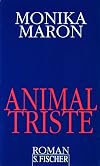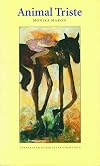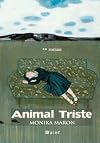
Animal Triste
by Monika Maron
On This Page
Description
In an autumnal love story of erotic obsession, possessiveness, remembrance, oblivion, and time, an elderly woman dwells upon a failed love affair of some time past, when she was no longer young but not yet old. The narrator relives meeting her lover, Franz, at the natural history museum, when, for the first time in her life, she experiences all-consuming love and absolute happiness. Ultimately the affair founders because of her inability to believe that Franz will actually leave his wife. show more After he disappears from her life, she withdraws from the world, waiting for his return and revisiting their time together over and over in a never-ending cycle of obsession. Her love for Franz becomes a compulsive suffering from which she can neither free herself nor withhold anything. show lessTags
Recommendations




























Member Reviews
I have mixed feelings about this book. It is written very well, the language is very poignant and clear. The story is building up slowly and the end was somewhat surprising, but still not unprobable, if that makes sense.
The protagonist, an aging woman, is not someone to identify with easily, she is bitter and very self-centered, confesses to not caring for her own daughter much e.g..
It is supposed to be a book about love and I think this is why I was so disappointed. I couldn't really follow how she fell in love with "Franz" just because of one very irrelevant sentence he said to her. He is only described with his eyes ("kleine hechtgraue Augen"), not sure how it was translated, it means "small, pike-grey eyes". I didn't see much love show more in there, but maybe I am too romantic or naive and have a strange understanding of love. For me the book is only about the kind of "being in love" that borders on obsession, but is not the same as loving in my opinion. This aside, it is still a somehow great book and I am not sorry that I have read it. show less
The protagonist, an aging woman, is not someone to identify with easily, she is bitter and very self-centered, confesses to not caring for her own daughter much e.g..
It is supposed to be a book about love and I think this is why I was so disappointed. I couldn't really follow how she fell in love with "Franz" just because of one very irrelevant sentence he said to her. He is only described with his eyes ("kleine hechtgraue Augen"), not sure how it was translated, it means "small, pike-grey eyes". I didn't see much love show more in there, but maybe I am too romantic or naive and have a strange understanding of love. For me the book is only about the kind of "being in love" that borders on obsession, but is not the same as loving in my opinion. This aside, it is still a somehow great book and I am not sorry that I have read it. show less
Einer nicht mehr jungen Frau entgleiten Zeitgefühl und
Erinnerungsvermögen, als ihre verspätete Jugendliebe sie
verläßt. Allein die Erinnerung an ihren Geliebten zählt,
dem sie kurz nach der Wende begegnete. Der
Hautflüglerforscher aus dem Westen und die Paläontologin
treffen sich im Naturkundemuseum, in dem sie den
Brachiosaurus hegt. Er bezeichnet ihren Schützling als
"Schönes Tier" und erweckt damit gleichzeitig das Fossil
ihrer verschlossen gehaltenen Liebesfähigkeit zu einem
späten, doch vehementen Leben - als allein sinnstiftendes
Prinzip ihrer durch den Niedergang des Unrechtsstaats
fragwürdig gewordenen Existenz. Während Marons letzter
Roman "Stille Zeile sechs" (BA 11/91) eine Abrechnung mit
der ersten show more Funktionärsgeneration der DDR war, enthält
"Animal triste" zahlreiche Verschlüsselungen der
Nachwendepolitik im Osten. Dennoch ist der stilistisch
anspruchvolle Roman breiter zugänglich über den
Themenschwerpunkt des Einzelnen zwischen staatlicher
Behinderung und seiner Trauer um Versäumtes und der
tatsächlichen Nutzung der Freiheitsrechte. show less
Erinnerungsvermögen, als ihre verspätete Jugendliebe sie
verläßt. Allein die Erinnerung an ihren Geliebten zählt,
dem sie kurz nach der Wende begegnete. Der
Hautflüglerforscher aus dem Westen und die Paläontologin
treffen sich im Naturkundemuseum, in dem sie den
Brachiosaurus hegt. Er bezeichnet ihren Schützling als
"Schönes Tier" und erweckt damit gleichzeitig das Fossil
ihrer verschlossen gehaltenen Liebesfähigkeit zu einem
späten, doch vehementen Leben - als allein sinnstiftendes
Prinzip ihrer durch den Niedergang des Unrechtsstaats
fragwürdig gewordenen Existenz. Während Marons letzter
Roman "Stille Zeile sechs" (BA 11/91) eine Abrechnung mit
der ersten show more Funktionärsgeneration der DDR war, enthält
"Animal triste" zahlreiche Verschlüsselungen der
Nachwendepolitik im Osten. Dennoch ist der stilistisch
anspruchvolle Roman breiter zugänglich über den
Themenschwerpunkt des Einzelnen zwischen staatlicher
Behinderung und seiner Trauer um Versäumtes und der
tatsächlichen Nutzung der Freiheitsrechte. show less
Jan 5, 2012German
Jo penso que es tracta de una novel.la extraordinaria. No és gaire sencilla de llegir. Es complexa i plena de sentit i alhora també carregada de absurd, si es vol mirar des d'aquesta optica. Gens fàcil de llegir tantmateix éxtraordinària.
Nov 28, 2022Catalan
Ratings
Members
- Recently Added By
Lists

Works referenced in Welcome to the Hyunam-Dong Bookshop
19 works; 1 member
Author Information

27+ Works 644 Members
Some Editions
Awards and Honors
Notable Lists
Series
Belongs to Publisher Series
Common Knowledge
- Canonical title
- Animal Triste
- Original title
- Animal Triste : Roman
- Original publication date
- 1996
- People/Characters*
- Franz
- Important places*
- Berlin, Deutschland
- Dedication*
- In dankbarer Erinnerung an Günther Busch, gestorben am 25. Juni 1995
- First words*
- Als ich jung war, habe ich wie die meisten jungen Menschen geglaubt, ich müsste jung sterben.
- Last words*
- (Click to show. Warning: May contain spoilers.)Ich bin eins von ihnen, eine braunhaarige Äffin mit einer stumpfen Nase und langen Armen, die ich um meinen Tierleib schlinge. So bleibe ich liegen.
- Original language*
- Deutsch
*Some information comes from Common Knowledge in other languages. Click "Edit" for more information.
Classifications
- Genres
- Fiction and Literature, General Fiction, Romance
- DDC/MDS
- 833.914 — Literature & rhetoric German & related literatures German fiction 1900- 1900-1990 1945-1990
- LCC
- PT2673 .A4686 .A8413 — Language and Literature German, Dutch and Scandinavian literatures German literature Individual authors or works 1961-2000
- BISAC
Statistics
- Members
- 109
- Popularity
- 295,183
- Reviews
- 3
- Rating
- (3.81)
- Languages
- 10 — Catalan, Czech, Dutch, English, Finnish, French, German, Italian, Croatian, Turkish
- Media
- Paper, Ebook
- ISBNs
- 18
- ASINs
- 2