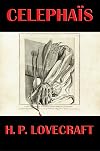
Celephaïs [short story]
by H. P. Lovecraft
On This Page
Description
Celepha?s is a fantasy story by American horror fiction writer H. P. Lovecraft, written in early November 1920 and first published in the May 1922 issue of the Rainbow. The title refers to a fictional city that later appears in H. P. Lovecrafts? Dream Cycle, including his novella The Dream-Quest of Unknown Kadath (1926). Celephas was created in a dream by Kuranes (which is his name in dreams-his real name is not given) as a child of the English landed gentry. As a man in his forties, alone show more and dispossessed in contemporary London, he dreams it again and then, seeking it, slowly slips away to the dream-world. show lessTags
Recommendations



























Member Recommendations
Member Reviews
Um homem volta a desejar uma cidade que criou em sonhos quando criança. Ele acaba virando o rei do mundo dos sonhos enquanto o seu corpo morto jaz em Innsmouth.
Cerrando el año con los relatos cortos de H. P. Lovecraft, esta vez con "Celephïs" en el que el protagonista en el mundo onírico se hace llamar Kuranes, quien sueña con una ciudad... allá en donde el mar se reúne con el cielo.
"y vio la ciudad del valle, refulgiendo de forma radiante a lo lejos, lejos y abajo, con el trasfondo del mar y del cielo, y la montaña cubierta de nieves al pie de la orilla"
"y vio la ciudad del valle, refulgiendo de forma radiante a lo lejos, lejos y abajo, con el trasfondo del mar y del cielo, y la montaña cubierta de nieves al pie de la orilla"
A dreamer finds his dreams, maybe. I really, really liked this one. *disbelief*
(Moving 2015 review to separate work to make room under collection for review, September 2017.)
(Moving 2015 review to separate work to make room under collection for review, September 2017.)
pretty original to say the least
Lorsqu'il rêve Kuranes se transporte jusqu'à Celephais.
Jul 3, 2011French
Ratings
Members
- Recently Added By
Lists

In and About the 1920s
181 works; 31 members

Favourite Short Stories
153 works; 9 members

Best Science Fiction Novels
816 works; 426 members
Survey of Classic Science Fiction
171 works; 47 members
Author Information

1,932+ Works 74,044 Members
Howard Phillips Lovecraft, 1890 - 1937 H. P. Lovecraft was born on August 20, 1890 in Providence, Rhode Island. His mother was Sarah Susan Phillips Lovecraft and his father was Winfield Scott Lovecraft, a traveling salesman for Gorham & Co. Silversmtihs. Lovecraft was reciting poetry at the age of two and when he was three years old, his father show more suffered a mental breakdown and was admitted to Butler Hospital. He spent five years there before dying on July 19, 1898 of paresis, a form of neurosyphillis. During those five years, Lovecraft was told that his father was paralyzed and in a coma, which was not the case. His mother, two aunts and grandfather were now bringing up Lovecraft. He suffered from frequent illnesses as a boy, many of which were psychological. He began writing between the ages of six and seven and, at about the age of eight, he discovered science. He began to produce the hectographed journals, "The Scientific Gazette" (1899-1907) and "The Rhode Island Journal of Astronomy" (1903-07). His first appearance in print happened, in 1906, when he wrote a letter on an astronomical matter to The Providence Sunday Journal. A short time later, he began writing a monthly astronomy column for The Pawtuxet Valley Gleaner - a rural paper. He also wrote columns for The Providence Tribune (1906-08), The Providence Evening News (1914-18), The Asheville (N.C.) Gazette-News (1915). In 1904, his grandfather died and the family suffered severe financial difficulties, which forced him and his mother to move out of their Victorian home. Devastated by this, he apparently contemplated suicide. In 1908, before graduating from high school, he suffered a nervous breakdown. He didn't receive a diploma and failed to get into Brown University, both of which caused him great shame. Lovecraft was not heard from for five years, re-emerging because of a letter he wrote in protest to Fred Jackson's love story in The Argosy. His letter was published in 1913 and caused great controversy, which was noted by Edward F. Daas, President of the United Amateur Press Association (UAPA). Daas invited Lovecraft to join the UAPA, which he did in early 1914. He eventually became President and Official Editor of the UAPA and served briefly as President of the rival National Amateur Press Association (NAPA). He published thirteen issues of his own paper, The Conservative (1915-23) and contributed poetry and essays to other journals. He also wrote some fiction which titles include "The Beast in the Cave" (1905), "The Alchemist" (1908), "The Tomb" and "Dagon" (1917). In 1919, Lovecraft's mother was deteriorating, mentally and physically, and was admitted to Butler Hospital. On May 24, 1921, his mother died from a gall bladder operation. While attending an amateur journalism convention in Boston, Lovecraft met his future wife Sonia Haft Greene, a Russian Jew. They were married on March 3, 1924 and Lovecraft moved to her apartment in Brooklyn. Sonia had a shop on Fifth Avenue that went bankrupt. In 1925, Sonia went to Cleveland for a job and Lovecraft moved to a smaller apartment in the Red Hook district of Brooklyn. In 1926, he decided to move back to Providence. Lovecraft had his aunts bar his wife, Sonia, from going to Providence to start a business because he couldn't have the stigma of a tradeswoman wife. They were divorced in 1929. After his return to Providence, he wrote his greatest fiction, which included the titles "The Call of Cthulhu" (1926), "At the Mountains of Madness" (1931), and "The Shadow Out of Time" (1934-35). In 1932, his aunt, Mrs. Clark, died; and he moved in with his other aunt, Mrs. Gamwell, in 1933. Suffering from cancer of the intestine, Lovecraft was admitted to Jane Brown Memorial Hospital and on March 15, 1937 he died. (Bowker Author Biography) show less
Work Relationships
Is contained in
Has the adaptation
Common Knowledge
- Canonical title
- Celephaïs [short story]
- Original publication date
- 1922-05
- People/Characters
- Kuranes
- Important places
- Celephais, Ooth-Nargai, Dreamlands; Innsmouth, Massachusetts, USA
- First words
- In a dream Kuranes saw the city in the valley, and the seacoast beyond, and the snowy peak overlooking the sea, and the gaily painted galleys that sail out of the harbour towards distant regions where the sea meets the sky.
- Last words
- (Click to show. Warning: May contain spoilers.)He reigns there still, and will reign happily for ever, though below the cliffs at Innsmouth the channel tides played mockingly with the body of a tramp who stumbled through the half-deserted village at dawn; played mockingly, and cast it upon the rocks by ivy-covered Trevor Towers, where a notably fat and especially offensive millionaire brewer enjoys the purchased atmosphere of extinct nobility.
Classifications
Statistics
- Members
- 50
- Popularity
- 605,251
- Reviews
- 5
- Rating
- (3.04)
- Languages
- English
- Media
- Paper, Ebook
- ISBNs
- 8
- ASINs
- 5