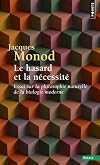
Chance and Necessity: An Essay on the Natural Philosophy of Modern Biology
by Jacques Monod
On This Page
Description
"A philosophical statement whose explicit intention is to sweep away as both false and dangerous the 'animist' conception of man that has dominated virtually all Western world views from those of primitive cultures to those of dialectical materialists. Monod bases his argument on the evidence of modern biology, which shows, indisputably, that man is the product of chance genetic mutation. He draws upon what we now know about genetic structure (and on what we can theorize) to suggest an show more entirely new way of looking at ourselves. He argues that objective scientific knowledge, the only knowledge we can rely on, denies the concepts of destiny or evolutionary purpose that underlie traditional philosophies; and he contends that the persistence of those concepts is responsible for the intensifying schizophrenia of a world that accepts, and lives by, the fruits of science while refusing to face its momentous moral implications"--Publisher description. show lessTags
Recommendations
















Member Reviews
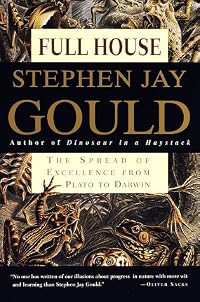
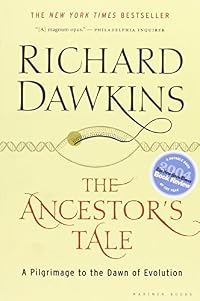
I seldom have chosen books as Picks for the Journal of Chemical Education that are not relatively recent (although there are precedents for this), but the current controversy over "Intelligent" Design brought vividly to mind the 1971 book, "Chance and Necessity" by Nobelist Jacques Monod. While I appreciate the arguments for evolution by people like Stephen Jay Gould and Richard Dawkins, Monod's reasoning appeals to me even more as a molecular scientist. I read "Chance and Necessity" when it was first published those thirty-some years ago, and it is a testament to the power of this book that it has stuck with me so strongly for so long. Monod looks at the biomolecular basis of genetics in search of evidence for any non-random processes, show more which would be required if some design were imposed on the processes of selection. He finds none. In fact, he can positively rule out the existence of such mechanisms. Modern biology tells us, according to Monod, "...it follows that chance alone is at the source of every innovation, of all creation in the biosphere. Pure chance, absolutely free but blind, at the very root of the stupendous edifice of evolution; this central concept of modern biology is no longer one among other possible or even conceivable hypotheses. It is today the sole conceivable hypothesis, the only one that squares with observed and tested fact. And nothing warrants the supposition - or the hope - that on this score our position is likely ever to be revised. His conclusions are precisely those that are an anathema to traditional believers. In his words, "The ancient covenant is in pieces; man knows at last that he is alone in the universe's unfeeling immensity, out of which he has emerged only by chance. His destiny is nowhere spelled out, nor is his duty. The kingdom above or the darkness below; it is for him to choose." Find a copy this important book from your library or locate a used one. show less
Review and philosophical implications of modern molecular biology by one of its most famous practitioners. The question of the title is 'Chance and necessity?' He comes down heavy on the side of chance. But do we really (as scientists) have to come down on the side of chance if we want to avoid the pitfalls of 'design'? I think the thinking in this arena is beginning to change - life may be necessity after all. If you are interested in this question, this book is a great place to start. Not easy reading, but very deep.
'Chance alone is at the source of every innovaton, of all creation in the biosphere. Pure chance, only chance, absolute but blind liberty is at the root of the prodigious edifice that is evolution... It is today the sole conceivable hypothesis, the only one that squares with observed and tested fact.'
GB-5
Oct 23, 2020Catalan
QBB-3
Jun 3, 2021Catalan
Cet ouvrage, un grand classique désormais, son auteur l'a écrit pour répondre au " devoir qui s'impose, aujourd'hui plus que jamais, aux hommes de science de penser leur discipline dans l'ensemble de la culture moderne pour l'enrichir non seulement de connaissances techniquement importantes, mais aussi des idées venues de leur science qu'ils peuvent croire humainement signifiantes. L'ingénuité même d'un regard neuf (celui de la science l'est toujours) peut parfois éclairer d'un jour nouveau d'anciens problèmes... ". "Tout ce qui existe dans l'Univers, disait le philosophe grec Démocrite, est le fruit du hasard et de la nécessité." Grande figure parmi les pionniers de la biologie moléculaire, le Prix Nobel Jacques Monod show more (1910-1976) montre la fécondité de cette dualité pour comprendre les grandes problématiques de la biologie - origine de la vie ou évolution des espèces - et saisir les enjeux de la génétique moderne. Si l'homme ne résulte d'aucun projet divin, si son évolution tient davantage du hasard que d'un projet préétabli, rien ne l'autorise pour autant à sombrer dans un matérialisme pessimiste. Face aux défis de la science et de la technique qui vont jusqu'à menacer l'intégrité de l'Homme, Jacques Monod plaide pour l'invention d'un nouvel humanisme intégrant les données de la science. L'ancienne alliance est rompue ; l'homme sait enfin qu'il est seul dans l'immensité indifférente de l'Univers d'où il a émergé par hasard. Non plus que son destin, son devoir n'est écrit nulle part. À lui de choisir entre le Royaume et les ténèbres. --Arthur Hennessy show less
Dec 15, 2010French
Caos. Il caso e la necessità è un libro particolare. Difficile da interpretare, sempre in bilico tra scienza e filosofia. Lettura interessante ma a tratti non proprio chiara. Per amanti del genere
Dec 13, 2007Italian
Members
- Recently Added By
Lists

Books in the bibliography of Godel, Escher, Bach by Douglas Hofstadter
97 works; 3 members

The Great Courses: The Darwinian Revolution
50 works; 1 member
Author Information

14+ Works 828 Members
Some Editions
Awards and Honors
Awards
Notable Lists
Series
Belongs to Publisher Series
Common Knowledge
- Canonical title
- Chance and Necessity: An Essay on the Natural Philosophy of Modern Biology
- Original title
- Le hasard et la nécessité : essai sur la philosophie naturelle de la biologie moderne
- Original publication date
- 1970
- Original language*
- Francés
*Some information comes from Common Knowledge in other languages. Click "Edit" for more information.
Classifications
Statistics
- Members
- 805
- Popularity
- 34,177
- Reviews
- 8
- Rating
- (3.87)
- Languages
- 14 — Danish, Dutch, English, Finnish, French, German, Icelandic, Italian, Japanese, Portuguese, Romanian, Spanish, Swedish, Turkish
- Media
- Paper, Ebook
- ISBNs
- 34
- ASINs
- 18