On This Page
Description
The wandering warrior Balsa is hired to protect Prince Chagum from both a mysterious monster and the prince's father, the Mikado.Tags
Recommendations
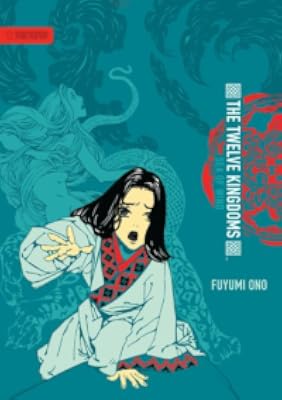
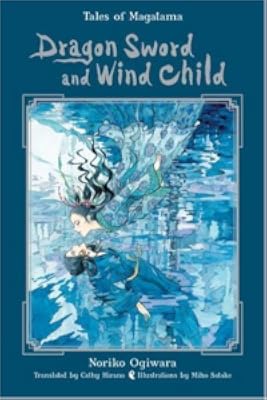

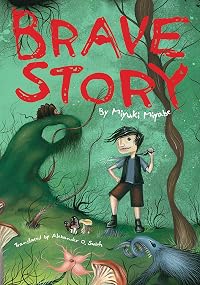
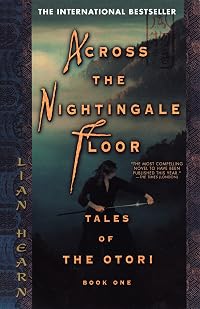






Member Recommendations
Member Reviews
5Q, 5P
This is a fantastic novel! It is set in a fictionalized version of medieval Japan. Balsa, a commoner, bodyguard, and spear-wielding warrior is essentially roped in to protecting the second son of the Mikado, Prince Chagum, whom the Mikado is trying to kill because Chagum appears to have been possessed by a demon who, supposedly, was destroyed by the sacred ancestor of the royal line two hundred years prior to the beginning of the story. Balsa, a flawed, fascinating, utterly realistic character with her own tortured past eventually bonds with Chagum, teaching him to support and defend himself while they hide from and fight off a fantastical facsimile of a black ops squad, the mysterious and fierce Hunters of the Mikado. All the show more while, Balsa and Chagum, with the help of two unique and compelling magic weavers, Tanda and Torogai, are trying to figure out what has possessed Chagum and how they should best protect him, both from the Hunters and from the forces of the spirit world, Nayugu. Splendidly described and beautifully rendered, the world of New Yogo and its characters is full of depth and complexity not often found in YA fantasy novels! show less
This is a fantastic novel! It is set in a fictionalized version of medieval Japan. Balsa, a commoner, bodyguard, and spear-wielding warrior is essentially roped in to protecting the second son of the Mikado, Prince Chagum, whom the Mikado is trying to kill because Chagum appears to have been possessed by a demon who, supposedly, was destroyed by the sacred ancestor of the royal line two hundred years prior to the beginning of the story. Balsa, a flawed, fascinating, utterly realistic character with her own tortured past eventually bonds with Chagum, teaching him to support and defend himself while they hide from and fight off a fantastical facsimile of a black ops squad, the mysterious and fierce Hunters of the Mikado. All the show more while, Balsa and Chagum, with the help of two unique and compelling magic weavers, Tanda and Torogai, are trying to figure out what has possessed Chagum and how they should best protect him, both from the Hunters and from the forces of the spirit world, Nayugu. Splendidly described and beautifully rendered, the world of New Yogo and its characters is full of depth and complexity not often found in YA fantasy novels! show less
The last time I read and reviewed this book was back in 2010, when my posts included spoiler-filled synopses that were as long or longer than the reviews themselves. I figured that a new review was in order, especially since my opinion of this book has improved.
After Balsa, a female bodyguard, rescues young Prince Chagum from drowning, she finds herself being roped into being his protector. Chagum is believed to be possessed by the same creature that once caused a terrible drought. It's thought that the drought will be averted if Chagum is killed, so the Mikado himself has ordered several assassination attempts against him. Chagum's mother, the Second Queen, enlists Balsa's help to save him.
While Balsa attempts to hide Chagum and show more keep him safe from his pursuers, she also seeks out several friends in the hope of figuring out what's going on so that she can somehow both save Chagum's life and prevent the drought.
The first time I read this book was, I think, too soon after having seen the anime. They're both good, but the time I spent noting similarities and differences to the anime made it hard to judge the book on its own merits (yes, I know the book came first, but my first exposure to the story was the anime).
Balsa makes me wish more than the first two books in this series had been translated into English. She's a great character - an experienced and talented warrior with an intriguing past. In general, the book had some nice gender role reversal, with its female stoic warrior character and male healer interested in the spirit world. There was a hint of potential romance between Balsa and Tanda, the healer, but it was handled in a very low-drama way. Tanda was a little frustrated at Balsa's lack of desire to settle down, but it never got to the point of wrecking their friendship.
The "found family" aspect involving Balsa, Tanda, and Chagum was nice. I enjoyed that restful period of the story before everybody had to worry about Chagum's safety again, and it was nice to see Chagum becoming more comfortable and confident in his life as a commoner.
One of the things I really liked about this book was the way the setting and its history mattered. This was very much a story about how knowledge is lost or changed over time. Near the beginning of the book, readers get the history of how New Yogo was founded, but it's entirely from the perspective of the Yogoese, who are currently the area's dominant ethnic group. Later on, readers get more sides of the story - the secret history that only the Star Readers know (which is, again, Yogoese history) and Yakoo stories.
The Yakoo were the people who originally lived in the area where New Yogo was founded. (Supposedly they fled out of fear when the Yogoese peacefully tried to contact them, and I think the Yakoo side of the story agreed with this or at least didn't refute it, but I don't buy it.) They'd lost much of their culture and traditions, and what was left was sometimes mixed with Yogoese culture to an uncertain degree. It gave me shivers to think how close everyone came to not having the knowledge they needed during the chase at the end of the book.
I was surprised at how much I enjoyed rereading this. I haven't read the next book in the series yet, but I'm now looking forward to it even more.
(Original review posted on A Library Girl's Familiar Diversions.) show less
After Balsa, a female bodyguard, rescues young Prince Chagum from drowning, she finds herself being roped into being his protector. Chagum is believed to be possessed by the same creature that once caused a terrible drought. It's thought that the drought will be averted if Chagum is killed, so the Mikado himself has ordered several assassination attempts against him. Chagum's mother, the Second Queen, enlists Balsa's help to save him.
While Balsa attempts to hide Chagum and show more keep him safe from his pursuers, she also seeks out several friends in the hope of figuring out what's going on so that she can somehow both save Chagum's life and prevent the drought.
The first time I read this book was, I think, too soon after having seen the anime. They're both good, but the time I spent noting similarities and differences to the anime made it hard to judge the book on its own merits (yes, I know the book came first, but my first exposure to the story was the anime).
Balsa makes me wish more than the first two books in this series had been translated into English. She's a great character - an experienced and talented warrior with an intriguing past. In general, the book had some nice gender role reversal, with its female stoic warrior character and male healer interested in the spirit world. There was a hint of potential romance between Balsa and Tanda, the healer, but it was handled in a very low-drama way. Tanda was a little frustrated at Balsa's lack of desire to settle down, but it never got to the point of wrecking their friendship.
The "found family" aspect involving Balsa, Tanda, and Chagum was nice. I enjoyed that restful period of the story before everybody had to worry about Chagum's safety again, and it was nice to see Chagum becoming more comfortable and confident in his life as a commoner.
One of the things I really liked about this book was the way the setting and its history mattered. This was very much a story about how knowledge is lost or changed over time. Near the beginning of the book, readers get the history of how New Yogo was founded, but it's entirely from the perspective of the Yogoese, who are currently the area's dominant ethnic group. Later on, readers get more sides of the story - the secret history that only the Star Readers know (which is, again, Yogoese history) and Yakoo stories.
The Yakoo were the people who originally lived in the area where New Yogo was founded. (Supposedly they fled out of fear when the Yogoese peacefully tried to contact them, and I think the Yakoo side of the story agreed with this or at least didn't refute it, but I don't buy it.) They'd lost much of their culture and traditions, and what was left was sometimes mixed with Yogoese culture to an uncertain degree. It gave me shivers to think how close everyone came to not having the knowledge they needed during the chase at the end of the book.
I was surprised at how much I enjoyed rereading this. I haven't read the next book in the series yet, but I'm now looking forward to it even more.
(Original review posted on A Library Girl's Familiar Diversions.) show less
Having seen and greatly enjoyed the Anime, I was delighted to find the book at a Library Book Sale. Often animes are taken from manga but this one was taken from a book – and faithfully rendered into film. The book brings alive in the mind this fantastic story. With a deft hand, the author gives us the world of real and spirit clashing and the people in our world that must fight to protect it.
While the language and vocabulary are of no particular difficulty, the subject is not simple. The author touches on the how different cultures mix, and in particular, who writes history – and why it might not always be true. This would be an excellent story to start a discussion with elementary age kids about critical analysis of historical show more reporting. Can you always believe the history books? How do you know what is and isn’t true? Why do people lie about history? It isn’t told in a heavy-handed moral sort of way either, but simply a presentation of the story that would lead to good thoughts and good discussion. This is also an excellent book about another culture from a non-western author. If you are looking to get kids reading non-western authors, this must be on your list! Happy Reading! show less
While the language and vocabulary are of no particular difficulty, the subject is not simple. The author touches on the how different cultures mix, and in particular, who writes history – and why it might not always be true. This would be an excellent story to start a discussion with elementary age kids about critical analysis of historical show more reporting. Can you always believe the history books? How do you know what is and isn’t true? Why do people lie about history? It isn’t told in a heavy-handed moral sort of way either, but simply a presentation of the story that would lead to good thoughts and good discussion. This is also an excellent book about another culture from a non-western author. If you are looking to get kids reading non-western authors, this must be on your list! Happy Reading! show less
I had originally watched the Moribito anime and loved it. When I saw this book at the bookstore I was very excited to read it. This was a great book. It’s a wonderful balance of history, magic, action, and coming of age story. I really enjoyed it. This is a book that is great for all ages as well. The whole story is set in a sort of feudal Japan.
I really love that this book features an older female warrior as the main character (Balsa is in her 30’s). Balsa loves fighting and protecting; being thrown into the role of caretaker for a eleven year old boy is a huge change for her. I also love that her love interest is pretty much the opposite of her in every way (bookish, wise, and patient).
This book is very much a coming of age story show more for Prince Chagum. He learns how to do things himself and experiences the broader world. There are elements of magic in here as well. Prince Chagum is carrying the egg of a water spirit in his chest and must safely see it through to its birth or die.
Politics are touched on as well. We see how history and myth are written by the conquerors and the true history may be lost with the people who were conquered.
The book itself is beautifully put together. The pages are thick and well bound and the illustration and ink color throughout is amazing. This is one of those books that is soo much better in paper format and definitely one you’ll want to keep around.
Overall this was an amazing story and I would love to continue the Moribito series. This book is a wonderful blend of history, fantasy, action, friendship, and coming of age. I would definitely recommend to those who enjoy fantasies set in feudal Japan. show less
I really love that this book features an older female warrior as the main character (Balsa is in her 30’s). Balsa loves fighting and protecting; being thrown into the role of caretaker for a eleven year old boy is a huge change for her. I also love that her love interest is pretty much the opposite of her in every way (bookish, wise, and patient).
This book is very much a coming of age story show more for Prince Chagum. He learns how to do things himself and experiences the broader world. There are elements of magic in here as well. Prince Chagum is carrying the egg of a water spirit in his chest and must safely see it through to its birth or die.
Politics are touched on as well. We see how history and myth are written by the conquerors and the true history may be lost with the people who were conquered.
The book itself is beautifully put together. The pages are thick and well bound and the illustration and ink color throughout is amazing. This is one of those books that is soo much better in paper format and definitely one you’ll want to keep around.
Overall this was an amazing story and I would love to continue the Moribito series. This book is a wonderful blend of history, fantasy, action, friendship, and coming of age. I would definitely recommend to those who enjoy fantasies set in feudal Japan. show less
I first learned about Nahoko Uehashi's Moribito: Guardian of the Spirit while perusing a list of Batchelder Award winners and nominees looking for Japanese entrants. Moribito: Guardian of the Spirit won the award in 2009 and in 2010 it's sequel Moribito: Guardian of the Darkness was listed as an honor book. Moribito is actually the first book of a ten volume Japanese fantasy series aimed towards younger readers; only the first two books have been translated into English so far. The first novel was made into both a manga series (not currently licensed in English) and an anime series, which I'll definitely be watching. There is also a radio drama adaptation. Originally published in Japan in 1996, Moribito: Guardian of the Spirit was show more subsequently released by Arthur A. Levine books, an imprint of Scholastic, with an English translation by Cathy Hirano, who also translated the second book.
Despite being a woman and an outsider, Balsa has gained quite a reputation as an exceptional body guard and a master of the spear. When she saves the life of Prince Chagum, Balsa is brought to the palace by his mother, the Second Queen. She suspects that multiple attempts have been made on her son's life and have been made to look like accidents. The boy appears to be possessed by some sort of spirit and is seen as a threat to the country's stability. Balsa agrees to act as the prince's protector and flees the city with him. The two are not only pursued by elite human agents, but by supernatural beings as well. The only chance Balsa has to save Chagum is to understand what exactly it is that's inhabiting his body--knowledge that has been lost over time and forgotten as myth.
Balsa is so awesome. Next time someone tells you a woman nearing middle-age can't kick ass, just point to her. She has been training for most of her life to be a proficient fighter and while she has some raw, natural talent, her skills are mostly the result of hard work and practice. Uehashi has written some great action and fight sequences that are easy to follow but are still very exciting. Realistically, people get hurt and have to deal with the consequences of their injuries and healing, something that is often forgotten in other fantasy novels I've read, especially those written for younger readers. Another thing that Uehashi has done very well is that none of the characters are inherently good or bad--they're simply people. They've all made mistakes and done stupid things, but they also all have redeeming qualities. Thrown into a situation where their actions are dictated by what society requires as opposed to what they truly want or desires as individuals, they are dealing as best as they can.
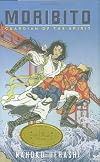
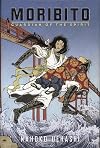
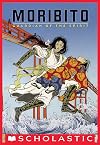
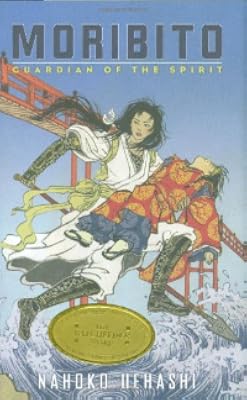
I absolutely loved Moribito. Levine's production values and presentation of the novel is simply gorgeous and includes beautiful illustrations by Yuko Shimizu (which I believe are unique to the English edition). Hirano's translation is also spot-on, using slightly formal and archaic sounding language that fits the story well. Although it is a contemporary novel, I felt as though I was being told a tale and legend much older. Moribito has a very definite ending so I have no idea where Uehashi plans to take things next. But I was so impressed by the first novel in the series that I immediately went out and bought the second volume. If any of the following books are even close to being as good as Moribito: Guardian of the Spirit, I truly hope that Levine will publish the rest of the series.
Experiments in Manga show less
Despite being a woman and an outsider, Balsa has gained quite a reputation as an exceptional body guard and a master of the spear. When she saves the life of Prince Chagum, Balsa is brought to the palace by his mother, the Second Queen. She suspects that multiple attempts have been made on her son's life and have been made to look like accidents. The boy appears to be possessed by some sort of spirit and is seen as a threat to the country's stability. Balsa agrees to act as the prince's protector and flees the city with him. The two are not only pursued by elite human agents, but by supernatural beings as well. The only chance Balsa has to save Chagum is to understand what exactly it is that's inhabiting his body--knowledge that has been lost over time and forgotten as myth.
Balsa is so awesome. Next time someone tells you a woman nearing middle-age can't kick ass, just point to her. She has been training for most of her life to be a proficient fighter and while she has some raw, natural talent, her skills are mostly the result of hard work and practice. Uehashi has written some great action and fight sequences that are easy to follow but are still very exciting. Realistically, people get hurt and have to deal with the consequences of their injuries and healing, something that is often forgotten in other fantasy novels I've read, especially those written for younger readers. Another thing that Uehashi has done very well is that none of the characters are inherently good or bad--they're simply people. They've all made mistakes and done stupid things, but they also all have redeeming qualities. Thrown into a situation where their actions are dictated by what society requires as opposed to what they truly want or desires as individuals, they are dealing as best as they can.
I absolutely loved Moribito. Levine's production values and presentation of the novel is simply gorgeous and includes beautiful illustrations by Yuko Shimizu (which I believe are unique to the English edition). Hirano's translation is also spot-on, using slightly formal and archaic sounding language that fits the story well. Although it is a contemporary novel, I felt as though I was being told a tale and legend much older. Moribito has a very definite ending so I have no idea where Uehashi plans to take things next. But I was so impressed by the first novel in the series that I immediately went out and bought the second volume. If any of the following books are even close to being as good as Moribito: Guardian of the Spirit, I truly hope that Levine will publish the rest of the series.
Experiments in Manga show less
5Q 5P
Wandering warrior woman and well-known bodyguard Balsa saves the second prince's life, and is hired by his mother to protect him. An unknown spirit lives within the prince, causing his father to order his death. Prince Chagum and Balsa barely escape the assassins as they head to the mountains in search of safe harbor and the wisdom of Torogai, the magic weaver. What follows is a dangerous quest to protect the egg within Chagum from both assassins and the terrible egg-eating monster Rurunga, or the life-giving rains will never return.
Translated from the original Japanese, Moribito is an amazingly written book, the setting of which is an alternate, historical, and magical Japan. The pages are seeped in the culture, and what few show more necessary cultural explanations a reader might require is skillfully worked into dialogue and description. The plot steadily drives the characters forward, as they struggle between duty and morality. show less
Wandering warrior woman and well-known bodyguard Balsa saves the second prince's life, and is hired by his mother to protect him. An unknown spirit lives within the prince, causing his father to order his death. Prince Chagum and Balsa barely escape the assassins as they head to the mountains in search of safe harbor and the wisdom of Torogai, the magic weaver. What follows is a dangerous quest to protect the egg within Chagum from both assassins and the terrible egg-eating monster Rurunga, or the life-giving rains will never return.
Translated from the original Japanese, Moribito is an amazingly written book, the setting of which is an alternate, historical, and magical Japan. The pages are seeped in the culture, and what few show more necessary cultural explanations a reader might require is skillfully worked into dialogue and description. The plot steadily drives the characters forward, as they struggle between duty and morality. show less
4Q, 4P After several attempts on his life, a young prince is placed in the care of Balsa, a bodyguard. Something mystical and uncertain is inside the prince, and Balsa must do everything in her power to protect him from those that are trying to find them, and other mystical forces at prey.
This book is strong on plot, and those that like reading epic battle scenes, will delight in the vivid imagery of Uehashi story. I tend to be drawn to books with fleshed out characters, so I struggled connecting with this book as most of the characters came out a little flat. Balsa, a female body guard bad ass, in the physical world, seemed to be devoid of too much personality, though there were physical things that she did that were awesome in the show more plot base of the story. Even though this book wasn’t a book I connected with strongly, I do think that it is one that teen readers who like a lot of action and mythical elements will really enjoy. It seems that readers that like fantasy tend to be drawn to world building and story, and Uehashi is fantastic for both.
I think that teen readers will identify with the struggle of the young prince who finds himself forced into responsibilities he didn’t ask for, nor does he want to shoulder. Sometimes it seems so appealing to be something else, rather than to face our given situations. show less
This book is strong on plot, and those that like reading epic battle scenes, will delight in the vivid imagery of Uehashi story. I tend to be drawn to books with fleshed out characters, so I struggled connecting with this book as most of the characters came out a little flat. Balsa, a female body guard bad ass, in the physical world, seemed to be devoid of too much personality, though there were physical things that she did that were awesome in the show more plot base of the story. Even though this book wasn’t a book I connected with strongly, I do think that it is one that teen readers who like a lot of action and mythical elements will really enjoy. It seems that readers that like fantasy tend to be drawn to world building and story, and Uehashi is fantastic for both.
I think that teen readers will identify with the struggle of the young prince who finds himself forced into responsibilities he didn’t ask for, nor does he want to shoulder. Sometimes it seems so appealing to be something else, rather than to face our given situations. show less
Members
- Recently Added By
Lists

Speculative Fiction from around the World
610 works; 18 members
Author Information

64+ Works 1,658 Members
Some Editions
Awards and Honors
Awards
Distinctions
Notable Lists
Series

Belongs to Publisher Series
Work Relationships
Has the adaptation
Common Knowledge
- Canonical title
- Moribito: Guardian of the Spirit
- Original publication date
- 1996
- People/Characters
- Balsa; Prince Chagum; Tanda; Torogai; Rarunga; Shuga (show all 7); Mon
- Related movies
- Moribito: Guardian of the Spirit (2007 | IMDb); Moribito (2016 | IMDb)
- First words
- At the moment the royal procession reached Yamakage Bridge, Balsa's destiny took an unexpected turn.
- Last words
- (Click to show. Warning: May contain spoilers.)Through the trees in the valley, she could glimpse, far in the distance, blue mountains shrouded in rain.
- Publisher's editor
- Klein, Cheryl
- Blurbers
- Stone, Jeff; Hearn, Liarn
- Original language
- Japanese
Classifications
- Genres
- Fiction and Literature, Fantasy, Tween, Kids, Teen, Young Adult
- DDC/MDS
- 895.636 — Literature & rhetoric Literatures of other languages Literatures of East and Southeast Asia Japanese Japanese fiction 2000–
- LCC
- PZ7 .U277 .M — Language and Literature Fiction and juvenile belles lettres Fiction and juvenile belles lettres Juvenile belles lettres
- BISAC
Statistics
- Members
- 268
- Popularity
- 120,689
- Reviews
- 25
- Rating
- (3.75)
- Languages
- 6 — English, French, Italian, Japanese, Portuguese, Spanish
- Media
- Paper, Ebook
- ISBNs
- 14
- ASINs
- 3